
人形机器人关节

Search documents
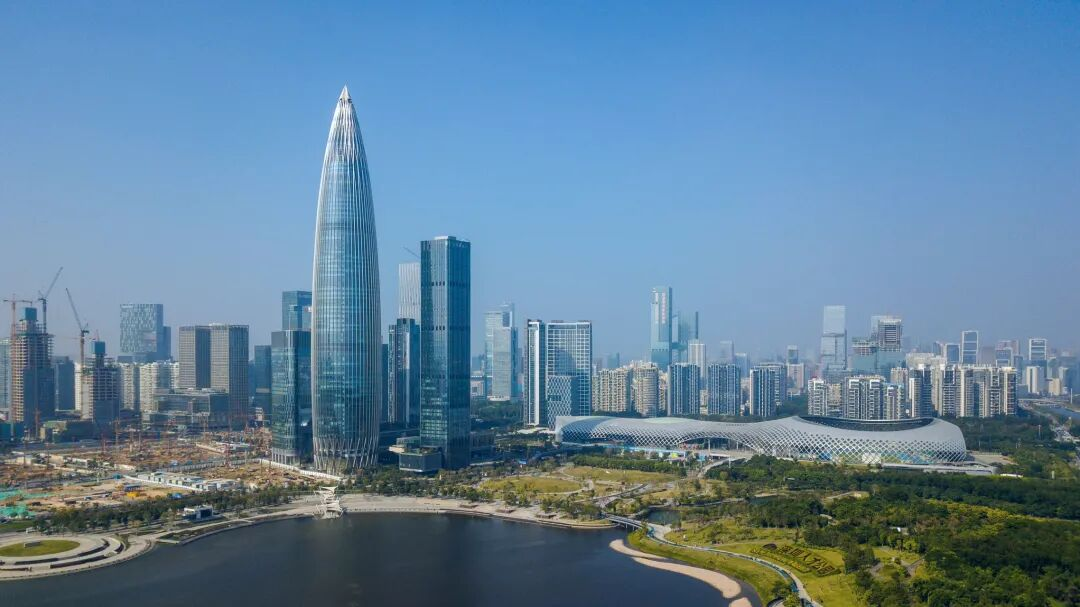
中国首个“万亿区”诞生!6000家高企,每平方公里54亿:解构中国最“恐怖”的经济密度……
Xin Lang Cai Jing· 2026-02-10 12:41
Core Insights - Shenzhen's Nanshan District has become the first county-level administrative region in China to surpass a GDP of 1 trillion yuan by 2025, surpassing approximately 90% of China's prefecture-level cities and even exceeding the annual economic output of small European countries like Iceland and Estonia [2][38] - Nanshan's economic success is attributed to a combination of market mechanisms, technological innovation, and urban governance, rather than natural resource endowments or administrative status [4][39] Economic Performance - Nanshan generates over 25% of Shenzhen's economic output on less than 10% of its land, with a GDP density of 54 billion yuan per square kilometer, three times the average in Shenzhen and over three times that of Shanghai's Pudong New Area [2][38] - The district hosts 218 listed companies and contributes approximately 0.7% to the national GDP, showcasing a high concentration of economic activity [2][38] Industrial Ecosystem - Nanshan is characterized as a "tropical rainforest" of industry, with over 600,000 market entities, including 6,037 national high-tech enterprises, creating a unique ecosystem of vertical integration and rapid innovation [7][41] - The district's "robot valley" exemplifies its industrial efficiency, where product development cycles are significantly shorter than in Silicon Valley, allowing for rapid prototyping and testing [9][43] R&D Investment - Nanshan's R&D investment intensity reaches 7.87%, far exceeding the national average of approximately 2.5% and surpassing Israel's 5.6%, leading to a high number of patents per capita [14][48] - The integration of secondary and tertiary industries has resulted in nearly 80% of the economy being driven by high-tech services rather than traditional sectors, with strategic emerging industries accounting for nearly 60% of GDP [14][48] Government Role - The local government plays a crucial role in fostering innovation through supportive policies, including substantial industry guidance funds and a high tolerance for failure, which helps startups navigate funding challenges [16][50] - Nanshan's strict intellectual property protection has made it a hub for international patent applications, accounting for 1/14 of the national total [18][52] Urban Integration - The district promotes seamless collaboration between academia and industry, with universities located close to enterprises, facilitating talent mobility and innovation [20][54] - Nanshan's urban planning integrates work and leisure, creating an attractive environment for top talent, which enhances cross-industry innovation [22][56] Comparative Analysis - Compared to Beijing's Haidian District, which excels in original innovation, Nanshan's strength lies in the industrialization of technology, with over 90% of R&D activities occurring within enterprises [24][58] - In contrast to Shanghai's Pudong, which benefits from significant state resources, Nanshan's growth is driven by grassroots entrepreneurship and a market-oriented approach [28][62] Challenges Ahead - Nanshan faces risks of hollowing out due to rising costs, as high rents and labor expenses may drive manufacturing away, necessitating innovative solutions to maintain its industrial base [30][65] - The district's administrative status as a district limits its governance capabilities, posing challenges in fiscal management and regional coordination [32][67] - The high cost of living may hinder the retention of young talent, raising concerns about the sustainability of its innovative ecosystem [34][69] Conclusion - Nanshan's achievement as the first trillion-yuan district signifies a shift towards innovation-driven growth without reliance on natural resources, providing a model for other regions in China [36][70] - The district's future will depend on balancing high-quality growth with quality of life, as it navigates the complexities of urbanization and economic development [36][70]

向“新”生长绘出发展“上扬曲线”
Xin Lang Cai Jing· 2025-12-24 23:56
Core Viewpoint - The article highlights the growth and innovation of Huzhou Andar Automotive Parts Co., Ltd., which is capitalizing on the booming demand for automotive parts, particularly in the electric vehicle sector, and emphasizes the importance of technological innovation in driving high-quality development for state-owned enterprises in Huzhou [1][2]. Group 1: Company Performance - Huzhou Andar Automotive Parts Co., Ltd. has seen a surge in orders, with production lines operating at high capacity and orders extending into the post-Chinese New Year period [1]. - The company has achieved its annual sales and profit targets ahead of schedule, reflecting strong market demand [1]. Group 2: Innovation and Development - The company initiated a project in 2021 to produce 15 million sets of key components for electric vehicles, integrating traditional industries with new market opportunities [1]. - Andar has completed nearly 300 innovation improvement projects this year and has been recognized for its "automotive powertrain casing" product as part of the "2025 Zhejiang Manufacturing Boutique" list [1]. - The company has filed for 36 patents and is enhancing its R&D capabilities through partnerships with academic institutions [1]. Group 3: Industry Trends - Huzhou's state-owned enterprises are focusing on technological innovation as a key driver for high-quality development, with a significant increase in R&D investment [2][3]. - By the end of November, state-owned enterprises in Huzhou had invested 120 million yuan in R&D, with a research intensity of 6.37% for key manufacturing and innovative enterprises [3]. - The local government is encouraging collaboration between enterprises and research institutions, resulting in the establishment of 30 laboratories and innovation centers [3]. Group 4: Future Outlook - Huzhou's state-owned enterprises are expected to continue enhancing their innovation capabilities, particularly in fields like artificial intelligence, biomedicine, and energy conservation [5]. - The establishment of various industry funds, totaling 81.455 billion yuan, aims to support early-stage investments in hard technology [5].
道氏技术:与能斯达及芯培森签署战略合作协议 将碳材料应用于人形机器人电子肌肉等关键零部件材料配方中
Mei Ri Jing Ji Xin Wen· 2025-07-29 11:37
Core Viewpoint - The announcement highlights a strategic cooperation agreement between the company, Suzhou Nengsida Electronics Technology, and its affiliate Guangdong Chipenson Technology, focusing on the development and market expansion of key components for humanoid robots, including electronic muscles, electronic skin, and joints [1] Group 1 - The agreement aims to integrate the strengths of the three parties in the research and development of materials required for key components of humanoid robots [1] - The collaboration will involve the application of carbon materials in the formulation of electronic muscles, electronic skin, and joints, enhancing product performance [1] - The agreement is a framework agreement, with specific cooperation matters to be approved and disclosed according to relevant regulations [1]


道氏技术:公司与能斯达及关联方芯培森签署战略合作框架协议 围绕人形机器人电子肌肉等方面展开深度合作
news flash· 2025-07-29 11:27
Core Viewpoint - The company, Daoshi Technology, has signed a strategic cooperation agreement with Suzhou Nengsida Electronic Technology Co., Ltd. and its affiliate Guangdong Chiperson Technology Co., Ltd. to enhance the development and market expansion of key components for humanoid robots [1] Group 1 - The collaboration will focus on integrating each party's strengths in the research and development of materials needed for electronic muscles, electronic skin, and joints in humanoid robots [1] - The agreement aims to apply carbon materials in the formulation of key component materials for humanoid robots, thereby improving product performance [1] - This framework agreement serves as a guiding document for the long-term cooperation among the three parties, with specific cooperation matters to follow relevant approval procedures and information disclosure obligations [1]