人形机器人天工

Search documents
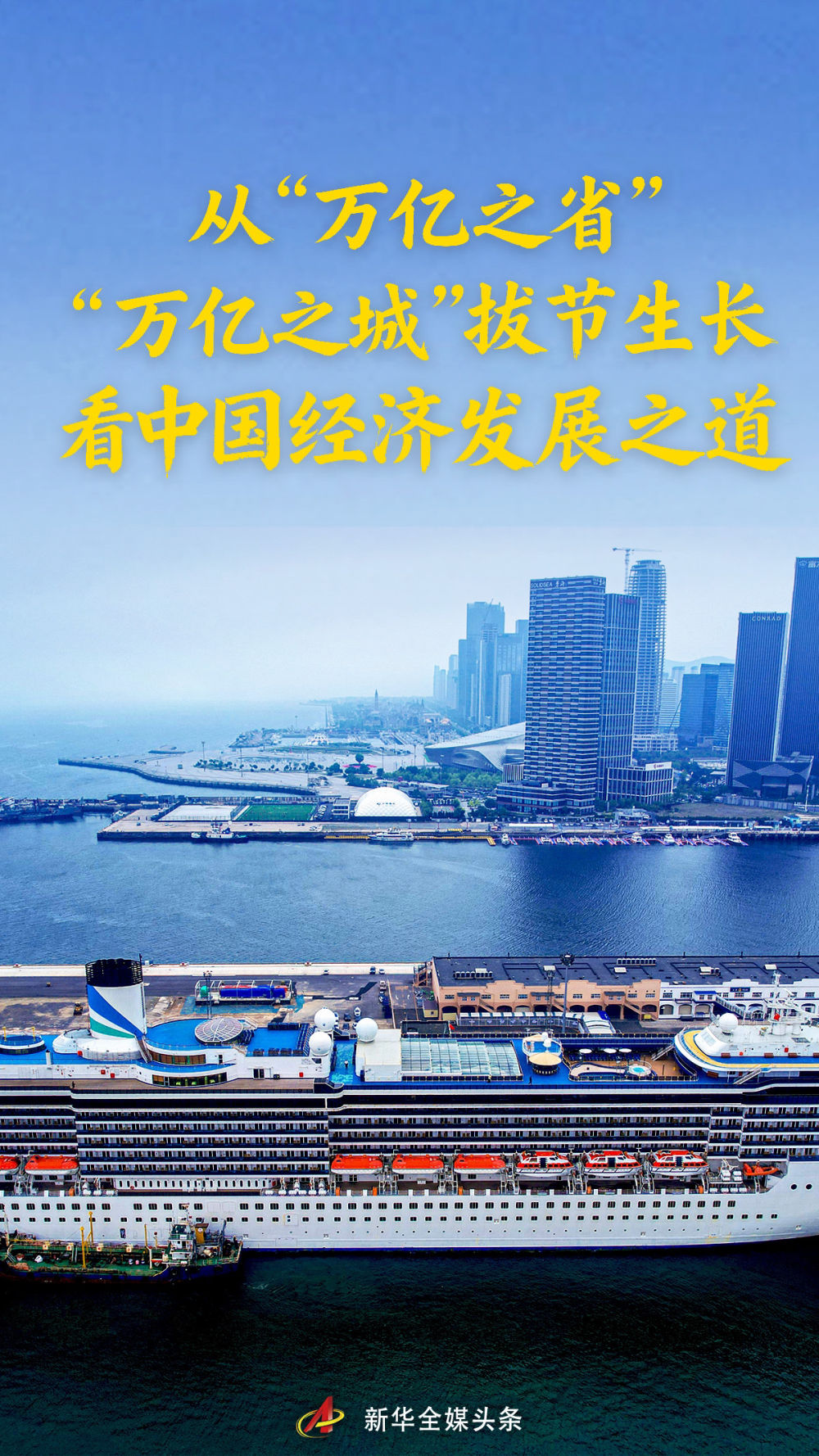
从“万亿之省”“万亿之城”拔节生长看中国经济发展之道
Xin Hua Wang· 2026-01-27 15:40
Core Insights - In 2025, China's economy reached a new milestone with a total GDP surpassing 140 trillion yuan, marking significant advancements in regional and urban economic scales [3] - Key cities and provinces have achieved notable GDP thresholds, including Shandong becoming a "10 trillion yuan province" and Beijing a "5 trillion yuan city," reflecting the resilience and growth of China's economy amidst complex environments [4][6] Economic Milestones - Beijing's GDP exceeded 5 trillion yuan, making it the second city in China to reach this level, with an economic increment of approximately 1.4 trillion yuan over the past five years [4] - Shandong's economy crossed the 10 trillion yuan mark, becoming the third province in China to achieve this, following Guangdong and Jiangsu, and the first in Northern China [4] - Dalian and Wenzhou have both surpassed the 1 trillion yuan threshold, bringing the total number of "trillion yuan cities" in China to 29 [6] Regional Economic Dynamics - The economic landscape of China is evolving, with a balanced development pattern emerging between the north and south, as well as east and west [10] - The "trillion yuan" threshold is seen as a recognition of comprehensive economic strength, with "10 trillion yuan provinces" ranking among the top fifteen global economies [10] - The economic growth in regions like Shandong and cities like Shenzhen's Nanshan District showcases a shift towards high-quality development and innovation-driven growth [14][24] Development Strategies - Different provinces and cities are adopting unique strategies for growth, such as Beijing's focus on reducing non-capital functions and enhancing high-quality development [13] - Shandong is transitioning from a traditional industrial base to a more advanced economic structure, with over 40% of its key industries now featuring advanced capacities [13] - Nanshan District in Shenzhen exemplifies high economic density and innovation, achieving a GDP of over 1 trillion yuan within a small geographical area [8][22] Innovation and Reform - Innovation is a key driver of economic growth, with Beijing maintaining a high R&D investment intensity and Dalian seeing a significant increase in high-value patents [16] - Reforms aimed at improving the business environment are crucial for the rise of "trillion yuan cities," with initiatives in Dalian and Wenzhou enhancing operational efficiency for businesses [16] - The focus on quality of life and public welfare is evident, with significant portions of fiscal spending in Shandong directed towards education, healthcare, and social services [18]

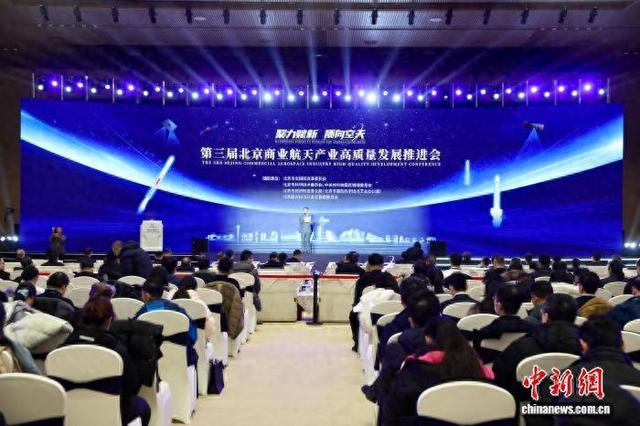
北京商业航天产业高质量发展推进会举办 共商产业未来
Xin Lang Cai Jing· 2026-01-23 13:45
Group 1 - The third Beijing Commercial Aerospace Industry High-Quality Development Promotion Conference was held with the theme "Gathering Strength to Empower New Quality Towards Aerospace" [1][3] - The conference included multiple segments such as results release, keynote speeches, and thematic discussions, focusing on institutional innovation, cutting-edge technology exploration, and international cooperation [3][5] - Seven key laboratories in Beijing were awarded, focusing on frontier technologies and key industry layouts to accelerate original innovation and tackle core technology challenges [3][5] Group 2 - The Beijing Municipal Bureau of Economy and Information Technology released measures to promote the development and utilization of commercial satellite remote sensing data resources from 2026 to 2030, aiming to optimize the environment for data resource development and expand application scenarios [5][8] - Beijing E-Town announced nine major capacity projects and six satellite projects, with a total investment exceeding 15 billion yuan, aimed at forming a new quality capacity across the entire industry chain [5][8] - The construction of six common platforms in Beijing Rocket Street will focus on key aspects of commercial aerospace innovation, supporting high-quality development and high-level safety [7][8] Group 3 - The global first humanoid robot successfully connected to a low-orbit satellite, showcasing innovative applications in commercial aerospace [8] - Beijing E-Town aims to leverage its resource advantages and development momentum during the 14th Five-Year Plan period to support the commercial aerospace industry through enhanced policy support, larger-scale investments, and expanded industrial space [8]
“这里就是未来世界的样子!”
Bei Jing Wan Bao· 2025-10-03 06:48
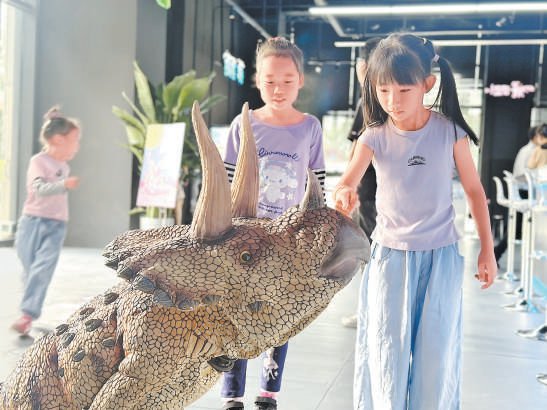
Core Insights - The article highlights the emergence of a technologically advanced holiday experience in Beijing's Yizhuang, featuring a robot-themed restaurant and the world's first embodied intelligent robot 4S store, attracting both local and international visitors [2][4]. Group 1: Robot-Themed Restaurant - The "Robot Flame Research Institute" restaurant opened in August 2023, showcasing robots capable of preparing food, performing music, and engaging in stand-up comedy, with high visitor turnout during holidays [2][4]. - A visitor from the U.S. expressed amazement at the restaurant's offerings, including robots that can recite poetry and prepare drinks, indicating a strong interest in the futuristic experience [2][3]. - The restaurant has seen daily attendance exceeding 200 visitors during the holiday period, reflecting its popularity and the growing interest in robotic dining experiences [2][4]. Group 2: Robot Interaction and Entertainment - Children and families are engaging with various robots, such as a chess-playing robot that captivates young visitors, demonstrating the interactive potential of robotic technology [3]. - Performances featuring robot dogs and dinosaurs have been well-received, with audience participation enhancing the entertainment value [3]. - The restaurant's atmosphere is designed to be engaging and educational, with children learning from their interactions with the robots [3]. Group 3: Robot 4S Store - The world's first embodied intelligent robot 4S store opened alongside the restaurant, featuring humanoid robots that have participated in competitive events, such as a half marathon [4]. - The store offers guided tours, with an average of 200-300 visitors attending daily during the holiday, indicating strong public interest in robotic technology and its applications [4]. - The performance of the champion robot, completing a half marathon in just over two hours, surprised visitors and showcased the advancements in robotic capabilities [4].
北京最新部署!超级赛道,密集利好!
证券时报· 2025-08-10 06:58
Core Viewpoint - The article highlights the active development and support for embodied intelligence in robotics across multiple cities in China, particularly focusing on policies and initiatives from Beijing, Shanghai, and Shenzhen aimed at fostering innovation and growth in this sector [1][2][8]. Group 1: Beijing's Initiatives - Beijing Economic-Technological Development Area has launched the "Embodied Intelligence Robot Ten Measures" to support the development of the embodied intelligence robotics industry with ten specific measures [1][4]. - In the first half of the year, the robotics and intelligent manufacturing industry in Beijing achieved an output value of 39.4 billion yuan, representing a year-on-year growth of 10.7% [4]. - The plan includes support for real-world data collection, funding for training grounds, and a yearly issuance of 100 million yuan in "data vouchers" to encourage data procurement [5][6]. Group 2: Shanghai's Development Plan - Shanghai aims to achieve a core industry scale of over 50 billion yuan by 2027, with a focus on breakthroughs in key algorithms and technologies [8][9]. - The plan includes the establishment of at least four high-quality incubators and support for over 20 key technology breakthroughs [8][9]. - Financial support for projects can reach up to 5 million yuan, with a maximum of 30% of the total investment covered [8]. Group 3: Shenzhen's Action Plan - Shenzhen's action plan aims for breakthroughs in key components and technologies related to robotics by 2027, with a target of nurturing over 10 companies valued at over 10 billion yuan [10][11]. - The plan emphasizes the establishment of public service platforms to attract more enterprises and research institutions, enhancing the overall industrial ecosystem [10][11]. - It also includes support for the development of AI chips and the establishment of innovation service platforms to facilitate technology application [11]. Group 4: Industry Outlook - The industry is expected to see significant growth, with 2025 projected as a pivotal year for mass production of embodied intelligence robots, marking a deep integration of AI and robotics [12]. - Application scenarios are identified as a critical breakthrough point for the commercialization of embodied intelligence, with strong potential in various sectors such as logistics, healthcare, and domestic services [13].