商业航天产业发展

Search documents
大兴又一宗土地挂牌出让,为商业航天产业发展再添优质空间
Xin Jing Bao· 2026-02-25 08:42
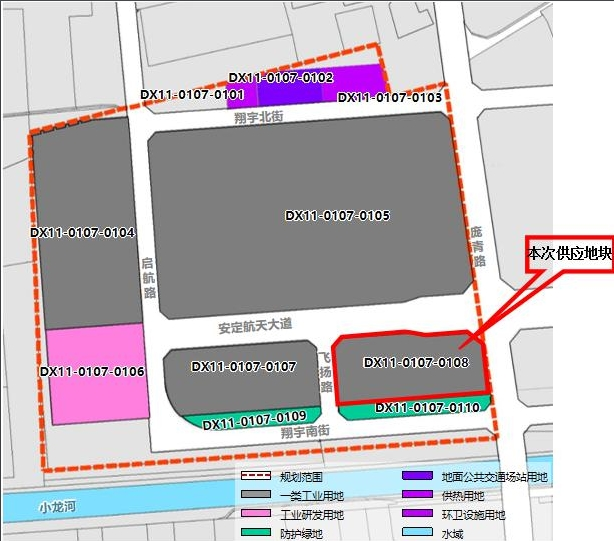
Core Insights - The Beijing Commercial Aerospace Industry Base has announced the official listing for the sale of land parcels DX11-0107-0108, aimed at enhancing the region's commercial aerospace industry development [1] Group 1: Land Details - The land parcel is located in Daxing District, An Ding Town, covering an area of approximately 1.34 hectares with a controlled building scale of about 13,400 square meters [1] - This is the second industrial land parcel offered for sale in the base, providing additional quality industrial space for the commercial aerospace sector [1] Group 2: Auction Information - The starting price for the land auction is set at RMB 22.23 million, with a bidding increment of RMB 150,000 and a deposit requirement of RMB 4.5 million [3] - The auction is open to a wide range of bidders, including domestic and foreign enterprises, organizations, and individuals, with certain legal exceptions [3] Group 3: Project Requirements - The auction announcement stipulates that projects must align with the established industrial development plan of Daxing District and comply with energy and water consumption standards set by Beijing [3] - Projects must also adhere to relevant policies in Daxing District to ensure professional and compliant industrial development [3] Group 4: Auction Timeline - The bidding for the land will commence on March 6, 2026, at 9 AM, with a minimum bidding period of 10 working days [3] - Detailed information and bidding requirements can be accessed through the official websites of the Beijing Planning and Natural Resources Committee or the Beijing Public Resource Trading Service Platform [3]

C电科:公司积极关注各类市场主体的发展动态,持续拓展产品应用场景
Zheng Quan Ri Bao Wang· 2026-02-24 12:44
Core Viewpoint - The company is actively monitoring the development dynamics of various market entities in the rapidly growing commercial aerospace industry in China and is continuously expanding its product application scenarios [1] Group 1: Company Actions - The company emphasizes compliance with commercial confidentiality and information disclosure regulations when discussing specific customer cooperation situations [1] - The company commits to fulfilling its information disclosure obligations in accordance with the Shanghai Stock Exchange's listing rules for the Sci-Tech Innovation Board [1] - Major contracts that meet disclosure standards will be announced in a timely manner [1] Group 2: Industry Context - The rapid development of the commercial aerospace industry in China is a focal point for the company, indicating potential growth opportunities [1] - The company encourages stakeholders to pay attention to announcements published on the Shanghai Stock Exchange website and designated media [1]
何时送我上太空?
Xin Lang Cai Jing· 2026-02-06 22:00
Core Viewpoint - The Sichuan provincial government is accelerating the construction of a commercial spaceport, with discussions on "space tourism" gaining traction among representatives at the provincial assembly [1] Group 1: Development of Commercial Space in Sichuan - By 2028, there are plans for celebrities like Huang Jingyu to travel to space, raising questions about when ordinary people will have similar opportunities [2] - The technology for commercial space travel is complex and has a high technical threshold, differentiating it from conventional air travel [2] - Sichuan has significant advantages for commercial space development, including the Xichang Satellite Launch Center and a growing core circle of commercial space R&D and manufacturing in the Chengdu-Deyang-Meishan-Ziyang area [2] Group 2: Industry Challenges and Recommendations - Despite its advantages, Sichuan faces challenges in technology and supply chain, with notable gaps in local support and upstream/downstream industry connections [3] - Recommendations include increasing policy and financial support to strengthen the supply chain, particularly by guiding aerospace industries from eastern coastal regions to transfer to the Chengdu metropolitan area [3] - Suggestions also include collaboration between local governments and state-owned enterprises to establish industry guidance funds, leveraging a "mother fund + sub-fund" model to attract more social capital into the commercial space sector [3] Group 3: Cost and Accessibility of Space Travel - The current cost of a ticket to space is around 3 million yuan, raising concerns about accessibility for the general public [4] - There is a need for technological advancements to significantly reduce the costs of commercial space travel, with hopes that increased rocket payload capacity will lead to more frequent and environmentally friendly launches, making space tourism more affordable in the future [4]
中信建投:中美双极格局主导发展进程 商业航天产业边界向多元赛道拓展
智通财经网· 2026-02-04 08:28
Core Viewpoint - The global commercial aerospace industry is entering a new phase focused on large-scale deployment and ecosystem construction, driven by a bipolar structure dominated by China and the U.S. Group 1: Policy and Regulation - The policy framework for China's commercial aerospace is set to mature by 2025, with the establishment of a Commercial Aerospace Department by the National Space Administration, marking a shift from "encouraging exploration" to "systematic governance and standardization" [1]. Group 2: Capital and Financing - The Shanghai Stock Exchange has opened an IPO channel for commercial rocket companies under the new standards, with industry financing expected to reach 18.6 billion yuan by 2025, and the total valuation of the top 100 companies surpassing the trillion yuan mark [2]. Group 3: Satellite Internet and Deployment - Low Earth orbit satellite internet is entering a phase of normalized networking, with Chinese constellations like "StarNet" and "Qianfan" moving into mass deployment, and "one rocket multiple satellites" launches becoming routine to secure scarce frequency resources [3]. Group 4: Manufacturing Innovations - Satellite manufacturing is transitioning into a "super factory" era, focusing on efficiency and consistency in mass production, exemplified by the automated production lines in Hainan's Wenchang Satellite Super Factory, aiming for an annual capacity of 1,000 units [4]. Group 5: Commercial Applications - The commercial sector is exploring business models that follow a "demand-driven" approach, with direct-to-satellite mobile connections becoming a hot topic, and the Ministry of Industry and Information Technology setting a target of over 10 million users by 2030 to lay the groundwork for a 6G integrated network [5]. Group 6: Reusable Rockets - The focus of competition is shifting from "can it be recovered" to "can it be reused frequently," with multiple medium to large liquid rockets expected to make their maiden flights between 2025 and 2026 to tackle the challenges of capacity and cost associated with satellite constellation construction [6]. Group 7: 3D Printing Technology - 3D printing is evolving from prototype manufacturing to direct production of critical components like rocket engines and satellite structures, enabling significant cost reductions and rapid iterations, becoming a key measure of engineering capability [7]. Group 8: Collaboration Between Enterprises - The industry landscape is moving beyond simple complementarity to a phase of "strategic leadership and market agility," where state-owned enterprises ensure strategic security and foundational capabilities, while private enterprises contribute innovation and cost efficiency [8]. Group 9: Global Competition Dynamics - Global competition has expanded from frequency resource contention to the establishment of 6G integrated communication standards and the positioning of future talent ecosystems, with China and the U.S. building their respective political, technological, and supply chain alliances in the space sector [10]. Group 10: Expanding Space Economy - The boundaries of the space economy are significantly broadening, with emerging fields including space computing (e.g., orbital data centers), space tourism (suborbital, orbital, and deep space travel), heavy launch vehicle development, and long-term visions like Mars colonization, marking the beginning of a new era of "starry seas" [11].

商业航天企业 IPO 加速,商业航天产业有望加速扩张
Changjiang Securities· 2026-01-30 05:08
Investment Rating - The industry investment rating is "Positive" and maintained [7] Core Insights - The commercial aerospace industry in China is at a critical stage of transitioning from technology incubation to industrial explosion, driven by policy support and technological breakthroughs. Major commercial aerospace companies are expected to undergo a series of IPOs, which will facilitate industry development through capital operations. Attention is recommended on core suppliers across the industry chain, particularly those related to satellite applications [2][11]. Summary by Sections Recent Developments - Recently, three companies, Xinghe Power, Interstellar Glory, and Tianbing Technology, updated their IPO guidance progress. Following the acceptance of Blue Arrow Aerospace's IPO on the Sci-Tech Innovation Board, five domestic commercial aerospace companies focusing on launch vehicles have initiated the IPO process [2][4]. Market Dynamics - The financing market is active, reflecting the high prosperity of China's commercial aerospace industry. In 2025, the total financing amount for the commercial aerospace industry reached 18.6 billion, a year-on-year increase of 32%. The most popular financing areas include satellite applications (8.7 billion), rocket manufacturing (6.17 billion), and satellite manufacturing (3 billion) [11]. Future Outlook - The commercial aerospace market in China is projected to reach 1.2 trillion by 2024 and is expected to exceed 3.5 trillion by 2030, with an average annual growth rate of approximately 18%. The active financing market indicates a positive outlook for the development of commercial aerospace, and with continuous breakthroughs in reusable technology, the market is likely to expand further [11].
人大代表建言海南商业航天:加大政策支持 加快产业聚集
Zhong Guo Xin Wen Wang· 2026-01-27 07:04
Core Viewpoint - The representatives from Hainan are advocating for increased policy support and accelerated industrial clustering to promote the development of the commercial aerospace industry in Hainan [1][3]. Group 1: Policy Support and Industrial Development - Hainan is actively promoting the "Five Directions to Strengthen" initiative, focusing on developing a characteristic industrial chain [3]. - The proposal from the Hainan Provincial Party Committee emphasizes the systematic construction of a commercial aerospace launch site to enhance the rocket, satellite, and data chains [3]. - The Wenchang Aerospace Supercomputing Center is positioned as a core support platform for the aerospace data industry, leveraging policies for international data flow and commercial aerospace promotion [3][4]. Group 2: Achievements and Future Plans - The Wenchang Aerospace Supercomputing Center has achieved significant milestones, including the integration of multiple satellites and the establishment of a data center with global connectivity [4]. - By 2026, the center plans to invest 1.5 billion yuan to focus on aerospace data, computing power, and algorithms, addressing industry challenges related to data storage and processing [5]. - Three major projects will be launched to tackle issues in data quality, AI integration, and computing power support for aerospace data [5]. Group 3: Recommendations for Future Growth - There is a need to optimize the investment and financing environment for the commercial aerospace industry, as it requires substantial capital for infrastructure development [5]. - The establishment of diverse funding channels, including government funds and commercial bank loans, is recommended to support the industry [5]. - Enhanced policy support is necessary to cover the entire aerospace industry chain, facilitating collaborative development in Hainan [5].
北京商业航天产业高质量发展推进会举办 共商产业未来
Xin Lang Cai Jing· 2026-01-23 13:45
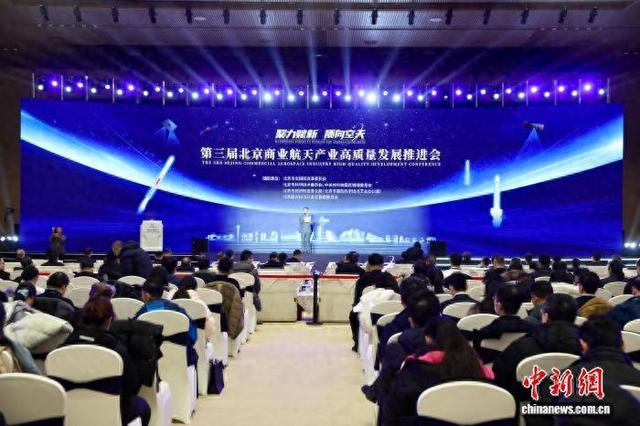
Group 1 - The third Beijing Commercial Aerospace Industry High-Quality Development Promotion Conference was held with the theme "Gathering Strength to Empower New Quality Towards Aerospace" [1][3] - The conference included multiple segments such as results release, keynote speeches, and thematic discussions, focusing on institutional innovation, cutting-edge technology exploration, and international cooperation [3][5] - Seven key laboratories in Beijing were awarded, focusing on frontier technologies and key industry layouts to accelerate original innovation and tackle core technology challenges [3][5] Group 2 - The Beijing Municipal Bureau of Economy and Information Technology released measures to promote the development and utilization of commercial satellite remote sensing data resources from 2026 to 2030, aiming to optimize the environment for data resource development and expand application scenarios [5][8] - Beijing E-Town announced nine major capacity projects and six satellite projects, with a total investment exceeding 15 billion yuan, aimed at forming a new quality capacity across the entire industry chain [5][8] - The construction of six common platforms in Beijing Rocket Street will focus on key aspects of commercial aerospace innovation, supporting high-quality development and high-level safety [7][8] Group 3 - The global first humanoid robot successfully connected to a low-orbit satellite, showcasing innovative applications in commercial aerospace [8] - Beijing E-Town aims to leverage its resource advantages and development momentum during the 14th Five-Year Plan period to support the commercial aerospace industry through enhanced policy support, larger-scale investments, and expanded industrial space [8]
四川凉山:设立不低于40亿元的商业航天产业专项基金,支持火箭、卫星研制及应用等相关企业落地
Xin Lang Cai Jing· 2026-01-23 06:32
Core Viewpoint - The newly issued "Special Policy for Supporting the Concentrated Development of the Commercial Aerospace Industry in Liangshan Prefecture (Trial)" aims to establish a comprehensive support framework for the commercial aerospace sector, including a dedicated fund and favorable policies for land use [1] Group 1: Financial Support - A special fund of no less than 4 billion yuan (approximately 0.57 billion USD) will be established to support the development of rocket and satellite manufacturing, as well as aerospace big data applications [1] - The policy encourages the formation of a complete industrial chain that covers research and development, manufacturing, launch services, and data applications [1] Group 2: Land Use Policies - The policy provides a "green channel" for commercial aerospace enterprises to address land use needs in accordance with laws and regulations [1] - Key commercial aerospace enterprises will be included in the provincial and state major project database, ensuring legal and regulatory support for annual land use planning indicators [1] - The minimum price for land transfer can be executed at 70% of the local industrial land transfer minimum price standard [1] - The policy encourages a combination of leasing and transfer methods for land supply [1]
《酒泉市商业航天产业发展规划》正式发布 建设国家商业航天发射基地
Xin Lang Cai Jing· 2026-01-23 05:49
Core Viewpoint - The "Jiuquan Commercial Aerospace Industry Development Plan (2026-2035)" aims to establish Jiuquan as a leading commercial aerospace hub in China, outlining the significance, trends, and feasibility of commercial aerospace development [1] Group 1: Strategic Vision and Objectives - The plan emphasizes the creation of the "China Jiuquan Commercial Aerospace Port" as its overarching vision [1] - It identifies strategic positions including the establishment of a national commercial aerospace launch base, research and testing base, technical support base, and data application base [1] Group 2: Industry Layout and Development - The plan proposes an "one port, two zones, multi-point linkage" industrial structure, focusing on the needs of the national aerospace sector and the capabilities of Jiuquan [1] - It outlines seven key industries to be developed: aerospace launch and testing, rocket manufacturing and testing, satellite manufacturing and application, aerospace data backup and application, technical support, logistics, and aerospace tourism [1] Group 3: Implementation Actions - To ensure effective implementation, the plan includes seven major actions: investment attraction, project construction breakthroughs, park quality enhancement, comprehensive support, technology finance empowerment, and aerospace brand promotion [1]
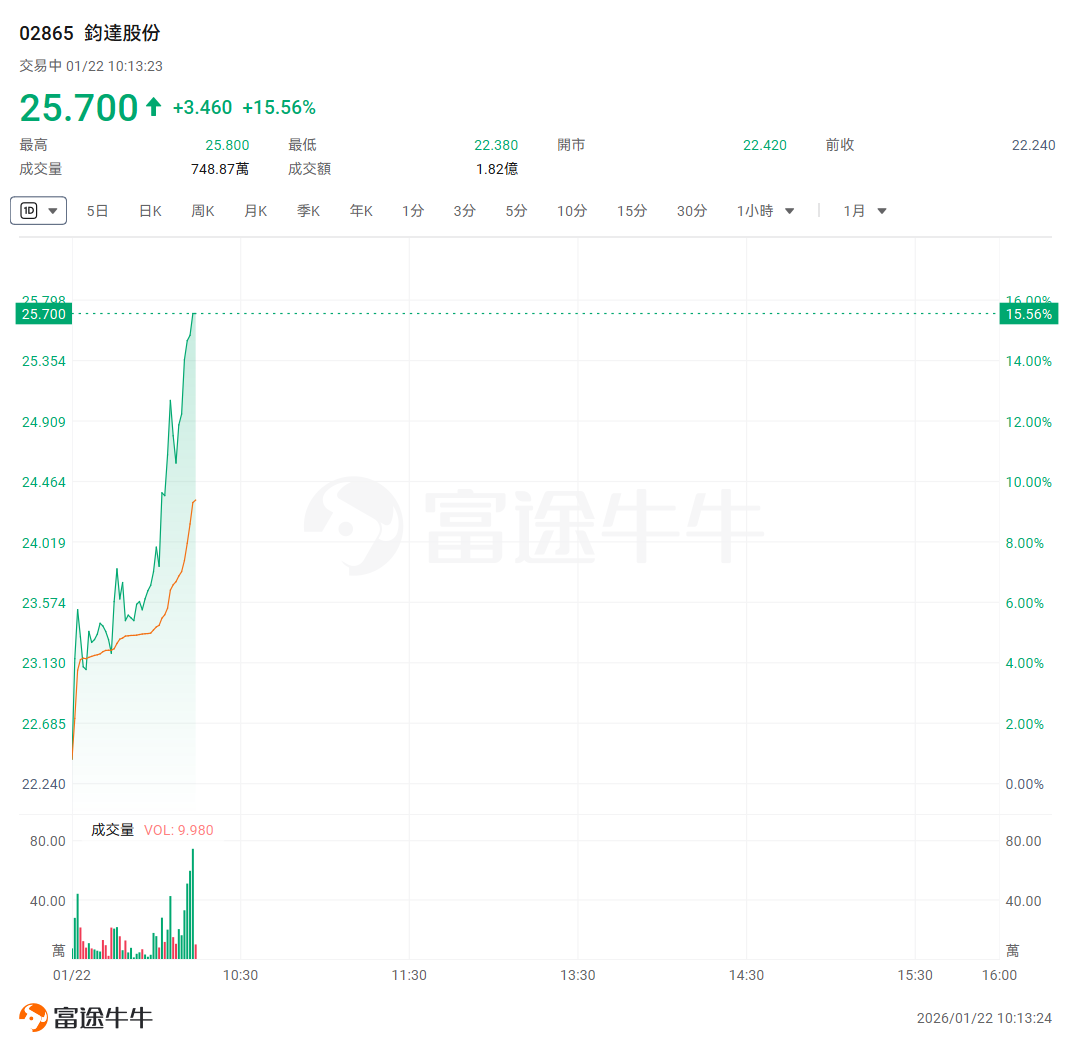
港股商业航天股冲高,钧达股份领涨,拟配股筹资用于太空光伏电池相关产品研发等
Zhi Tong Cai Jing· 2026-01-22 02:49
Group 1 - JunDa Co., Ltd. announced a placement agreement on January 21, 2026, to sell up to 18.682 million shares at a price of HKD 22.00 per share, representing a discount of approximately 1.08% compared to the closing price of HKD 22.24 on the same day [3] - If fully placed, the shares would account for about 22.75% of the enlarged issued H-shares and approximately 6.04% of the existing issued shares [3] - The estimated total proceeds from the placement are approximately HKD 411 million, with a net amount expected to be around HKD 398 million after deducting expenses [3] Group 2 - The net proceeds from the placement are intended to be used as follows: approximately 45% for research and production of space photovoltaic battery-related products, 45% for equity investments and collaborations in the commercial aerospace sector, and 10% to supplement the company's working capital [3] - The Hong Kong stock market saw a surge in commercial aerospace stocks, with increases of nearly 10%, 4%, and 3% for various companies [4] - JunDa Co., Ltd. shares rose by 14.66% to HKD 25.50, with a trading volume of HKD 193 million [5] Group 3 - Elon Musk is actively advancing SpaceX's IPO plan, aiming for completion by July this year, with a valuation of USD 800 billion from a secondary market share sale last December [6] - The commercial aerospace industry is entering a golden era driven by both demand and supply, with rapid development in private rocket companies and a shift from national to commercial aerospace [6] - Focus areas include satellite manufacturing and supply chain components, particularly in low Earth orbit satellite production and infrastructure development [6]