
企业级智能体

Search documents
大模型第一股首份成绩单出炉
第一财经· 2026-03-31 15:55
Core Viewpoint - The article discusses the annual performance announcement of Zhipu (2513.HK), referred to as the "first stock of large models," highlighting significant revenue growth but also increasing losses, reflecting the challenges in the large model industry [3]. Financial Summary - Zhipu reported total revenue of RMB 724.33 million for 2025, a year-on-year increase of 131.9% [4] - Gross profit reached RMB 296.66 million, up 68.7% year-on-year, but the gross margin decreased from 56.3% to 41.0% due to the increased share of cloud services [4] - Research and development expenses rose by 44.9% to RMB 3.18 billion, while the net loss for the year was RMB 4.72 billion, a 59.5% increase compared to the previous year [4] Business Segmentation - Zhipu's revenue breakdown shows the enterprise-level general model generated RMB 365.7 million, the open platform and API brought in RMB 190.4 million, the enterprise-level intelligent agents contributed RMB 165.7 million, and technical services and others accounted for RMB 25.4 million [5] - The cloud and enterprise-level intelligent agent revenues saw substantial increases of 292.6% and 248.8%, respectively, with cloud gross margins improving from 3.3% to 18.9%, surpassing industry averages [5] Future Outlook - Zhipu's CEO, Zhang Peng, indicated that the annual recurring revenue (ARR) for the open platform and API business grew 60 times, asserting the company's pricing power in the industry [5] - The company aims to continue its development along the path of becoming "China's Anthropic," focusing on a simplified and economical business model for API services [5] - Concerns about the sustainability of the token economic model were addressed, with the chairman, Liu Debing, suggesting a tiered approach to tokens, where lower-tier tokens may adopt a low-cost or free advertising model, while higher-tier tokens maintain pricing power based on ROI [6]


AI Makes AI!工业富联2026年度科技创新峰会圆满举行
Xin Lang Cai Jing· 2026-01-22 10:09
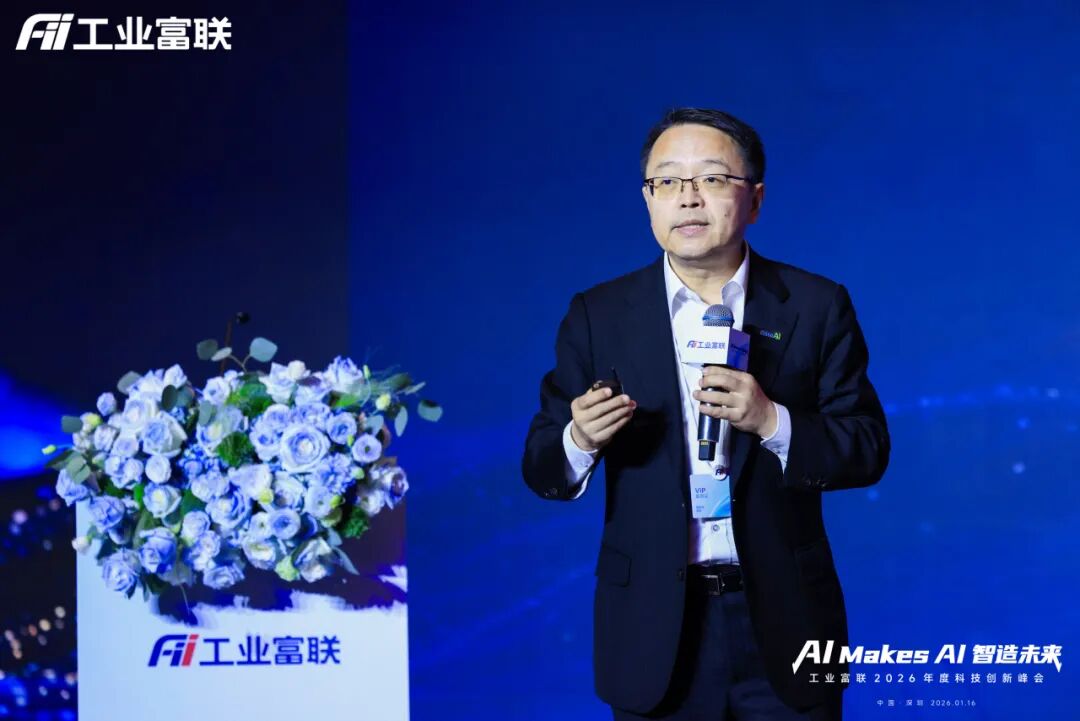
Core Insights - The 2026 Industrial Technology Innovation Summit held by Industrial Fulian focused on the deep integration of artificial intelligence (AI) and intelligent manufacturing, discussing opportunities and challenges for industrial upgrades [1][21] - The summit gathered over thirty heavyweight speakers from AI and intelligent manufacturing, with nearly five hundred attendees from industry, academia, and investment sectors [2][21] Group 1: Key Themes and Discussions - Chairman Zheng Hongmeng emphasized that as AI model sizes increase, training power consumption doubles annually, leading to higher energy and heat dissipation challenges, indicating a comprehensive upgrade of the entire industrial chain [2][21] - Zheng noted that future competition in AI and intelligent manufacturing will shift from individual company technology superiority to the ability to integrate systems effectively [2][21] - The CTO of Industrial Fulian, Zhou Taiyu, highlighted the transition of AI infrastructure from a "single-point computing" model to a "system engineering" approach, creating a closed-loop system of computing power, algorithms, and applications [3][22] Group 2: Technological Foundations - Academician Mao Junfa pointed out that integrated circuits are the foundational technology for scientific instruments, while AI is the driving force behind scientific discovery and technological advancement [4][23] - The future of AI is expected to require interdisciplinary integration, including physics, life sciences, and philosophy, as the industry faces challenges related to Moore's Law [4][23] Group 3: Industry Collaboration and Development - A roundtable discussion on global AI infrastructure emphasized that building AI infrastructure requires deep collaboration across the entire industry chain, representing a significant opportunity for value reconstruction [5][24] - Tencent Cloud's VP Wang Qi stated that intelligent agents are crucial for bridging the gap in enterprise AI application implementation, relying on scenario-driven, data collaboration, and ecosystem co-construction [6][25] Group 4: Practical Applications and Innovations - Chen Zhaopeng, CEO of Sensing Robotics, discussed the application of embodied intelligence in industrial scenarios, emphasizing the need for widespread deployment of robots to create a positive feedback loop of application, data, and training [7][26] - The roundtable on AI applications and productivity innovation highlighted that AI's value is extending from the digital world to the physical world, marking a deep transformation in manufacturing [8][26] Group 5: Future Trends and Challenges - The "AI Smart Computing Center" session focused on innovations in large-scale computing cluster architectures and solutions for power and heat dissipation [11][28] - The "AI Smart Factory" session analyzed capital expenditure trends in the AI industry chain and the evolution of humanoid robots from hardware modularization to software autonomy [15][32] - Discussions on the transformation from Industry 4.0 to 5.0 addressed the challenges and opportunities of human-machine collaboration, aiming for a win-win path of efficiency and sustainability [17][34]

硅谷人工智能研究院院长皮埃罗·斯加鲁菲:2025年AI智能体将重塑数字劳动力
Jin Rong Jie· 2025-12-10 08:41
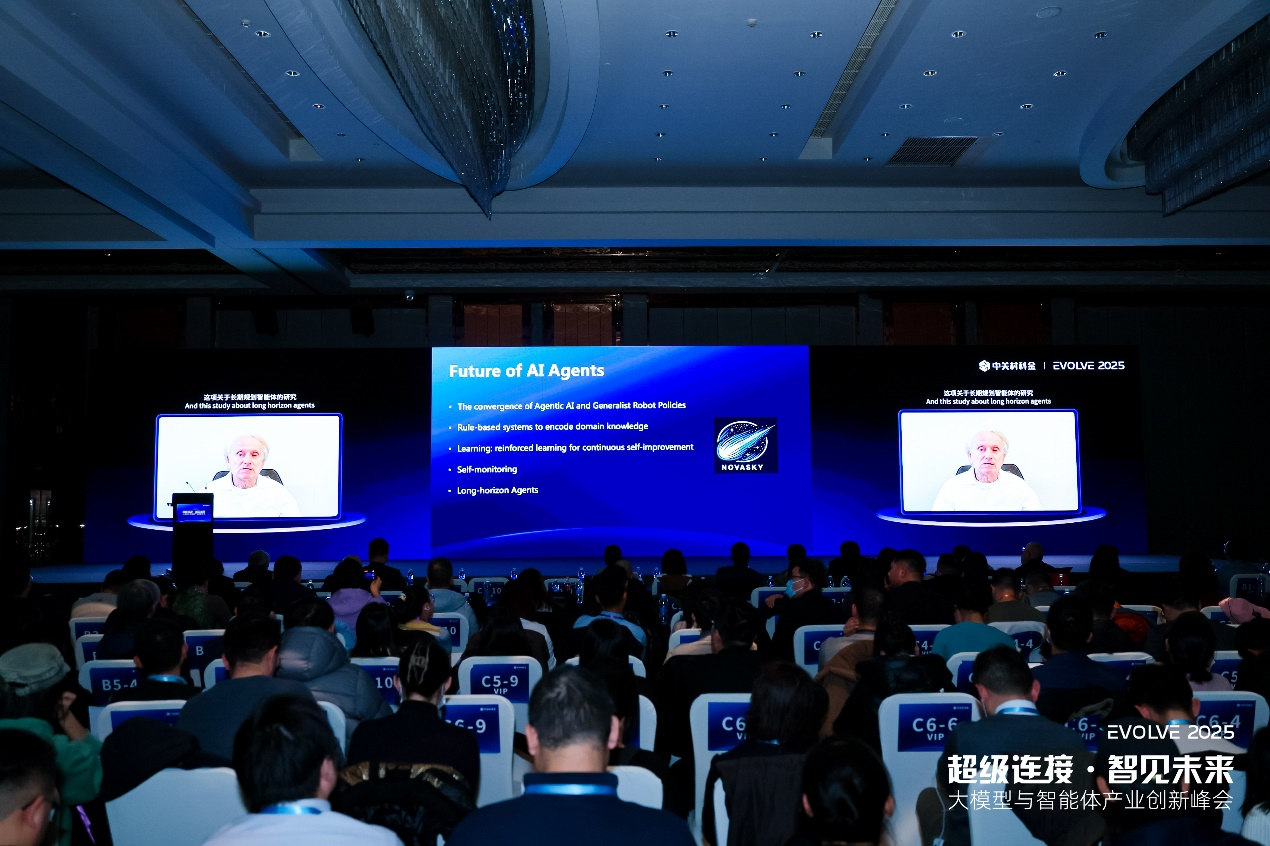
Core Insights - The "EVOLVE 2025" summit showcased the roadmap for enterprise-level AI agents and introduced a "3+2+2" product matrix to facilitate rapid development of AI agents for businesses [1] - The summit emphasized the collaboration among major cloud service providers to create a sustainable AI ecosystem through the "Super Connection" global partner program [1] Group 1: AI Development Trends - Piero Scaruffi highlighted a clear trend of technological integration in generative AI by 2025, with innovations like diffusion Transformers and multi-modal capabilities becoming standard [3] - The emergence of new technologies such as thinking chains and expert mixtures is reshaping the landscape of AI applications [3] Group 2: Evolution of AI Agents - The distinction between traditional AI products and advanced AI agents was made, with the latter being likened to autonomous driving, capable of executing complex workflows independently [4] - The operational mechanism of these AI agents is summarized as a cycle of perception, decision-making, action, and learning, allowing them to adapt to various environmental changes [4] Group 3: Multi-Agent Systems - The transition from applications to multi-agent systems introduces challenges in orchestration, necessitating a new technology stack that includes hardware, cloud services, and orchestration layers [5] - The concept of "context engineering" is emphasized, requiring AI agents to understand organizational structures and goals beyond executing single tasks [5] Group 4: Industry Applications - Various sectors are witnessing innovative applications of AI, particularly in customer support, where intelligent systems can understand context and emotions, enhancing user experience [6] - Companies like Johnson Controls have developed integrated AI systems that significantly improve efficiency in maintenance and troubleshooting [6] Group 5: Trust in AI - The "Waymo effect" illustrates the growing trust in AI as autonomous vehicles become more prevalent, laying a foundation for broader AI agent applications [7] - Scaruffi envisions a future where multiple AI agents collaborate dynamically, akin to human social interactions, to achieve common goals [7]
加速企业级智能体规模化落地 多家企业共建“超级连接”产业生态
Zheng Quan Shi Bao Wang· 2025-12-09 12:46
Core Insights - The "EVOLVE2025" summit highlighted the launch of a comprehensive enterprise-level intelligent agent roadmap by Zhongguancun KJ, featuring a "3+2+2" product matrix that includes three foundational platforms and two application platforms, aimed at accelerating the large-scale implementation of intelligent agents in various industries [1][2] Group 1: Intelligent Agent Development - The development of large models is rooted in the accumulation of smaller models and data modeling, emphasizing the need for data to be transformed into knowledge through the discovery of hidden patterns [1][2] - Intelligent agents integrate core capabilities such as perception, understanding, decision-making, and control, serving as key vehicles for technology implementation [1][2] - The evolution of intelligent agents is supported by foundational algorithms like deep learning and reinforcement learning, with a focus on enhancing efficiency through collaborative deployment across cloud, edge, and endpoint [1][2] Group 2: Industry Trends and Challenges - The need for precision and lightweight models in large model deployment is critical, with techniques like model distillation helping to reduce computational requirements [2] - There are technical risks such as "hallucinations" in natural language understanding, particularly in accurately grasping Chinese semantics, which remain a long-term challenge [2] - The future direction involves transitioning large models and intelligent agents from general-purpose to specialized applications tailored to specific industries and product scenarios [2] Group 3: AI Agent as a Central Hub - AI intelligent agents are seen as the central brain for enterprises, addressing issues like data silos and process fragmentation by connecting key elements such as people, resources, and systems [3] - Each connection made by intelligent agents generates new interaction data, which in turn iterates the model itself, leading to increased intelligence and value creation for enterprises [3] - The evolution from the internet to mobile internet and now to artificial intelligence represents an evolution of connectivity, with intelligent agents acting as super connectors within and outside organizations [2][3]
中国银河证券:AI算力与应用实现正向循环 AI Agent商业模式向“交付价值”转变
智通财经网· 2025-07-10 06:00
Group 1 - The demand for overseas AI reasoning computing power is expected to grow significantly, with projected increases in total computing power demand for AI Agent applications reaching 8 times, 3.5 times, and 2.5 times from 2026 to 2028 respectively [1] - NVIDIA's upcoming AI chips, Vera Rubin NVL144 and Rubin Ultra NVL576, are expected to outperform previous models significantly, with performance increases of 3.3 times and 14 times respectively compared to the GB300 NVL72 [1] - The supply-demand gap for overseas reasoning computing power is anticipated to widen due to the rapid growth in demand outpacing the evolution of AI chip performance [1] Group 2 - The overall monthly active user growth for domestic AI applications is lagging behind that of overseas applications, with the top 20 overseas AI products showing a monthly growth rate of approximately 4% as of May this year [2] - Doubao has demonstrated a relatively strong performance, with its daily token usage exceeding 16.4 trillion, while Huolanganjing holds a 46.4% market share in the domestic public cloud for large model calls [2] - The positive cycle between overseas AI computing power and applications is expected to drive significant capital expenditure guidance from major North American cloud providers by 2025 [2] Group 3 - The business model of AI Agents is shifting from "providing tools" to "delivering value," indicating a potential revaluation opportunity for SAAS companies [3] - The enterprise-level AI Agents are at a critical point of scalable application, with priority sectors for implementation identified as enterprise services (OA/ERP/CRM), finance/risk control, marketing/e-commerce, manufacturing/supply chain, legal/government, and healthcare/education [3] - The growth of productivity AI agents is being driven by efficiency improvements, with a notable increase in AI tools for programming, education, and creative sectors [3]
