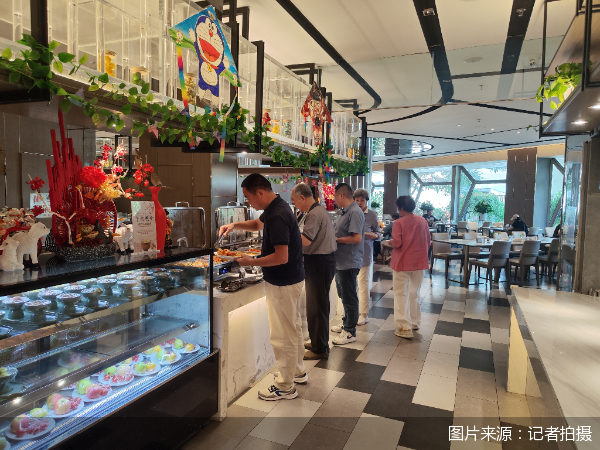
传统手擀面自助晚餐

Search documents
星级酒店扎堆做起社区生意
Bei Jing Shang Bao· 2025-09-29 15:41
Core Insights - Star-rated hotels in Beijing are targeting community consumption by offering affordable dining options and selling homemade food products, aiming to increase restaurant utilization and diversify revenue streams [1][3][5] Group 1: Community Engagement - Hotels like Beijing Jianguo Hotel and Beijing Royal Grand Hotel are launching budget-friendly self-service meals and food products aimed at local residents and business professionals [3][4] - The Beijing Jianguo Hotel's hand-pulled noodle dinner, priced at 28.8 yuan per person, has sold over 3,000 orders in six months, indicating strong community demand [3][4] - The Beijing West Garden Hotel is also engaging with local communities by selling homemade food items at discounted prices, which are well-received by residents [4][5] Group 2: Revenue Generation - With stable room revenue, hotels are looking to boost income through their dining segments, with community sales generating between 6,000 to 10,000 yuan per outing [5][6] - The introduction of multi-tiered pricing for dining products is seen as a strategy to expand customer base and increase restaurant revenue [5][6] Group 3: Cost Management Challenges - Despite the popularity of community sales, hotels face challenges in cost control, as providing diverse meal options at low prices can strain their operational budgets [6][7] - Hotels are exploring ways to balance cost and customer flow, including seasonal ingredient purchases to manage expenses while maintaining quality [6][7] - Some hotels have already adjusted their promotional pricing in response to rising operational costs, indicating the difficulty of sustaining ultra-low pricing strategies [7]

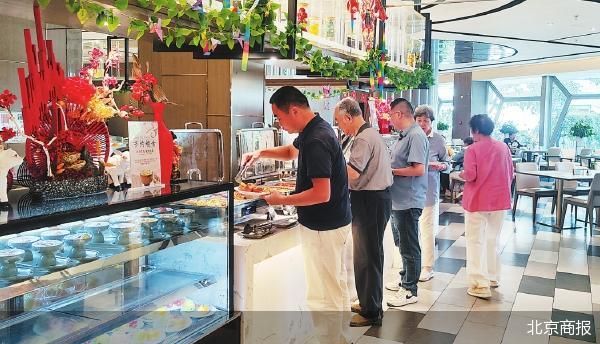
28.8元面条自助半年销量3000单,星级酒店扎堆做起社区生意
Bei Jing Shang Bao· 2025-09-29 09:36
Core Insights - Many star-rated hotels in Beijing are shifting their focus to community business by offering affordable dining options and selling homemade food products to local residents [1][3][6] Group 1: Community Engagement - Hotels like Beijing Jianguo Hotel and Beijing Royal Grand Hotel have introduced budget-friendly self-service meals and food products aimed at nearby communities, with offerings such as a 28.8 yuan handmade noodle dinner that sold over 3,000 orders in six months [1][3] - The community demand for affordable dining options is strong, as evidenced by the sales figures of various meal packages, including a 58 yuan business lunch that sold over 6,000 orders [3][6] Group 2: Revenue Generation - The initiative to sell food products in communities is driven by the need to increase restaurant utilization and diversify revenue streams, especially as hotel room revenues stabilize [6][10] - Hotels can earn between 6,000 to 10,000 yuan per outing when selling food in communities, which contributes positively to their overall dining revenue [6] Group 3: Challenges and Cost Management - Despite the popularity of community offerings, hotels face challenges in cost control, as providing diverse meal options at low prices can strain their operational budgets [8][9] - Some hotels have adjusted their pricing strategies in response to rising operational costs, indicating that ultra-low pricing may not be sustainable in the long term [9] Group 4: Strategic Positioning - Hotels are encouraged to leverage existing staff efficiency to manage costs while expanding their community-focused dining options, which can also attract hotel guests [10]