旅游酒店

Search documents
岭南控股(000524) - 2026年3月31日投资者关系活动记录表
2026-03-31 12:14
Group 1: Financial Performance - The company achieved a total revenue of CNY 4,503.95 million in 2025, representing a year-on-year growth of 4.52% [2] - The net profit attributable to shareholders, excluding non-recurring gains and losses, was CNY 61.48 million, an increase of 1.66% compared to the previous year [2] - The net assets attributable to shareholders at the end of the period were CNY 2,287.10 million, reflecting a growth of 0.87% year-on-year [2] - The net cash flow from operating activities was CNY 240.20 million, with a debt-to-asset ratio of 40.28% and a weighted average return on net assets of 3.08% [2] Group 2: Business Development - The travel and tourism segment showed steady growth, with the hotel management business expanding its scale and revenue increasing by 13.13% compared to 2019 [3][4] - The company plans to expand its hotel management projects by approximately 150, focusing on the Guangdong province and the Greater Bay Area [4][6] - The company is enhancing its product offerings in the travel segment by focusing on high-value products such as customized tours and wellness travel [5] Group 3: Strategic Initiatives - The company is committed to integrating its various business segments, including travel, accommodation, and dining, to create a comprehensive tourism ecosystem [3][5] - Future plans include the development of new retail models in the tourism sector, transforming hotels and travel agencies into retail spaces [5] - The company aims to innovate in high-end tourism products and enhance brand positioning to meet the evolving consumer demands [5] Group 4: Shareholder Returns - The proposed profit distribution plan for 2025 includes a cash dividend of CNY 0.51 per 10 shares, totaling approximately CNY 34.18 million [8]

国泰海通 · 晨报260325|策略、交运、批零社服
国泰海通证券研究· 2026-03-24 14:00
Historical Review - The oil crisis typically begins with geopolitical conflicts and escalates due to anticipated disruptions in oil supply, driven by factors such as production cuts, embargoes, and sanctions, resulting in short-term price spikes and a long-term upward shift in price levels [2] - The macroeconomic impact often leads to inflation followed by stagnation or stagflation; the 1970s oil crisis and the Russia-Ukraine conflict both caused inflationary pressures in the U.S., but the economy in the 1970s fell into recession and stagflation, while in 2022, only a technical recession occurred, remaining at a level of real inflation [2] - Market narratives have evolved, reflecting a learning effect; the crises of the 1970s shifted from valuation model failures and wage-inflation spirals to a focus on real assets and supply-side reforms, while 2022 centered around Federal Reserve tightening policies and energy transitions [2] - Asset performance during crises shows that commodities like oil benefit directly, while gold reflects pre-war risk aversion and post-war trends depend on the dollar and U.S. Treasury yields; equities face valuation pressures, particularly in growth sectors, while bonds initially decline due to risk aversion but may rise with inflation expectations [2] Comparison of Past and Present - Similarities include the current position of the U.S. inflation cycle and concerns about debt vulnerabilities extending to developed economies like Japan [3] - Differences lie in the foundation of global economic growth, with current inflation levels at historical lows, central bank policies focusing more on price stability, and reduced reliance on oil due to improved energy efficiency [3] - These similarities and differences reshape current asset pricing logic, with global central banks having more mature tools to control inflation, though the risk of stagflation remains a concern [3] Lessons from History - The uncertainty surrounding the prospects of U.S.-Iran-Israel conflicts has led to a significant rise in oil prices, with a strong consensus on inflation but divided opinions on stagnation; asset price volatility has increased due to the unpredictable nature of conflicts and policy paths [4] - Since the conflict began in late February, asset performance has aligned closely with historical patterns, favoring oil, energy stocks, and defensive assets, indicating high market risk aversion and a shift in trading logic from "secondary inflation" to "stagflation" expectations [4] - Future investment strategies should focus on areas with stronger certainty, including strategic security in energy and supply chains, technology sectors aligned with future industry trends, and gold as a long-term beneficiary of weakened dollar credibility [4]


F1赛事拉动周边酒店预订量大增125%
第一财经· 2026-03-12 06:39
Group 1 - The core viewpoint of the article highlights a significant increase in hotel bookings around the F1 event, with an average surge of 125% within a 3-kilometer radius of the venue [2] - Official data indicates that the expected attendance during the three-day event will reach 230,000, potentially setting a new record for spectator numbers [2]

午评:创业板指半日跌1.46%,稀有金属、算力租赁板块集体爆发
Xin Lang Cai Jing· 2026-02-27 03:33
Market Overview - The three major A-share indices collectively declined in the morning session, with the Shanghai Composite Index down 0.17%, the Shenzhen Component Index down 0.68%, and the ChiNext Index down 1.46% [1] - The total trading volume in the Shanghai, Shenzhen, and Beijing markets reached 15,966 billion yuan, a decrease of 532 billion yuan compared to the previous day [1] - Over 2,300 stocks in the market experienced gains [1] Sector Performance - Sectors with notable gains included small metals, computing power leasing, cloud computing, coal mining and processing, cross-border payments, steel, photovoltaic equipment, AI applications, and tourism and hotel industries [1] - Conversely, sectors that saw significant declines included paper making, PCB, CPO, storage chips, batteries, photolithography machines, and PET copper foil [1] Notable Stock Movements - Rare metals such as tungsten and rare earths surged due to price increases, with companies like Zhongtung High-tech, Zhangyuan Tungsten, and Zhong Rare Metals reaching historical highs [1] - The demand for cloud computing is reflected in the first-time surpassing of AI Token usage in China over the US, leading to a significant rise in the computing power leasing sector, with stocks like Yuntian Lifei and Chengdi Xiangjiang hitting the daily limit [1] - The space photovoltaic sector also performed well, with Jun Da Co. and Shuangliang Energy both reaching the daily limit [1] External Influences - Nvidia experienced its largest single-day drop since April 16 of last year, impacting the CPO and PCB sectors, with many computing hardware stocks like Xinyisheng, Zhongji Xuchuang, and Shenghong Technology declining over 5% [1]

午后“秒”涨停!封单逾11万手
Zhong Guo Zheng Quan Bao· 2026-02-24 08:46
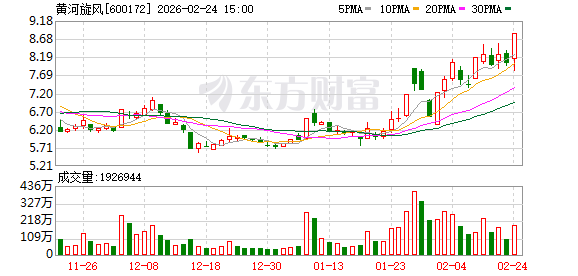
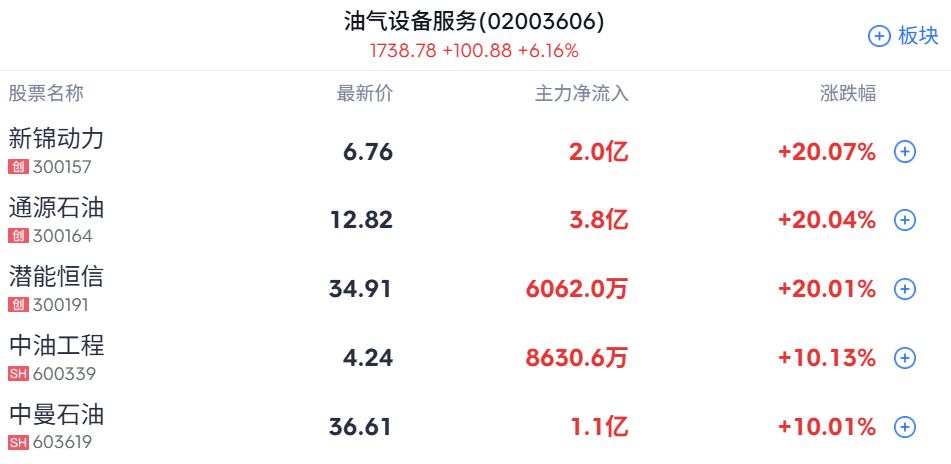
Market Overview - On February 24, the A-share market saw all three major indices close higher, with the Shanghai Composite Index rising by 0.87%, the Shenzhen Component Index by 1.36%, and the ChiNext Index by 0.99%. The total market turnover reached 22,182 billion yuan, an increase of 2,192 billion yuan compared to the previous trading day [2]. Sector Performance - The energy and chemical sectors were notably active due to escalating geopolitical risks driving oil prices up, with the oil and gas extraction and service sector surging over 10%. More than ten stocks in this sector hit the daily limit [4]. - The cultivated diamond sector also saw significant gains, with Sifangda hitting the daily limit. Huanghe Xuanfeng's stock price rose to 8.82 yuan per share, with a market capitalization of 12.72 billion yuan [4]. - The electric grid equipment sector was active, with stocks like Hancable and Mingyang Electric hitting the daily limit [4][6]. AI and Energy Transition - A recent report from a market research firm indicates that the domestic electric grid sector is entering a high prosperity cycle, driven by the demand from AI computing and the global energy transition. The explosion in AI computing is expected to increase power supply demand, with solid-state transformers becoming a core focus for grid upgrades [8]. Consumer Sector Adjustments - The film and cinema sector experienced a significant decline, with the sector dropping over 7%. Major companies like Light Media and Bona Film saw their stocks hit the daily limit [10][11]. - The tourism and hotel sector also faced a downturn, with leading stocks like China Duty Free Group experiencing significant declines, while others like Jinjiang Hotels showed mixed performance [14]. - The liquor sector saw a pullback, with stocks like Gujing Gongjiu and Luzhou Laojiao leading the declines. However, the overall sales performance during the Spring Festival met market expectations, indicating potential future value in the sector [15].




A股收评 | A股马年开门红 三大主线表现强势 春季躁动进入第二阶段?
智通财经网· 2026-02-24 07:30
Market Overview - A-shares experienced a significant opening, driven by multiple favorable factors, with the Shanghai Composite Index rising by 0.87%, the Shenzhen Component Index by 1.36%, and the ChiNext Index by 0.99% [1] - The trading volume in the Shanghai and Shenzhen markets reached 2.2 trillion yuan, an increase of 219.4 billion yuan compared to the previous trading day [1] Domestic Factors - Domestic liquidity remains reasonably ample, with effective reverse repurchase operations before the holiday stabilizing the market's funding situation [2] - Post-holiday, there is an increased willingness for capital to flow back into the market, providing support for upward movement [2] Economic and Policy Environment - The macroeconomic environment is steadily recovering, and ongoing industrial policies are boosting market risk appetite, leading to optimistic expectations for capital market performance in the Year of the Horse [3] Sector Performance - **Cyclical Stocks**: The oil and gas, non-ferrous metals, and chemical sectors saw significant gains, with the oil and gas sector leading the way [4] - **Computing Power Industry Chain**: Sectors such as optical modules, optical fibers, and PCB showed active performance, with several stocks hitting the limit up [5] - **Power Infrastructure Industry Chain**: The electric grid equipment sector experienced upward movement, with multiple stocks reaching the limit up [6] Key Sectors - **Oil and Gas Stocks**: The oil and gas sector led the market, with stocks like Tongyuan Petroleum and Zhongyou Engineering seeing substantial gains [7] - **Precious Metals**: The precious metals sector rose, with stocks such as Hunan Silver and Sichuan Gold hitting the limit up [9] - **Phosphate Chemical Sector**: The phosphate chemical sector expanded its gains, with several stocks reaching the limit up [11] - **Storage Chip Concept**: The storage chip sector saw fluctuations but ultimately rose, with stocks like Taiji Industry and Shikong Technology hitting the limit up [13] - **Electric Grid Equipment**: The electric grid equipment sector continued to strengthen, with stocks like Baiyun Electric and Baobian Electric reaching the limit up [15] Institutional Insights - **Xingye Securities**: A-shares are expected to enter a high-probability window post-holiday, with a positive outlook for a new upward trend [17] - **Dongwu Securities**: Historical "Spring Festival effect" suggests that post-holiday funds may revive, leading to a positive market opening [19] - **Huaxi Securities**: The "red envelope market" is anticipated post-holiday, driven by various factors including external uncertainties and strong performance in technology sectors [20] - **Guotou Securities**: The likelihood of a resurgence in technology sectors post-holiday has increased, supported by favorable external conditions and domestic catalysts [21]


预计一季度内地经济平稳增长:环球市场动态2026年2月24日
citic securities· 2026-02-24 05:19
Market Overview - Hong Kong stocks opened higher, with the Hang Seng Index rising by 2.53% to 27,081.91 points, driven by a rebound in the technology sector[13] - European markets showed mixed results, with the Euro Stoxx 600 index down 0.5%, while the UK FTSE 100 index remained relatively stable, closing at 10,684.74 points[11] - US markets faced significant declines, with the Dow Jones dropping 1.7% to 48,804.1 points, marking its largest single-day drop since January 20[11] Economic Indicators - China's GDP is projected to grow by 4.7% year-on-year in Q1 2026, benefiting from a high base effect and increased consumer spending during the extended Spring Festival holiday[6] - The average daily cross-regional flow of people during the Spring Festival increased by nearly 9% compared to the previous year, boosting hotel and flight prices[6] Commodity and Currency Trends - Gold prices surged by 2.87%, closing at $5,204.7 per ounce, driven by increased demand for safe-haven assets amid geopolitical tensions and tariff uncertainties[32] - The US dollar index fell by 0.1%, with the euro and yen appreciating against the dollar[32] Fixed Income Market - US Treasury yields declined, with the 2-year yield down 4 basis points to 3.44%, reflecting heightened risk aversion in the market[35] - Asian credit markets remained stable, with spreads narrowing by 1 basis point, as investors cautiously monitored US tariff developments[35] Sector Performance - In the US, technology and software stocks were heavily sold off, with IBM experiencing a drop of over 13%, while major tech stocks like Microsoft and Meta fell by approximately 3%[11] - In Hong Kong, the materials sector led gains with a 4.3% increase, while the energy sector saw minimal growth of 0.2%[14]
中金:一文看懂春节数据
中金点睛· 2026-02-24 00:00
Macro: Long Holidays Boost Consumer Sentiment - The 2026 Spring Festival saw an increase in consumer sentiment, attributed to the long holiday and supportive consumption policies from nine government departments, which included financial subsidies [4][7] - During the first four days of the holiday, the average daily sales of key retail and catering enterprises increased by 8.6% compared to the same period in 2025, marking a high growth rate for major holidays since 2024 [4][17] - The first three days of the holiday saw a 10.6% increase in average daily sales compared to the same period in 2025, indicating a strong pre-holiday consumption boost [4][5] Tourism and Hospitality: Longest Spring Festival Releases Consumption Potential - The Spring Festival travel period recorded 5.08 billion person-times of inter-regional movement, a year-on-year increase of 5.5%, with significant growth in railway and civil aviation [5][32] - The average travel days for users on Tuniu reached 5.9 days, an increase of 1.1 days from the previous year, indicating a trend towards longer trips [5][6] - The relaxation of visa policies has led to a rapid increase in inbound tourism, with a predicted daily average of over 2.05 million inbound and outbound travelers during the holiday, a 14.1% increase year-on-year [6][7] Retail and Consumer Goods: Strong Performance in Various Sectors - The retail and catering sectors experienced robust growth, with key platforms reporting a 19.7% increase in sales of smart wearable devices during the first three days of the holiday [29][35] - The demand for traditional cultural IP and duty-free sales performed well, with duty-free sales in Hainan reaching 9.7 billion yuan during the first four days, a 15.8% increase year-on-year [32][33] - The "old for new" policy continued to stimulate consumer demand, with 28.43 million people benefiting from it, leading to sales of 196.39 billion yuan, including 1.0023 billion yuan from new car sales [33][36] Media and Entertainment: Mixed Performance - The total box office for the 2026 Spring Festival reached 5 billion yuan, with a significant decline of 37.6% compared to the previous year, marking the lowest level since 2018 [7][17] - The decline in box office revenue is attributed to a high base from the previous year, where the film "Nezha" contributed significantly to the box office [7][17] Internet and Technology: Growth in Online Services - The online travel agency (OTA) data showed a significant increase in travel bookings, with domestic flight ticket reservations exceeding 11.78 million, an 11% increase year-on-year [32][36] - The demand for online services surged, with Douyin reporting a 216% increase in group meal orders during the Spring Festival, indicating a shift towards digital consumption [35][36] Investment Strategy: Focus on Growth Sectors - The report suggests focusing on sectors with growth potential, such as AI technology, consumer electronics, and traditional cultural experiences, as they are expected to benefit from ongoing consumption policies [22][23] - The investment outlook remains stable, with a particular emphasis on AI and robotics sectors, which are anticipated to be highlights in the post-holiday market [22][23]





A股开盘:三大指数集体低开,沪指跌0.44%
Jin Rong Jie· 2026-02-13 02:12
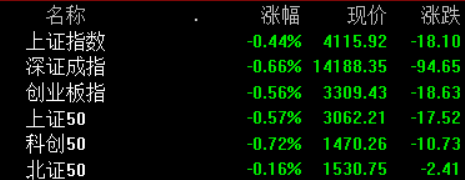
Market Overview - The Shanghai Composite Index opened down 0.44% at 4115.92 points, the Shenzhen Component Index fell 0.66% to 14188.35 points, the ChiNext Index decreased by 0.56% to 3309.43 points, and the STAR 50 Index dropped 0.72% to 1470.26 points [1] - The total trading volume in the Shanghai and Shenzhen markets was 19.977 billion yuan, with nearly 3000 stocks declining across the market [1] Sector Performance - The sectors that experienced the largest declines included energy metals, precious metals (core stocks), oil and gas, small metals, industrial metals, film (core stocks) and cinema, and communication equipment [2] - Conversely, sectors that saw gains included airport and shipping (core stocks), beverages, tourism and hotels (core stocks), liquor (core stocks), retail, and diversified finance [3] Notable Stocks - Key stocks such as Yabo Co., Ltd. opened up 2.29%, while AI application company Zhangyue Technology opened up 5.94%. However, Decai Co., Ltd. opened down 2.76% [3] - In the computing power (core stocks) leasing sector, Dwei Technology reached a bidding limit up, while YN Holdings also hit a bidding limit up [3] - Fiber optic concept stock Teifa Information opened down 2.56%, while Jinshi Technology opened up 5.31%. In the non-ferrous metals (core stocks) sector, Xianglu Tungsten Industry opened down 2.39%, and Zhangyuan Tungsten Industry opened up 3.52% [3] - Electronic cloth concept stock Honghe Technology opened up 0.08%, and Zhongcai Technology opened flat [3]
A股开盘:三大指数集体低开,沪指跌0.44%,能源金属、贵金属、油气等跌幅居前
Jin Rong Jie· 2026-02-13 01:39
Market Overview - The Shanghai Composite Index opened down 0.44% at 4115.92 points, the Shenzhen Component Index fell 0.66% to 14188.35 points, the ChiNext Index decreased by 0.56% to 3309.43 points, and the STAR 50 Index dropped 0.72% to 1470.26 points. The total trading volume in the Shanghai and Shenzhen markets was 19.977 billion yuan, with nearly 3000 stocks declining across the market [1][2]. Sector Performance - The sectors with the largest declines included energy metals (-2.11%), precious metals (-1.85%), oil and gas extraction (-1.57%), small metals (-1.54%), industrial metals (-1.33%), film and cinema (-1.11%), and communication equipment (-0.76%) [3][4]. - Conversely, sectors that saw gains included airport and shipping (+0.50%), beverage manufacturing (+0.46%), tourism and hotels (+0.39%), liquor (+0.37%), retail (+0.32%), and diversified finance (+0.31%) [4]. Notable Stocks - Key stocks included Yabo Co., which opened up 2.29%, and AI application company Zhangyue Technology, which opened up 5.94%. Other notable movements included De Cai Co., which opened down 2.76%, and major technology rental company Dwei Technology, which hit the daily limit up [4][5]. Overnight Market Trends - The U.S. stock market saw all three major indices decline, with the Dow Jones down 1.34% to 49451.98 points, the S&P 500 down 1.57% to 6832.76 points, and the Nasdaq down 2.03% to 22597.15 points. Major tech stocks also fell, with Apple down approximately 5% and Facebook down nearly 3% [6]. Economic and Policy Updates - The People's Bank of China announced a reverse repurchase operation of 1 trillion yuan to maintain liquidity in the banking system, with a term of 182 days [7]. - The launch of the "2026 Film Economy Promotion Year" was announced by the National Film Administration, aiming to boost the film industry [8]. Analyst Insights - Huatai Securities highlighted that the demand for CPUs will surge due to the rapid development of Agentic AI, which is expected to drive a significant increase in cloud computing needs [9][10]. - Zhongtai Securities noted that the electronic fabric market is experiencing unexpected price increases due to supply tightness, suggesting a focus on leading companies with production capacity and cost advantages [11]. - CITIC Construction pointed out that the oil transportation industry is facing supply constraints, which is driving up the value of shipping stocks [12].