
伽利略AI风机

Search documents
“县”象万千丨“中国制造业第一县”江阴的焕新之道
Xin Lang Cai Jing· 2026-02-26 13:33
Core Viewpoint - The article emphasizes the transformation and modernization of Jiangyin, a county-level city in China, through industrial park upgrades, aiming to build a competitive modern industrial system and achieve high-quality development during the 14th Five-Year Plan period [3][24]. Group 1: Economic Growth and Development Goals - Jiangyin's GDP is projected to exceed 512.6 billion yuan in 2024, making it the second county-level city in China to surpass the 500 billion yuan mark, with a further increase to 527.218 billion yuan in 2025 [3][24]. - The city aims to enhance its industrial capabilities and competitiveness as part of the national strategy for modern industrial system development [3][24]. Group 2: Industrial Park Upgrades - The upgrade of industrial parks is identified as a key strategy to address land resource limitations and to foster new industrial growth [5][7]. - Jiangyin has initiated a comprehensive restructuring of nearly 200 scattered industrial parks into a new layout of "20+10+X" modern parks, supported by a detailed planning system [9][10]. Group 3: Environmental and Economic Impact - The industrial park upgrades have resulted in the reclamation of 40,200 acres of land, with 16,800 acres designated for industrial use, leading to the establishment of over 100 industrial projects with a total investment exceeding 90 billion yuan [20][24]. - The average sales per acre for industrial enterprises have increased by nearly 1.3 million yuan, and the output value of large-scale industrial enterprises has surpassed 750 billion yuan [20][24]. Group 4: Innovation and Talent Attraction - The upgrades have facilitated the creation of innovation-driven spaces, such as the "Xia Ke Bay Science City" and "Yangtze River Delta Digital Innovation Port," enhancing the ecosystem for attracting and retaining high-end talent [22]. - Jiangyin's focus on creating a complete nurturing chain from co-working spaces to incubators and industrial parks is aimed at fostering a vibrant innovation environment [22]. Group 5: Future Outlook - Jiangyin is positioned to continue its high-quality development trajectory, with plans to strengthen land reserves, promote major project implementation, and enhance industrial transformation [24][26]. - The city is committed to building distinctive industrial clusters that are competitive and recognizable, reflecting its ambition to maintain its status as a leading manufacturing hub in China [24][26].

AI风机,到底强在哪?
Zhong Guo Neng Yuan Wang· 2026-02-02 09:25
Core Insights - The development of wind energy in China has been characterized by the pursuit of certainty amidst uncertainty, particularly in the evolution of wind turbine technology [1] Group 1: Wind Turbine Evolution - The first generation of wind turbines focused on automation and power target tracking, but faced limitations due to the computational power of industrial PLCs, leading to issues in complex operational conditions [1] - The second generation introduced a shift from rule-based control to model-based control, significantly increasing the complexity of control models and algorithms, but still struggled with reliability in complex environments [2] - The 2.5 generation, represented by Envision Energy's "smart turbine," utilized load sensing and real data to enhance design boundaries and address key operational challenges, such as blade overload issues [2] Group 2: AI Integration in Wind Turbines - The third generation, exemplified by the Galileo AI turbine, incorporates AI for generalized learning and adaptive optimization, moving away from manually coded scenarios to an autonomous exploration of optimal operational strategies [3][4] - The AI turbine's learning process is likened to a child's development of muscle memory, showing rapid improvement over time and the potential for limitless advancement [4] - The integration of AI technology in large-scale turbines addresses uncertainties in component and system performance, as well as market fluctuations, necessitating a holistic upgrade in perception, planning, and control [4][5] Group 3: Performance and Market Impact - The Galileo AI turbine has demonstrated a 20.9% increase in revenue since its deployment in 2024 compared to the previous generation, highlighting the effectiveness of AI in enhancing operational efficiency [5] - Envision Energy's recent deployment of the first AI turbine for the Nullagine wind project in Australia showcases the adaptability of AI turbines to extreme environmental conditions and complex wind scenarios [6]
远景能源签约东南亚最大单机容量海上风电项目
Zhong Guo Neng Yuan Wang· 2026-01-30 03:15
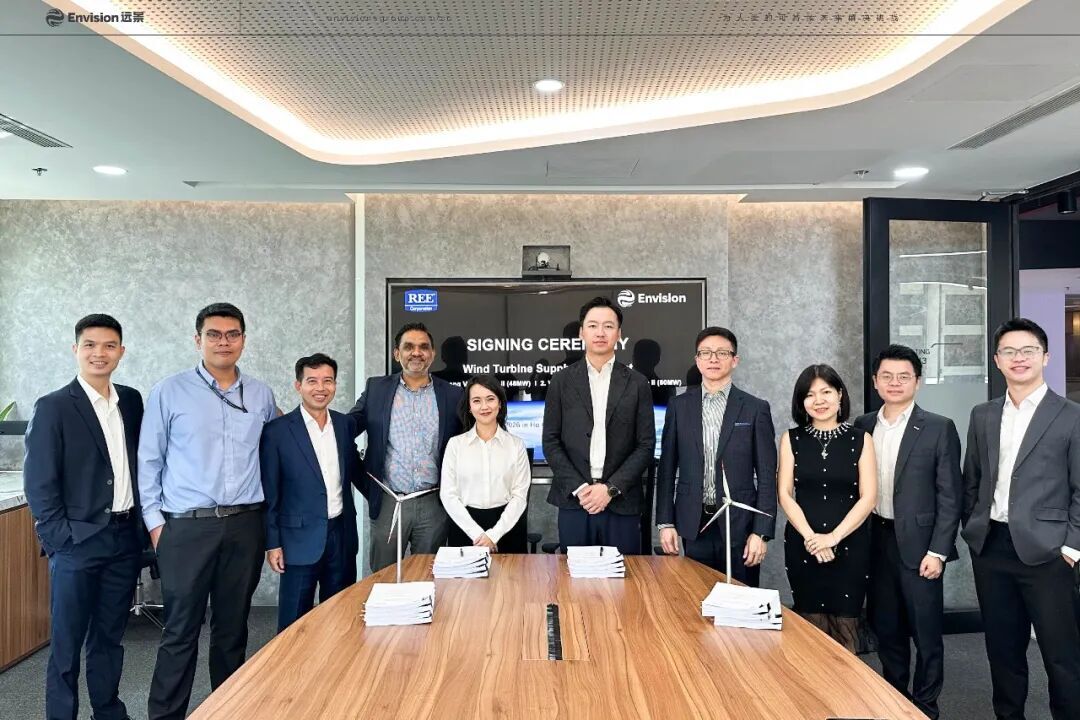
Core Viewpoint - The signing of a 128MW offshore wind power project supply contract between Envision Energy and REE Group in Ho Chi Minh City, Vietnam, marks a significant step towards achieving Vietnam's "net zero emissions" goal and showcases the advancement of Chinese offshore wind technology in the international market [1][5]. Group 1: Project Details - The 128MW offshore wind power project is located in the southern province of Vinh Long and will utilize 16 units of the EN-226/8.XMW offshore intelligent wind turbine, making it the largest offshore wind project in Southeast Asia by single unit capacity [1][3]. - The project is divided into two construction sites, with an average wind speed exceeding 7 meters per second, and is among the first projects to receive investment licenses under Vietnam's new 8th Power Development Plan [3]. - Construction has officially commenced, with full capacity expected to be connected to the grid by the end of October 2026 [3]. Group 2: Technological and Strategic Significance - Envision Energy's EN-226/8.5 offshore intelligent wind turbine has secured over 2.8GW in orders since its launch in 2022, recognized for its high performance and reliability in low wind speed areas [3][6]. - The collaboration with local suppliers in Vietnam has successfully addressed challenges related to local tower manufacturing capacity, ensuring project quality and long-term operational value [3][6]. - The project is expected to serve as a benchmark for future offshore wind projects in Vietnam and Southeast Asia, contributing to regional energy transition and net zero goals [5][6]. Group 3: Company Background and Achievements - Envision Energy is positioned as an innovative green technology company, leading the industry with technological advancements aimed at creating a "zero-carbon era" [6]. - The company has previously delivered over 1.2GW of onshore wind turbine orders in Vietnam, maintaining the largest market share and establishing a robust local service team [6]. - The EN-226/8.5 wind turbine has demonstrated exceptional reliability and efficiency, receiving accolades such as the "2024 5A Wind Farm" and "2025 China Power Quality Engineering Award" [8].
长期主“亿”:远景全球风电装机突破1亿千瓦
中国能源报· 2026-01-20 07:30
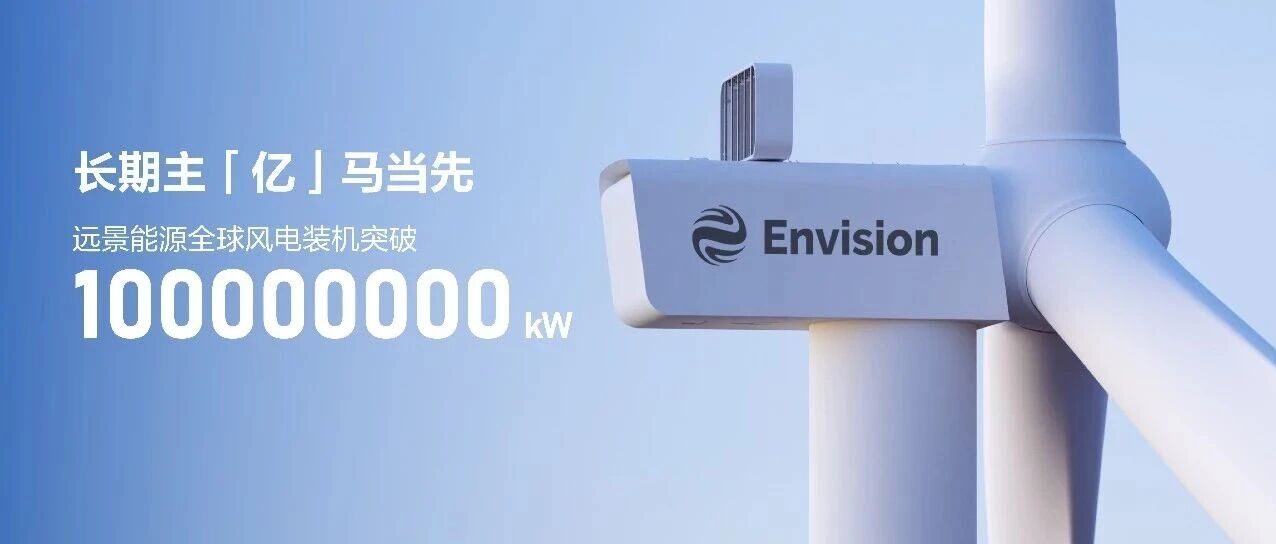
Core Viewpoint - Envision Energy is set to achieve a milestone of over 100 million kilowatts of installed wind power capacity globally by 2025, becoming the fastest wind turbine manufacturer to reach this mark, showcasing the potential of China's wind power industry and its commitment to long-termism and green technology innovation [1][3]. Group 1: Company Achievements - Envision Energy has maintained its position as the world's leading wind turbine order recipient for four consecutive years, with over 20 operational headquarters and R&D centers globally, and more than 60 manufacturing bases [5]. - The company has developed a comprehensive green energy ecosystem, integrating the entire value chain and industry chain of green energy, and has introduced groundbreaking products such as the Galileo AI wind turbine and the world's largest green hydrogen project [3][8]. - Envision's projects have become significant diplomatic symbols for China, including the first 100 MW wind project in Kazakhstan and the largest wind power project in Africa, demonstrating the company's global impact [5]. Group 2: Technological Innovations - Envision Energy has pioneered the concept of "intelligent wind turbines" and has made substantial advancements in physical artificial intelligence, which enhances renewable energy generation, storage, and grid management [3][8]. - The "Yuanjing Tianji" meteorological model and "Yuanjing Tianshu" energy model are central to Envision's AI systems, enabling real-time analysis and coordination of energy data to optimize renewable energy systems [8]. - The company plans to launch the world's largest AI power system by 2025, integrating all cutting-edge product technologies to drive global prosperity in the renewable energy sector [8].
风电的下一程,是技术更是生态
Zhong Guo Dian Li Bao· 2025-11-07 03:23
Core Insights - The wind power industry is transitioning from a "scale competition" to a "value competition," focusing on "power generation value" rather than just "power generation capacity" [1][4] - The marketization of renewable energy pricing is driving this shift, as traditional revenue models based on high output are becoming less viable [2][4] Industry Trends - The trend of large-scale wind turbine production is slowing down, with fewer manufacturers releasing larger turbine models in 2025 [2] - The introduction of policies like the "Document No. 136" has increased uncertainty in revenue for wind power projects, leading to a reevaluation of growth strategies [2][4] Technological Developments - Companies are emphasizing "high reliability" and "smart generation" as essential components for investment safety and operational efficiency [4][6] - The integration of artificial intelligence and system collaboration is seen as crucial for enhancing reliability and optimizing power generation [5][8] Market Dynamics - The industry is moving towards integrated development, combining wind power with other energy sources to create comprehensive energy solutions [9][11] - The focus is shifting from merely generating power to ensuring stable and predictable revenue streams for clients [6][11] Future Outlook - Companies that can leverage AI technology and provide integrated solutions are expected to lead the industry transformation [11] - The emphasis on building a sustainable industrial ecosystem is becoming increasingly important for the future of wind power in China [11]

不止度电成本 更供产业红利 中国风电用“价值包”赋能全球绿色发展
Zhong Guo Chan Ye Jing Ji Xin Xi Wang· 2025-11-04 22:05
Core Insights - China's wind turbine exports are expected to increase by 71.9% year-on-year in 2024, with a growth rate exceeding 20% in the first half of 2025, driven by technological advancements and industrial upgrades [1] - The industry is shifting from merely selling equipment to providing value through local partnerships, lifecycle services, and technology standardization, aiming to create a resilient and sustainable global wind energy ecosystem [1][2] - The emphasis on understanding and responding to the real demands of overseas markets is crucial for the success of Chinese wind energy companies in global competition [2] Industry Developments - Technological innovations have led to the development of more efficient and intelligent wind turbines, significantly reducing the cost per kilowatt-hour and enabling installations in diverse geographical conditions [1] - At the 2025 Beijing International Wind Energy Conference, several groundbreaking products were launched, showcasing China's leadership in wind energy technology and ecosystem development [1] Market Strategy - Chinese wind energy companies are encouraged to adopt a win-win philosophy by sharing management experiences and cultivating local talent to build localized supply chains, which can alleviate concerns in overseas markets [2] - The integration of logistics, installation, and service into the supply chain is becoming increasingly important, with approximately 50% of Goldwind's overseas revenue coming from non-turbine business [3] Localization Efforts - Localization is essential for successful overseas operations, including local service teams, supply chains, and ESG (Environmental, Social, and Governance) practices [4] - Goldwind is actively developing local supply chains in Brazil, focusing on enhancing local manufacturing capabilities while maintaining cost control [3] Long-term Vision - The long-term strategy of cultivating customer relationships and market presence is emphasized, with a caution against making unsustainable commitments to capture market share [4]

风电行业从规模扩张转向价值提升——2025北京国际风能大会暨展览会观察
Ke Ji Ri Bao· 2025-11-03 04:00
Core Insights - The article highlights the transition of China's wind power industry from a focus on "generation capacity" to "generation value" as the market evolves towards competition in the electricity market [1][6][9] Group 1: Industry Developments - China's wind power industry has achieved a significant milestone with the largest offshore wind turbine capacity of 26 MW and the world's first 16 MW floating offshore wind system [1] - The country aims to reach a wind power installation target of 50 billion kW by 2060, with a focus on enhancing the competitiveness of wind energy in the market [5][4] - The wind power sector has maintained its position as the world's largest for 15 consecutive years, with an annual addition of over 10 million kW [4] Group 2: Market Dynamics - The shift towards market-driven pricing for renewable energy means that wind power projects will no longer benefit from guaranteed purchase prices, necessitating a focus on market competition [1][6] - The concept of "cost of electricity value" is being adopted to enhance market competitiveness, moving away from the traditional focus on "cost of electricity" [6][7] Group 3: Technological Innovations - Companies like Goldwind Technology are implementing strategies to optimize power generation based on price fluctuations, enhancing the operational efficiency of wind turbines [7][8] - The integration of artificial intelligence in wind energy systems is being emphasized, with companies like Envision Energy and CRRC Group launching AI-driven solutions to improve energy management and operational efficiency [9][10] Group 4: Future Outlook - The future competitiveness of energy companies will increasingly depend on their capabilities in artificial intelligence and data management rather than just installed capacity [10] - The industry is expected to undergo a transformation towards a more intelligent and integrated energy ecosystem, driven by advancements in AI technology [9][10]


风电行业从规模扩张转向价值提升
Ke Ji Ri Bao· 2025-11-02 23:43
Core Insights - The wind power industry in China is transitioning from a focus on "generation capacity" to "generation value" as market dynamics change, particularly with the move towards market-driven pricing for electricity [1][4][3] Group 1: Industry Developments - China has maintained its position as the world's largest wind power market for 15 consecutive years, with an annual installation rate exceeding 10 million kilowatts [2] - The country aims to achieve a wind power installed capacity of 50 billion kilowatts by 2060, with significant contributions expected from wind energy [3][2] - The "Three North" region has over 75 billion kilowatts of economically viable wind energy resources, while offshore wind resources within 300 kilometers are entering large-scale commercial development [2] Group 2: Technological Innovations - The industry is adopting a "value per kilowatt-hour" strategy, moving away from merely increasing turbine size to optimizing the economic value of electricity generated [4][5] - Goldwind Technology has introduced the GWH204-Ultra series turbines, which enhance output during high-value trading periods through advanced materials and intelligent systems [5][6] - The integration of artificial intelligence in wind energy systems is becoming prevalent, with companies like Envision Energy and CRRC Group launching AI-driven solutions to improve operational efficiency and revenue [7][8] Group 3: Market Dynamics - The shift towards market-driven pricing has led to a reevaluation of traditional profit models, emphasizing the need for precise forecasting and adaptive generation strategies [4][6] - The new paradigm requires wind power companies to respond to price fluctuations and optimize generation accordingly, moving from a fixed-price subsidy model to a competitive market environment [4][6] - The focus on artificial intelligence is expected to enhance the industry's ability to manage the uncertainties of renewable energy generation and pricing [8]
风电行业转出新空间 锚定50亿千瓦装机目标
Zhong Guo Jing Ji Wang· 2025-10-24 00:17
Core Insights - The Chinese wind power industry is rapidly advancing towards high-quality development, with a focus on overcoming challenges in deep-sea wind power and adapting to harsh environments [1][2] - China aims to achieve a wind power installed capacity of 50 billion kilowatts by 2035, with significant contributions from both onshore and offshore wind resources [2][3] - The industry is experiencing a transformation from policy-driven to market-driven dynamics, emphasizing the importance of artificial intelligence in enhancing operational efficiency and competitiveness [4][5] Industry Development - China's wind power installed capacity has maintained the world's largest position for 15 consecutive years, with an annual increase of over 10 million kilowatts [1] - The country has set a new target for non-fossil energy consumption to exceed 30% of total energy consumption by 2035, with wind and solar power capacity aimed to reach six times that of June 2020 [1][2] - The "Three North" regions have over 75 billion kilowatts of economically viable onshore wind resources, while offshore wind resources within 300 kilometers are entering large-scale commercial development [2] Technological Innovation - The integration of AI technology in wind power equipment is becoming a key focus, with companies like Envision Energy launching AI-driven wind turbines and energy storage systems [4][5] - AI applications are enhancing operational efficiency, enabling real-time responses in electricity trading, and improving the stability of wind farms under complex grid conditions [5] - The shift towards AI-driven solutions is expected to redefine the competitive landscape of the energy sector, moving away from traditional metrics like installed capacity [5] International Expansion - Chinese wind turbine exports are on the rise, with a projected increase of 41.7% in new export capacity for 2024, reaching a cumulative export capacity of 2,078.78 million kilowatts [6] - The industry is transitioning from merely exporting equipment to providing comprehensive solutions that include technology, standards, and services [6][7] - Leading companies like Envision Energy are securing significant international orders, reinforcing China's position in the global wind power market [6][7]
风电行业转出新空间
Jing Ji Ri Bao· 2025-10-23 21:31
Core Insights - The Chinese wind power industry is rapidly advancing towards high-quality development, with a focus on overcoming challenges in deep-sea wind power and adapting to harsh environments [1][2] - The industry aims to achieve a target of 50 billion kilowatts of installed capacity, with significant growth in both domestic and international markets [2][3] Industry Development - Since the 14th Five-Year Plan, China's wind power capacity has consistently ranked first globally for 15 years, entering a phase of adding over 10 million kilowatts annually [1] - The country has exported wind turbine units to 57 countries, with seven manufacturers establishing or planning to establish overseas factories [1] Climate Goals - Wind power is crucial for achieving national climate action goals, with a commitment to increase non-fossil energy consumption to over 30% by 2035 and to expand wind and solar capacity significantly [2][3] Market Dynamics - The wind power sector is transitioning from policy-driven to market-driven dynamics, with a focus on fair competition and reducing price undercutting [4] - The introduction of AI technologies is enhancing operational efficiency and reliability in wind power generation [5][6] Export Growth - The export capacity of Chinese wind turbines is projected to grow significantly, with a 41.7% increase expected in 2024 [7] - The industry is shifting from merely exporting equipment to providing a comprehensive system that includes technology, standards, and services [7][8] Localization Strategy - To navigate uncertainties in international markets, Chinese wind power companies are encouraged to adopt localization strategies, fostering closer collaboration with local developers [8]