
伽利略AI风储一体机

Search documents
远景能源签约东南亚最大单机容量海上风电项目
Zhong Guo Neng Yuan Wang· 2026-01-30 03:15
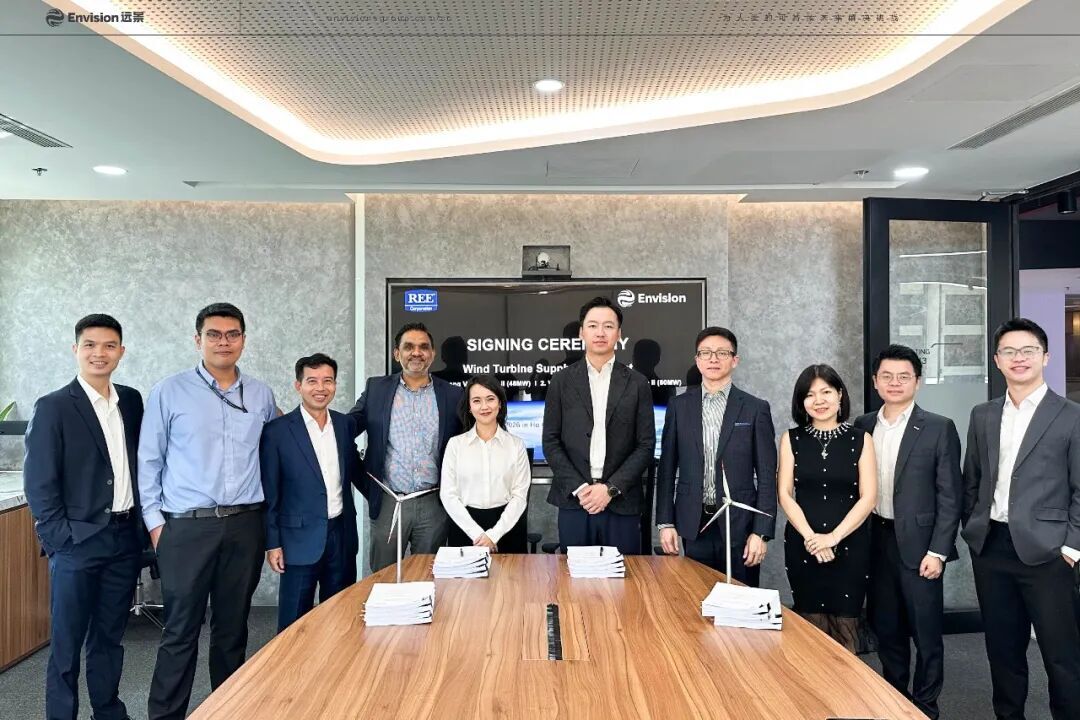
Core Viewpoint - The signing of a 128MW offshore wind power project supply contract between Envision Energy and REE Group in Ho Chi Minh City, Vietnam, marks a significant step towards achieving Vietnam's "net zero emissions" goal and showcases the advancement of Chinese offshore wind technology in the international market [1][5]. Group 1: Project Details - The 128MW offshore wind power project is located in the southern province of Vinh Long and will utilize 16 units of the EN-226/8.XMW offshore intelligent wind turbine, making it the largest offshore wind project in Southeast Asia by single unit capacity [1][3]. - The project is divided into two construction sites, with an average wind speed exceeding 7 meters per second, and is among the first projects to receive investment licenses under Vietnam's new 8th Power Development Plan [3]. - Construction has officially commenced, with full capacity expected to be connected to the grid by the end of October 2026 [3]. Group 2: Technological and Strategic Significance - Envision Energy's EN-226/8.5 offshore intelligent wind turbine has secured over 2.8GW in orders since its launch in 2022, recognized for its high performance and reliability in low wind speed areas [3][6]. - The collaboration with local suppliers in Vietnam has successfully addressed challenges related to local tower manufacturing capacity, ensuring project quality and long-term operational value [3][6]. - The project is expected to serve as a benchmark for future offshore wind projects in Vietnam and Southeast Asia, contributing to regional energy transition and net zero goals [5][6]. Group 3: Company Background and Achievements - Envision Energy is positioned as an innovative green technology company, leading the industry with technological advancements aimed at creating a "zero-carbon era" [6]. - The company has previously delivered over 1.2GW of onshore wind turbine orders in Vietnam, maintaining the largest market share and establishing a robust local service team [6]. - The EN-226/8.5 wind turbine has demonstrated exceptional reliability and efficiency, receiving accolades such as the "2024 5A Wind Farm" and "2025 China Power Quality Engineering Award" [8].

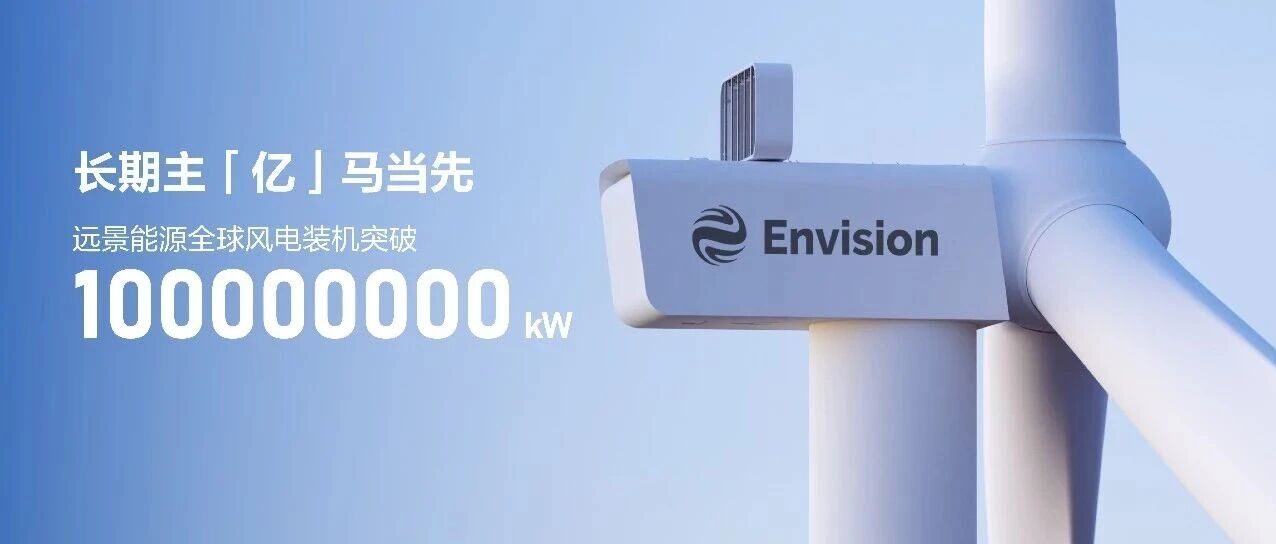
长期主“亿”:远景全球风电装机突破1亿千瓦
中国能源报· 2026-01-20 07:30
Core Viewpoint - Envision Energy is set to achieve a milestone of over 100 million kilowatts of installed wind power capacity globally by 2025, becoming the fastest wind turbine manufacturer to reach this mark, showcasing the potential of China's wind power industry and its commitment to long-termism and green technology innovation [1][3]. Group 1: Company Achievements - Envision Energy has maintained its position as the world's leading wind turbine order recipient for four consecutive years, with over 20 operational headquarters and R&D centers globally, and more than 60 manufacturing bases [5]. - The company has developed a comprehensive green energy ecosystem, integrating the entire value chain and industry chain of green energy, and has introduced groundbreaking products such as the Galileo AI wind turbine and the world's largest green hydrogen project [3][8]. - Envision's projects have become significant diplomatic symbols for China, including the first 100 MW wind project in Kazakhstan and the largest wind power project in Africa, demonstrating the company's global impact [5]. Group 2: Technological Innovations - Envision Energy has pioneered the concept of "intelligent wind turbines" and has made substantial advancements in physical artificial intelligence, which enhances renewable energy generation, storage, and grid management [3][8]. - The "Yuanjing Tianji" meteorological model and "Yuanjing Tianshu" energy model are central to Envision's AI systems, enabling real-time analysis and coordination of energy data to optimize renewable energy systems [8]. - The company plans to launch the world's largest AI power system by 2025, integrating all cutting-edge product technologies to drive global prosperity in the renewable energy sector [8].
风电:走出内卷
Ge Long Hui· 2025-12-08 07:46
Core Insights - The wind power industry in China has reached a turning point in 2025, moving out of a phase of intense price competition and entering a new stage of market-driven development [1][3][9] Industry Performance - In Q3 2025, the wind power sector achieved revenues of 66.2 billion yuan, a year-on-year increase of 27%, with a net profit of 1.45 billion yuan, up 4.6% [1] - For the first three quarters of 2025, the wind power sector's revenue reached 171 billion yuan, a 37.9% year-on-year growth, and net profit was 5.67 billion yuan, up 12.5% [1] - Leading company Goldwind Technology reported a revenue of 48.15 billion yuan in the first three quarters, a 34.34% increase, and a net profit of 2.58 billion yuan, a significant rise of 44.21% [1] Price Recovery - The average bidding price for onshore wind turbines (excluding towers) rose to 1,593 yuan/kW in 2025, a 12% increase from 2024 [3] - The price of offshore wind turbines stabilized between 2,700 and 2,800 yuan/kW [3] - The industry has seen a recovery in profitability due to the rational return of wind turbine prices, moving away from the previous low-price competition [2][3] Strategic Goals - The "Wind Energy Beijing Declaration 2.0" sets ambitious targets for wind power development, aiming for an annual installation of at least 120 million kW during the 14th Five-Year Plan period, a 140% increase from the previous version [4][5] - By 2030, the cumulative installation target is set to reach 1.3 billion kW, a 62.5% increase from the earlier goal [4] Product Development Shift - The industry is shifting focus from merely increasing capacity to enhancing value and reliability in product development [6][7] - Goldwind Technology introduced the "Value Cost of Electricity (LCOV)" concept, emphasizing the importance of project profitability over just reducing costs [7] - Companies are increasingly integrating AI technology to improve operational efficiency and project returns [7][8] Global Expansion - The "Two Seas Strategy" (overseas markets + deep-sea development) is becoming a core development direction for leading companies in the wind power sector [9][10] - By the end of 2024, Goldwind Technology had established a manufacturing base in Brazil, while other companies are expanding their global presence in markets like Uzbekistan, India, and Saudi Arabia [10][11] - Domestic companies are transitioning from traditional product exports to localized operations, with significant growth in overseas orders, which are crucial for enhancing profitability [11]
斩获印度300MW订单,远景能源出海战略再下一城
Sou Hu Cai Jing· 2025-12-04 02:48
Core Viewpoint - Envision Energy is rapidly expanding its global footprint, particularly in the Indian market, with significant orders and projects aimed at leveraging local wind conditions for clean energy generation [3][4]. Market Consolidation - Envision Energy has secured a 300 MW order from UPC Renewable Energy India, marking another significant achievement in the Indian market [3]. - The company has over 16 GW of order capacity in India and is developing projects exceeding 4.5 GW, with operational capacity surpassing 2.5 GW [4]. - The Indian wind power market is experiencing rapid growth, with a 113% year-on-year increase in new installations, reaching 1.6 GW in Q2 2025 [4]. Business Landscape - Envision Energy ranks 122nd in the 2025 list of China's top 500 private enterprises with a revenue of 86.942 billion yuan and is valued at 110 billion yuan, placing it 30th in the 2025 Global Unicorn List [5]. - The company has established a strong global presence, with over 9 GW of new overseas orders in the first three quarters of 2025, accounting for over 40% of China's new overseas orders [5]. - Envision Energy has set up operational headquarters and R&D centers in over 20 countries and has manufacturing bases in more than 60 countries, with international employees making up over 50% of its workforce [5]. Strategic Vision - Envision Energy is advancing its "AI + Energy" strategy, integrating artificial intelligence with energy systems, and has launched the world's first Galileo AI wind-storage integrated machine [6]. - The company is developing comprehensive energy solutions, including green electricity direct connection, source-grid-load-storage, and off-grid hydrogen and ammonia production [6]. - The Chifeng green hydrogen and ammonia project is set to produce 320,000 tons of green synthetic ammonia annually, with a total planned capacity of 1.52 million tons [6]. Global Benchmark - Envision Energy is not only expanding its market but also exporting technology and standards, with a $1 billion investment in a zero-carbon hydrogen industry park in Spain [8]. - The company has partnered with FRV in Saudi Arabia for a green ammonia project in Brazil, which includes a 500 MW electrolyzer and a comprehensive green ammonia plant [8]. - Envision Energy has built a full industry chain capability covering wind power, energy storage, hydrogen energy, and smart energy management, with over 88 GW of total installed capacity globally [9]. Environmental Commitment - Envision Energy has achieved operational carbon neutrality for three consecutive years and aims for 100% renewable electricity usage by 2024, one year ahead of its RE100 commitment [7]. - The company plans to achieve 100% green electricity usage in its core supply chain by 2028 [7].
风电的下一程,是技术更是生态
Zhong Guo Dian Li Bao· 2025-11-07 03:23
Core Insights - The wind power industry is transitioning from a "scale competition" to a "value competition," focusing on "power generation value" rather than just "power generation capacity" [1][4] - The marketization of renewable energy pricing is driving this shift, as traditional revenue models based on high output are becoming less viable [2][4] Industry Trends - The trend of large-scale wind turbine production is slowing down, with fewer manufacturers releasing larger turbine models in 2025 [2] - The introduction of policies like the "Document No. 136" has increased uncertainty in revenue for wind power projects, leading to a reevaluation of growth strategies [2][4] Technological Developments - Companies are emphasizing "high reliability" and "smart generation" as essential components for investment safety and operational efficiency [4][6] - The integration of artificial intelligence and system collaboration is seen as crucial for enhancing reliability and optimizing power generation [5][8] Market Dynamics - The industry is moving towards integrated development, combining wind power with other energy sources to create comprehensive energy solutions [9][11] - The focus is shifting from merely generating power to ensuring stable and predictable revenue streams for clients [6][11] Future Outlook - Companies that can leverage AI technology and provide integrated solutions are expected to lead the industry transformation [11] - The emphasis on building a sustainable industrial ecosystem is becoming increasingly important for the future of wind power in China [11]

风电行业从规模扩张转向价值提升——2025北京国际风能大会暨展览会观察
Ke Ji Ri Bao· 2025-11-03 04:00
Core Insights - The article highlights the transition of China's wind power industry from a focus on "generation capacity" to "generation value" as the market evolves towards competition in the electricity market [1][6][9] Group 1: Industry Developments - China's wind power industry has achieved a significant milestone with the largest offshore wind turbine capacity of 26 MW and the world's first 16 MW floating offshore wind system [1] - The country aims to reach a wind power installation target of 50 billion kW by 2060, with a focus on enhancing the competitiveness of wind energy in the market [5][4] - The wind power sector has maintained its position as the world's largest for 15 consecutive years, with an annual addition of over 10 million kW [4] Group 2: Market Dynamics - The shift towards market-driven pricing for renewable energy means that wind power projects will no longer benefit from guaranteed purchase prices, necessitating a focus on market competition [1][6] - The concept of "cost of electricity value" is being adopted to enhance market competitiveness, moving away from the traditional focus on "cost of electricity" [6][7] Group 3: Technological Innovations - Companies like Goldwind Technology are implementing strategies to optimize power generation based on price fluctuations, enhancing the operational efficiency of wind turbines [7][8] - The integration of artificial intelligence in wind energy systems is being emphasized, with companies like Envision Energy and CRRC Group launching AI-driven solutions to improve energy management and operational efficiency [9][10] Group 4: Future Outlook - The future competitiveness of energy companies will increasingly depend on their capabilities in artificial intelligence and data management rather than just installed capacity [10] - The industry is expected to undergo a transformation towards a more intelligent and integrated energy ecosystem, driven by advancements in AI technology [9][10]


风电行业从规模扩张转向价值提升
Ke Ji Ri Bao· 2025-11-02 23:43
Core Insights - The wind power industry in China is transitioning from a focus on "generation capacity" to "generation value" as market dynamics change, particularly with the move towards market-driven pricing for electricity [1][4][3] Group 1: Industry Developments - China has maintained its position as the world's largest wind power market for 15 consecutive years, with an annual installation rate exceeding 10 million kilowatts [2] - The country aims to achieve a wind power installed capacity of 50 billion kilowatts by 2060, with significant contributions expected from wind energy [3][2] - The "Three North" region has over 75 billion kilowatts of economically viable wind energy resources, while offshore wind resources within 300 kilometers are entering large-scale commercial development [2] Group 2: Technological Innovations - The industry is adopting a "value per kilowatt-hour" strategy, moving away from merely increasing turbine size to optimizing the economic value of electricity generated [4][5] - Goldwind Technology has introduced the GWH204-Ultra series turbines, which enhance output during high-value trading periods through advanced materials and intelligent systems [5][6] - The integration of artificial intelligence in wind energy systems is becoming prevalent, with companies like Envision Energy and CRRC Group launching AI-driven solutions to improve operational efficiency and revenue [7][8] Group 3: Market Dynamics - The shift towards market-driven pricing has led to a reevaluation of traditional profit models, emphasizing the need for precise forecasting and adaptive generation strategies [4][6] - The new paradigm requires wind power companies to respond to price fluctuations and optimize generation accordingly, moving from a fixed-price subsidy model to a competitive market environment [4][6] - The focus on artificial intelligence is expected to enhance the industry's ability to manage the uncertainties of renewable energy generation and pricing [8]
风电产业迎来业绩拐点:三季报亮眼,政策与需求共振推动行业复苏 |行业风向标
Sou Hu Cai Jing· 2025-10-28 08:13
Core Insights - The wind power sector in A-shares is experiencing a significant recovery, with major companies like Goldwind Technology, Xinqianglian, and China National Materials Technology reporting substantial revenue and profit growth, marking a transition from losses to profits driven by policy support and market demand [1][2][5] Industry Performance - The recovery trend in the wind power industry is evident across the entire supply chain, with leading companies reporting net profit growth exceeding 200% and improved gross margins compared to the previous year [2][5] - Goldwind Technology reported a revenue of 48.147 billion yuan, a year-on-year increase of 34.34%, and a net profit of 2.584 billion yuan, up 44.21% [2] - Xinqianglian achieved a revenue of 3.618 billion yuan, a growth of 84.10%, and a net profit of 664 million yuan, reversing a loss from the previous year [4] - Haile Wind Power reported a revenue of 3.671 billion yuan, a 246.01% increase, and a net profit of 347 million yuan, marking a significant turnaround [4] - China National Materials Technology recorded a revenue of 21.701 billion yuan, a 29.09% increase, and a net profit of 1.480 billion yuan, up 143.24% [5] Policy and Market Dynamics - The strong performance in Q3 is attributed to a combination of policy benefits and the steady advancement of major projects, with the government implementing measures to curb unhealthy competition in the industry [6][7] - The "anti-involution" policies introduced by the government aim to stabilize market prices and promote fair competition, leading to a recovery in bidding prices for wind power projects [6][7] - Major projects like the Kubuqi Desert Wind Power Base, with an investment of 98.8 billion yuan and a planned capacity of 4 million kilowatts, are set to drive demand in the sector [7] Future Growth Prospects - The "Wind Energy Beijing Declaration 2.0" anticipates that China's annual new installed capacity for wind power will not be less than 120 GW during the 14th Five-Year Plan period, doubling the previous average [9] - The offshore wind power sector is expected to see significant growth, with policies supporting its development and a projected increase in global offshore wind capacity from 15.5 GW to 38.5 GW by 2030 [10][12] - Domestic companies are accelerating their global expansion, with firms like Envision Energy and Mingyang Smart Energy securing international contracts and establishing manufacturing bases abroad [14][15] Technological Innovations - The integration of AI and energy solutions is becoming a focal point for innovation in the wind power industry, with companies exploring new business models and technologies [15] - The emphasis on green hydrogen and ammonia, along with zero-carbon initiatives, is expected to shape the future landscape of the industry [15]

申万公用环保周报:第二产业用电回暖,冷冬预期有望提升销气增速-20251026
Shenwan Hongyuan Securities· 2025-10-26 13:13
Investment Rating - The report maintains a positive outlook on the power and gas sectors, indicating a "Buy" recommendation for several companies within these industries [3][4]. Core Insights - The second industry is the main driver of electricity consumption growth, with a notable increase in electricity demand due to seasonal factors and high temperatures in Q3 [4][9]. - Global gas prices are rebounding, and expectations of a cold winter may enhance gas sales growth [18][19]. - The report highlights various investment opportunities across different energy sectors, including hydropower, green energy, nuclear power, thermal power, and gas [16][40]. Summary by Sections 1. Electricity: Q3 Second Industry Drives National Electricity Consumption - In September, total electricity consumption reached 888.6 billion kWh, a year-on-year increase of 4.5% [10]. - The second industry contributed significantly to this growth, with a 5.1% increase in electricity consumption, accounting for 51% of the total growth [4][9]. - The cumulative electricity consumption from January to September was 7767.5 billion kWh, reflecting a 4.6% year-on-year growth [13]. 2. Gas: Global Gas Price Rebound and Cold Winter Expectations - As of October 24, the Henry Hub spot price was $3.21/mmBtu, showing a weekly increase of 13.96% [19][20]. - The report notes a seasonal demand increase and geopolitical factors supporting gas prices, particularly in Europe [25][37]. - The anticipated La Niña phenomenon may lead to colder winter conditions, potentially boosting gas consumption [37]. 3. Weekly Market Review - The report indicates that the power equipment sector outperformed the Shanghai and Shenzhen 300 index, while the public utility, gas, and environmental protection sectors lagged [42]. 4. Company and Industry Dynamics - The report discusses significant developments in the energy sector, including the launch of innovative products in wind energy and updates on national energy policies [50][51]. - It highlights the performance of major companies, such as Huadian International, which reported a decrease in electricity generation due to increased renewable energy capacity [57].




经济观察丨北京风能展明星产品反映“大风车”新风向
Zhong Guo Xin Wen Wang· 2025-10-24 02:26
Group 1: Industry Trends - The recent Beijing International Wind Energy Conference showcased nearly a thousand wind power companies, highlighting the industry's new direction towards larger wind turbines [1] - The trend of larger wind turbines is exemplified by Mingyang Smart Energy's launch of the world's first 50 MW wind turbine, which nearly doubles the capacity of the largest existing models [1] - The innovative Y-series platform design features a "dual-head" configuration with two 25 MW units, designed for deep-sea environments with a wind turbine diameter of 260 meters [1] Group 2: Technological Advancements - Luoyang Bearing Group presented the world's first 16 MW offshore wind turbine main bearing, along with yaw and pitch bearings for the largest 18 MW offshore wind turbine [2] - The 16 MW main bearing has been tested against extreme weather conditions, demonstrating its robust quality [2] - China Shipbuilding Technology's H305-20 MW offshore wind turbine is designed for high wind speed areas and can withstand typhoons, improving operational efficiency by over 10% [2] Group 3: Smart Integration - Artificial intelligence is transforming the wind energy sector, with companies like Envision Energy emphasizing the need for AI integration to optimize energy production and pricing [3] - Envision Energy launched the world's first Galileo AI wind-storage integrated machine, which enhances revenue by over 20% while reducing costs by more than 10% [3] - China CRRC introduced an AI+ wind turbine system, aiming to support the entire wind energy supply chain through intelligent solutions [3]