低压直流储能

Search documents
AI正在重塑绿电的赚钱逻辑
3 6 Ke· 2025-12-29 00:08
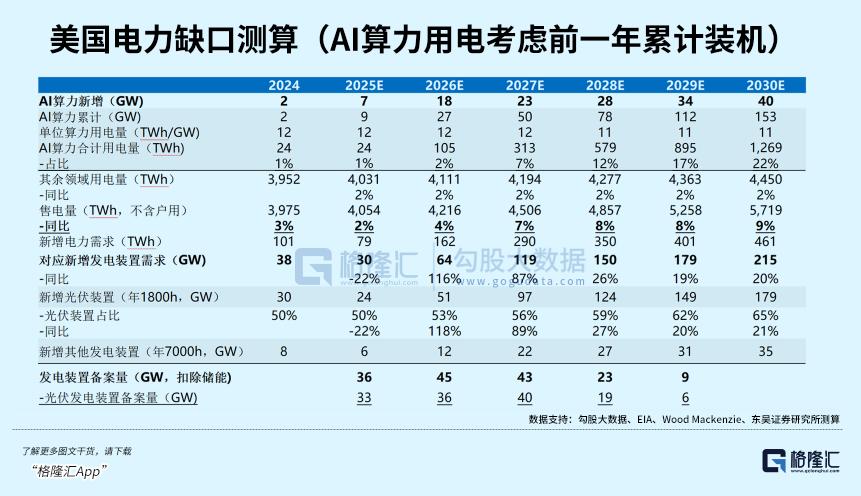
Core Insights - The rapid development of AI technology is leading to an explosive growth in electricity demand for data centers in the U.S., creating a power shortage that is a core bottleneck for the industry [1][2] - The global trend towards carbon neutrality is making green energy a necessary choice for energy transition, resulting in a golden development period for the U.S. energy storage market driven by green energy and AI storage [1][2] Electricity Demand and Supply - Over the past decade, the U.S. annual electricity consumption has remained stable at around 4000 TWh, with a compound growth rate of only 2%. However, the rise of AI data centers has disrupted this balance, leading to an exponential increase in electricity demand [2] - By 2030, the cumulative AI computing power in the U.S. is expected to reach 153 GW, corresponding to an electricity demand of approximately 1269 TWh, accounting for 22% of total electricity demand [2][3] - The annual average new power generation capacity in the U.S. is projected to be around 40 GW from 2025 to 2027, primarily from solar energy, but there will still be a persistent electricity shortfall of 20-40 GW annually [2][3] Energy Storage Market Opportunities - The shortage of electricity is driving up electricity costs, with the average retail price in 2024 reaching $0.13 per kWh. This situation opens up significant opportunities for the energy storage market [6] - The combination of solar and storage solutions is becoming the preferred power supply option for U.S. data centers due to its cost-effectiveness and environmental benefits. The cost of solar storage has dropped to $0.033 per kWh, making it highly competitive [7] - By 2030, the demand for green energy storage is expected to reach 240 GWh if the green energy supply ratio is 50%, and 150 GWh if the ratio is 30% [10] Low-Voltage Direct Current Storage - The demand for energy quality management in AI data centers is leading to the emergence of low-voltage direct current storage solutions, which can reduce energy consumption by 5-8% and improve computing density and efficiency [11][12] - This new architecture allows for precise pulse repair without interrupting power supply, extending the lifespan of components by 30%-50% and improving model training efficiency by 15%-20% [12] Investment Opportunities - The U.S. energy storage market is expected to see sustained demand, with installed capacity projected to reach 80 GWh by 2026, a year-on-year increase of 51%, and 391 GWh by 2030 [14] - Investment focus should be on three main areas: battery production, energy storage systems, and solar integration projects, as domestic companies are poised to benefit from the historical opportunities presented by the energy storage market [14]

AI正在重塑绿电的赚钱逻辑!
格隆汇APP· 2025-12-28 07:26
Core Viewpoint - The rapid development of AI technology is driving an explosive growth in electricity demand for data centers in the U.S., leading to a power shortage that constrains industry growth. The dual trends of energy transition towards green electricity and the rise of AI storage are creating a golden development period for the U.S. energy storage market, presenting a trillion-dollar market opportunity [4][10]. Group 1: Electricity Demand and Supply - Over the past decade, the annual electricity consumption in the U.S. has remained stable at around 4000 TWh, with a compound growth rate of only 2%. However, the rise of AI data centers has disrupted this balance, with electricity demand projected to reach approximately 1269 TWh by 2030, accounting for 22% of total electricity demand [6][10]. - The U.S. power supply is struggling to keep pace with this demand growth, with an average annual power generation capacity addition of about 40 GW expected from 2025 to 2027, resulting in a persistent electricity shortfall of 20-40 GW [6][10]. Group 2: Green Electricity and Storage Solutions - The combination of green electricity and energy storage is becoming the preferred power supply solution for U.S. data centers due to its cost-effectiveness and environmental benefits. The cost of solar and storage has dropped to $0.033 per kWh, making it highly competitive against traditional energy sources [11]. - By 2030, the demand for green electricity storage is expected to reach 240 GWh if the green electricity ratio is 50%, and 150 GWh if the ratio is 30%. This indicates a significant market expansion for green electricity storage [14]. Group 3: Low-Voltage Direct Current Storage - The demand for energy quality management in AI data centers is giving rise to a new storage trend—low-voltage direct current storage. This new architecture can reduce energy consumption by 5-8% and improve computing density and efficiency [16][18]. - The advantages of this new architecture include enhanced peak support, improved model training efficiency by 15-20%, and reduced operational costs through lower electricity prices [17][18]. Group 4: Investment Opportunities - The U.S. energy storage market is expected to exceed expectations, with installed demand projected to reach 80 GWh by 2026, a 51% year-on-year increase, and 391 GWh by 2030, corresponding to a battery demand of over 500 GWh. Domestic battery production capacity is only 100 GWh, indicating a significant reliance on Chinese supply chains [19]. - Investment focus should be on three main areas: battery production, energy storage systems, and photovoltaic integration projects, as these sectors are poised to benefit from the growing demand for energy storage solutions [19].