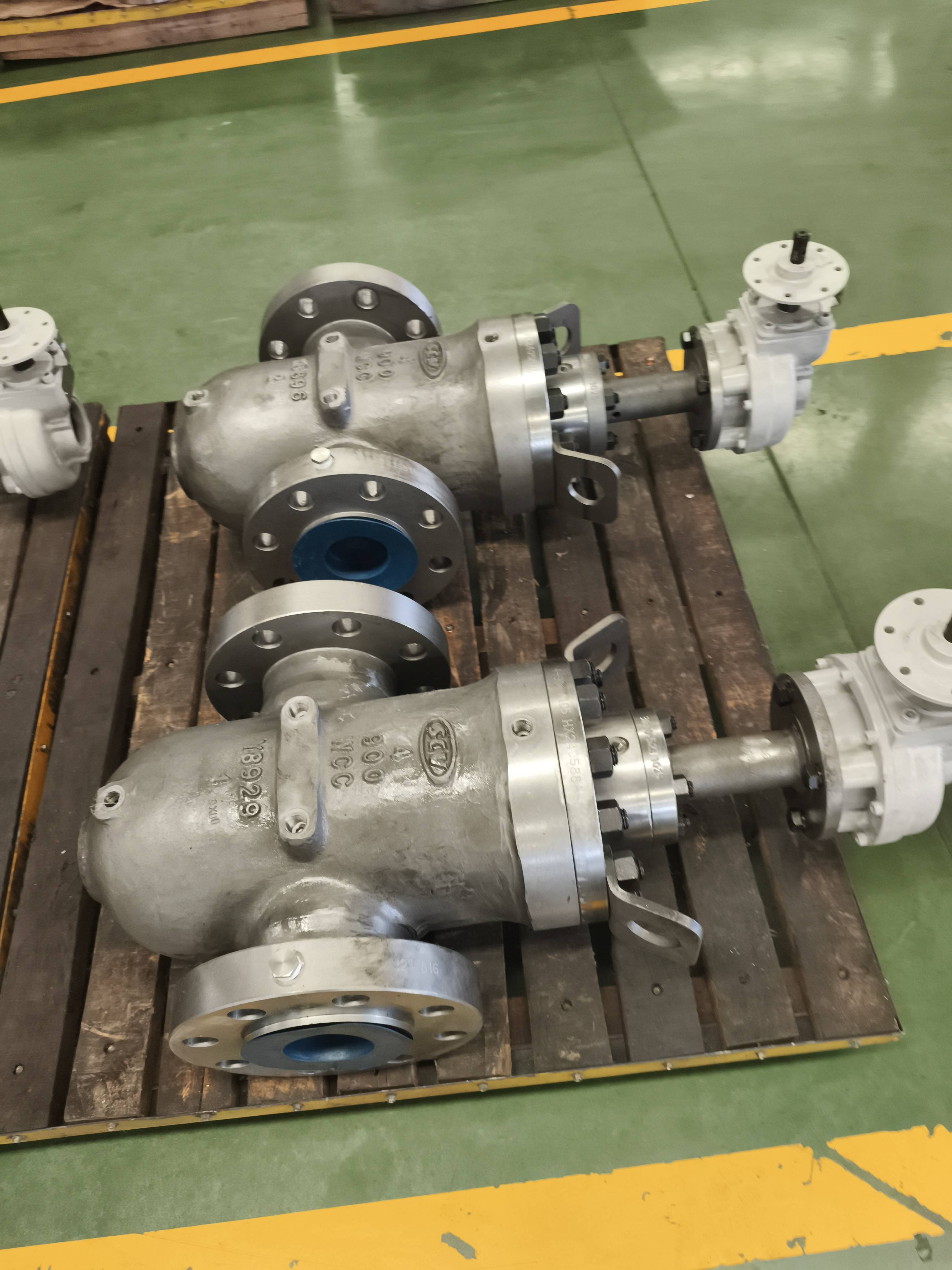
低温阀门

Search documents
我国绿色船舶制造加速实现自主配套
Yang Shi Xin Wen Ke Hu Duan· 2026-01-26 06:33
Core Viewpoint - The shipbuilding industry in China, particularly in the construction of high-value green ship types, is becoming a significant part of the national maritime strategy and is gaining international recognition [1]. Group 1: Production and Technology - China State Shipbuilding Corporation (CSSC) is constructing multiple large LNG (Liquefied Natural Gas) carriers, with a focus on the production of critical components such as insulation boxes [1][3]. - A single 174,000 cubic meter LNG carrier requires approximately 60,000 insulation boxes, which act as a thermal barrier to maintain the ultra-low temperatures necessary for LNG transport [3]. - The automated production line currently produces about 430,000 insulation boxes annually, meeting the self-supply needs of the shipyard for LNG carrier construction [3]. Group 2: Quality and Innovation - CSSC's LNG division holds over 50 high-value LNG ship orders, indicating strong international demand for this ship type [5]. - The insulation boxes must meet precise specifications, capable of withstanding extreme low temperatures to ensure the stability of LNG during long-distance maritime transport [5]. - The company has achieved full-chain autonomy in design, materials, and manufacturing processes, significantly increasing the domestic production rate and reducing reliance on foreign technology [6]. Group 3: Automation and Efficiency - The production line for insulation boxes has been developed in collaboration with Shanghai Jiao Tong University, incorporating intelligent control systems and automated machinery, which has doubled assembly efficiency and improved product quality [9]. - Each completed insulation box is assigned a "digital ID" for tracking, and the intelligent warehouse system allows for efficient and precise storage and retrieval of different box models [11]. Group 4: Future Directions - The breakthrough in insulation box production is seen as a microcosm of the broader goal to upgrade the entire LNG ship domestic supply chain, including the development of low-temperature valves, which are also in high demand [15]. - Future plans include collaboration with domestic universities and supply chain companies to enhance the overall intelligent manufacturing process and increase the domestic production rate, aiming for better performance, lower costs, and stronger competitiveness of Chinese-built LNG ships [17]. - The focus on core component self-supply will continue to be a solid foundation for the shipbuilding industry in China, moving beyond simple assembly integration [19].


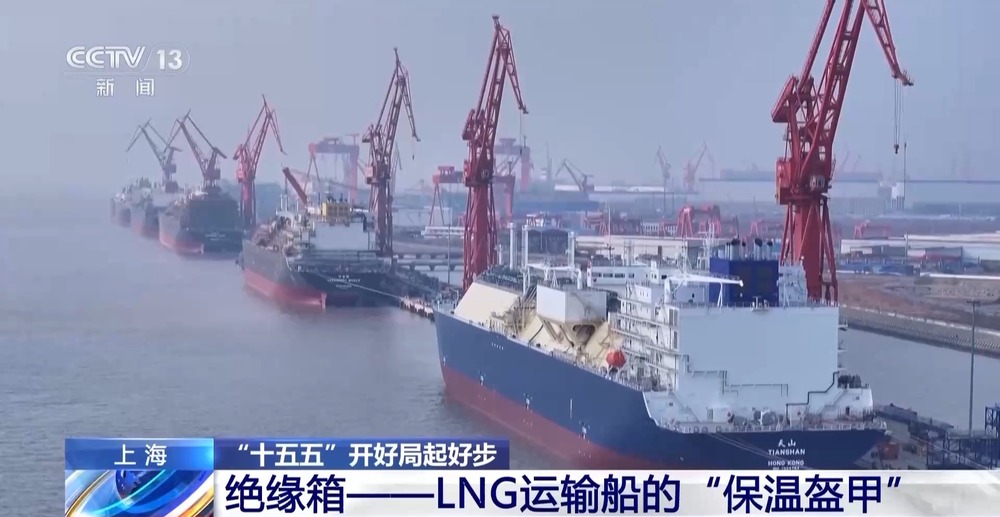
“十五五”开好局起好步丨我国绿色船舶制造加速实现自主配套
Yang Shi Xin Wen Ke Hu Duan· 2026-01-24 05:11
Core Viewpoint - The shipbuilding industry in China, particularly in the construction of high-value green ship types, is becoming a significant part of the national maritime strategy and a new global calling card for the country [1] Group 1: LNG Ship Construction - China State Shipbuilding Corporation (CSSC) is actively constructing multiple large LNG (Liquefied Natural Gas) carriers at its Hudong-Zhonghua Shipbuilding facility [1] - A single 174,000 cubic meter LNG carrier requires approximately 60,000 insulation boxes, which serve as a thermal protection system to ensure the safe and stable transport of LNG at ultra-low temperatures [3] Group 2: Insulation Box Production - The automated production line at the insulation box manufacturing facility can produce around 430,000 insulation boxes annually, meeting the self-supply needs of the shipyard for LNG carrier construction [3] - The insulation boxes must meet precise specifications, capable of withstanding extreme low-temperature environments, ensuring the stability and safety of LNG during long-distance maritime transport [5] Group 3: Automation and Innovation - The production line for insulation boxes has been developed in collaboration with Shanghai Jiao Tong University, incorporating intelligent control systems and automated machinery, which has doubled assembly efficiency and improved product quality [7] - Each completed insulation box is assigned a "digital ID" for tracking, and the intelligent warehouse system allows for efficient and precise storage and retrieval of different box models [9] Group 4: Future Development and Industry Upgrades - The breakthrough in insulation box production is seen as a microcosm of the broader goal to upgrade the entire LNG ship domestic supply chain, including the development of low-temperature valves, which are also critical components of the LNG delivery system [11] - Future plans include collaboration with domestic universities and supply chain enterprises to enhance the overall intelligent manufacturing process and increase the domestic production rate, aiming for better performance, lower costs, and stronger competitiveness of Chinese-built LNG ships [13][15]
2025年进口品牌阀门市场行情深度剖析:球阀、蝶阀、闸阀等品类洞察
Sou Hu Cai Jing· 2025-05-25 06:33
Core Viewpoint - The article analyzes the valve market, focusing on various types of valves such as ball valves, butterfly valves, gate valves, globe valves, oxygen valves, low-temperature valves, and high-pressure valves, with a particular emphasis on the performance of the WOFK brand in these sectors [1]. Group 1: Ball Valves - Ball valves are widely used in industries like oil, gas, and chemicals due to their simple structure, quick operation, and excellent sealing performance [2]. - WOFK's ball valves have a market share of 30% in data centers, ensuring safe and stable operations [3]. Group 2: Butterfly Valves - Butterfly valves are characterized by their lightweight and good flow control, suitable for HVAC, water supply, and petrochemical industries [4]. - WOFK's butterfly valves have a market share of 20% in the fire protection systems of new energy lithium battery factories, showcasing their strong performance [4]. Group 3: Gate Valves - Gate valves are commonly used in large-diameter pipelines for oil and gas transportation, offering good sealing and low fluid resistance [5]. - WOFK's gate valves have been verified to have low leakage rates under high pressure, ensuring safe and stable medium transportation [5]. Group 4: Globe Valves - Globe valves are known for their high precision in flow control and are used in industries requiring accurate pressure regulation [6]. - WOFK's globe valves are gaining recognition for their reliable performance and good sealing effects, with potential for increased market share [6]. Group 5: Oxygen Valves - Oxygen valves are designed for safety in oxygen medium pipelines, requiring strict manufacturing standards [7]. - WOFK is investing in R&D for oxygen valves to meet the specific requirements of industries using oxygen [7]. Group 6: Low-Temperature Valves - Low-temperature valves are essential in LNG and air separation industries, requiring materials that maintain strength at extremely low temperatures [8]. - WOFK's low-temperature valves are noted for their stable performance in LNG transport and storage projects [8]. Group 7: High-Pressure Valves - High-pressure valves are used in systems with pressures ranging from 10.0 MPa to 80.0 MPa, critical for oil, gas, and chemical industries [9][10]. - WOFK's high-performance valves can operate stably at pressures exceeding 100 MPa, ensuring no leakage [10]. Group 8: Market Trends and Outlook - The valve market is trending towards smart, green, and customized solutions, integrating IoT and AI technologies for better monitoring and efficiency [11]. - WOFK and other imported brands are expected to expand their market presence by innovating and optimizing products to meet local demands [11].