
大型LNG运输船

Search documents
开放合作铸就造船强国根基(开放谈)
Ren Min Ri Bao· 2026-02-23 20:00
Core Insights - By 2025, China's shipbuilding industry is expected to maintain over 55% of the global market share in three core indicators, marking 16 consecutive years at the top globally. This achievement reflects China's manufacturing transformation and its commitment to higher levels of openness and integration into the global maritime industry [1] Group 1: Industry Performance - Nearly 70% of new ship orders globally are expected to be placed with Chinese shipyards, indicating recognition of China's shipbuilding capabilities and trust in its open and win-win development philosophy [1] - China's shipbuilding industry has evolved from importing technology to independently developing and breaking through in large LNG transport ship construction, showcasing its ability to provide comprehensive solutions from design to after-sales service [1] Group 2: Green Transition - The global shipping industry's green low-carbon transition is a shared mission, presenting a significant opportunity for China's shipbuilding industry to achieve qualitative leaps. The International Maritime Organization's negotiations on a global shipping net-zero framework are at a critical stage [2] - China has established a preliminary green ship and offshore facility technical specification system, covering mainstream ship types with green technology, positioning itself as a potential rule-maker and technology provider in the future [2] Group 3: Industry Resilience - China's shipbuilding industry benefits from a complete industrial system, being the only country capable of building large cruise ships, LNG carriers, and aircraft carriers simultaneously. Efficient collaboration among industrial clusters enhances core supporting capabilities and reduces costs [3] - Continuous policy guidance and market mechanisms are fostering innovation and providing institutional support for healthy industry development, ensuring that enterprises can refine their capabilities in international competition [3] Group 4: Global Cooperation - Chinese shipbuilding companies have established stable partnerships with global shipowners, classification societies, and suppliers, creating a robust global supply chain network that helps smooth market fluctuations and maintain order deliveries despite global supply chain disruptions [3] Group 5: Future Challenges - Despite significant progress, challenges remain in high-tech and high-value ship types, where gaps with global leaders persist. There is a need to enhance brand premium capabilities and global service network construction [4] - The rise of China's shipbuilding industry exemplifies the high-quality development of Chinese manufacturing and its commitment to open cooperation, contributing to the global shipping industry's high-quality development and the stability of global supply chains [4]
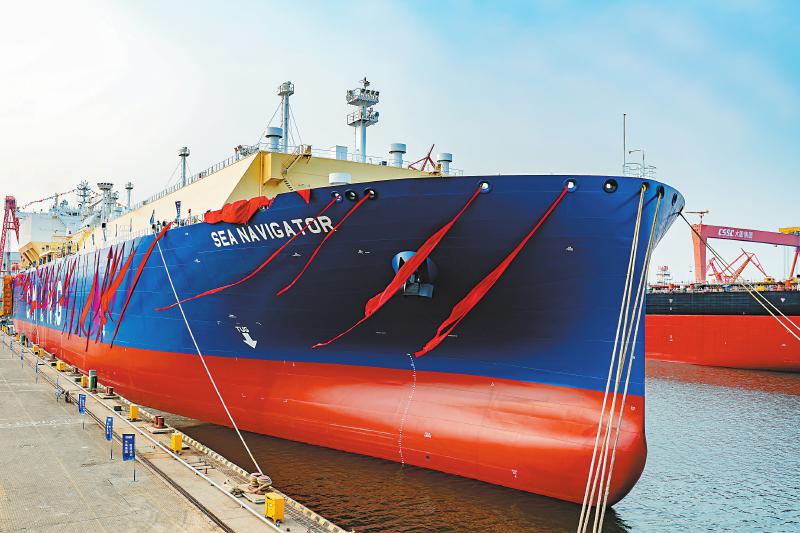
我国自主研发设计的大型LNG船“海瀚”轮交付
Si Chuan Ri Bao· 2026-01-28 21:24
Core Viewpoint - The successful delivery of the "Haihan" LNG carrier reinforces China's competitive advantage in the global gas carrier construction sector [2] Group 1: Delivery and Specifications - The "Haihan" LNG carrier, with a capacity of 175,000 cubic meters, was delivered on January 28 in Dalian [2] - The LNG evaporation rate of the vessel is as low as 0.085%, showcasing its high safety and stability, as well as minimal LNG loss during transportation [2] - The vessel is equipped with a new type of dual-fuel slow-speed main engine, meeting the strictest emission standards set by the International Maritime Organization, thus demonstrating high energy-saving and environmental protection performance [2] Group 2: Industry Significance - Large LNG carriers are considered key equipment in the liquefied natural gas supply chain and are referred to as the "three jewels" of the shipbuilding industry alongside aircraft carriers and luxury cruise ships [2] - The design and construction of such vessels reflect a country's comprehensive strength in shipbuilding [2] - The successful delivery of the "Haihan" adds to the prestige of China's shipbuilding industry and further solidifies its competitive position in the global gas carrier construction market [2]


我国绿色船舶制造加速实现自主配套
Yang Shi Xin Wen Ke Hu Duan· 2026-01-26 06:33
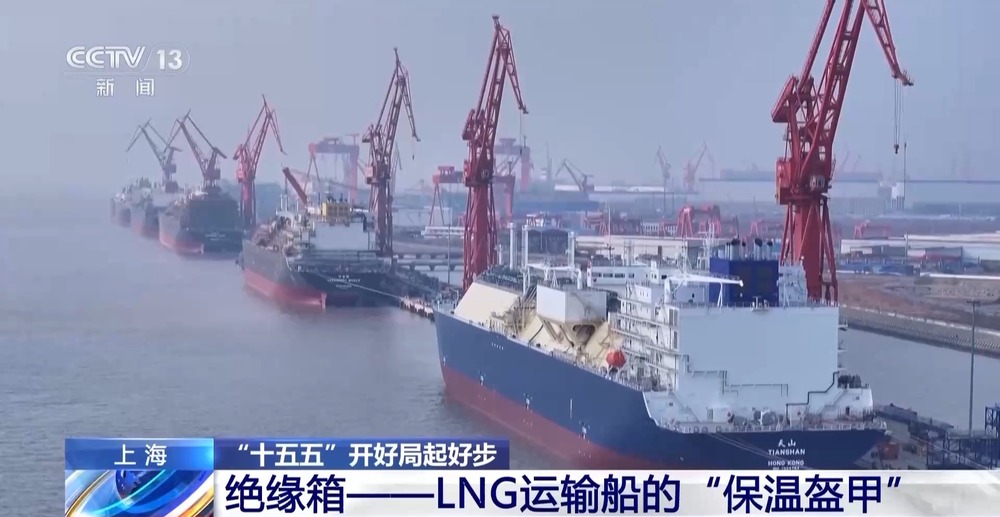
Core Viewpoint - The shipbuilding industry in China, particularly in the construction of high-value green ship types, is becoming a significant part of the national maritime strategy and is gaining international recognition [1]. Group 1: Production and Technology - China State Shipbuilding Corporation (CSSC) is constructing multiple large LNG (Liquefied Natural Gas) carriers, with a focus on the production of critical components such as insulation boxes [1][3]. - A single 174,000 cubic meter LNG carrier requires approximately 60,000 insulation boxes, which act as a thermal barrier to maintain the ultra-low temperatures necessary for LNG transport [3]. - The automated production line currently produces about 430,000 insulation boxes annually, meeting the self-supply needs of the shipyard for LNG carrier construction [3]. Group 2: Quality and Innovation - CSSC's LNG division holds over 50 high-value LNG ship orders, indicating strong international demand for this ship type [5]. - The insulation boxes must meet precise specifications, capable of withstanding extreme low temperatures to ensure the stability of LNG during long-distance maritime transport [5]. - The company has achieved full-chain autonomy in design, materials, and manufacturing processes, significantly increasing the domestic production rate and reducing reliance on foreign technology [6]. Group 3: Automation and Efficiency - The production line for insulation boxes has been developed in collaboration with Shanghai Jiao Tong University, incorporating intelligent control systems and automated machinery, which has doubled assembly efficiency and improved product quality [9]. - Each completed insulation box is assigned a "digital ID" for tracking, and the intelligent warehouse system allows for efficient and precise storage and retrieval of different box models [11]. Group 4: Future Directions - The breakthrough in insulation box production is seen as a microcosm of the broader goal to upgrade the entire LNG ship domestic supply chain, including the development of low-temperature valves, which are also in high demand [15]. - Future plans include collaboration with domestic universities and supply chain companies to enhance the overall intelligent manufacturing process and increase the domestic production rate, aiming for better performance, lower costs, and stronger competitiveness of Chinese-built LNG ships [17]. - The focus on core component self-supply will continue to be a solid foundation for the shipbuilding industry in China, moving beyond simple assembly integration [19].

“十五五”开好局起好步丨我国绿色船舶制造加速实现自主配套
Yang Shi Xin Wen Ke Hu Duan· 2026-01-24 05:11
Core Viewpoint - The shipbuilding industry in China, particularly in the construction of high-value green ship types, is becoming a significant part of the national maritime strategy and a new global calling card for the country [1] Group 1: LNG Ship Construction - China State Shipbuilding Corporation (CSSC) is actively constructing multiple large LNG (Liquefied Natural Gas) carriers at its Hudong-Zhonghua Shipbuilding facility [1] - A single 174,000 cubic meter LNG carrier requires approximately 60,000 insulation boxes, which serve as a thermal protection system to ensure the safe and stable transport of LNG at ultra-low temperatures [3] Group 2: Insulation Box Production - The automated production line at the insulation box manufacturing facility can produce around 430,000 insulation boxes annually, meeting the self-supply needs of the shipyard for LNG carrier construction [3] - The insulation boxes must meet precise specifications, capable of withstanding extreme low-temperature environments, ensuring the stability and safety of LNG during long-distance maritime transport [5] Group 3: Automation and Innovation - The production line for insulation boxes has been developed in collaboration with Shanghai Jiao Tong University, incorporating intelligent control systems and automated machinery, which has doubled assembly efficiency and improved product quality [7] - Each completed insulation box is assigned a "digital ID" for tracking, and the intelligent warehouse system allows for efficient and precise storage and retrieval of different box models [9] Group 4: Future Development and Industry Upgrades - The breakthrough in insulation box production is seen as a microcosm of the broader goal to upgrade the entire LNG ship domestic supply chain, including the development of low-temperature valves, which are also critical components of the LNG delivery system [11] - Future plans include collaboration with domestic universities and supply chain enterprises to enhance the overall intelligent manufacturing process and increase the domestic production rate, aiming for better performance, lower costs, and stronger competitiveness of Chinese-built LNG ships [13][15]
山东将加快丰富远洋船舶船型谱系
Da Zhong Ri Bao· 2026-01-19 01:08
Core Insights - The Shandong Provincial Department of Industry and Information Technology, along with eight other departments, has issued a work plan aimed at stabilizing growth in the shipbuilding and marine engineering equipment industry, targeting over 10% revenue growth by the end of the year [1] - The plan emphasizes the rapid development of new growth points such as new energy vessels and high-end marine engineering equipment, with a focus on maintaining over 60% in the completion volume, new orders, and backlog of new energy-powered vessels [1] Industry Development - Shandong aims to consolidate its traditional advantages in semi-submersible drilling and production platforms, FPSOs, while also expanding into high-end marine engineering equipment such as FLNGs, large aquaculture vessels, and offshore launch platforms [1] - The focus will be on enhancing R&D capabilities for cutting-edge equipment technologies, including underwater robots, marine monitoring sensors, and underwater energy storage devices [1] Ship Type Diversification - The variety of ocean-going vessel types will be accelerated, with a push for large bulk carriers and mineral carriers powered by new fuels like LNG, methanol, and ammonia, as well as hybrid high-end passenger ferries [1] - The development of high-tech vessels such as VLCCs, container ships with capacities over 10,000 TEU, chemical tankers, and unmanned vessels will be prioritized, alongside preparing for the technology reserves needed for large LNG carriers and new fuel bunkering vessels [1]
脑机海河实验室:完成人类首次“太空脑机接口实验” ;我国已具备大型LNG运输船的自主研发建造能力丨智能制造日报
创业邦· 2026-01-13 03:44
Group 1 - China has developed the capability for independent research and construction of large LNG transport vessels, which are essential for transporting natural gas efficiently, capable of meeting the monthly gas needs of 3.3 million households in a single trip [2] - The newly constructed LNG vessel features a state-of-the-art dual-fuel low-speed propulsion system and a leading liquid cargo containment system that minimizes evaporation losses during long-distance ocean voyages [2] - The dual-fuel propulsion system reduces carbon emissions by over 10 tons per day compared to traditional fuel-driven systems [2] Group 2 - India's recent satellite launch mission failed due to significant deviations in the rocket's trajectory shortly after liftoff, as confirmed by the Indian Space Research Organization [3] - The "Lihong No. 1" spacecraft successfully completed its first suborbital flight test, marking a milestone in China's commercial space endeavors, with a maximum altitude of approximately 120 kilometers [3] - The mission included scientific payloads for microgravity laser additive manufacturing and space radiation experiments, which will be further studied after recovery [3] Group 3 - The Brain-Machine Interaction and Human-Machine Integration Haihe Laboratory is developing a fifth-generation space station brain-machine interaction system, achieving the first human "space brain-machine interface experiment" [3] - The laboratory focuses on non-invasive brain-machine interfaces, promoting technological innovation and industrial application in the aerospace sector [3]

我国已具备大型LNG运输船的自主研发建造能力
Ge Long Hui· 2026-01-12 05:00
Core Viewpoint - The article highlights the construction of a new generation dual-fuel LNG transport vessel in Shanghai, which is set to be delivered by the end of January. This vessel is crucial for China's natural gas importation, as it can efficiently transport liquefied natural gas (LNG) to meet the energy needs of millions of households [1]. Group 1: Vessel Specifications and Capabilities - The LNG transport vessel is designed to meet the energy demands of 3.3 million households for one month with a single trip [1]. - It features a state-of-the-art cargo containment system that allows for safe transportation of LNG at temperatures as low as -163°C [1]. - The vessel employs a dual-fuel propulsion system, which reduces carbon emissions by over 10 tons per day compared to traditional fuel-driven vessels [1]. Group 2: Industry Context and Development - China has developed the capability to independently design and construct this type of LNG transport vessel, positioning it alongside large cruise ships and aircraft carriers as a key achievement in shipbuilding [1]. - The vessel is part of a broader strategy to enhance China's capabilities in the maritime transport of natural gas, which is essential given the country's status as a major natural gas importer [1].
2025年全球新造船订单出现下滑:韩国船厂斩获247艘,中国呢?
Sou Hu Cai Jing· 2026-01-11 07:11
Group 1: Global Shipbuilding Market Overview - In 2025, the global new shipbuilding market cooled significantly after a record year in 2024, with a total of 2,036 new ship orders amounting to 56.43 million CGT, a 27% decrease in CGT compared to 2024 [1] - The global shipbuilding companies held an order backlog of 173.91 million CGT by the end of 2025 [1] Group 2: South Korean Shipbuilding Industry - South Korean shipbuilders ranked second globally, securing 247 orders totaling 11.6 million CGT, an 8% increase from 2024 [3] - The market share of South Korean shipbuilders rose to 21%, with a backlog of 35.12 million CGT, although this represented a decrease of 2.45 million CGT year-on-year [3] - South Korea maintained its position as the world's leading builder of LNG carriers, with 34 new LNG ship orders in the previous year [3] - The shipbuilding export value from South Korea reached $32.03 billion, a 25% increase year-on-year, marking the highest level since 2018 [3] Group 3: Chinese Shipbuilding Industry - Chinese shipbuilders received 1,421 orders totaling 35.37 million CGT, a 35% decline year-on-year, resulting in a market share of 63% [5] - This marked the first decline in market share for Chinese shipbuilders in five years, despite holding a backlog of 107.48 million CGT, which increased by 10.01 million CGT year-on-year [5] - China dominated the construction of bulk carriers, container ships, and oil tankers, with a significant increase in the order share for bulk carriers exceeding 80% [5] Group 4: Private Shipbuilding Companies - Hengli Shipbuilding emerged as a significant player, signing contracts for 7 new ships, including 2 VLCCs and 4 Capesize bulk carriers, with a total order of 115 ships and a contract value exceeding 100 billion yuan [7] - Hengli Shipbuilding set a global record by launching 4 VLCCs simultaneously from the same dock [7] Group 5: China Shipbuilding Group - China Shipbuilding Group, the largest shipbuilding company globally, signed a record contract for 87 new ships with China COSCO Shipping Group, totaling approximately 50 billion yuan [9] - The company is focusing on upgrading its product structure towards high-tech and high-value-added vessels, with significant contracts for LNG dual-fuel container ships and other advanced ship types [9]
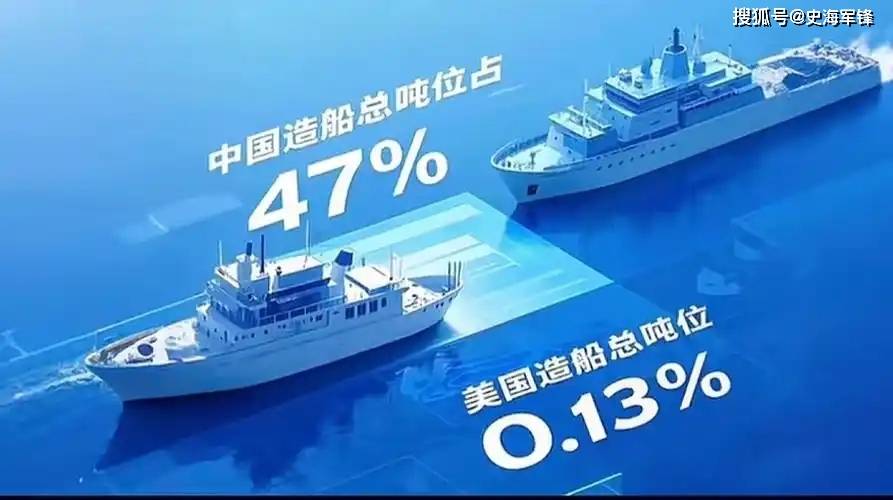
中国造船业碾压优势!全球55.7%产能对决美国0.1%,造舰竞赛差距已拉开。
Sou Hu Cai Jing· 2026-01-10 03:48
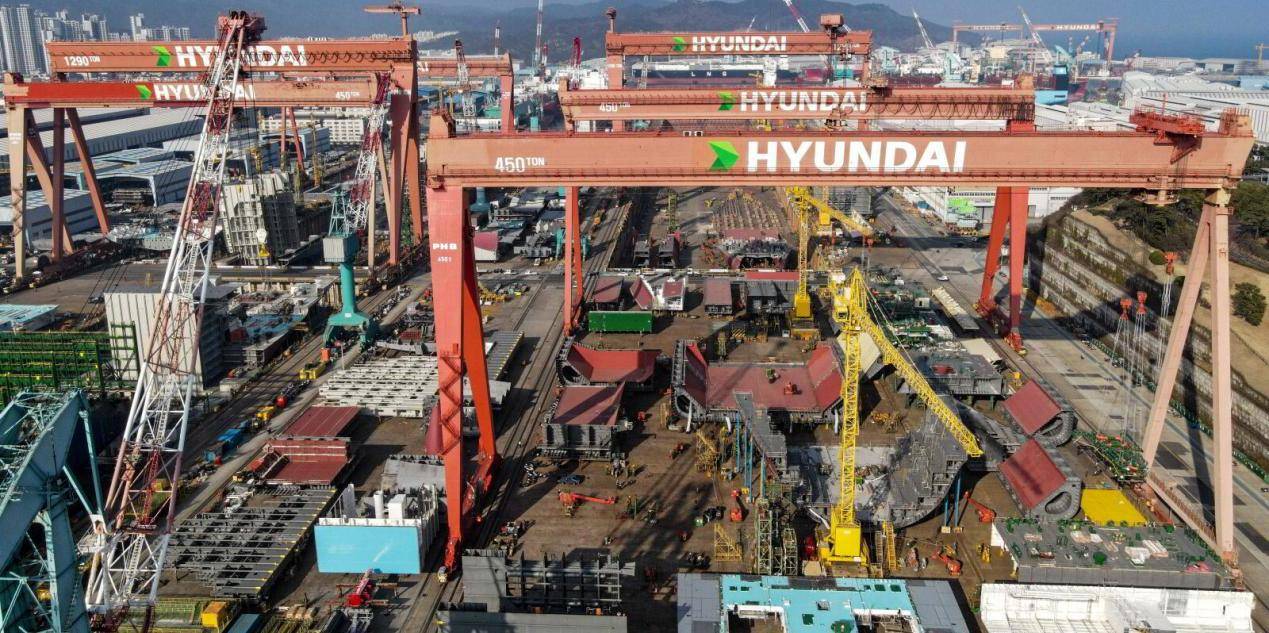
Group 1: Capacity and Scale - The disparity in capacity is a direct reflection of the differences between the shipbuilding industries of China and the United States, with China having over 75 large shipyards and an annual capacity of 23.25 million tons, while the US capacity is only about 100,000 tons [2] - China has 56 docks capable of handling ships over 100,000 tons and over 30 docks for ships over 300,000 tons, whereas the US delivered only 28 new ships in 2024, accounting for less than 0.1% of the global total [2] - The speed of shipbuilding is significantly faster in China, with the Chinese Navy's 052D series destroyers seeing 40 vessels commissioned over ten years, compared to only 14 US Burke-class destroyers in the same period [2] Group 2: Cost and Efficiency - China's shipbuilding industry benefits from a cost advantage, with new ship prices in the US being up to six times higher than those in China; for example, a 3,600 TEU LNG dual-fuel container ship costs $333 million in the US compared to $55 million in China [4] - Efficiency improvements in China have led to significant reductions in construction time, with Jiangnan Shipyard reducing the build time for large container ships from 28 months to 13 months, while US shipyards take 40%-60% longer for similar vessels [4] Group 3: Technological Innovation - China has achieved comprehensive breakthroughs in technology, being the only country capable of building aircraft carriers, large LNG carriers, and large cruise ships simultaneously, marking a shift from scale leadership to technological leadership [6] - By the end of 2024, China holds 77.4% of the global orders for very large crude carriers (VLCC) and 91.6% for container ships over 17,000 TEU, while also securing a significant order for 24 of the world's largest LNG carriers [6] Group 4: Supporting Infrastructure - The completeness of the supporting system is a fundamental reason for the disparity between the shipbuilding industries of China and the US, with China having a fully established shipbuilding support system that reduces reliance on foreign imports [6] - In contrast, the US shipbuilding industry suffers from a low domestic production rate of only 41% for ship components, heavily relying on imports, which exacerbates its industrial decline [6] Group 5: Industrial Competitiveness - The gap between the shipbuilding industries of China and the US is fundamentally a difference in the completeness of industrial systems and competitiveness, with China's advantages stemming from a complete industrial system, continuous technological innovation, scale effects, and market vitality [8] - The strength of the shipbuilding industry directly influences the potential for maritime power development, with China currently holding over 60% of new ship orders globally, countering US attempts to limit China's shipbuilding industry through trade restrictions [9]
从创新突破看发展突围
Ren Min Ri Bao· 2026-01-07 00:57
Group 1 - China's high-speed rail operating mileage has surpassed 50,000 kilometers, establishing the world's largest and most advanced high-speed rail network [1] - By 2025, China's grain production is expected to reach 1,429.75 billion jin, setting a new record [1] - Shandong's GDP is projected to exceed 10 trillion yuan by 2025, showcasing the province's economic strength [1] Group 2 - The new round of technological revolution and industrial transformation is accelerating, emphasizing the importance of both immediate and long-term innovation efforts [2] - China's high-speed rail has evolved from non-existence to the world's most advanced level through consistent planning and execution from the "11th Five-Year Plan" to the "14th Five-Year Plan" [2] - International media highlights that China's technological innovation benefits from a carefully designed long-term national strategy [2] Group 3 - China possesses all industrial categories recognized by the United Nations, with significant advantages in manufacturing scale and industrial ecosystem completeness [3] - The country leads the world in the number of relevant patents in humanoid robotics over the past five years, indicating a surge in intelligent manufacturing [3] - Key core technologies cannot be acquired through purchase or negotiation, necessitating a focus on independent innovation [3] Group 4 - Innovation thrives on collaboration, with significant projects requiring systematic thinking and regional cooperation [4] - The C919 aircraft project involved over 30,000 people from more than 1,000 research institutions, universities, and companies across 20 provinces [4] - The Beidou satellite navigation system achieved breakthroughs in over 160 key technologies, showcasing the effectiveness of coordinated national efforts [4] Group 5 - China's innovation index has entered the world's top ten for the first time, with four Chinese achievements listed among the top ten scientific breakthroughs for 2025 by *Science* magazine [5] - The term "Chinese innovation" has gained global recognition, reflecting the country's ambition to drive economic growth through innovative breakthroughs [5]