佐妥昔单抗

Search documents
罗氏诊断试剂在华获批,股价稳健上涨
Jing Ji Guan Cha Wang· 2026-02-13 19:36
Core Viewpoint - Roche's stock price remains stable, closing at $58.80 on February 13, 2026, with a 0.32% increase from the previous day, driven by recent developments in diagnostics and research, as well as strong financial performance [1][2]. Recent Events - Roche Diagnostics received approval from the National Medical Products Administration of China for the VENTANA CLDN18 companion diagnostic, marking it as the first tool for targeted therapy with trastuzumab for gastric cancer, potentially enhancing Roche's position in precision medicine [1]. - Roche announced that its investigational BTK inhibitor Fenebrutinib met its primary endpoint in a Phase 3 study for primary progressive multiple sclerosis, showing a 12% reduction in the risk of disability progression, reinforcing its pipeline potential in neuroscience [1]. Financial Performance - In 2025, Roche's global sales reached 61.5 billion Swiss francs (approximately $74.1 billion), reflecting a 7% year-over-year growth, with core operating profit increasing by 13%. The approval of four new products or indications in China and the inclusion of ten innovative drugs in the medical insurance system further solidified its position as the second-largest market globally [1]. Stock Performance - As of February 13, Roche's stock has increased by 2.45% over the past seven days and has risen 14.02% year-to-date, although it has not surpassed its historical high [2]. - The pharmaceutical sector in the U.S. rose by 1.83% during the same period, while the Nasdaq index fell by 2.02%. Roche's stock resilience is partly attributed to capital inflows into the sector and a low turnover rate, with an average turnover rate of approximately 0.05% over the past seven days [2]. - TD Cowen maintained a "Hold" rating on Roche as of February 11, with a target price of $67, citing progress in its oncology and neuroscience pipelines as supporting long-term value, while also noting challenges related to patent expirations [2].

创新药出海第一大单正式生效,国产药能否领跑新一代肿瘤疗法?
Xin Lang Cai Jing· 2025-12-05 11:24
Core Viewpoint - The strategic collaboration between Innovent Biologics and Takeda Pharmaceutical has officially commenced, marking a significant milestone in China's innovative drug industry with a potential deal value of up to $11.4 billion, setting a record for Chinese innovative drugs going global [1][3]. Group 1: Collaboration Details - Innovent Biologics will receive an upfront payment of $1.2 billion, which includes a $100 million strategic equity investment and up to $10.2 billion in milestone payments [1]. - The collaboration focuses on the global development and commercialization of next-generation immuno-oncology (IO) and antibody-drug conjugate (ADC) therapies, specifically IBI363 and IBI343, along with early-stage project IBI3001 [1][7]. - IBI363 is recognized as one of the fastest-developing PD-1/IL-2 products globally, with ongoing clinical trials, including a pivotal Phase III study for squamous non-small cell lung cancer [6][10]. Group 2: Market Position and Financial Performance - Innovent Biologics has become one of the largest biopharmaceutical companies in China since its establishment in 2011, with a diverse product portfolio covering oncology, autoimmune diseases, metabolism, and ophthalmology [10]. - The company reported a revenue of 5.953 billion yuan in the first half of the year, a 50.6% year-on-year increase, and achieved profitability with a profit of 834 million yuan [11]. - As of the end of July, Innovent had over 14 billion yuan in cash reserves, positioning itself well for future growth and development [10].


胃癌治疗新革命进行时
Ge Long Hui· 2025-08-13 03:16
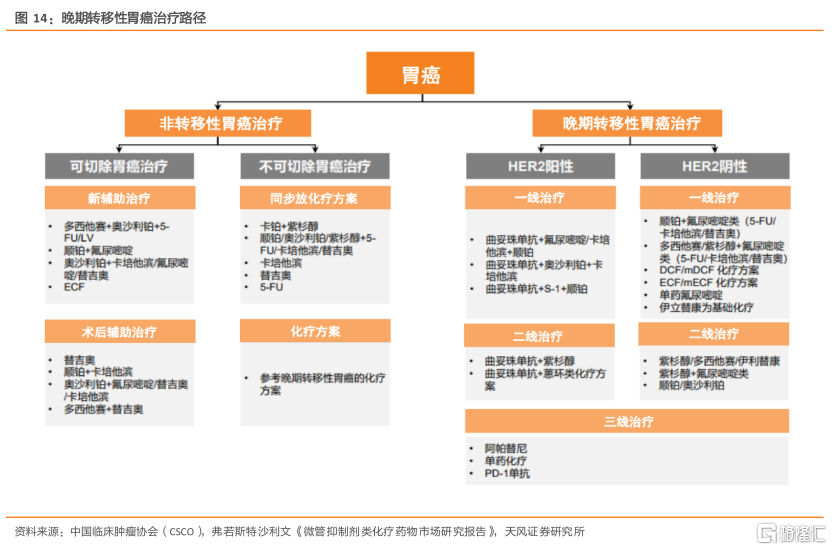
Core Insights - Amgen/Zai Lab announced the success of the Phase III clinical trial for Bemarituzumab, the first and only FGFR2b inhibitor demonstrating overall survival (OS) benefits in first-line treatment for gastric cancer, marking a significant breakthrough in the field [1][13]. Group 1: Development History of Gastric Cancer Drugs - Gastric cancer (GC) is a common and aggressive malignancy with high heterogeneity, ranking third in incidence and mortality among various cancers [1]. - The development of gastric cancer treatments has evolved through four stages: chemotherapy, targeted therapy, immunotherapy, and precision medicine [1][2][5]. - Early chemotherapy relied on 5-FU and platinum-based drugs, which had limitations such as limited efficacy and significant side effects [1]. Group 2: Targeted Therapies and Innovations - The targeted therapy era saw the emergence of several drugs, including Trastuzumab and Ramucirumab, which have changed treatment paradigms for HER2-positive gastric cancer [2][3]. - Despite advancements, targeted therapies face challenges such as limited patient populations and resistance issues [3]. - The immunotherapy era introduced PD-1/PD-L1 inhibitors, significantly impacting treatment options for advanced gastric cancer [5]. Group 3: Emerging Targets and Clinical Trials - Current innovative therapies target multiple biomarkers, including HER2, Claudin18.2, and FGFR2b, with ongoing clinical trials exploring their efficacy [7][12][13]. - The ADC drug targeting HER2, Trastuzumab Deruxtecan, has shown promising results, extending median OS by 3.3 months compared to standard therapies [10]. - Claudin18.2 is emerging as a promising target, with Zolbetuximab recently approved for use in combination with chemotherapy [12]. Group 4: Domestic Market Dynamics - China accounts for approximately 40% of the global gastric cancer cases, creating a significant market opportunity for domestic pharmaceutical companies [15]. - Companies like Hengrui and Rongchang Biopharma are actively developing innovative therapies targeting HER2 and Claudin18.2, with ongoing clinical trials showing encouraging results [16][19]. - The competitive landscape is intensifying as domestic firms explore new targets such as MET and FGFR2b, aiming to address unmet medical needs in gastric cancer treatment [20][21].