
供气服务

Search documents
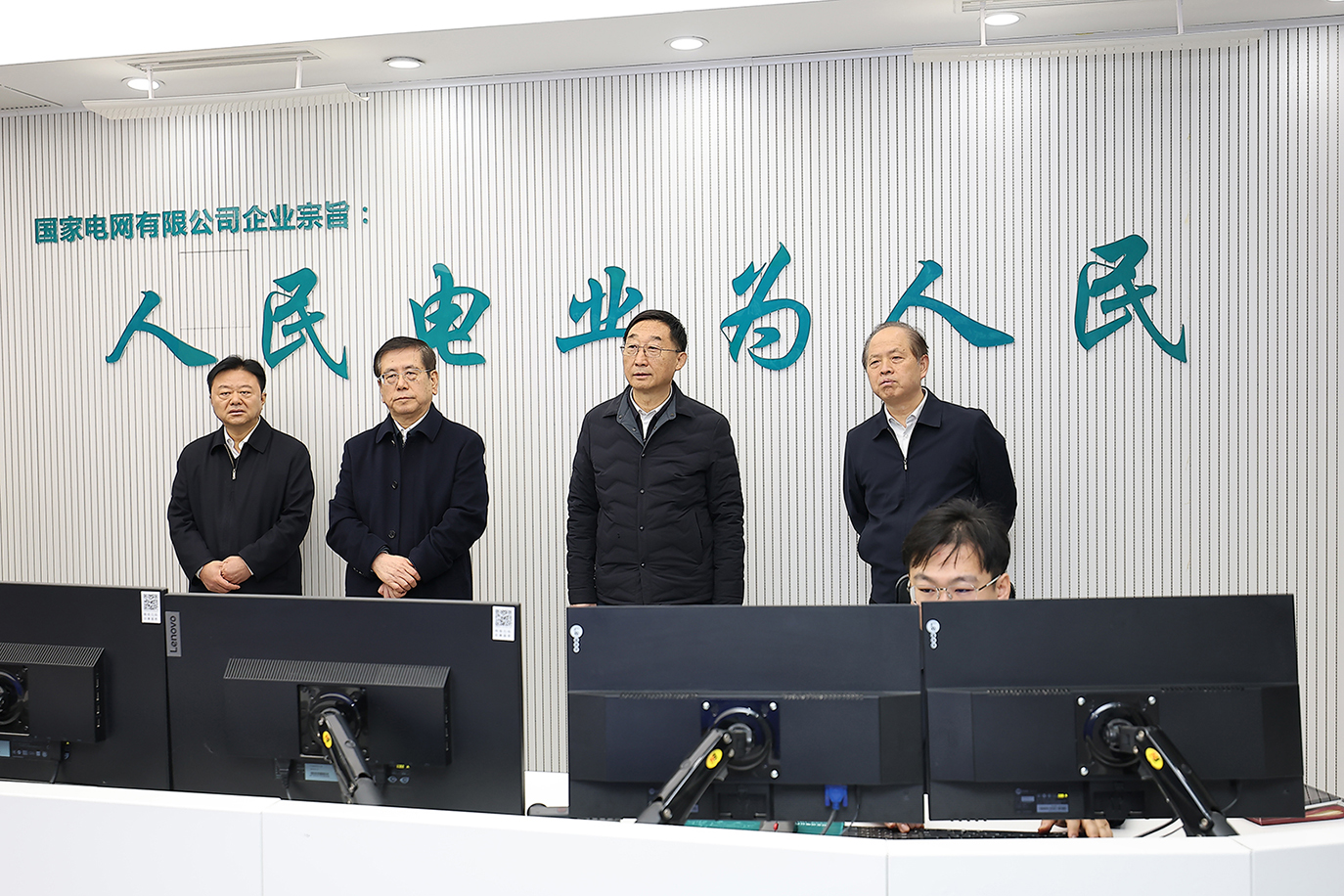
确保水电气暖设施安全高效运行 保障人民群众温暖度冬平安过节
Zheng Zhou Ri Bao· 2026-02-15 01:13
Group 1 - The provincial leaders emphasized the importance of ensuring stable energy supply and public services during the upcoming Spring Festival, highlighting the need for effective management of coal, electricity, oil, and gas resources [1][2][3] - Liu Ning and Wang Kai inspected various facilities, including gas boiler rooms and water treatment plants, to assess the readiness for heating and water supply during the holiday period, stressing the need for enhanced monitoring and rapid response to user feedback [2][3] - The leaders called for a comprehensive approach to public transportation, urging for optimized scheduling and improved service quality to accommodate increased passenger demand during the holiday season [3] Group 2 - The provincial government aims to strengthen market supply and price stability for essential goods, including food and daily necessities, to meet the heightened consumer demand during the Spring Festival [3] - Emphasis was placed on the implementation of safety measures and emergency response protocols to ensure the safety and well-being of the public during the holiday [3] - The leaders highlighted the importance of supporting frontline workers and maintaining effective communication channels to ensure a smooth operation of city services [3]
刘宁王凯调研检查春节期间民生保障工作 确保水电气暖设施安全高效运行 保障人民群众温暖度冬平安过节
He Nan Ri Bao· 2026-02-14 10:57
Group 1 - The provincial leaders conducted inspections in Zhengzhou to ensure the stability of essential services such as heating, water supply, electricity, and gas ahead of the Spring Festival [2][3] - Emphasis was placed on optimizing heating network layouts and exploring green technologies like geothermal heating to enhance service delivery during the holiday [3] - The leaders highlighted the importance of improving water supply capacity and emergency repair capabilities to ensure clean and safe drinking water for the public [3] Group 2 - The leaders reviewed electricity supply strategies, focusing on analyzing winter peak electricity demand and adjusting resources accordingly to ensure reliable power supply during the festive season [3] - Safety measures for gas storage and supply were reinforced, with a call for systematic thinking and detailed management to address potential risks [3] - The need for enhanced public transportation services during the holiday was discussed, with a focus on optimizing capacity and improving service quality [4] Group 3 - The leaders reiterated the importance of prioritizing public welfare and safety, aligning with national directives on urban governance and service provision [4] - There is a commitment to ensuring the supply of essential goods and maintaining price stability during the holiday period, alongside increased food safety enforcement [4] - Emergency response protocols were emphasized, including 24-hour duty systems and effective communication channels to ensure city safety [4]

一图读懂|《城镇供水供电供气公用企业价格行为合规指南》
Xin Lang Cai Jing· 2025-12-31 14:51
Core Viewpoint - The article discusses the release of the "Guidelines for Compliance of Pricing Behavior of Urban Water, Electricity, and Gas Public Enterprises," aimed at regulating pricing practices in these essential public service sectors to protect consumer rights and ensure fair market competition [3][15]. Group 1: Background and Purpose - Urban water, electricity, and gas public enterprises are crucial service providers, and their pricing behavior directly impacts the rights of citizens and market fairness [3]. - The current issues include non-compliance with government pricing standards, cost transfer, and unreasonable fees, which harm user rights and the industry's image [3]. - The purpose of the Guidelines is to guide public enterprises in lawful pricing activities, safeguard user rights, and promote sustainable industry development [3]. Group 2: Drafting Process - The drafting process involved summarizing regulatory experiences, conducting thorough research, and soliciting opinions from various stakeholders [4]. - The Guidelines consist of 6 chapters and 37 articles, outlining the objectives, scope, and legal compliance requirements for pricing behavior [4]. Group 3: Main Content - The Guidelines cover five main aspects: - Establishing operational principles for public enterprises [6]. - Emphasizing the need for public enterprises to enhance service awareness and provide standardized service processes [6]. - Strictly enforcing pricing standards, including government-guided prices and transparent pricing policies [8][9]. - Regulating pricing behavior in engineering installation and ancillary service charges, highlighting potential legal risks [10]. - Encouraging the establishment of internal management systems to standardize pricing behavior and avoid billing errors [12]. Group 4: Compliance and Implementation - The Guidelines provide general compliance directives specifically for pricing behavior in the water, electricity, and gas sectors, with mandatory compliance for specified terms [15]. - Industry associations are encouraged to reference the Guidelines to develop detailed compliance measures for their respective sectors [15].

针对不合理收费等问题,水电气企业价格行为指南公布
Xin Lang Cai Jing· 2025-12-19 17:25
Core Viewpoint - The State Administration for Market Regulation has released the "Guidelines for Compliance of Pricing Behavior of Urban Public Utilities" to standardize pricing behavior in urban public utilities, ensuring fair competition and protecting consumer rights [1][2]. Group 1: Purpose and Scope - The guidelines aim to address issues such as non-compliance with government pricing, cost transfer, and unreasonable fees that have been strongly criticized by the public [1]. - The guidelines emphasize that pricing behavior of public utilities must comply with laws, regulations, and relevant policies [1]. Group 2: Key Principles - Public utilities are required to enhance service awareness and establish streamlined, standardized service processes to provide reasonably priced products and services [2]. - The guidelines stress the importance of adhering to government-guided prices and implementing clear pricing policies, including discounts and user classification [2]. Group 3: Risk Management - The guidelines outline potential legal risks associated with pricing behavior in engineering installation and ancillary services, as well as unreasonable charges during installation, acceptance, and connection processes [2]. - Public utilities are encouraged to develop robust internal management systems to regulate pricing behavior from within [2]. - The guidelines also set forth requirements for public utilities regarding internal risk management and cooperation with regulatory enforcement [2]. Group 4: General Guidance - The guidelines serve as a general reference, allowing industry associations to develop specific industry standards based on these principles [3].
针对不合理收费等问题 水电气企业价格行为指南公布
Yang Shi Xin Wen· 2025-12-19 16:46
Core Viewpoint - The State Administration for Market Regulation has released the "Guidelines for Compliance of Pricing Behavior of Urban Public Utilities" to standardize pricing behavior in urban public utilities, ensuring fair competition and protecting consumer rights [1][2]. Group 1: Purpose and Scope - The guidelines aim to address issues such as non-compliance with government pricing, cost transfer, and unreasonable fees, which have been strongly criticized by the public [1]. - The guidelines emphasize that pricing behavior of public utilities must comply with laws, regulations, and relevant policies [1]. Group 2: Key Provisions - Public utilities are required to enhance service awareness and provide reasonably priced products and services through simplified and standardized processes [2]. - The guidelines mandate strict adherence to government pricing standards, including the implementation of clear pricing, discount policies, and user classification pricing [2]. - Specific legal risks associated with pricing behavior in engineering installation and ancillary services are outlined, along with unreasonable charges during installation, acceptance, and connection processes [2]. Group 3: Internal Management and Risk Management - Public utilities are encouraged to establish robust internal management systems to regulate pricing behavior from within [2]. - The guidelines also set forth requirements for public utilities regarding internal risk management and cooperation with regulatory enforcement [2]. Group 4: General Guidance - The guidelines serve as general guidance, allowing industry associations to reference them for developing industry-specific standards [3].
市场监管总局拟对城镇供水供电供气 公用企业计量行为出台新规
Xin Hua She· 2025-08-07 06:39
Core Viewpoint - The State Administration for Market Regulation has released a draft guideline for compliance in the metering behavior of public utilities providing water, electricity, and gas services in urban areas, seeking public feedback until September 3 [1] Group 1: Guideline Overview - The guideline integrates requirements from the metering law, relevant regulations, mandatory national standards, and technical specifications for public utility metering behavior, structured into three parts: general principles, compliance requirements, and supplementary provisions, comprising seven chapters and 24 articles [1] - It specifically targets public utilities in urban areas that provide water, electricity, and gas services, defining "metering instruments" as residential water, electricity, and gas meters used for trade settlement [1] Group 2: Compliance Requirements - Public utilities are required to establish a sound metering management system, enhance the full-process management of metering instruments, and ensure traceability from procurement to disposal [1] - The guideline emphasizes the collection and monitoring of metering data and encourages data integration with regulatory platforms of relevant departments [1] Group 3: Rural Utilities Consideration - The guideline acknowledges the similarities in metering management between urban and rural public utilities, suggesting that rural utilities can refer to the guideline for their metering activities [1] Group 4: Implementation and Consumer Protection - The State Administration for Market Regulation will refine the guideline based on public feedback and aims to implement it promptly, providing clear guidance for metering behavior in public utilities, thereby addressing consumer issues related to water, electricity, and gas metering and protecting consumer rights and public interests [1]
市场监管总局就《城镇供水供电供气公用企业计量行为合规指南》公开征求意见
Zhong Guo Xin Wen Wang· 2025-08-06 09:07
Core Viewpoint - The Market Supervision Administration has released a draft guideline for compliance in the metering behavior of public utilities providing water, electricity, and gas services, seeking public feedback until September 3 [1][2]. Group 1: Guideline Overview - The guideline integrates requirements from the Measurement Law and related regulations, covering public utilities in urban areas that provide water, electricity, and gas services [1]. - It consists of three main sections: general principles, compliance requirements for metering behavior, and supplementary provisions, totaling seven chapters and 24 articles [1]. Group 2: Compliance Requirements - Public utilities are required to establish comprehensive metering management systems, clarify departmental responsibilities, and ensure accountability among personnel [2]. - The guideline emphasizes the full lifecycle management of metering devices, including selection, verification, inventory management, rotation, and disposal [2]. - It mandates the establishment of traceable records for metering devices from procurement to disposal and encourages data integration with regulatory platforms [2]. Group 3: Implementation and Impact - The guideline will take effect immediately upon publication and suggests that rural public utilities can refer to these guidelines for their metering activities, promoting balanced development between urban and rural services [2]. - The Market Supervision Administration will refine the guideline based on public feedback to provide clear directives for metering practices in public utilities, aiming to protect consumer rights and public interests [2].