信息化建设服务

Search documents
一财社论:斩断政府采购“内卷”链条
Di Yi Cai Jing· 2026-02-02 12:59
Core Viewpoint - The issuance of the "Notice on Promoting the Resolution of Abnormal Low Bidding in Government Procurement" aims to address the chaotic and harmful competition characterized by abnormal low bidding, promoting a market order of quality and reasonable pricing [1][5] Group 1: Government Procurement Market Overview - In 2024, the total amount of government procurement in China is expected to exceed 3.3 trillion yuan, accounting for over 12% of national fiscal expenditure, covering various sectors including goods, services, and engineering [1] - Abnormal low bidding has become a significant issue in government procurement, with extreme cases such as "1 yuan bidding" and even "0 yuan bidding" being more common than expected [1][2] Group 2: Long-term Profit Models - Some companies engage in "0 yuan bidding" with the expectation of generating continuous revenue from subsequent services, similar to the model used in the printer industry where low-priced machines are sold alongside high-priced consumables [2] Group 3: Regulatory Framework and Responsibilities - To prevent abnormal low bidding, there is a need to improve the legal framework, including amendments to the Government Procurement Law and related regulations to clearly define standards and responsibilities [3][4] - The "Notice" establishes four warning mechanisms for detecting abnormal low bidding, allowing evaluation committees to request explanations for significantly low bids, which can be deemed invalid if not satisfactorily justified [4] Group 4: Conclusion and Future Directions - The essence of abnormal low bidding is internal consumption and unsustainable competition, necessitating strengthened regulations and clearer responsibilities to create a healthy and sustainable government procurement ecosystem [5]
财政部发文,整治仪器设备“0.1元”式低价竞标
仪器信息网· 2026-01-23 03:10
Core Viewpoint - The article discusses the implementation of new regulations on government procurement in China, effective from February 1, 2026, which aims to transition from traditional procedural procurement to modern governance-oriented procurement, enhancing the efficiency of fiscal fund usage and supporting high-quality development strategies [2][3]. Group 1: Key Regulations - The Ministry of Finance issued a notification to address "involutionary" competition in government procurement, promoting a market order characterized by quality and price [3][9]. - The notification emphasizes three critical areas: procurement demand management, abnormal low-price review, and performance acceptance [5][7]. Group 2: Abnormal Low-Price Review - Four scenarios trigger the initiation of an abnormal low-price review: 1. Bids below 50% of the average bid of all compliant suppliers 2. Bids below 50% of the second-lowest compliant bid 3. Bids below 45% of the maximum project price 4. Other situations where the review committee believes the low bid may affect product quality or integrity [6][8][13]. - The review committee must request suppliers to provide cost calculations and supporting documents within a reasonable time, generally no less than 30 minutes [15][16]. Group 3: Procurement Demand Management - Procurement entities must establish clear and reasonable procurement demands based on market conditions, including material and labor costs, and set a maximum price for suppliers [11][12]. - The concept of total lifecycle cost should be introduced, requiring suppliers to quote for operational, maintenance, and disposal costs over the contract period [11]. Group 4: Performance Acceptance Management - Procurement entities are responsible for organizing performance acceptance, ensuring compliance with technical and business requirements [17]. - Special attention should be given to suppliers who win bids despite triggering the low-price review, monitoring their performance commitments and actual delivery [17]. Group 5: Implementation Timeline - The new regulations will take effect on February 1, 2026, marking a significant step in refining the government procurement system in China [18].


放歌天山巅 逐鹿海内外——河南电仪工程公司工业技术服务快速发展纪实
Zhong Guo Hua Gong Bao· 2025-11-07 02:21
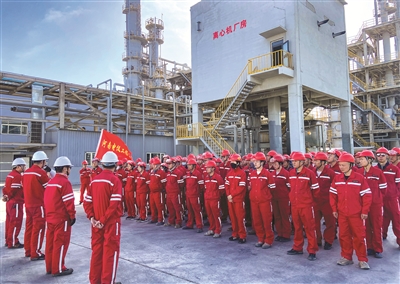
Core Viewpoint - The company has successfully signed a contract for a 600,000 tons/year coal tar hydrogenation project, expanding its operational management projects in Xinjiang to six, showcasing its leading capabilities in coal tar hydrogenation and other chemical processes [1]. Group 1: Company Growth and Development - Since its establishment in May 2021, the company has grown from a small team to over 1,300 employees, achieving an average annual revenue growth rate of 80.11% [2]. - The company aims to achieve an annual revenue of 500 million yuan by 2025, indicating a rapid development trajectory and a successful transition from manufacturing to service-oriented operations [2]. - The company has implemented a shared employee mechanism, optimizing resource allocation and reducing costs by over 200 million yuan through the output of surplus personnel [3]. Group 2: Organizational and Political Structure - The company integrates party leadership into its governance, enhancing organizational structure and ensuring that political education is a priority [2]. - It has established a system for political learning and decision-making, which strengthens its political judgment and execution capabilities [2]. Group 3: Service and Customer Relations - The company focuses on customer needs, providing tailored solutions that enhance safety, efficiency, and cost-effectiveness, thereby creating a value-driven partnership [6]. - It has received numerous letters of appreciation from clients, indicating a strong reputation for quality service and customer satisfaction [6][9]. Group 4: Technological Innovation - The company collaborates with research institutions to promote technological innovation, successfully completing multiple projects that enhance production capabilities [7]. - It has developed advanced tools, such as an AI noise filtering leak detection device, which has passed national certification [7]. Group 5: Market Expansion - The company has successfully penetrated both domestic and international markets, executing over 50 projects in China and expanding into countries like Uzbekistan and Kazakhstan [10]. - It has captured 90% of the domestic market for coal gasification startup services, demonstrating its strong market position [10]. Group 6: Future Outlook - The company is currently in its third phase of development, focusing on rapid expansion and strengthening its market position through a capital and technology collaborative model [11]. - With the support of the newly formed China Pingmei Shenma Group, the company is poised for continued growth and aims to establish itself as a leading brand in the industry [11][12].
这家公司曾被口头警告!换审计机构、换会计师、换交易所!
IPO日报· 2025-07-30 09:28
Core Viewpoint - Shengruan Technology Co., Ltd. is seeking to list on the Hong Kong Stock Exchange for the second time after its initial application expired due to a six-month deadline, having previously withdrawn its application from the Beijing Stock Exchange just three months prior [1][4]. Company Overview - Shengruan Technology, established in January 2002 and located in Dongying, Shandong Province, focuses on providing information technology services for oil and gas enterprises, government units, and small to medium-sized manufacturing companies, with business areas including smart oilfields, smart cities, and industrial internet [3]. - The company was listed on the New Third Board on August 14, 2015, with the code 833339 [3]. Audit and Financial Issues - The company has changed its auditing firms three times in five years, raising concerns about its financial controls. It faced scrutiny from regulators due to three consecutive accounting errors from 2022 to 2023, leading to retrospective adjustments of net profits by -62.24% and -15.34% [3][5]. - The company has switched its auditing firm multiple times, with the latest change occurring in January 2024 when it appointed KPMG Huazhen as its auditor for the 2024 fiscal year [4]. Financial Performance - Shengruan Technology reported revenues of approximately CNY 391 million, CNY 502 million, CNY 525 million, and CNY 31 million for the years 2022, 2023, and the first quarter of 2025, reflecting a compound annual growth rate (CAGR) of 15.96% [8]. - Net profits for the same periods were approximately CNY 38 million, CNY 54 million, CNY 59 million, and a loss of CNY 20 million, with a CAGR of 25.57% [8]. - The company's gross margin has declined from approximately 41.4% in 2022 to 24.6% in the first quarter of 2025, a decrease of 16.8 percentage points over the period [8][6]. Market Position - According to Frost & Sullivan, the Chinese smart energy solutions market grew from CNY 11.4 billion in 2018 to CNY 26.9 billion in 2023, with a projected CAGR of 17.2% from 2023 to 2028 [7]. - Shengruan Technology is the second-largest independent solution provider in the Chinese smart energy solutions market, holding a market share of 2.3% in 2024 [7]. Use of IPO Proceeds - The funds raised from the IPO will primarily be used for research and development, expansion into overseas markets, and to supplement working capital [11].