全生命周期成本

Search documents
万马股份:将积极适应政策要求,以更高质量、更优服务赢得客户认可
Sou Hu Cai Jing· 2026-01-27 21:51
Core Viewpoint - The new government procurement regulations aimed at curbing "involutionary competition" are expected to create a healthier market environment, benefiting companies like Wanma Co., Ltd. that focus on quality and lifecycle service capabilities [1] Group 1: Government Procurement Regulations - The Ministry of Finance's new regulations, effective from February 1, 2026, focus on promoting "quality and price" and addressing issues of abnormally low bids in government procurement [1] - These regulations are designed to foster a sustainable market environment by discouraging unhealthy price competition [1] Group 2: Company Response and Strategy - Wanma Co., Ltd. emphasizes its commitment to technological innovation, reliable quality, and comprehensive lifecycle service as core competitive advantages [1] - The company plans to adapt to the new regulations and aims to win customer recognition through higher quality, better service, and more comprehensive solutions [1] - Wanma Co., Ltd. will disclose specific operational data and significant information post-regulation implementation in accordance with regulatory requirements [1]

财政部发文,整治仪器设备“0.1元”式低价竞标
仪器信息网· 2026-01-23 03:10
Core Viewpoint - The article discusses the implementation of new regulations on government procurement in China, effective from February 1, 2026, which aims to transition from traditional procedural procurement to modern governance-oriented procurement, enhancing the efficiency of fiscal fund usage and supporting high-quality development strategies [2][3]. Group 1: Key Regulations - The Ministry of Finance issued a notification to address "involutionary" competition in government procurement, promoting a market order characterized by quality and price [3][9]. - The notification emphasizes three critical areas: procurement demand management, abnormal low-price review, and performance acceptance [5][7]. Group 2: Abnormal Low-Price Review - Four scenarios trigger the initiation of an abnormal low-price review: 1. Bids below 50% of the average bid of all compliant suppliers 2. Bids below 50% of the second-lowest compliant bid 3. Bids below 45% of the maximum project price 4. Other situations where the review committee believes the low bid may affect product quality or integrity [6][8][13]. - The review committee must request suppliers to provide cost calculations and supporting documents within a reasonable time, generally no less than 30 minutes [15][16]. Group 3: Procurement Demand Management - Procurement entities must establish clear and reasonable procurement demands based on market conditions, including material and labor costs, and set a maximum price for suppliers [11][12]. - The concept of total lifecycle cost should be introduced, requiring suppliers to quote for operational, maintenance, and disposal costs over the contract period [11]. Group 4: Performance Acceptance Management - Procurement entities are responsible for organizing performance acceptance, ensuring compliance with technical and business requirements [17]. - Special attention should be given to suppliers who win bids despite triggering the low-price review, monitoring their performance commitments and actual delivery [17]. Group 5: Implementation Timeline - The new regulations will take effect on February 1, 2026, marking a significant step in refining the government procurement system in China [18].


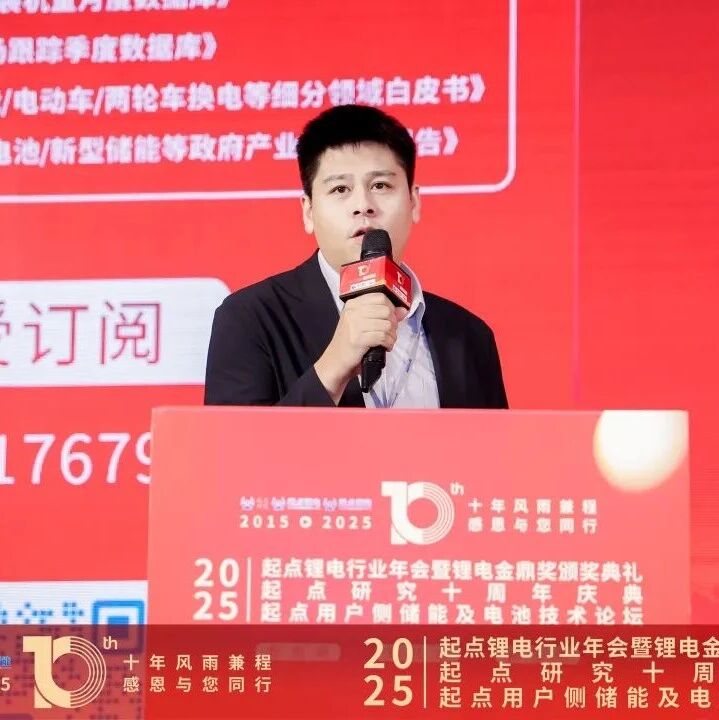
弘正储能 广东公司营销总监 王睛武:工商业储能在华南地区的应用趋势
起点锂电· 2025-12-20 07:04
Core Viewpoint - The article discusses the trends and challenges in commercial energy storage in South China, emphasizing the impact of recent policies on market dynamics and the necessity for diversified revenue models in the energy storage sector [6][9]. Group 1: Market and Policy Trends - The core drivers of trends in commercial energy storage are market dynamics and policy changes, particularly the introduction of the 136 document, which marks the beginning of a fully market-oriented pricing era for new energy [6]. - The 1192 document has elevated the necessity of energy storage from an optional to a mandatory component, presenting challenges for system integrators in the commercial energy storage sector [6]. Group 2: Challenges Faced - The end of the single-scenario era due to the 136 document requires diversified revenue assurance strategies for energy storage systems [6]. - There is a growing concern regarding the safety of energy storage systems, including the need for timely after-sales service and low operational costs [7]. - Increasing demands for interaction with electricity trading platforms and Virtual Power Plant (VPP) platforms present additional challenges for energy storage providers [8]. Group 3: Future Changes in Energy Storage - By 2026, commercial energy storage manufacturers are expected to focus on minimizing lifecycle costs while ensuring safety and accommodating multiple scenarios [9]. - The industry is shifting from a "two charge, two discharge" model to a "one charge, one discharge" model with longer storage durations, which will facilitate peak-valley arbitrage and other needs [9]. - The introduction of larger battery cells may lead to a rapid replacement of existing cells, potentially reducing system costs [9]. Group 4: Digitalization and System Integration - The future of energy storage will require a strong digital capability, aiming to provide a product-as-a-service model that integrates full lifecycle management through smart cloud platforms [11]. - Key characteristics for competitive energy storage players include high efficiency, lifecycle management capabilities, and the ability to handle multiple interactions and scenarios [18]. - The 5S system product view emphasizes simplicity, intelligence, speed, safety, and sustainability in energy storage solutions [21]. Group 5: Specific Applications and Innovations - The article highlights specific applications such as renewable energy consumption, voltage management, and user-side solutions, all driven by digitalization to achieve functions like peak-valley arbitrage and capacity management [28]. - The company emphasizes the importance of AI algorithms for battery state estimation and market trading strategies, which can enhance efficiency by 10% compared to fixed charging and discharging strategies [29].
【高端访谈】东风柳汽林长波:轻量化已经转化为用户收益
Xin Hua Cai Jing· 2025-12-16 02:45
Core Viewpoint - Dongfeng Liuzhou Motor Co., Ltd. is focusing on lightweight technology in commercial vehicles, which translates into economic benefits for users, emphasizing the importance of a "full lifecycle cost" assessment system to quantify these benefits [1][2]. Group 1: Lightweight Strategy - The company is developing a "full lifecycle cost" assessment system to quantify the benefits of lightweight technology, using the example of the Chenglong H7 Pro model, which can achieve a 15% reduction in fuel consumption [2]. - In the first ten months of this year, Dongfeng Liuzhou's commercial vehicle sales exceeded 39,000 units, representing a year-on-year growth of 34% [2]. - The company emphasizes collaborative innovation in the supply chain to implement its lightweight strategy, partnering with Chuangneng New Energy for joint development of key technologies [2]. Group 2: Intelligent Technology - The application of intelligent technology in commercial vehicles is seen as a significant opportunity for differentiation, particularly in reducing labor costs and optimizing energy consumption [3]. - In long-distance logistics, the intelligent driving system allows for reduced manpower, requiring only one driver and one safety officer, thus lowering operational costs for users [3]. - The intelligent driving system is expected to improve fuel efficiency significantly, with different driving habits impacting fuel consumption by 10%-15% [3]. Group 3: Future Outlook - The company aims to leverage intelligent technology to create a differentiated advantage, projecting a commercial vehicle production target of 45,000 units by 2025 [4]. - Over the next 3 to 5 years, the company anticipates achieving a total sales volume of 300,000 units for both commercial and passenger vehicles [4].

北京楼市,新房冰火两重天!二手房价格体系乱了
Sou Hu Cai Jing· 2025-12-08 22:47
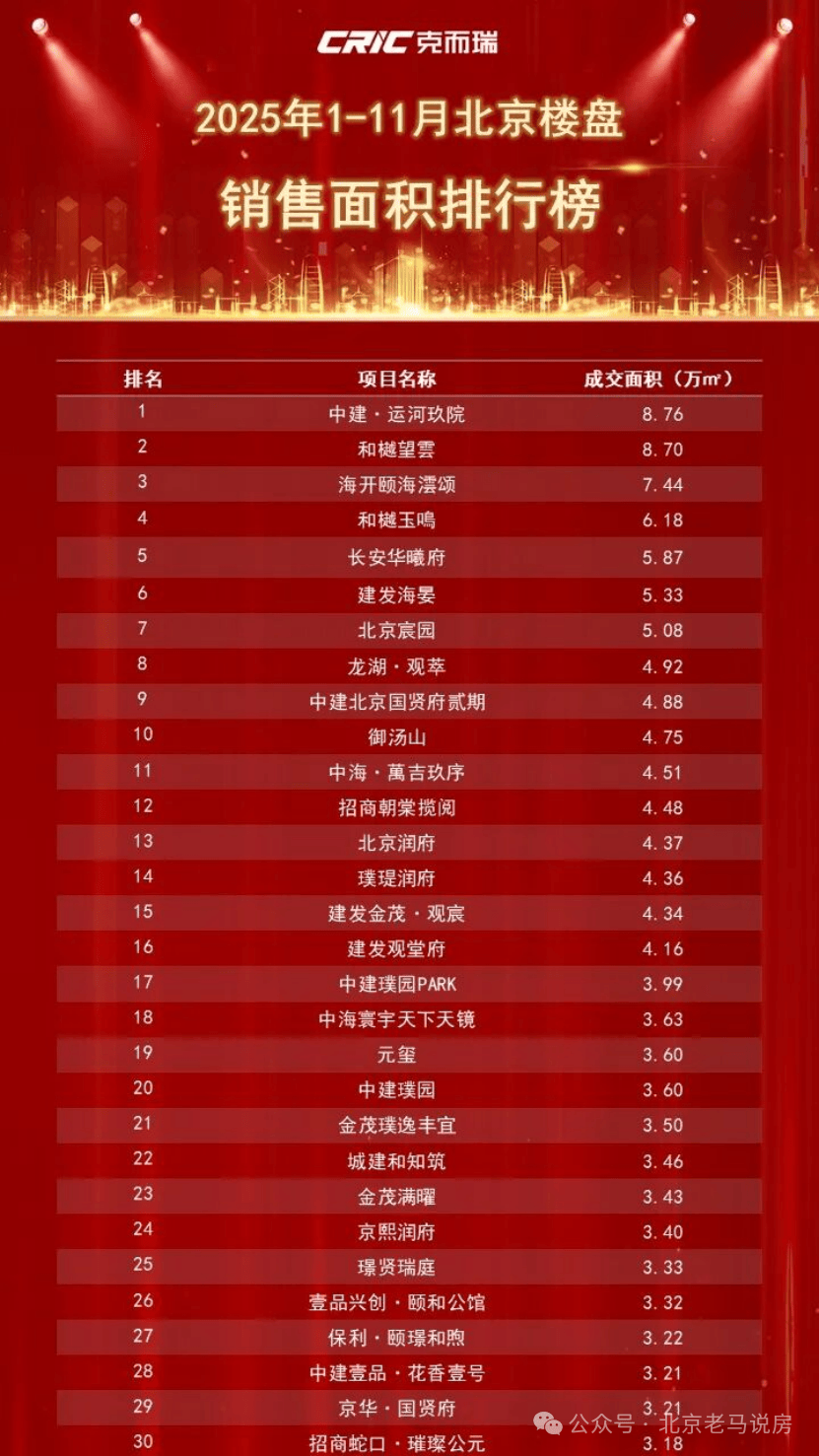
Core Insights - The Beijing real estate market is showing a clear trend where luxury homes and entry-level properties are performing well, while mid-range improvement housing is struggling to find its footing [1][4][13] - The market is characterized by a "two extremes hot, middle cold" phenomenon, indicating a significant divide in buyer interest and sales performance [4][5][13] Luxury Market - High-end properties are thriving, with unique resources and quality allowing them to maintain a separate market dynamic [6][8] - In November, luxury properties priced above 100,000 yuan per square meter frequently appeared on sales charts, with notable sales such as Jianfa Haiyan in Haidian district achieving a price of 137,036 yuan per square meter and generating over 600 million yuan in sales [7][9] - Buyers in the luxury segment are less sensitive to price changes, focusing instead on scarcity and exclusive resources [7][8] Entry-Level Market - Entry-level properties are gaining traction due to their affordability, with several units priced below 60,000 yuan per square meter making it to the top sales rankings [11] - Key factors driving the success of entry-level homes include proximity to subway lines, low total prices, and high usable area ratios [12] - For instance, the Zhongjian Yunhe Jiuyuan in Tongzhou sold nearly 70 units at just over 60,000 yuan per square meter, highlighting the appeal of affordable housing options [11][12] Mid-Range Market - The mid-range improvement housing market is facing challenges, caught in a difficult position without the allure of luxury or the price appeal of entry-level homes [13][14] - Properties priced between 6 million to just over 10 million yuan are struggling, with some previously popular projects now seeing price declines in the secondary market [13][14] - The disparity in costs within the same project could pose risks for future transactions, as buyers who purchased at higher prices may face losses if market conditions worsen [14] Market Outlook - The real estate market is expected to continue seeking balance between policy support and self-correction, with a persistent trend of "two extremes stable, middle fluctuating" likely to endure [15][16]
渤海油田“新探”:能源供应“压舱石”是如何炼成的?
经济观察报· 2025-06-20 03:54
Core Viewpoint - The article emphasizes the significance of the Bozhong 19-6 condensate gas field as a major breakthrough in China's energy sector, highlighting its substantial reserves and the technological advancements that enable efficient and environmentally friendly extraction of natural resources [1][3]. Group 1: Overview of Bozhong 19-6 Condensate Gas Field - The Bozhong 19-6 condensate gas field is the first in eastern China with proven reserves exceeding 100 billion cubic meters and technically recoverable reserves of over 100 million tons of oil equivalent [1][2]. - The field is supported by a central processing platform that integrates various functions for efficient offshore oil and gas production [2][3]. Group 2: Technical Challenges and Innovations - The geological complexity of the ancient metamorphic rock formations posed significant challenges, but advancements in seismic exploration and geological theories have led to successful extraction [2][3]. - The platform operates under extreme conditions, with temperatures exceeding 180 degrees Celsius and pressures reaching 53 MPa, necessitating advanced drilling technologies and materials [6][7]. Group 3: Economic Viability - The all-in cost of oil equivalent production from the Bozhong 19-6 field is reported at $28.52 per barrel, making it one of the most competitive in the global oil industry [11][12]. - The cost structure includes not only operational expenses but also amortized capital investments, taxes, and management costs, ensuring profitability even during downturns in oil prices [12][13]. Group 4: Strategic Importance - The Bozhong 19-6 field plays a crucial role in China's energy security, contributing significantly to the national oil output, with the Bohai Oilfield accounting for nearly one-sixth of the country's total production [19]. - The field's production targets aim for an annual output of 40 million tons of oil equivalent by 2025, comparable to that of a medium-sized oil-producing country [19][21]. Group 5: Environmental Considerations - The article discusses the dual objectives of increasing production while reducing carbon emissions, highlighting initiatives like shore power projects and the integration of renewable energy sources [23][24]. - The implementation of CCUS (Carbon Capture, Utilization, and Storage) technology is being explored to mitigate carbon emissions while enhancing oil recovery [26][27].