光子AI芯片

Search documents
AI催化全球竞逐光子产业,陕西“追光”四年如何抢占窗口期?
2 1 Shi Ji Jing Ji Bao Dao· 2025-11-06 08:48
Core Insights - The photon industry is recognized as a revolutionary and foundational strategic high-tech industry for the 21st century, with significant global interest and investment [1][3] - The global photon market reached $920 billion in 2023 and is expected to exceed $1.2 trillion by 2027, driven by the explosion of AI technology [3] - Shaanxi province is actively positioning itself in the photon industry by launching a photon technology laboratory with an investment exceeding 1 billion yuan, aiming to tackle over 30 key technologies in the next two years [3][6] Industry Growth - Since the launch of the "Chasing Light Plan" in 2021, Shaanxi's photon industry has seen rapid growth, with the number of enterprises increasing to over 370 and the industry scale rising from 15 billion yuan to 36.5 billion yuan [4] - The establishment of the "8-inch Advanced Silicon Photonic Integration Technology Innovation Platform" has been completed, addressing the gap in silicon photonic chip testing resources in Shaanxi [6][7] Investment Landscape - Zhongke Chuangxing has made significant investments in over 180 companies in the optoelectronic semiconductor sector, covering the entire industry chain from upstream materials to downstream applications [3][8] - The investment logic focuses on the critical role of the photon industry in the 21st century, particularly in light of the rapid growth of AI computing power and the limitations of electronic technology [8][9] Technological Development - The 8-inch silicon photonic platform, with an investment of 750 million yuan, aims to provide a comprehensive support system for the "Chasing Light Plan," facilitating research, testing, and mass production [7] - The photon technology laboratory will serve as a hub for innovation, research, and industry collaboration, with an investment of over 1 billion yuan and a focus on transforming research outcomes into industrial applications [7][8] Future Outlook - The integration of large models and embodied intelligence technologies is driving advancements in AI and robotics, creating new demands for computational efficiency, perception accuracy, and communication stability [9] - Zhongke Chuangxing plans to continue its strategic investments in the photon sector, focusing on both immediate growth opportunities and long-term innovations [9]


“光+AI”推动光子产业进一步生态聚变 2025硬科技创新大会光子产业高峰会议在西安举行
Zheng Quan Shi Bao Wang· 2025-11-04 11:57
Core Insights - The article highlights the transformative impact of photonic technology as a foundational technology for future advancements, particularly in its integration with AI, leading to an upgrade from "chain aggregation" to "ecological fusion" in the Shaanxi photonic industry [1][2] Group 1: Technological Breakthroughs and Platform Development - The Shaanxi photonic industry has made significant advancements in technology research and platform development, providing a solid foundation for the deep integration of AI and photonic technology [2] - The photonic technology laboratory is in the cultivation phase, with notable achievements such as the domestically leading attosecond streak camera developed by the Xi'an Institute of Optics and Precision Mechanics, which supports high-precision visual applications in AI optical imaging and quantum computing [2] - The laboratory aims to establish a comprehensive facility by 2027, targeting over 30 critical technologies [2] Group 2: Industry Growth and Investment - The "Chasing Light Plan" initiated in 2021 has led to a rapid growth in the photonic industry in Shaanxi, with the number of companies increasing to 379 and the industry scale rising from 15 billion to 36.5 billion [3] - The Shaanxi Optoelectronic Pilot Institute has invested 1.5 billion in building platforms for 6-inch compound photonic chips and 8-inch silicon photonic integration technology, facilitating the development of automotive-grade photonic chips and high-precision intelligent sensing chips [3] Group 3: Talent Integration and Ecosystem Development - The conference emphasized the importance of integrating education and technology talent to create a robust innovation ecosystem in the photonic industry [4] - A signing ceremony was held to promote the integration of education and technology talent, involving multiple stakeholders to address bottlenecks in the photonic industry's development [4] - The Qin Chuang Yuan Photonic Industry Innovation Cluster aims to establish a comprehensive development model that combines education, technology, industry, and finance [4] Group 4: Strategic Collaborations - A strategic cooperation signing ceremony for advanced semiconductor equipment was conducted, involving key institutions to enhance the upstream core segments of the photonic industry chain [5] Group 5: Expert Insights and Future Directions - Experts at the conference discussed the future core track of the industry, focusing on the integration of AI and photonics, with applications in various fields such as medical diagnostics and space exploration [6] - Several photonic-related companies showcased innovative technologies and products, promoting collaboration and communication within the industry [6]
国际团队将在太空测试光子AI芯片;智源研究院发布悟界Emu3.5丨AIGC日报
创业邦· 2025-10-31 00:08
Group 1 - Nvidia plans to invest up to $1 billion in AI startup Poolside, potentially increasing its valuation to four times the previous amount [2] - Poolside is negotiating to raise $2 billion at a valuation of $12 billion, excluding the current fundraising [2] - The latest funding round has already secured over $1 billion in commitments, with approximately $700 million coming from existing investors [2] Group 2 - The "Top 100 Innovative Enterprises in China's AI Industry by 2025" was released, featuring 10 companies from Shenzhen, highlighting the city's strengths in AI [2] - Notable Shenzhen companies on the list include Huawei, Tencent, and ZTE, showcasing their representation in the AI sector [2] Group 3 - The Zhiyuan Research Institute launched the Emu3.5 multimodal model, trained on over 10 trillion tokens, with a significant increase in video training duration and parameter count [2] - Emu3.5 can generate immersive storytelling experiences and perform complex interactions across various scenarios [2] Group 4 - An international team, including the University of Florida and NASA, successfully sent a photonic AI chip to the International Space Station, marking a new phase in space semiconductor research [2]

中东半导体,未来很刺眼
3 6 Ke· 2025-09-06 04:02
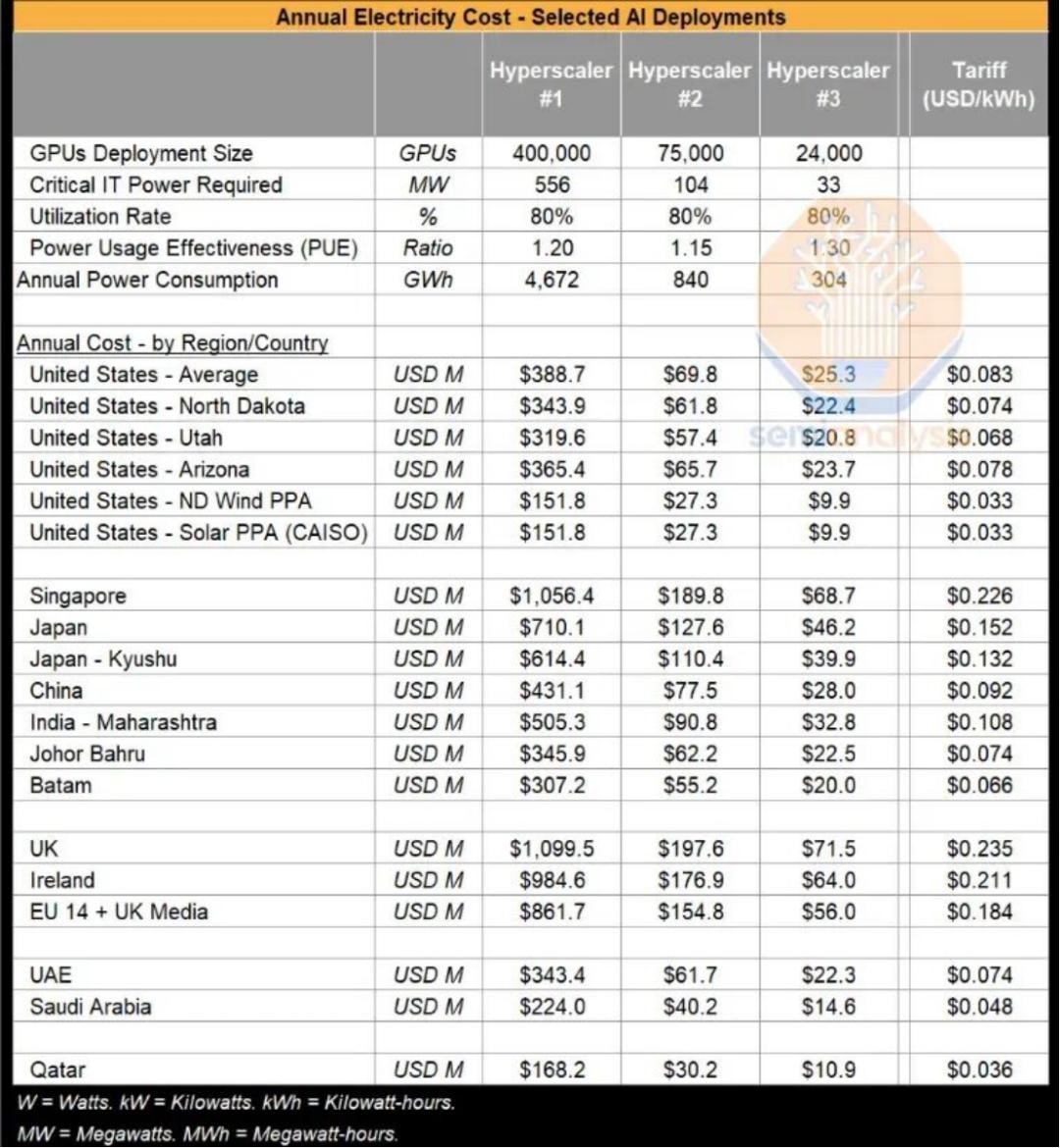
Core Insights - Middle Eastern countries, particularly Saudi Arabia and the UAE, are heavily investing in AI and semiconductor industries, driven by substantial government support and strategic initiatives [3][5][17] - Major global semiconductor companies are forming partnerships and making significant investments in the region, indicating strong market potential and interest [10][11][12] Group 1: Investment and Strategic Initiatives - In May, Trump signed military, technology, and business deals worth up to $3.2 trillion with UAE, Qatar, and Saudi Arabia, including advancements in AI and semiconductors [1] - Saudi Arabia's Vision 2030 places AI at the core of its national transformation, aiming to attract $20 billion in investments and train over 20,000 AI experts by 2030 [3] - The Public Investment Fund (PIF) of Saudi Arabia has allocated over $40 billion to AI-related companies, including Humain, which plans to build data centers with a capacity of 1.9 GW by 2030 [3][4] Group 2: Regional Developments and Collaborations - The UAE's G42 is negotiating with AMD, Qualcomm, and Cerebras to reduce reliance on Nvidia and is planning a massive AI park to establish the region as a global tech hub [1][5] - Saudi Arabia's Humain is collaborating with AMD and AWS to create an AI park, with a $5 billion investment to enhance local AI infrastructure [10][11] - The UAE's MGX fund, a $100 billion initiative, aims to make AI contribute 20% to the non-oil GDP by 2031, focusing on AI infrastructure and core technologies [5] Group 3: Market Advantages - The Middle East benefits from low electricity costs, with Saudi Arabia and Qatar's prices being 40%-60% lower than the US average, which is advantageous for energy-intensive AI and semiconductor operations [8] - The region has a young and growing population, with a significant portion under 24, providing a future workforce for the semiconductor and AI sectors [9] Group 4: Local Innovations and Self-Reliance - Companies in the UAE are developing their own chips, such as the first industrial-grade photonic AI chip, aiming to reduce dependence on Western technology [14] - Saudi Arabia's KACST has successfully designed and produced advanced electronic chips, indicating a push towards local semiconductor capabilities [16]