
全鱼宴

Search documents
一席全鱼宴,年年皆有余
Xin Lang Cai Jing· 2026-02-18 23:26
Core Viewpoint - The article highlights the cultural significance and economic transformation of Meixiong Village in Xiongjiang Town, where the traditional "whole fish feast" symbolizes abundance and family reunion during the Spring Festival, while also showcasing the village's shift towards eco-tourism and sustainable development. Group 1: Cultural Significance - Every year on the second day of the Lunar New Year, families in Meixiong Village prepare a "whole fish feast" to celebrate the festival, symbolizing prosperity and abundance [1] - The tradition has been passed down for many years, reflecting the community's strong cultural ties and the importance of family gatherings during the New Year [1] Group 2: Economic and Environmental Transformation - Xiongjiang Town has completed the withdrawal of all fish cages, becoming the first town in the Minjiang River basin to achieve this, contributing to improved water quality [2] - Since April 2025, efforts to enhance water quality have stabilized the Minjiang River's water quality at Class II standards, promoting a healthier ecosystem [2] - The transformation from fishing to tourism has led to 149 former fishermen becoming involved in the hospitality and tourism sectors, such as becoming innkeepers and baristas [2] Group 3: Tourism Development - The village has evolved from a small fishing community to a popular eco-tourism destination, often referred to as "the Fujian version of the Little Erhai Lake" [2] - During the Spring Festival, Meixiong Village promotes various themed feasts, including the whole fish feast, to attract returning residents and tourists, enhancing the local economy [3] - The focus on ecological and cultural tourism has resulted in a more prosperous community, with improved living standards for residents [3]
查干湖冬捕文化带动东北小城旅游热
Xin Hua Wang· 2026-01-09 02:29
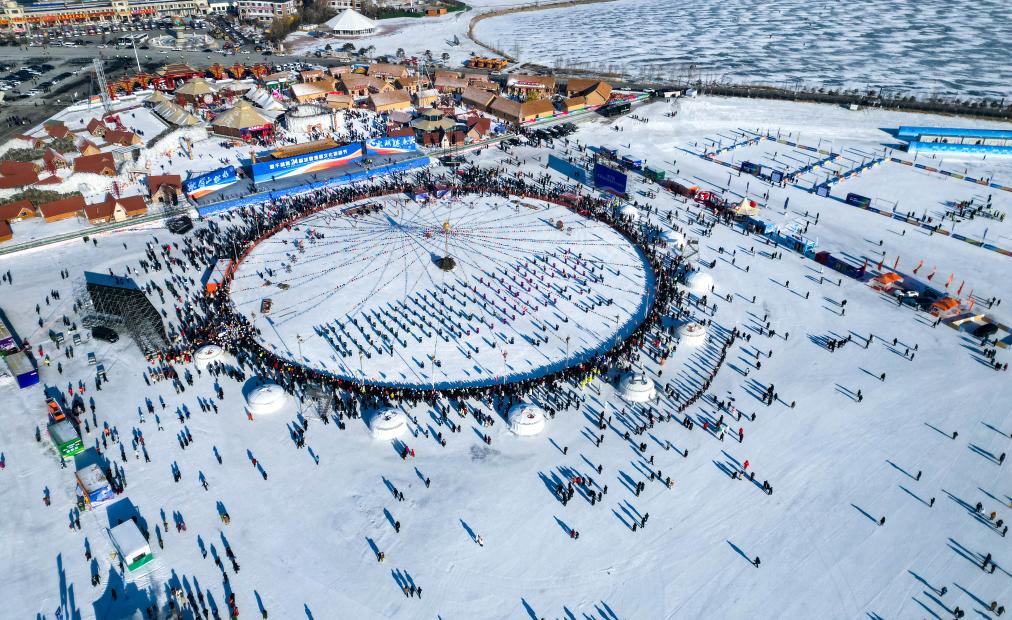
Group 1 - The 24th Ice and Snow Fishing Culture Tourism Festival was held at Chagan Lake, attracting thousands of visitors and showcasing the traditional winter fishing practices [2][3] - Chagan Lake, one of China's top ten freshwater lakes, has a rich fishing resource and was recognized as a national intangible cultural heritage in 2008 [2] - The local economy has benefited significantly from tourism, with many small fishing villages transforming into popular tourist destinations, leading to increased wealth for local residents [3] Group 2 - Local businesses, such as restaurants and accommodations, have expanded significantly; for example, Wang Jiajie's restaurant grew from 100 square meters to over 900 square meters [5] - The number of packing points in the Chagan Lake area increased from 3 to 12, with the introduction of automated packing equipment reducing packing time from 5-6 minutes to 30 seconds [6] - The presence of logistics companies has facilitated the direct shipping of fresh fish to customers across the country, enhancing the overall tourism experience [5][6]

如何做好“冷水鱼+”大文章
Xin Lang Cai Jing· 2026-01-04 22:09
Core Viewpoint - The cold water fish industry in Heilongjiang Province is experiencing significant growth and transformation through the "Cold Water Fish+" strategy, which aims to extend the industrial chain and integrate various sectors, enhancing its market presence and economic impact [1]. Cold Water Fish + Dining - The cold water fish industry has evolved from traditional fishing to high-end culinary experiences, with sturgeon and other cold water fish becoming popular delicacies across China [2]. - The full fish banquet concept has gained popularity, featuring over twenty dishes that highlight the unique flavors of cold water fish, including sturgeon caviar, which is exported to countries like Russia and Germany [2]. Cold Water Fish + Tourism - The winter fishing festival at Lianhuan Lake has transformed from a local livelihood into a tourist attraction, drawing thousands of visitors annually to experience traditional fishing and enjoy full fish banquets [3]. - The integration of fishing and tourism has significantly increased local fishermen's incomes, showcasing the potential of the "Cold Water Fish + Tourism" model [3]. Cold Water Fish + Cultural Integration - The city of Fuyuan combines Hezhe ethnic culture with the cold water fish industry, offering cultural experiences such as fish skin art and live fish markets, enhancing the tourism appeal [4]. - Various seasonal events and activities related to cold water fish are attracting more tourists, promoting the trend of "eating fish and touring Heilongjiang" [4]. Cold Water Fish + Future Development - The cold water fish industry has substantial growth potential, with plans to enhance technology in breeding and processing, establish a strong brand presence, and integrate with various sectors like tourism and e-commerce [5]. - Technological advancements have led to significant improvements in fish breeding, with the introduction of new species and increased farming efficiency, resulting in a 283.3% growth in aquaculture area [5]. - The establishment of smart fish farms is contributing to the modernization of the fishing industry, with several smart farms already operational in Heilongjiang [6]. Brand Development and Market Competitiveness - The province has developed several well-known brands, facilitating partnerships that expand the reach of Heilongjiang cold water fish to national and international markets [6]. - The integration of education and research within the fishing industry is promoting sustainable development and enhancing the cultural significance of the industry [6].

水产种苗破1800亿尾,综合产值超100亿元,未来三年九江镇要这样干
Nan Fang Nong Cun Bao· 2026-01-04 09:05
Core Viewpoint - The article discusses the ambitious development plan for the aquaculture industry in Jiujiang Town, aiming to achieve a comprehensive output value exceeding 100 billion yuan within three years, with a focus on enhancing brand recognition and integrating various industry sectors [2][60]. Group 1: Development Goals and Plans - Jiujiang Town aims to become a national benchmark for high-level aquaculture, with a target of producing over 1.8 trillion fish seedlings by 2027, contributing significantly to the national and Guangdong fish seed market [7][9]. - The "Three-Year Development Plan" for the aquaculture industry has been officially released, outlining strategies for industrial upgrading, technological innovation, and the integration of primary, secondary, and tertiary industries [4][6]. - By 2025, Jiujiang is expected to produce approximately 1.7 trillion fish seedlings, accounting for about 10% of the national total and 20% of Guangdong's output [9][10]. Group 2: Brand and Market Strategy - The plan emphasizes building a comprehensive brand system, with a goal of adding at least 10 new freshwater fish trademarks and brands by 2027 [14][66]. - Jiujiang aims to enhance its brand influence by promoting the slogan "World Seedlings Look at Jiujiang," reinforcing its reputation as "China's Freshwater Fish Seedling Capital" [12][17]. - The establishment of a complete industrial chain from quality fish seedlings to branded finished fish products is a key focus, supported by technological advancements and collaboration with academic teams [18][19]. Group 3: Infrastructure and Investment - The Guangdong International (Nanhai) Health Food Industrial Park has attracted 13 enterprises with a total investment exceeding 4 billion yuan, aiming to create a processing hub for aquatic products in the Guangdong-Hong Kong-Macao Greater Bay Area [31][32]. - The modern aquaculture logistics industrial park is expected to handle approximately 250,000 tons of aquatic products by 2025, playing a crucial role in the national aquaculture distribution landscape [40][42]. - Planned investments of over 300 million yuan will support the construction of key projects, including a seafood trading center and cold chain logistics base, targeting an annual circulation of 300,000 tons of aquatic products by 2027 [44][45]. Group 4: Key Industry Elements and Support - The development plan identifies three critical industry elements: promoting seedling research and innovation, modernizing breeding practices, and establishing high-quality standards for fish species [51][68]. - The plan includes initiatives to enhance social participation and government support, ensuring resources flow towards agricultural industries and fostering collaboration among stakeholders [70][71]. - Jiujiang aims to integrate agriculture, cuisine, tourism, and culture to create a new highland for food culture in the Greater Bay Area, with plans for at least 10 cultural dining events annually [59][69].

云南江川星云湖开渔 邀游客感受滇国故里魅力
Xin Lang Cai Jing· 2025-12-25 14:16
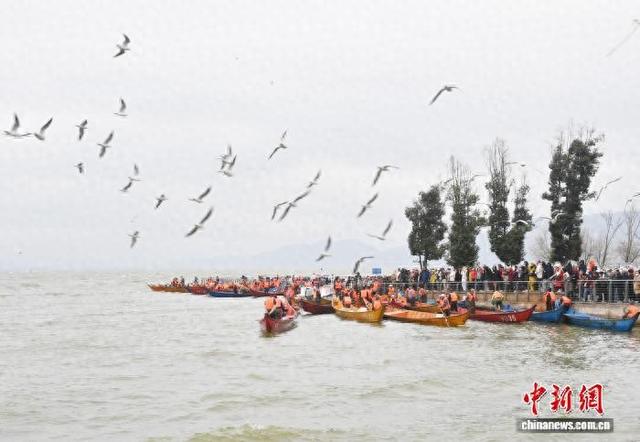
Core Viewpoint - The 18th Fishing Opening Series and Plateau Lake Aquatic Product Trading Fair in Jiangchuan, Yunnan, commenced on December 25 and will last until January 10, 2024, attracting tourists to experience local culture and aquatic products [1] Group 1: Event Overview - The event features various activities including artistic performances, drone shows, a New Year's Eve concert, and a large fireworks display [7] - The opening ceremony included 40 fishing boats entering the lake, drawing thousands of local residents and tourists to witness the event [3] Group 2: Economic Impact - The local fishing industry thrives, with fishermen reporting high sales during the opening event; over 800 kilograms of fish were sold within half a day [5] - Jiangchuan is known for its diverse fish species and culinary techniques, with fish dishes like copper pot fish and saltwater fish being popular, contributing to the local economy [5] Group 3: Cultural Significance - Jiangchuan has historical significance as a key site of ancient Dian civilization, with notable archaeological finds such as the "Niu Hu Tong An" [1] - The region's unique fish species, including the Yunnan white fish, are endemic to the area, highlighting its ecological importance [1]
对俄免签政策“满月” 饶河跨境游“哈拉少!”
Yang Guang Wang· 2025-10-21 00:04
Core Insights - The implementation of a visa-free policy for Russian tourists has significantly increased the number of visitors entering China through the Raohe port, enhancing cross-border tourism experiences [1][3][5] Group 1: Visitor Statistics and Trends - Since the visa-free policy was enacted, Raohe has seen an influx of 43,000 travelers, with 28,000 being Russian nationals, accounting for 60% of total visitors [3] - The number of visitors entering through Raohe has increased by 30% compared to the same period last year [3] Group 2: Services and Amenities - Local businesses, including restaurants and hotels, have adapted to cater to Russian tourists by providing services in Russian and creating "love cards" with essential information [6] - The hospitality sector has experienced a surge, with hotels accommodating over 1,200 guests during the recent holiday period, tripling the number from the previous year [6] Group 3: Cultural and Culinary Experiences - Russian tourists are drawn to Raohe for its culinary offerings and traditional Chinese medicine therapies, with many expressing satisfaction with their experiences [4][5] - Local establishments are expanding their menus to include dishes favored by Russian visitors, such as caviar and roasted meats, while also planning themed accommodations and entertainment [6] Group 4: Long-term Development Strategies - Raohe County is focusing on enhancing its tourism infrastructure and service quality to meet the growing demand, including the establishment of new self-driving travel camps [8] - Future plans include the development of a comprehensive tourism standard and the promotion of interconnected scenic routes to improve visitor experiences [8]