具身智能专属保险产品

Search documents
风口财评|让机器人保险为产业创新筑牢“安全网”
Da Zhong Ri Bao· 2025-12-03 01:13
Core Insights - The first third-party liability insurance for embodied intelligent robots has been launched in Suzhou, with a coverage amount of 1 million yuan to protect against potential accidents caused by robots [1] - Major insurance companies like Ping An, Taikang, and PICC have introduced specialized insurance products for embodied intelligence since September, addressing risks associated with the scaling of this emerging industry [1] - The inclusion of "embodied intelligence" in the government work report for 2025 highlights its significance as a core direction for future industrial development in China [1] Group 1 - The insurance products cover various dimensions including physical damage, third-party liability, and cybersecurity, providing a risk shield for the burgeoning trillion-yuan industry [1] - The risks associated with human-robot interaction have evolved from traditional mechanical failures to new areas such as data breaches and algorithmic ethics, creating challenges for industry scalability [1] - The insurance sector's involvement is seen as a necessary market mechanism to price innovation, moving beyond traditional equipment insurance to include new risks like system failures and cybersecurity incidents [2] Group 2 - Embodied intelligent insurance is centered on "risk personification," allowing for flexible adjustments in coverage based on specific scenarios, thus supporting the entire lifecycle of robots from production to usage [2] - The development of robot insurance faces challenges such as the lack of long-term data for accurate pricing and the rapid technological advancements that can render risk models obsolete [2] - The insurance industry is positioned as a stabilizer for emerging sectors, needing to create risk databases and innovate products to keep pace with technological changes in the embodied intelligence field [2]

人形机器人如何“放心用”?头部险企接连推专属产品,尚需跨越三大核心障碍
Mei Ri Jing Ji Xin Wen· 2025-11-25 11:08
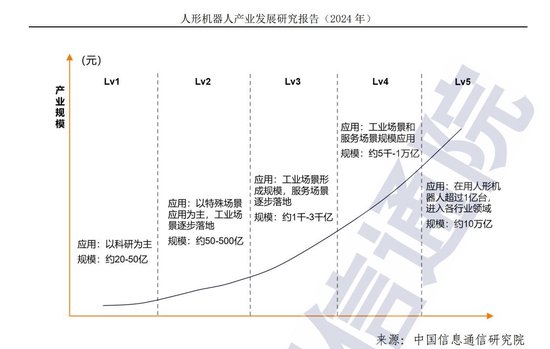
Core Viewpoint - The rapid advancement of artificial intelligence has led to a pressing need for humanoid robots, which are transitioning from laboratory demonstrations to commercial applications, indicating a new phase in industry development [1][3]. Industry Overview - The humanoid robot market in China is projected to reach a scale of 100 billion RMB by 2035, driven by applications in manufacturing, social services, and special operations [1][9]. - The insurance industry is responding to the emerging risks associated with humanoid robots by developing specialized insurance products to cover various dimensions such as property loss, third-party liability, cybersecurity, and data breaches [1][2]. Insurance Product Development - Major insurance companies like China Pacific Insurance and People’s Insurance Company of China have launched dedicated insurance products for humanoid robots, addressing risks from operational failures to third-party injuries [3][4]. - The "Smart Insurance" product by China Pacific Insurance offers integrated coverage for property loss, third-party liability, and flexible policy durations tailored to various commercial scenarios [3][4]. Risk Management Challenges - The application of humanoid robots faces significant challenges, including safety risks, property damage, and liability issues, which are critical for scaling their use [5][7]. - The complexity of humanoid robots, which integrate mechanical, electronic, and AI components, leads to multifaceted risks that traditional insurance products may not adequately cover [8][12]. Market Potential and Support - The humanoid robot market is expected to expand significantly, with projections indicating a market size of 1 trillion to 3 trillion RMB by 2040, and over 100 million humanoid robots in use by 2045 [9][11]. - Government initiatives are increasingly supporting the humanoid robot industry, including financial incentives for insurance premiums to encourage innovation and adoption [13][12]. Ethical and Regulatory Considerations - The industry faces ethical challenges and a lack of unified standards, complicating the insurance landscape and raising questions about liability in cases of malfunction or harm caused by humanoid robots [15][16]. - The need for new insurance products that address algorithmic responsibility and system failures is highlighted, along with the importance of establishing a risk database for accurate pricing [16][14].