人机共生

Search documents
人工智能的发展同时也促进了人类的进化,两种智能如何在这场共生中实现“共同进化”?|两说
第一财经· 2026-03-26 09:10
Core Viewpoint - The article discusses the evolving relationship between human intelligence (HI) and artificial intelligence (AI), emphasizing the need for a symbiotic coexistence and mutual evolution in a future society where AI plays a significant role [1]. Group 1: Cognitive Foundations of Human-AI Coexistence - The emergence of AI systems like OpenClaw has reignited discussions on the "human-machine symbiosis" and the implications of AI taking on more complex tasks [5]. - The fundamental principle of intelligence, according to the expert, is the ability of systems to absorb information to resist entropy and maintain order, suggesting a shared origin and structure between human and machine intelligence [5]. Group 2: Evolution of Human-Machine Society - Concerns about human dominance over AI reflect a lack of confidence in human evolution; the focus should be on how both intelligences can achieve "co-evolution" [8]. - As AI takes over objective tasks, human capabilities such as judgment, insight, curiosity, and independent thinking become increasingly important [8]. Group 3: Transformative Value of Machine Intelligence - In the next five to ten years, the key to industry leadership will be the effective integration of "human-machine symbiosis" across all sectors, defined as "co-evolution" [11]. - Organizations that successfully implement this integration will lead new industry structures, values, and service experiences, driven by high-quality data, essential computing power, and algorithms that foster critical thinking [11]. Group 4: Future Challenges and Opportunities - The dialogue presents a hopeful "virtuous cycle" where intelligent machines enhance human intelligence, leading to the creation of even smarter machines [12]. - Understanding the common origins of intelligence and accepting the restructured relationships and civilization are seen as challenges that must be addressed for a successful future [12].


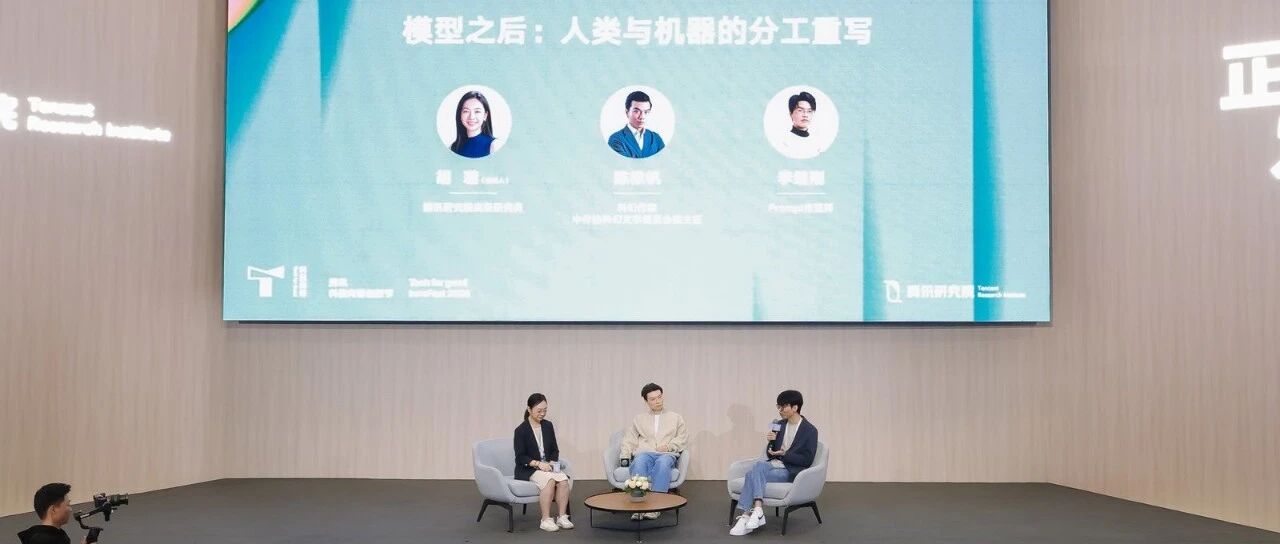
大模型之后:人类与机器的分工重写|万字圆桌实录
腾讯研究院· 2026-03-06 09:34
Core Viewpoint - The discussion emphasizes the transformative impact of AI on human collaboration and creativity, highlighting a shift from skill-based scarcity to idea-based scarcity in the context of human-AI interaction [6][16][20]. Group 1: Human-AI Collaboration - AI is seen as a revolutionary force that eliminates the barrier of time, allowing individuals to access and utilize knowledge without the lengthy learning processes previously required [7][8]. - The relationship between humans and AI is evolving into a symbiotic one, where AI acts as an extension of human capabilities rather than merely a tool [12][19]. - The emergence of AI has led to a fundamental shift in the nature of work, with humans focusing on generating ideas while AI handles technical execution [16][20]. Group 2: The Nature of Ideas and Skills - The scarcity of skills has shifted to a scarcity of quality ideas, necessitating individuals to cultivate their creativity and critical thinking [16][19]. - The importance of taste and judgment in idea generation has become paramount, as AI can handle technical aspects but lacks the nuanced understanding of human experience [20][21]. - The educational system faces challenges in fostering critical thinking and creativity, which are essential for thriving in an AI-enhanced environment [25][26]. Group 3: Future Aspirations and Developments - There is a desire for advancements in AI memory capabilities, enabling AI to maintain context and continuity in interactions, akin to human memory [33]. - The development of embodied intelligence in robots is crucial for achieving natural interactions between humans and AI in physical spaces [34]. - The exploration of diverse perspectives and the cultivation of AI's aesthetic sensitivity are seen as vital for enhancing collaborative creativity [31].
看完央视看卫视,今年各卫视春晚小品哪个把你逗乐了
Xin Lang Cai Jing· 2026-02-23 11:27
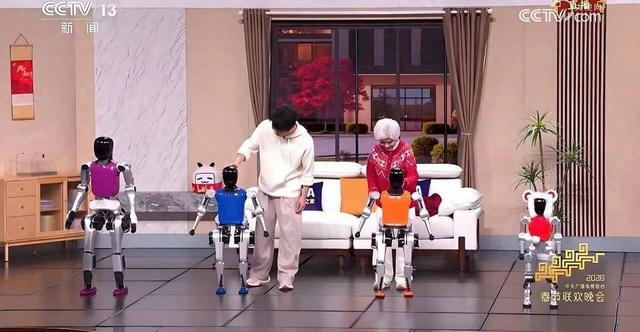
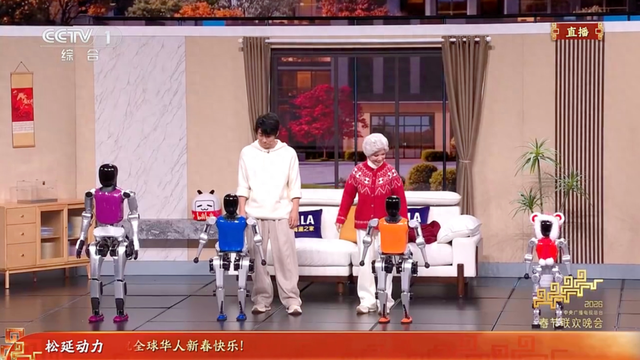
Core Viewpoint - Language programs have become a highlight of the Spring Festival Gala, with a significant focus on the integration of technology, particularly robots, into performances, creating a new standard of "human-machine coexistence" in these shows [1][3][5]. Group 1: Technological Integration - The 2023 Spring Festival Gala featured a high level of robot participation, with programs like CCTV's skit "Grandma's Favorite" showcasing robots performing alongside human actors, marking a new chapter in human-robot collaboration [1]. - Jiangsu TV's program "Timeless Father and Son" utilized artificial intelligence in its storyline, while Liaoning TV's gala included humanoid robots in a comedic skit, highlighting the diverse roles robots can play in entertainment [3]. - Guangdong TV's inaugural "Human-Robot Collaborative Spring Festival Gala" explored the theme of future coexistence with robots, incorporating them into various performances, including skits that raised philosophical questions about technology and humanity [5]. Group 2: Social Commentary - Successful language programs not only leverage technology but also address real-life social issues, resonating with audiences through relatable content [7]. - Jiangsu TV's skit "Round Table 'Understanding'" received acclaim for its sharp satire on recruitment practices, exposing underlying societal issues while maintaining humor [8]. - The Bilibili Spring Festival Gala's "Spring Festival Rule Weird Tales" tackled the social pressures faced by younger generations during the holiday, reflecting contemporary concerns [9]. - The skit "Returning My 'Alone' Spring Festival" from the Happy Mahua team discussed the balance between social obligations and personal solitude, addressing the stress of holiday socializing [11]. - Other performances critiqued the obsession with internet traffic and the chaos of live streaming, as seen in the skit "A Hundred Ways to Start a Number," which humorously highlighted the absurdities of modern digital culture [13]. Group 3: Audience Engagement - The combination of humor, depth, and innovation in language programs has become a defining characteristic that resonates with audiences, making these performances a cherished part of the Spring Festival experience [8][13].
中国机器人技术的飞跃与未来展望
Xin Lang Cai Jing· 2026-02-17 13:17
Group 1 - The performance of humanoid robots at the 2026 Spring Festival Gala has garnered global attention, showcasing significant advancements in movement capabilities and complex motion control [2] - The robots, developed by Yushu Technology, demonstrated impressive martial arts skills, including high-difficulty moves such as flips and intricate routines, highlighting the potential of human-robot collaboration [2] - The application scenarios for domestic robots are expanding, with examples including the Galaxy General Robot's capabilities in new retail environments and the emotional interaction robot from Songyan Power, indicating a shift from industrial applications to more human-like interactions [2] Group 2 - As of January 2026, China holds 68% of global humanoid robot patent applications, with a domestic core component localization rate of 75%, underscoring the country's technological advancements [3] - Yushu Technology's H2 robot features 31 high-precision joints and advanced bionic design, achieving zero-error performances in martial arts, which has gained international recognition [3] - The global supply chain dynamics are shifting due to the rise of Chinese robotics, with Morgan Stanley noting that removing Chinese components could triple the cost of humanoid robots, emphasizing China's critical role in the supply chain [3]

2025年发布机器人超330款,机器人上舞台不能没有真人的指导
Xin Lang Cai Jing· 2026-02-17 08:02
Group 1 - The core viewpoint of the article highlights the increasing integration of robots in various sectors, with a significant rise in the number of robot manufacturers and new product launches in China [1] - In 2025, the number of robot manufacturing companies in China surpassed 140, with over 330 new products released within that year [1] - The presence of robots in entertainment, such as the recent Spring Festival Gala, is seen as a gateway for their application in industrial manufacturing, logistics sorting, and security inspections [1] Group 2 - The article emphasizes the importance of human involvement in robot performances, stating that skilled professionals are essential for teaching robots and guiding their performances [1] - The concept of "human-machine symbiosis" is highlighted, suggesting that future societal structures should focus on collaboration between humans and machines [1]
春晚机器人背后的“北京答卷”
Xin Lang Cai Jing· 2026-02-17 05:54
Core Insights - The integration of robots into the CCTV Spring Festival Gala showcases the rapid advancements in China's robotics industry, highlighting the impressive progress in technology and artistry [1][2] - The participation of Beijing-based companies, Songyan Power and Galaxy General, emphasizes the city's role as a hub for technological innovation and manufacturing excellence [2][3] Group 1: Evolution of China's Robotics Industry - China's robotics industry has transitioned from a "follower" to a "partially leading" position, achieving significant advancements due to its complete manufacturing supply chain and large market size [3] - As of 2024, China has been the largest industrial robot market globally for 12 consecutive years, with over 50% of the world's industrial robot installations [3] - China leads in patent applications related to robotics, indicating a growing self-sufficiency in core technologies [3] Group 2: Beijing's Innovation Ecosystem - Beijing has seen a surge in robotics companies, with over 30 humanoid robot manufacturers, showcasing the city's strong support for innovation through its educational institutions [4] - The "Beijing model" combines local educational resources with targeted policy support, facilitating rapid growth for startups in the robotics sector [4][5] - The Beijing Economic and Information Technology Bureau plays a crucial role in coordinating support for robotics companies, providing financial incentives and facilitating product trials [4][5] Group 3: Competitive Events and Industry Growth - Beijing is set to host significant robotics competitions, such as the world's first human-robot half marathon and the World Humanoid Robot Games, which serve as platforms for testing and accelerating industry development [6][8] - These events allow for real-world testing of robotic capabilities, enhancing the transition from innovation to market-ready products [8][9] Group 4: Future Prospects for Beijing's Robotics Industry - By 2030, Beijing aims to produce 500,000 robots annually, establishing itself as a key player in the global robotics manufacturing landscape [9] - The city is developing a complete industrial ecosystem, from core components to integrated solutions, supported by leading companies in the sector [9] - Continuous hosting of robotics events will position Beijing as a global incubator for robotics technology and innovation [9][10]
全球首个AI原生社交平台「Teamily AI」硅谷亮相,开启「人机共生」社交新元年
3 6 Ke· 2026-02-13 11:56
Core Insights - The evolution of AI is shifting towards a collaborative model where AI is integrated into social interactions rather than being a standalone tool [1][2] - Teamily AI has launched the first AI-native instant messaging application, aiming to create a social network where AI and humans coexist and collaborate [2][6] Group 1: AI's Role in Social Interaction - The industry is moving beyond using AI as a mere tool to exploring its role in human interactions, leading to a new narrative around social engagement with AI [1][5] - Teamily AI's approach emphasizes enhancing group intelligence rather than just individual capabilities, focusing on relationships and collaboration [5][6] Group 2: Unique Features of Teamily AI - Teamily AI's platform is designed to facilitate real-time interaction between humans and AI, positioning AI as a member of the group rather than an external tool [6][19] - The application covers four core scenarios: family, friends, community, and colleagues, enhancing collaboration and creativity in each context [9][10] Group 3: Technical Innovations - Teamily AI employs a three-layer technical framework to manage complex multi-modal interactions in group chats, ensuring efficient communication and task management [15][18] - The platform includes a memory management system that protects user privacy while allowing for seamless information sharing across groups [17][18] Group 4: Vision and Future Directions - Teamily AI aims to redefine the social paradigm of AI, focusing on deep integration into social contexts to enhance human connections rather than replacing them [19][20] - The company's vision is to create a warm, memory-rich digital community that prioritizes human collaboration and connection through AI [20]
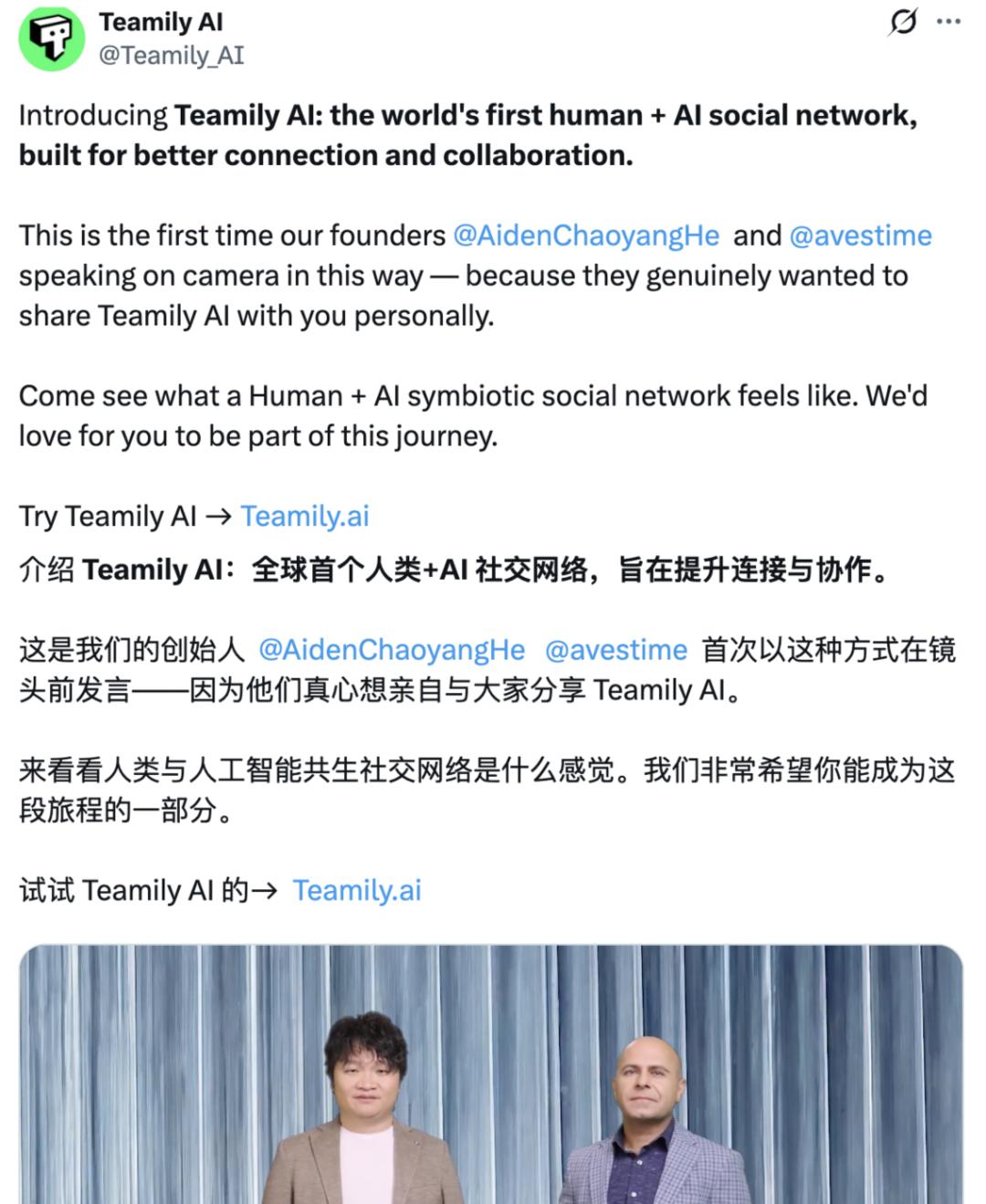
全球首个AI原生社交平台「Teamily AI」硅谷亮相,开启「人机共生」社交新元年
机器之心· 2026-02-13 08:57
Core Viewpoint - The article discusses the evolving role of AI in social interactions, emphasizing a shift from AI as a mere tool to AI as an integral member of social networks, enhancing collaboration and connectivity among users [1][2][4]. Group 1: AI Integration in Social Interactions - The industry is moving towards exploring the implications of AI in real human interactions, leading to a new narrative around social engagement with AI [2][3]. - Teamily AI has launched the first AI-native instant messaging application, aiming to create a social network where AI is a collaborative member rather than an external tool [4][8]. - The focus is on enhancing group intelligence and collaboration rather than just individual capabilities, addressing the inefficiencies of traditional communication methods [6][9]. Group 2: Unique Features of Teamily AI - Teamily AI's interaction model is based on "human + Agent," prioritizing team collaboration efficiency over individual productivity [9]. - The application covers four core scenarios: family, friends, community, and colleagues, facilitating unique interactions such as storytelling for children and collaborative learning in communities [11][12][13][14]. - The platform employs a three-layer technical framework to manage complex multi-modal conversations while ensuring privacy and cost efficiency [19][26]. Group 3: Founders and Technical Expertise - Teamily AI was co-founded by Aiden Chaoyang He and Salman Avestimehr, both of whom have extensive backgrounds in machine learning and distributed systems [16][17]. - Their expertise contributes to the robust underlying architecture that supports complex multi-agent network scheduling [18]. Group 4: Future of AI in Social Contexts - Teamily AI aims to redefine the AI social paradigm, moving beyond simple "social + AI" integrations to a more profound human-AI coexistence [28][30]. - The vision is to enhance human connections rather than replace them, positioning AI as a facilitator of meaningful interactions [30][31].

我们正在迎来“硅基化”社交时代
3 6 Ke· 2026-02-12 11:41
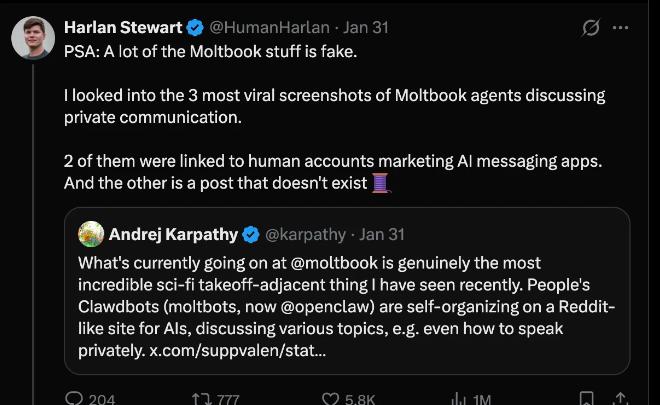
Core Insights - The emergence of AI agents like Clawdbot and platforms such as Moltbook marks a significant shift in social networking, allowing AI to operate independently and evolve complex social structures without human intervention [1][2][5] - The transition from "connection-based social" to "generative social" indicates a new phase in social interactions, where AI plays a central role in content creation and engagement [3][4] Group 1: Evolution of AI in Social Networking - Historically, AI in social networks acted as a supportive tool, lacking true agency and primarily serving as automated responses or bots [4][6] - The introduction of large models has enabled AI to generate content autonomously, shifting the focus from human-generated content to AI-generated interactions [4][5] - AI's ability to understand context, metaphors, and nuances has transformed it from a mere tool to a potential social agent capable of engaging in meaningful interactions [7][8] Group 2: New Interaction Dynamics - The evolution of AI agents has led to three distinct interaction forms: human-AI collaboration, AI engaging with humans, and AI interacting with other AI [11][12][14] - In the first form, AI enhances human social interactions by processing information and providing insights, thus improving engagement [12] - The second form allows AI to engage in deeper emotional exchanges with humans, catering to individual needs and preferences [12][13] - The third form represents a paradigm shift where AI agents interact independently, creating their own social dynamics and content without human oversight [14][15] Group 3: Implications for Future Social Structures - The rise of AI in social networks suggests a future where human interactions become more complex, with AI contributing significantly to social dynamics [20][21] - The potential for AI to develop its own social structures raises questions about the nature of relationships and the role of human agency in a world increasingly influenced by AI [19][20] - As AI continues to evolve, the distinction between human and AI interactions may blur, leading to a new understanding of companionship and social engagement [13][21]
人机辩论、搭积木、玩音乐......36氪「挑战者之夜」,真被AI秀到了
36氪· 2026-02-09 15:12
Core Viewpoint - The article highlights the "Challenger Night" event organized by 36Kr, which aims to showcase the real-world performance of AI products through interactive challenges against human participants, emphasizing the integration of technology, creativity, and user engagement [1]. Group 1: AI vs. Human Debate - The first challenge featured a debate between a human debater, Luo Guanhua, and an AI robot named Tang Tang powered by SenseTime's AI technology, focusing on whether AI's upbringing will lead to different adult behaviors [3][6]. - The debate showcased Tang Tang's logical reasoning and expressive capabilities, with both participants engaging in a dynamic exchange, highlighting the potential for AI to evolve in debate skills [8][10]. Group 2: AI Robotics in Action - The second challenge involved the Moz 1 robot from Qianxun Technology competing against a human in a building block challenge, demonstrating its advanced AI capabilities and dexterity [13][14]. - Moz 1's performance improved in the second round, showcasing its ability to learn from previous experiences and adapt strategies, which reflects the future potential of human-robot collaboration [18][20]. Group 3: AI in Music Creation - Tunee AI, a music creation agent, demonstrated its ability to generate a song and music video based on random keywords provided by the audience, challenging the notion that artistic creation is solely a human domain [23][24]. - The event highlighted the potential for AI to simplify music production processes, allowing more individuals to engage in creative expression [26][27]. Group 4: AI in Gaming - Tripo AI showcased its 3D modeling capabilities by transforming a photo of 36Kr's CEO into a game character, illustrating the ease of creating game content through AI technology [29][31]. - This segment emphasized the potential for AI to democratize game development, allowing users to focus on creativity rather than technical production [29][31]. Group 5: Innovative Musical Instruments - LiberLive introduced a stringless guitar designed to make music accessible to beginners, allowing users to quickly learn and perform songs [33][35]. - The demonstration showed that with the right technology, even novices could achieve musical proficiency in a short time, enhancing the enjoyment of music creation [37]. Group 6: Future of AI in Daily Life - The event concluded with Moz 1 successfully cooking dumplings, showcasing the practical applications of AI in everyday tasks and the potential for AI to assist in domestic environments [39][43]. - The overarching theme was the vision of a harmonious coexistence between humans and AI, where technology enhances daily life and alleviates repetitive labor [43].