
再生钢

Search documents
一家河北县城民企,成为英国政府的眼中钉
3 6 Ke· 2025-06-05 03:29
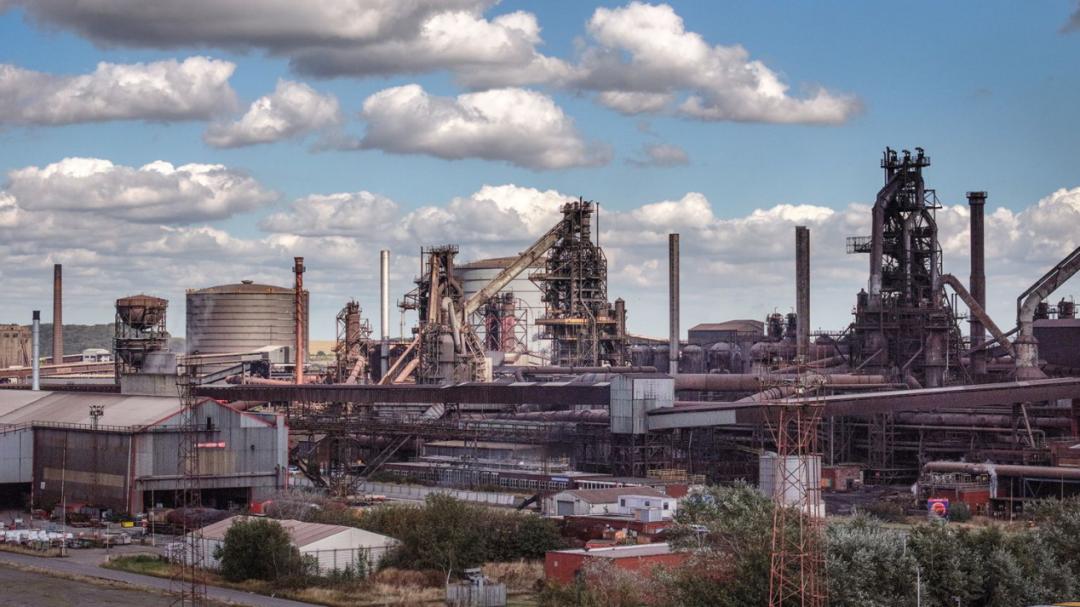
Core Viewpoint - The article discusses the decline of the UK steel industry, focusing on the conflict surrounding the Scunthorpe steel plant, which is now owned by a Chinese private enterprise, and the implications of this ownership on the UK's ability to produce primary steel. Group 1: Historical Context - Scunthorpe was once a significant steel production hub in England, known for its clean factories and green spaces, earning the nickname "Industrial Garden" [5] - By the 1960s, Scunthorpe was one of the top five steel production bases in the UK, but the industry has since faced a dramatic decline [5][9] - The UK steel industry produced 2.8 million tons of steel in 1970, but by 2023, this figure had plummeted to 5.6 million tons, marking a decline of 3.68% annually [24] Group 2: Current Industry Status - As of 2023, the UK steel industry employs approximately 37,000 workers and produces 5.6 million tons of steel, with 76% being primary steel and 24% recycled steel [9] - The Scunthorpe plant and the Tata Steel plant in Port Talbot are the last remaining facilities producing primary steel in the UK, and both are facing significant operational challenges [13][15] Group 3: Ownership and Economic Implications - The Scunthorpe plant is owned by China's Jingye Group, which acquired it after a series of ownership changes, including Tata Steel and Greybull Capital [45][39] - The UK steel industry is now largely controlled by foreign entities, with Tata and Jingye employing about 11,200 workers, representing one-third of the total workforce in the sector [15][18] - The closure of primary steel production facilities would leave the UK as the only G7 country unable to produce its own primary steel, raising concerns about national security and industrial capability [13][15] Group 4: Environmental and Political Challenges - The UK government has been caught in a dilemma between supporting environmental initiatives and maintaining domestic steel production capabilities [31][67] - The proposed transition from blast furnaces to electric arc furnaces by Jingye is seen as a cost-saving measure but threatens to eliminate 1,500 to 2,000 jobs [55][57] - The UK Parliament has intervened to prevent the closure of the Scunthorpe plant, reflecting the tension between environmental goals and industrial sovereignty [58][60]

沪铜日评:国内铜冶炼厂6月检修产能或环减,国内电解铜社会库存量环比减少-20250530
Hong Yuan Qi Huo· 2025-05-30 05:36
1. Report Industry Investment Rating - No information provided on the industry investment rating. 2. Core View of the Report - The easing of mutual tariffs between China and the US leads to expectations of pre - export rush, and the domestic electrolytic copper social inventory is at a low level. However, the traditional off - season of consumption is approaching, which may cause the Shanghai copper price to fluctuate widely. It is recommended that investors wait and see, and pay attention to the support and resistance levels of Shanghai copper, London copper, and US copper [4]. 3. Summary by Related Catalogs 3.1 Market Data - **Shanghai Copper Futures**: On May 29, 2025, the closing price of the active contract was 78,130 yuan, up 260 yuan from the previous day; the trading volume was 80,153 lots, an increase of 6,746 lots; the open interest was 174,757 lots, an increase of 5,295 lots; the inventory was 32,165 tons, a decrease of 2,696 tons [2]. - **LME Copper Futures**: On May 29, 2025, the closing price of the 3 - month copper futures (electronic trading) was 9,567 US dollars, up 1 US dollar from the previous day; the LME copper futures 0 - 3 - month contract spread was 51.57, up 6.60 from the previous day; the 3 - 15 - month contract spread was 98.25, down 1.00 from the previous day [2]. - **COMEX Copper**: On May 29, 2025, the closing price of the active copper futures contract was 4.671 US dollars, down 0.07 US dollars from the previous day; the total inventory was 180,501 tons, an increase of 1,538 tons [2]. 3.2 Macro Situation - The scale of short - term US Treasury bonds maturing in June and July is 1.2 trillion and 1.46 trillion US dollars respectively. The concentrated maturity and refinancing of US Treasury bonds may cause liquidity shocks. The US S&P Global Manufacturing and Services PMI in June were 52.8 and 54.8 respectively, both higher than expected. Tariffs have raised concerns about a rebound in consumer - side inflation, delaying the Fed's interest - rate cut expectations to September/December [3][4]. 3.3 Supply - Side Situation - Multiple copper mines and smelters have production changes. For example, the Kamoto - Kakoala copper mine of Jinsha Mining suspended underground mining due to multiple mine tremors on June 28; the Freeport McMoRan in Indonesia was allowed to export 1.27 million tons of copper concentrate in 6 months but will be subject to higher export tariffs; several copper mine expansion projects are planned to be put into production in the future, which may increase or decrease the domestic copper concentrate production (import) volume in June [4]. - The import volume index of Chinese copper concentrates is negative and decreased compared with last week. The out - port (in - port, inventory) volume of copper concentrates at world (Chinese) ports decreased (increased, decreased) compared with last week. The domestic scrap copper import window is open, but European high - quality scrap copper plates restrict exports, and Chinese importers can only purchase copper chips or brass [4]. - Some copper smelters have production adjustments. For example, Glencore's PASAK copper smelter in the Philippines with a 200,000 - ton smelting capacity has shut down, and its Alto Norte smelter in Chile with a 350,000 - ton copper capacity suspended production until May due to problems with the smelting furnace. The 500,000 - ton cathode copper plant in Congo may be completed and put into production in June 2025 [4]. 3.4 Demand - Side Situation - The capacity utilization rates of various copper - related downstream industries in China may decline in June. For example, the capacity utilization rates of electrolytic copper rods, recycled copper rods, copper electric cables, copper foil packaging, steel strips, copper foil, steel pipes, and brass rods may decline due to factors such as the easing of tariffs, the arrival of the traditional off - season, and the impact of US tariff policies [4].