农产品精深加工

Search documents
组团发展带动乡村共富
Jing Ji Ri Bao· 2025-11-16 22:10
Core Viewpoint - The article emphasizes the importance of promoting rural revitalization through categorized and regionalized approaches, aiming to enhance rural infrastructure, public services, and living environments while fostering collaborative development among villages [1]. Group 1: Rural Revitalization Strategy - The strategy focuses on breaking down administrative barriers and physical boundaries of villages, promoting a model where stronger villages support weaker ones, leading to a collective growth path [1]. - The approach aims to transition from isolated development ("point blooming") to integrated regional development ("landscape formation"), addressing issues of imbalance, resource fragmentation, and industrial homogeneity in rural areas [1]. Group 2: Current Challenges - Despite some successes in rural group development, many areas still face challenges such as the phenomenon of "gathering without integration," where industries and interests remain disconnected [2]. - Resource-sharing mechanisms within regions are not functioning optimally, leading to underutilization of land, capital, talent, and data [2]. - The mechanism for sharing development outcomes is inadequate, with the expected benefits of stronger villages supporting weaker ones not being realized effectively [2]. Group 3: Recommendations for Improvement - Strengthening planning guidance is essential, advocating for a unified approach that transcends township and village boundaries, focusing on regional characteristics for overall design [2]. - Promoting deep integration of industries within regions, encouraging collaboration between strong village enterprises and weaker villages through cooperative models [3]. - Facilitating the flow of resources by breaking down institutional barriers, ensuring efficient movement of land, capital, and talent within regions [3]. - Innovating governance mechanisms to coordinate interests among various stakeholders, ensuring effective management of regional development projects [3].
“十五五”县域经济发展如何迈步?多方专家学者支招
Di Yi Cai Jing· 2025-11-08 04:29
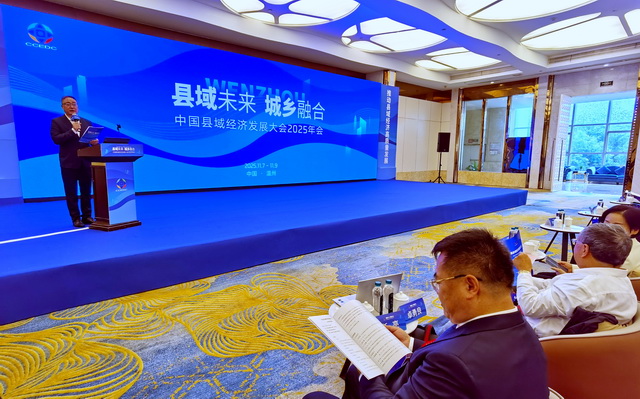
Core Viewpoint - The development of county economies during the 14th Five-Year Plan should focus on four key areas: artificial intelligence, urban-rural integration, green transformation, and county governance, emphasizing tailored policies over a one-size-fits-all approach [1][2][4] Group 1: Urban-Rural Integration - County economies are crucial for urban-rural integration, serving as a key engine for consumption and domestic demand [2] - The core of urban-rural integration is the integration of people, promoting the free movement of populations between urban and rural areas [2] - A modern industrial system should be established through deep integration of various industries in rural areas, moving beyond the traditional role of providing raw materials and labor [2][4] Group 2: Economic and Industrial Development - Counties should leverage their resource endowments and comparative advantages to develop suitable industries, including traditional and new sectors [3][5] - The integration of secondary and tertiary industries is essential for creating competitive and recognizable county industrial brands [4][5] - Counties should focus on attracting urban industries, capital, and talent while also connecting with rural industries to promote comprehensive development [5][8] Group 3: Infrastructure and Public Services - Enhancing public service attributes in counties is vital for economic development, requiring policies that facilitate the flow of resources such as land, capital, and talent [4][8] - The establishment of a conducive living and working environment is crucial, with improvements in rural infrastructure and public service accessibility [8] Group 4: Future Opportunities - The county economy faces new challenges and opportunities, including digital economy growth and rural revitalization [2][7] - The focus should be on cultivating specialized and innovative industrial clusters, extending agricultural processing chains, and developing new business models that integrate agriculture, e-commerce, and tourism [8]