
农村电商

Search documents
2026年中央一号文件,部署哪些“三农”重点?
Yang Shi Xin Wen Ke Hu Duan· 2026-02-04 00:42
Core Insights - The 2026 Central Document emphasizes the modernization of agriculture and rural areas, focusing on enhancing agricultural production capacity and quality efficiency [1] - It highlights the importance of stable grain and oil production, technological advancements, and effective application of scientific achievements [1] - The document also stresses the need for regular and precise assistance to foster county-level industries and ensure stable employment for migrant workers [1] Group 1: Stability and Changes in Agricultural Policy - The main theme of the document remains the prioritization of agriculture and rural development, with a focus on food security and farmer income [5] - Changes include a more systematic approach to agricultural work, with clearer policies tailored to regional characteristics [5] Group 2: Agricultural Technology Promotion - The document addresses the need for a systematic integration of agricultural technology, moving away from fragmented approaches to a more cohesive strategy [7] - It emphasizes the importance of social services and land transfer to facilitate the rapid application of technology in agriculture [7] Group 3: Disaster Prevention and Mitigation - The document calls for strengthening the agricultural disaster prevention and mitigation system in response to increasing extreme weather events [10] - Key strategies include monitoring and early warning systems, infrastructure development, and the promotion of resilient crop varieties [10] Group 4: Regularized Precision Assistance - The document introduces a systematic approach to ongoing assistance for poverty alleviation, ensuring continued support for previously impoverished populations [12] - It aims to enhance the internal motivation of impoverished regions by improving their industrial foundations and capabilities [14] Group 5: Rural E-commerce Development - The document highlights the role of e-commerce in addressing the sales challenges faced by rural products, particularly local specialties [16] - E-commerce is seen as a means to connect producers with consumers, thereby increasing farmers' incomes [16] Group 6: Employment and Development for Migrant Workers - The document outlines strategies to improve the skills of migrant workers, ensuring they can secure better job opportunities in urban areas [18] - It emphasizes the importance of providing access to public services and continuous skill enhancement for sustainable development [18]
我国连续13年 位居全球最大网络零售市场
Zheng Quan Shi Bao· 2026-01-14 17:30
Core Insights - The national e-commerce work conference held on January 13-14 emphasized four key areas for development by 2026: strengthening top-level design, enhancing development capabilities, creating a favorable ecosystem, and expanding open cooperation [1][2] Group 1: E-commerce Development Environment - Since the 14th Five-Year Plan, the e-commerce development environment has continuously improved, with the Ministry of Commerce and local departments implementing various policies to boost digital consumption, rural e-commerce, and cross-border e-commerce, injecting strong momentum into the construction of a unified national market [1] - The overall scale of digital consumption has exceeded 23.8 trillion yuan, making China the world's largest online retail market for 13 consecutive years [1] - The integration of digital and real economies has deepened, with over 1,500 industrial e-commerce matching events covering nearly 10,000 enterprises, effectively empowering traditional industry upgrades [1] Group 2: Social and Economic Impact - The social benefits of e-commerce have been continuously enhanced, with related employment exceeding 78 million and express delivery business volume growing at an average annual rate of nearly 20% [1] - The scale of software and information services related to cloud computing and big data has rapidly increased, demonstrating significant contributions during pandemic prevention and control efforts [1] - E-commerce has become a new driving force for cultivating new productive forces and plays an active role in building a new development pattern [1] Group 3: Strategic Goals for the 15th Five-Year Plan - The 15th Five-Year Plan period is crucial for achieving socialist modernization, with 2026 marking the beginning of this phase [2] - The conference highlighted the importance of integrating domestic economic work with international economic and trade struggles, focusing on high-quality development, high-level openness, and efficient governance in e-commerce [2] - Key strategies include strengthening party leadership, driving innovation, optimizing the development environment, and expanding open cooperation for inclusive and win-win outcomes [2]
商务部:2026年要扩大开放合作,突出普惠共赢,实现“向外”发展
Xin Hua Cai Jing· 2026-01-14 09:32
Core Insights - The national e-commerce work conference was held in Beijing on January 13-14, focusing on the implementation of the central economic work conference's spirit and summarizing the achievements of e-commerce during the 14th Five-Year Plan period, particularly for 2025 [1] Group 1: Achievements and Developments - Since the 14th Five-Year Plan, the Ministry of Commerce has worked with local departments to promote high-quality development in e-commerce, optimizing the development environment and implementing policies for digital consumption, rural e-commerce, and cross-border e-commerce [2] - The overall scale of digital consumption has exceeded 23.8 trillion yuan, with China maintaining its position as the world's largest online retail market for 13 consecutive years [2] - Over 1,500 industrial e-commerce matching activities have been conducted, covering nearly 10,000 enterprises, effectively empowering traditional industry upgrades and promoting online-offline synergy [2] - The number of "Silk Road e-commerce" partner countries has increased to 36, with successful progress in the creation of pilot zones, sharing the benefits of China's large e-commerce market globally [2] - Employment related to e-commerce has surpassed 78 million, with express delivery business volume growing nearly 20% annually, showcasing the sector's significant social impact [2] Group 2: Future Goals and Strategies - The 15th Five-Year Plan period is crucial for achieving socialist modernization, with 2026 marking the beginning of this phase [3] - The conference emphasized four key areas for development: strengthening party leadership for upward growth, driving innovation for new development, optimizing the environment for positive growth, and expanding open cooperation for inclusive benefits [3] - The conference included representatives from central and national departments, as well as commerce authorities from provinces, autonomous regions, and municipalities [3]
组团发展带动乡村共富
Jing Ji Ri Bao· 2025-11-16 22:10
Core Viewpoint - The article emphasizes the importance of promoting rural revitalization through categorized and regionalized approaches, aiming to enhance rural infrastructure, public services, and living environments while fostering collaborative development among villages [1]. Group 1: Rural Revitalization Strategy - The strategy focuses on breaking down administrative barriers and physical boundaries of villages, promoting a model where stronger villages support weaker ones, leading to a collective growth path [1]. - The approach aims to transition from isolated development ("point blooming") to integrated regional development ("landscape formation"), addressing issues of imbalance, resource fragmentation, and industrial homogeneity in rural areas [1]. Group 2: Current Challenges - Despite some successes in rural group development, many areas still face challenges such as the phenomenon of "gathering without integration," where industries and interests remain disconnected [2]. - Resource-sharing mechanisms within regions are not functioning optimally, leading to underutilization of land, capital, talent, and data [2]. - The mechanism for sharing development outcomes is inadequate, with the expected benefits of stronger villages supporting weaker ones not being realized effectively [2]. Group 3: Recommendations for Improvement - Strengthening planning guidance is essential, advocating for a unified approach that transcends township and village boundaries, focusing on regional characteristics for overall design [2]. - Promoting deep integration of industries within regions, encouraging collaboration between strong village enterprises and weaker villages through cooperative models [3]. - Facilitating the flow of resources by breaking down institutional barriers, ensuring efficient movement of land, capital, and talent within regions [3]. - Innovating governance mechanisms to coordinate interests among various stakeholders, ensuring effective management of regional development projects [3].
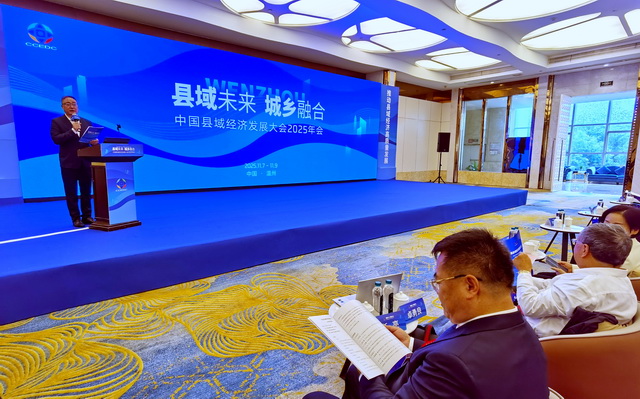
“十五五”县域经济发展如何迈步?多方专家学者支招
Di Yi Cai Jing· 2025-11-08 04:29
Core Viewpoint - The development of county economies during the 14th Five-Year Plan should focus on four key areas: artificial intelligence, urban-rural integration, green transformation, and county governance, emphasizing tailored policies over a one-size-fits-all approach [1][2][4] Group 1: Urban-Rural Integration - County economies are crucial for urban-rural integration, serving as a key engine for consumption and domestic demand [2] - The core of urban-rural integration is the integration of people, promoting the free movement of populations between urban and rural areas [2] - A modern industrial system should be established through deep integration of various industries in rural areas, moving beyond the traditional role of providing raw materials and labor [2][4] Group 2: Economic and Industrial Development - Counties should leverage their resource endowments and comparative advantages to develop suitable industries, including traditional and new sectors [3][5] - The integration of secondary and tertiary industries is essential for creating competitive and recognizable county industrial brands [4][5] - Counties should focus on attracting urban industries, capital, and talent while also connecting with rural industries to promote comprehensive development [5][8] Group 3: Infrastructure and Public Services - Enhancing public service attributes in counties is vital for economic development, requiring policies that facilitate the flow of resources such as land, capital, and talent [4][8] - The establishment of a conducive living and working environment is crucial, with improvements in rural infrastructure and public service accessibility [8] Group 4: Future Opportunities - The county economy faces new challenges and opportunities, including digital economy growth and rural revitalization [2][7] - The focus should be on cultivating specialized and innovative industrial clusters, extending agricultural processing chains, and developing new business models that integrate agriculture, e-commerce, and tourism [8]

湖北5.8万家工业企业上云 占总数近六成
Zhong Guo Chan Ye Jing Ji Xin Xi Wang· 2025-09-05 01:19
Core Insights - Hubei Province is experiencing a significant digital transformation in its manufacturing sector, with key metrics indicating progress in automation and digital tool adoption [1][2] Group 1: Digital Transformation Metrics - As of June, the CNC rate for key processes in large-scale industrial enterprises in Hubei reached 69.7%, ranking 7th nationally [1] - The penetration rate of digital R&D design tools in large-scale industrial enterprises is 90.7%, placing Hubei 6th in the country [1][2] - The number of industrial enterprises utilizing cloud services has reached 58% of the total, with 58,000 companies adopting cloud technology [1] Group 2: Policy and Strategic Initiatives - Hubei has implemented a series of plans such as the "Manufacturing Digital Transformation Implementation Plan" and "Hubei Digital Economy Promotion Measures" to support industrial digitalization [1] - The province is focusing on a phased approach to digital transformation, moving from "expansion" to "quality improvement" during the 14th Five-Year Plan period [1] Group 3: Sector-Specific Developments - In the primary sector, Hubei is enhancing the digitalization and intelligence of agricultural machinery and facilities, establishing smart farms and demonstration bases [1] - In the secondary sector, Hubei has certified 113 enterprises under the integration management system, ranking 2nd nationally, and has 55 factories listed in the national 5G factory directory [2] - In the tertiary sector, Hubei is building supply chain platforms in key industries, serving over 200,000 SMEs with a transaction volume exceeding 200 billion [2] Group 4: Future Plans - The Hubei Economic and Information Technology Department plans to continue advancing the digital, networked, and intelligent evolution of traditional industries to provide robust support for development [2]
河北廊坊 加速打造世界现代商贸物流中心
Ren Min Ri Bao· 2025-06-10 21:54
Core Insights - Langfang City aims to become a global modern commerce and logistics center, with a projected increase in the value added of its modern commerce and logistics industry to 94.88 billion yuan in 2024, representing a 9.2% year-on-year growth and accounting for 24.3% of the regional GDP, an increase of 6.8 percentage points from 2023 [1] Group 1: Infrastructure Development - Langfang is enhancing its logistics infrastructure by constructing key railway logistics hubs, including the Langfang Land Port Logistics Park and the Langfang Railway Logistics Hub, which are part of the Hebei Province's comprehensive freight hub development plan [2] - The city has successfully launched 12 international freight trains, establishing an international intermodal transport model that combines rail, cross-border road, and water transport [2] Group 2: Aviation Logistics - Langfang is developing a global aviation logistics hub by leveraging its unique advantages and attracting central enterprises like China Post to establish regional logistics hubs in the Beijing Daxing International Airport Economic Zone [3] - The city has signed contracts with various foreign trade enterprises and established a cross-border e-commerce center, facilitating trade with 113 countries and regions [3] Group 3: Transportation Optimization - The city is implementing 10 road network optimization projects, with an investment of 3.205 billion yuan, achieving a road freight turnover of 7.988 billion ton-kilometers, a year-on-year increase of 11.58%, ranking first in the province [4] - Langfang is also enhancing urban delivery logistics infrastructure by constructing public freight logistics hubs and logistics parks [4] Group 4: Industry Collaboration - The city is promoting the "Logistics + Agriculture" strategy, with 94 Taobao villages and 43 Taobao towns, achieving a total of 57.8314 million express deliveries of agricultural products [5] - Langfang is also advancing the "Logistics + Manufacturing" strategy, with 34 logistics equipment and parts companies generating 610 million yuan in revenue, a 25.6% year-on-year increase [6] Group 5: Policy and Environment - Langfang is focused on creating a favorable business environment by streamlining approval processes and enhancing land use efficiency, with a planned allocation of 2,121 acres for logistics and warehousing in 2024 [8] - The city has developed a comprehensive policy framework to reduce logistics costs, aiming to lower the ratio of total social logistics costs to GDP to 13% by 2027 [9] Group 6: Upcoming Events - The 2025 Langfang Economic and Trade Fair, themed around modern commerce and logistics, is scheduled to open on June 16, showcasing the city's vibrant image and commitment to logistics development [10]