农家乐餐饮

Search documents
不卖石头卖风景
Ren Min Ri Bao· 2026-02-25 00:03
Core Insights - The article highlights the transformation of the Woxian Valley area in Jiangxi, where local businesses have shifted from traditional stone mining to tourism and hospitality, resulting in significant economic benefits for the community [1][5]. Group 1: Business Transformation - The owner of a local restaurant, Wu Qifu, reports an annual revenue of over 5 million yuan, a stark contrast to his previous life as a stone miner [2][5]. - The closure of 179 stone factories in 2007 allowed the area to recover and pivot towards tourism, leading to a more sustainable economic model [5][6]. Group 2: Economic Impact on Local Residents - Local residents, such as Zhou Ganhua, have capitalized on the tourism boom, with his family earning over 300,000 yuan from lodging and additional income from renting out space for dining [6]. - Young entrepreneurs like Mei Xiangcai are innovating in the hospitality sector by managing accommodations through digital platforms, enhancing the visitor experience with services beyond just lodging [7]. Group 3: Community Development - The local government has supported this transition by providing subsidized loans to residents for upgrading their properties, contributing to the overall economic uplift of the area [6]. - The shift from "selling stone" to "selling scenery" reflects a broader trend of valuing environmental conservation alongside economic growth, as noted by local officials [5].
“生态+旅游”融合发展:激活绿色动能 带火一方美丽经济
Yang Shi Wang· 2025-07-06 03:46
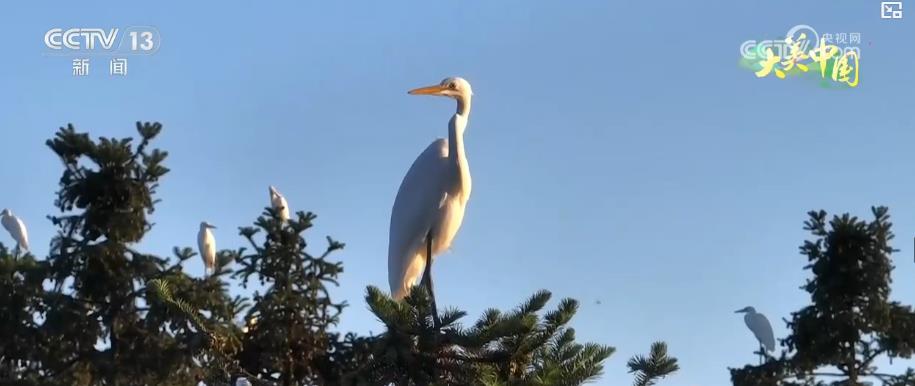
Core Viewpoint - The article highlights the ecological restoration and tourism development in Huayanxi National Forest Park, showcasing its transformation from an ecologically damaged area to a thriving ecosystem and tourist destination [1][6][9]. Group 1: Ecological Restoration - Huayanxi National Forest Park has a forest coverage rate exceeding 90%, making it a significant gene pool in northwestern Hunan [4]. - The area faced ecological degradation due to over-fishing and deforestation, leading to a decline in water quality to category five [6]. - Since 2010, the local government initiated the "Return of Egrets Project," which included measures such as banning water surface leasing, releasing over 30,000 fish annually to purify water, and enforcing strict regulations against hunting and logging [9][11]. Group 2: Biodiversity - The park is home to over 700 plant species and more than 150 animal species, including rare animals like the pangolin and the red-bellied golden pheasant [11]. - The return of egrets and other bird species, such as night herons and white spoonbills, indicates a successful recovery of the ecosystem [9][11]. Group 3: Tourism Development - The park attracts nearly 200,000 visitors annually, generating over 20 million yuan in operational revenue [13]. - The local economy has benefited from the "ecology + tourism" model, with the development of nearly 50 farmhouses offering eco-friendly dining experiences [14].