别样猪肉

Search documents
消费者不爱,资本退潮,植物肉在中国的故事讲不下去了?
Sou Hu Cai Jing· 2025-12-22 09:44
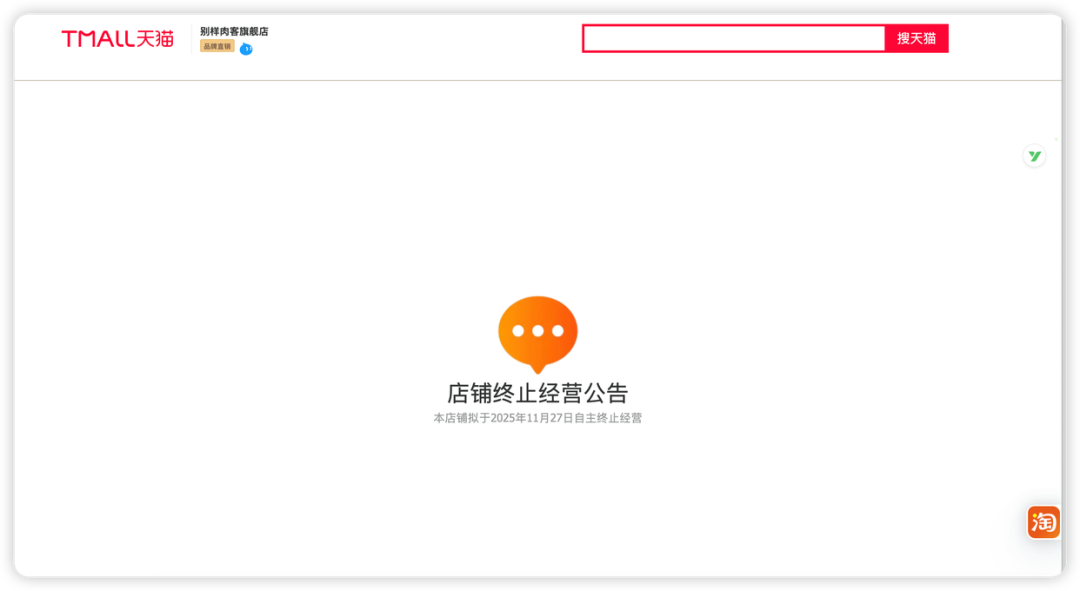
Core Viewpoint - Beyond Meat, known as the "first stock of plant-based meat," has ceased operations on Tmall and Pinduoduo, indicating a potential exit from the Chinese market [1][2]. Company Developments - Beyond Meat has closed its flagship stores and halted production at its factory in Jiaxing, with its official social media accounts last updated on October 1 [2]. - The company previously had successful collaborations with major brands like Starbucks and Yum China, launching plant-based products that gained consumer interest [2][3]. - Despite initial success, sales in retail channels have not met expectations, with the best-selling product, a plant-based burger patty, only achieving monthly sales of approximately 400 units [3][4]. Financial Performance - Beyond Meat's revenue has been declining, projected to drop from $419 million in 2022 to $326 million in 2024, with cumulative losses reaching $864 million [5]. - In response to financial pressures, the company has implemented significant cost-cutting measures, including a plan to suspend operations in China and reduce its workforce by 95% [5]. Market Trends - The plant-based meat sector has seen a significant decline in investment, with a 64% drop in global venture capital for plant-based companies in 2024 [7]. - Consumer feedback indicates a lack of interest in plant-based meat, with 74% of Chinese consumers stating they do not plan to repurchase these products due to taste and price concerns [9]. - Major food brands have stopped offering plant-based meat products, reflecting a shift in market strategy as consumer demand wanes [9][10]. Future Outlook - Experts suggest that while the plant-based meat market may have potential for recovery in the long term, short-term prospects remain challenging due to taste and price issues [10].


从风口到缺口:别样肉客的五年一梦
3 6 Ke· 2025-12-04 11:36
Core Insights - Beyond Meat, once hailed as the "first stock of plant-based meat," has exited the Chinese market within five years of its entry, marking a significant retreat for the brand [3][19] - The company faced challenges including high product prices, poor consumer reception, and a lack of taste compared to traditional meat, leading to a decline in sales and eventual withdrawal from the market [11][12][19] Company Overview - Beyond Meat entered the Chinese market in 2020, establishing a factory in Jiaxing, Zhejiang, and partnering with major food chains like Starbucks and KFC to promote its products [8][10] - Despite initial enthusiasm and significant investment, the company reported a decline in revenue from $4.19 billion in 2022 to $3.26 billion in 2024, with cumulative losses reaching $8.64 billion [14][19] Market Dynamics - The plant-based meat sector saw a surge in interest and investment from 2019 to 2020, with a 500% increase in investment events related to plant-based companies in China [5][6] - However, as consumer interest waned and product quality issues became apparent, investment in the sector decreased significantly, leading to the closure of several companies [13][14] Consumer Reception - Consumer feedback highlighted that Beyond Meat's products were priced higher than traditional meat, with a 454g pack of plant-based beef mince priced at 199 yuan, compared to 140 yuan for real beef [11][12] - A significant 74% of consumers indicated they would not repurchase plant-based meat products, primarily due to taste and texture issues [12][19] Industry Challenges - The plant-based meat industry is currently facing a "winter" phase, with many companies struggling to secure funding and maintain operations [13][14] - Experts suggest that the industry must focus on improving product quality, establishing standards, and finding a sustainable market position to survive [17][18][19] Future Outlook - Despite current challenges, there is potential for growth in the plant-based meat sector, particularly if companies can innovate and meet consumer expectations for taste and price [17][18] - The global market for plant-based meat is projected to grow significantly, with estimates suggesting a market size of approximately $7.6 billion in 2024, expanding to about $38.5 billion by 2033 [18]

“植物肉第一股”别样肉客在华完成last dance:最后一家旗舰店关停,SEC文件称在华活动“基本停止”
3 6 Ke· 2025-12-01 07:14
Core Viewpoint - Beyond Meat has officially ceased its operations in the Chinese market, closing its Tmall flagship store and halting all e-commerce sales channels in China, following an earlier announcement to pause its business in the region [1][5]. Group 1: Company Actions - Beyond Meat closed its Tmall flagship store and has also stopped operations on Pinduoduo, marking the end of its e-commerce presence in China [1][3]. - The company announced in February 2024 that it would pause its Chinese operations as part of a global restructuring plan, with activities expected to cease by the end of the second quarter of 2025 [5]. - The decision to halt operations in China is part of cost-cutting measures aimed at reducing operational expenses, with expected savings of approximately $500,000 to $1 million in cash compensation costs [5]. Group 2: Financial Impact - In the third quarter of 2025, Beyond Meat reported a net revenue of $70.2 million, a year-on-year decline of 13.3%, with losses widening to $110.7 million compared to $26.6 million in the same period last year [5]. - The cessation of operations in China resulted in $1.7 million in related costs, including accelerated depreciation and inventory impairment, negatively impacting gross profit [5]. Group 3: Industry Context - Beyond Meat entered the Chinese market in 2020, which was considered the "year of plant-based meat" in China, alongside other brands like The Vegetarian Butcher and Garden Gourmet [6]. - Despite initial success, the plant-based meat industry in China began to cool down in the second half of 2021, leading to the exit of several brands, including Hey Meat, which had its business license revoked in April 2023 [6]. - Other brands, such as Garden Gourmet and The Vegetarian Butcher, have also faced challenges, with the latter being sold by Unilever and its team disbanded [7].
别样肉客退出中国,浙江工厂不到5年就停产,曾获比尔·盖茨投资
Mei Ri Jing Ji Xin Wen· 2025-11-30 22:20
Core Viewpoint - Beyond Meat, known as the "first stock of plant-based meat," has quietly closed its flagship stores on major e-commerce platforms in China, indicating a significant retreat from the market [1][3]. Company Overview - Beyond Meat was founded in 2009 and went public in 2019, experiencing a stock price surge of 163% on its debut day. Notable investors include Bill Gates and Leonardo DiCaprio [3][5]. - The company initially entered the Chinese market in 2020 through partnerships with major food chains like Starbucks, KFC, and Pizza Hut, aiming to capture the B2B market [5][11]. Market Performance - As of November 30, 2023, Beyond Meat's official flagship store on Tmall is no longer searchable, and its Pinduoduo store is also non-functional [1][3]. - The company has faced declining revenue, with a drop from $419 million in 2022 to $326 million in 2024, and a cumulative loss of $864 million during the same period [11]. Product Pricing and Consumer Perception - Beyond Meat's products are priced above local alternatives, with plant-based beef patties costing over 60 yuan per kilogram, comparable to domestic beef prices [3][11]. - Consumer feedback indicates dissatisfaction with the taste and texture of plant-based meat, with many describing it as inferior to real meat [12][15]. Industry Trends - The plant-based meat sector in China has seen a decline in investment since late 2021, with many startups facing financial difficulties or shutting down [12]. - Despite the challenges, the market for plant-based meat is projected to grow, with estimates suggesting a market size of approximately $760 million by 2024 and $3.85 billion by 2033, maintaining a compound annual growth rate of around 20% [15]. Stock Performance - Beyond Meat's stock has significantly decreased, trading at $0.982 per share as of November 28, 2023, with a total market capitalization of $445 million [16].