细胞培养肉

Search documents
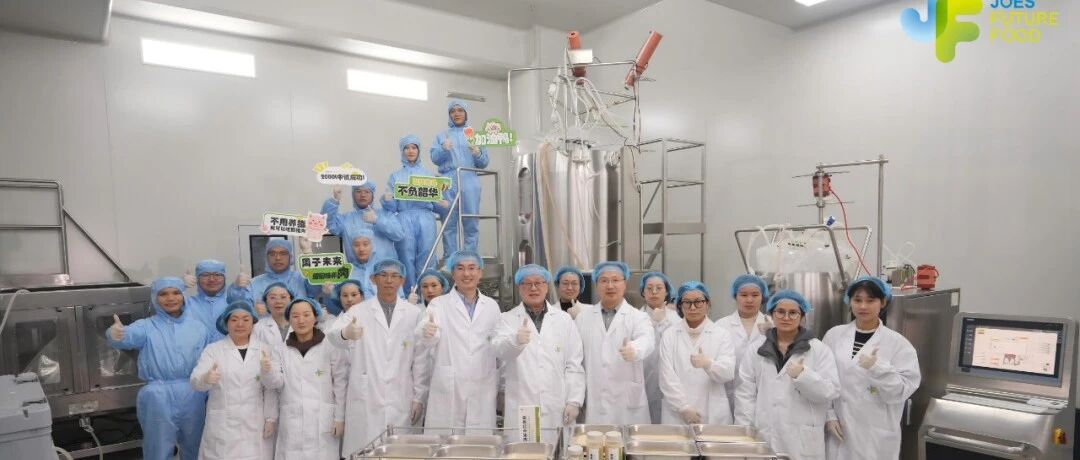
南京实现培养猪肉规模化试生产
Xin Hua Ri Bao· 2026-01-07 19:03
Core Viewpoint - The establishment of China's largest cell-cultured meat pilot plant by Nanjing Zhouzi Future Food Technology Co., Ltd. marks a significant advancement in the production of cultured pork, utilizing a 2000-liter bioreactor for large-scale production [1] Group 1: Company Overview - Nanjing Zhouzi Future Food Technology Co., Ltd. has successfully achieved pilot-scale production of cell-cultured pork, with a monthly output of 100 to 500 kilograms and an annual capacity expansion plan of 10 to 50 tons [1] - The company employs a proprietary serum-free culture medium and advanced 3D bioprinting technology to create realistic meat products that replicate the taste and texture of traditional meat [1] Group 2: Technological Advancements - The process begins with obtaining a small tissue sample from healthy pigs to extract stem cells, which are then cultivated in a bioreactor [1] - The technology has evolved over several years, with significant contributions from Professor Zhou Guanghong's team at Nanjing Agricultural University, including breakthroughs in serum-free culture media and cell suspension scaling [1] Group 3: Environmental Impact - Cell-cultured meat production significantly reduces the environmental footprint compared to traditional livestock farming, with a potential decrease in greenhouse gas emissions by 78% to 96%, and savings of 99% in land use and over 80% in water consumption [1]
国内最大中试!生物制造定调未来食品结构
合成生物学与绿色生物制造· 2025-12-16 02:36
Core Viewpoint - The article highlights a significant breakthrough in China's cell-cultured meat industry, with the establishment of the largest pilot plant for cell-cultured meat by Nanjing Zhouzi Future Food Technology Co., marking a key transition from laboratory research to engineering production [3][6]. Group 1: Company Achievements - Zhouzi Future is recognized as a pioneer in the cell-cultured meat sector in China, having developed the first cell-cultured meat in 2019 and founded in 2020 to advance industrialization [5]. - The company achieved the world's first 2000-liter bioreactor pilot production of cell-cultured pork in December 2025, establishing itself as a leader in this technology on an international scale [5][10]. - The pilot plant integrates various processes, including seed cell creation, serum-free medium development, and a comprehensive food safety system, with an annual production capacity of 10 to 50 tons of cell-cultured meat [6]. Group 2: Technological Innovations - Zhouzi Future has developed a dual research system focusing on both general products and innovative specialties, utilizing 3D printing technology to replicate the texture and flavor of traditional pork [7]. - The company has introduced unique products such as "honeycomb meat" and "meat clear soup jelly with crispy meat slices," showcasing the versatility of cell-cultured meat in various culinary applications [7]. Group 3: Industry Trends - The global cell-cultured meat industry is experiencing a surge in commercialization, with five countries approving products from ten companies, indicating a rapid acceleration in market acceptance [8]. - The regulatory landscape is evolving, with six new cell-cultured meat products gaining approval in 2025 alone, solidifying the foundation for large-scale commercial growth [8][10]. - Zhouzi Future's advancements position it to compete effectively in the global food technology and sustainable protein supply markets [10].

从风口到缺口:别样肉客的五年一梦
3 6 Ke· 2025-12-04 11:36
Core Insights - Beyond Meat, once hailed as the "first stock of plant-based meat," has exited the Chinese market within five years of its entry, marking a significant retreat for the brand [3][19] - The company faced challenges including high product prices, poor consumer reception, and a lack of taste compared to traditional meat, leading to a decline in sales and eventual withdrawal from the market [11][12][19] Company Overview - Beyond Meat entered the Chinese market in 2020, establishing a factory in Jiaxing, Zhejiang, and partnering with major food chains like Starbucks and KFC to promote its products [8][10] - Despite initial enthusiasm and significant investment, the company reported a decline in revenue from $4.19 billion in 2022 to $3.26 billion in 2024, with cumulative losses reaching $8.64 billion [14][19] Market Dynamics - The plant-based meat sector saw a surge in interest and investment from 2019 to 2020, with a 500% increase in investment events related to plant-based companies in China [5][6] - However, as consumer interest waned and product quality issues became apparent, investment in the sector decreased significantly, leading to the closure of several companies [13][14] Consumer Reception - Consumer feedback highlighted that Beyond Meat's products were priced higher than traditional meat, with a 454g pack of plant-based beef mince priced at 199 yuan, compared to 140 yuan for real beef [11][12] - A significant 74% of consumers indicated they would not repurchase plant-based meat products, primarily due to taste and texture issues [12][19] Industry Challenges - The plant-based meat industry is currently facing a "winter" phase, with many companies struggling to secure funding and maintain operations [13][14] - Experts suggest that the industry must focus on improving product quality, establishing standards, and finding a sustainable market position to survive [17][18][19] Future Outlook - Despite current challenges, there is potential for growth in the plant-based meat sector, particularly if companies can innovate and meet consumer expectations for taste and price [17][18] - The global market for plant-based meat is projected to grow significantly, with estimates suggesting a market size of approximately $7.6 billion in 2024, expanding to about $38.5 billion by 2033 [18]