制程设备

Search documents
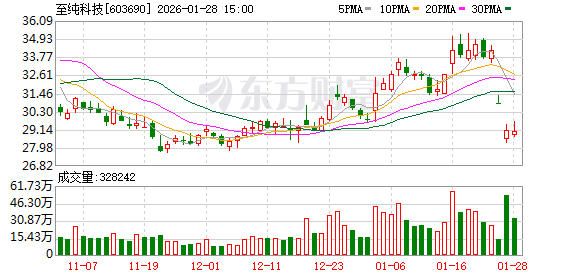
至纯科技:公司是国内系统集成领域及支持设备的领先企业,在国内12英寸晶圆厂特气系统市场份额接近50%
Zheng Quan Ri Bao· 2026-01-28 10:34
Core Viewpoint - The company, Zhichun Technology, focuses on the integrated circuit sector, providing process equipment, system integration, supporting equipment, electronic materials, and professional services, aiming for domestic market leadership in these areas [2] Group 1: Business Focus - The company is a leading enterprise in the domestic system integration and supporting equipment market, holding nearly 50% market share in the special gas system market for 12-inch wafer fabs and over 30% in the chemical system market [2] - The company's wet process equipment is concentrated on front-end processes, covering all processes for the 28nm technology node and achieving breakthroughs in more advanced nodes [2] Group 2: Technological Advancements - The company has made significant progress in high-end process equipment validation, including high-temperature sulfuric acid and FINETCH, leading the domestic market in these advanced technologies [2] - The company's goal is to achieve import substitution in the integrated circuit equipment sector [2]


至纯科技:公司与长江存储、长鑫科技均有合作
Ju Chao Zi Xun· 2025-10-23 13:09
Core Viewpoint - The company, Zhichun Technology, maintains partnerships with major domestic semiconductor firms and focuses on providing comprehensive lifecycle products and services for wafer fabs [1][3] Group 1: Company Overview - Zhichun Technology's product system includes process equipment, high-purity process equipment and systems, electronic materials, components, and professional services, catering to various stages of wafer fab construction and production [3] - The customer base includes major domestic integrated circuit manufacturers such as SMIC, Hua Hong, Shanghai Huali, Yangtze Memory Technologies, Changxin Memory Technologies, Yandong Micro, Silan Micro, and Runpeng Semiconductor [3] Group 2: Industry Trends - The rapid development of the domestic semiconductor industry chain is driving continuous expansion in wafer manufacturing, leading to an increasing demand for high-purity process equipment and systems [3] - Industry experts believe that Zhichun Technology's positioning in the semiconductor process equipment sector will benefit from accelerated wafer fab construction and the localization process [3] Group 3: Strategic Positioning - The company aims to deepen strategic cooperation with leading wafer fabs to enhance its technical service capabilities and market share [3] - Through technological innovation and industry chain layout, Zhichun Technology has gradually achieved domestic substitution for some equipment [3] - The company is expected to further solidify its leading position in the domestic high-purity process equipment market by closely binding with top customers [3]
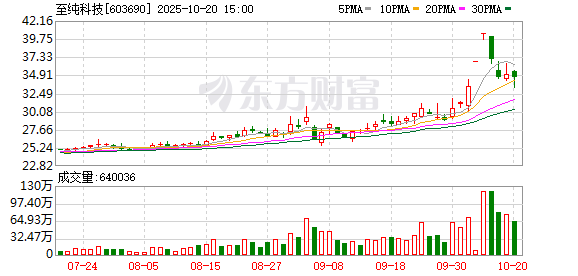
至纯科技:公司主要围绕集成电路晶圆制造和先进封装领域为客户提供制程设备、高纯工艺设备和系统
Zheng Quan Ri Bao· 2025-10-20 12:26
Group 1 - The company focuses on providing process equipment, high-purity process equipment, and systems for integrated circuit wafer manufacturing and advanced packaging [2] - The company also offers related electronic materials and professional services to its clients [2]
至纯科技(603690.SH):与新凯莱有业务合作
Ge Long Hui· 2025-09-24 08:13
Core Viewpoint - The company, Zhichun Technology, has announced a business collaboration with Xinkailai, focusing on providing process equipment, high-purity process equipment, systems, and related electronic materials and services in the integrated circuit wafer manufacturing and advanced packaging sectors [1] Group 1 - The collaboration with Xinkailai is centered around the integrated circuit wafer manufacturing and advanced packaging fields [1] - The business volume from this collaboration is currently low relative to the company's overall business [1]
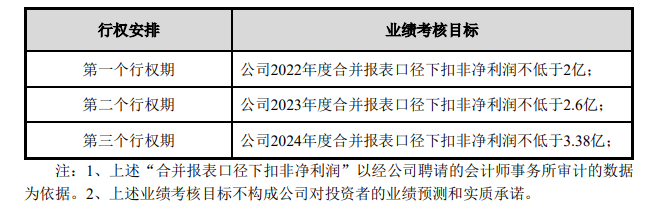
鸿合科技、至纯科技“伪市值管理”疑云:股权激励期间股东持续减持 业绩不达标高管薪资仍大涨
Xin Lang Zheng Quan· 2025-05-15 08:59
Core Viewpoint - The China Securities Regulatory Commission (CSRC) has issued guidelines encouraging listed companies to establish long-term incentive mechanisms, but some companies misuse stock incentive plans for personal gain, leading to significant discrepancies between executive compensation and company performance [1][2]. Group 1: Stock Incentive Plans - In 2023, 175 companies in A-shares had stock incentive plans that failed to meet performance targets, yet executive salaries increased despite poor performance [1]. - Honghe Technology and Zhichun Technology have been criticized for promoting stock incentive plans while their major shareholders and executives continuously reduce their holdings [2][11]. Group 2: Honghe Technology - Honghe Technology's stock option incentive plan aimed to grant 5.5 million stock options, with performance targets set for net profit over three years [3][4]. - The company's actual net profits from 2022 to 2024 were 318 million, 287 million, and 176 million yuan, respectively, showing a decline in meeting performance targets, especially in 2024 [4]. - Despite failing to meet performance targets, executive compensation at Honghe Technology surged, with total pre-tax remuneration for executives reaching 27.72 million yuan in 2024, a 165.72% increase from the previous year [7][8]. Group 3: Zhichun Technology - Zhichun Technology has implemented multiple stock incentive plans but has seen its market value drop significantly, raising questions about the effectiveness of its market value management [11][17]. - From 2021 to 2024, Zhichun Technology's net profits were 162 million, 285 million, 102 million, and -57 million yuan, with significant declines in 2023 and 2024 [13]. - Executive compensation at Zhichun Technology increased by 73.61% in 2024, despite the company's poor performance and failure to meet incentive plan targets [13]. Group 4: Regulatory Concerns - The CSRC has emphasized a "zero tolerance" policy towards companies that engage in "pseudo-market value management," which includes misleading disclosures and insider trading [17]. - Both Honghe Technology and Zhichun Technology have faced scrutiny for their internal controls and the actions of their executives, suggesting a need for regulatory intervention [9][10].