高纯工艺设备及系统

Search documents
至纯科技董事长蒋渊:深耕核心工艺 培育半导体行业“生态林”
Zhong Guo Zheng Quan Bao· 2025-11-16 22:30
Core Viewpoint - The company emphasizes the importance of maintaining a robust supply chain over short-term financial calculations, positioning itself strategically within the semiconductor industry [2]. Group 1: Company Strategy and Development - The company has evolved from a single system integrator to a comprehensive service provider covering "process-equipment-materials" in the semiconductor sector, focusing on high-purity processes [3]. - The company aims to tackle the most challenging technological gaps in the semiconductor industry, ensuring full process coverage in wet processing equipment [3][4]. - The company has successfully established a fully domestic 12-inch wafer gas supply factory, breaking the overseas supplier monopoly in the semiconductor gas supply market [4]. Group 2: Research and Development Focus - The company balances depth and breadth in its R&D efforts, ensuring alignment with market needs while also preparing for future technological advancements [5]. - The company has filed a total of 865 patents, including 356 invention patents, showcasing its commitment to innovation and development [5]. Group 3: Financial Management - The company maintains a debt ratio between 50% and 65% to ensure sufficient funding for growth opportunities while managing risks effectively [6]. Group 4: Industry Ecosystem Development - The company has built a strong service team across major semiconductor hubs in China, providing 24/7 support and tailored solutions to meet customer needs [7]. - The company focuses on becoming the preferred supplier for clients, emphasizing collaborative growth and innovation in equipment architecture to create real value [7].


东海证券晨会纪要-20251107
Donghai Securities· 2025-11-07 09:33
Group 1: Industry Overview - The production of industrial robots in China has shown impressive growth, with a year-on-year increase of 29.8% in the first three quarters of 2025, reaching 595,000 units, surpassing the total production for 2024 [5][6] - Domestic brands have gained market share over foreign brands in the industrial robot sector, with exports of industrial robots increasing by 54.9% in the same period [5][6] - The rise of domestic robot manufacturers is attributed to breakthroughs in core component technologies and a deep understanding of the local market, enhancing cost efficiency and supply chain stability [6][7] Group 2: Market Demand and Applications - The automotive manufacturing sector remains a traditional application market for industrial robots, driving demand for welding, handling, and painting processes [7] - The lithium battery production sector has also seen increased robot applications across various stages, including handling, loading and unloading, gluing, stacking, and assembly [7] - The electronics industry, particularly in the 3C sector, has a growing demand for automation, with robots increasingly used in chip manufacturing, display assembly, and consumer electronics [7] Group 3: Company Analysis - Zhichun Technology (603690) - Zhichun Technology reported a revenue of 2.367 billion yuan for the first three quarters of 2025, a decrease of 10.33% year-on-year, with a net profit of 85 million yuan, down 56.08% [11][12] - The company's gross margin improved significantly in Q3 2025, reaching 35.07%, an increase of 8.24 percentage points from the previous quarter, driven by product structure optimization and cost control [13] - The company has focused on the integrated circuit sector, primarily serving leading domestic wafer manufacturers, with project scales and contract amounts expanding, although project execution cycles have lengthened, impacting short-term performance [12][14] Group 4: Investment Recommendations - The investment outlook for the industrial robot sector is positive, with a focus on leading companies such as Huichuan Technology and Estun, as well as component manufacturers like Greentec Harmonic [8] - For Zhichun Technology, despite short-term performance pressures, the long-term growth potential remains, with revenue projections for 2025, 2026, and 2027 adjusted to 3.263 billion, 3.765 billion, and 4.361 billion yuan respectively [15]
至纯科技:公司与长江存储、长鑫科技均有合作
Ju Chao Zi Xun· 2025-10-23 13:09
Core Viewpoint - The company, Zhichun Technology, maintains partnerships with major domestic semiconductor firms and focuses on providing comprehensive lifecycle products and services for wafer fabs [1][3] Group 1: Company Overview - Zhichun Technology's product system includes process equipment, high-purity process equipment and systems, electronic materials, components, and professional services, catering to various stages of wafer fab construction and production [3] - The customer base includes major domestic integrated circuit manufacturers such as SMIC, Hua Hong, Shanghai Huali, Yangtze Memory Technologies, Changxin Memory Technologies, Yandong Micro, Silan Micro, and Runpeng Semiconductor [3] Group 2: Industry Trends - The rapid development of the domestic semiconductor industry chain is driving continuous expansion in wafer manufacturing, leading to an increasing demand for high-purity process equipment and systems [3] - Industry experts believe that Zhichun Technology's positioning in the semiconductor process equipment sector will benefit from accelerated wafer fab construction and the localization process [3] Group 3: Strategic Positioning - The company aims to deepen strategic cooperation with leading wafer fabs to enhance its technical service capabilities and market share [3] - Through technological innovation and industry chain layout, Zhichun Technology has gradually achieved domestic substitution for some equipment [3] - The company is expected to further solidify its leading position in the domestic high-purity process equipment market by closely binding with top customers [3]
鸿合科技、至纯科技“伪市值管理”疑云:股权激励期间股东持续减持 业绩不达标高管薪资仍大涨
Xin Lang Zheng Quan· 2025-05-15 08:59
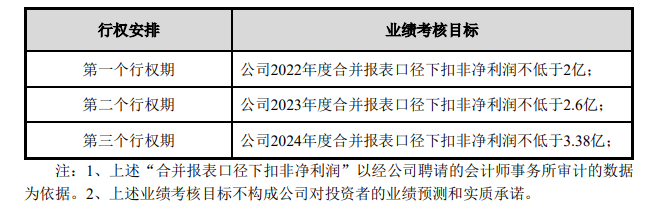
Core Viewpoint - The China Securities Regulatory Commission (CSRC) has issued guidelines encouraging listed companies to establish long-term incentive mechanisms, but some companies misuse stock incentive plans for personal gain, leading to significant discrepancies between executive compensation and company performance [1][2]. Group 1: Stock Incentive Plans - In 2023, 175 companies in A-shares had stock incentive plans that failed to meet performance targets, yet executive salaries increased despite poor performance [1]. - Honghe Technology and Zhichun Technology have been criticized for promoting stock incentive plans while their major shareholders and executives continuously reduce their holdings [2][11]. Group 2: Honghe Technology - Honghe Technology's stock option incentive plan aimed to grant 5.5 million stock options, with performance targets set for net profit over three years [3][4]. - The company's actual net profits from 2022 to 2024 were 318 million, 287 million, and 176 million yuan, respectively, showing a decline in meeting performance targets, especially in 2024 [4]. - Despite failing to meet performance targets, executive compensation at Honghe Technology surged, with total pre-tax remuneration for executives reaching 27.72 million yuan in 2024, a 165.72% increase from the previous year [7][8]. Group 3: Zhichun Technology - Zhichun Technology has implemented multiple stock incentive plans but has seen its market value drop significantly, raising questions about the effectiveness of its market value management [11][17]. - From 2021 to 2024, Zhichun Technology's net profits were 162 million, 285 million, 102 million, and -57 million yuan, with significant declines in 2023 and 2024 [13]. - Executive compensation at Zhichun Technology increased by 73.61% in 2024, despite the company's poor performance and failure to meet incentive plan targets [13]. Group 4: Regulatory Concerns - The CSRC has emphasized a "zero tolerance" policy towards companies that engage in "pseudo-market value management," which includes misleading disclosures and insider trading [17]. - Both Honghe Technology and Zhichun Technology have faced scrutiny for their internal controls and the actions of their executives, suggesting a need for regulatory intervention [9][10].