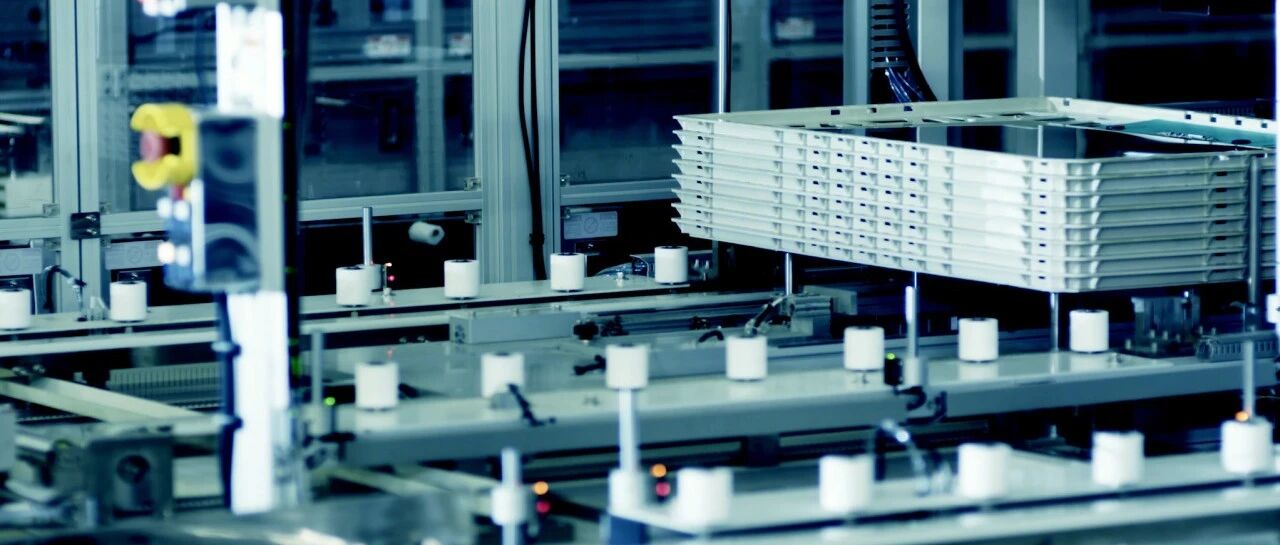
印刷OLED显示屏

Search documents
全球首条规模化量产的G8.6代印刷OELD产线正式开工
Nan Fang Ri Bao Wang Luo Ban· 2025-10-22 09:08
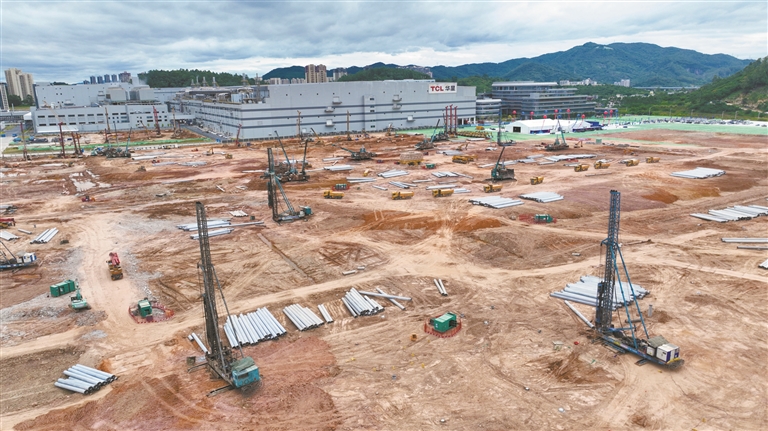
Core Insights - The TCL Huaxing T8 project, the world's first mass production G8.6 generation printed OLED production line, has commenced construction in Guangzhou with a total investment of approximately RMB 29.5 billion, expected to achieve an annual output value of RMB 12.1 billion upon reaching full production [1][2] - The T8 project features advantages of low energy consumption, low resource consumption, and high material utilization, with a design capacity of 22,500 sheets per month [1] - The project aims to accelerate the large-scale implementation of printed OLED technology in the global mid-to-high-end market, leveraging innovations such as industrial robots, AI models, and new materials [1][2] Industry Context - The G8.6 generation line and inkjet printing (IJPOLED) technology represent the forefront of global display technology, allowing precise printing of organic light-emitting materials onto OLED screens [2] - The project is seen as a critical breakthrough for China's new display industry, enabling a shift from following to leading in the high-generation AMOLED sector [2] - The Guangdong-Hong Kong-Macao Greater Bay Area is recognized as a key region for innovation in the electronic information industry, with a well-integrated industrial chain [2] Ecosystem Development - The T8 project will facilitate the establishment of a complete industrial chain ecosystem covering materials, equipment, panels, and terminals, with several leading global suppliers already committed to collaborating with TCL Huaxing [3]

从“跟跑”迈向“领跑” “中国好屏”弯道超车
Guang Zhou Ri Bao· 2025-10-22 02:09
Core Insights - TCL Huaxing's T8 project marks the world's first mass production G8.6 generation printed OLED production line, showcasing China's potential to lead in high-generation AMOLED technology [1][4][6] - The project represents a significant investment of approximately 29.5 billion RMB and is part of the "Hundred Million Thousand Project" in Guangzhou [1][6] Technology Development - The T8 project utilizes G8.6 substrate specifications and inkjet printing (IJPOLED) technology, which is considered the most advanced and promising direction in the global display field [4] - This technology allows for precise printing of organic light-emitting materials onto OLED screens, leading to lower costs, higher material utilization, and superior color performance [4][5] Market Positioning - The T8 project is expected to enable China's OLED industry to transition from a follower to a leader in the global new display industry [4][6] - TCL Huaxing aims to meet the demand for large-scale production of printed OLED products, providing solutions with low blue light, stable wide color gamut, and uniformity across multiple screens [5] Industry Collaboration - The project will accelerate the establishment of a cluster of upstream and downstream enterprises in the printed OLED ecosystem, covering materials, equipment, panels, and terminals [7] - Several leading global material and equipment suppliers have expressed intent to collaborate with TCL Huaxing to enhance the printed OLED supply chain [7] Regional Development - The T8 project signifies a new level of cooperation between Guangzhou and TCL in the new display field, highlighting Guangzhou's role as a manufacturing hub [6] - The Guangzhou Development Zone and Huangpu District are actively promoting industrial projects, with TCL Huaxing's T8 project being a key initiative among others [7]

最高荣誉!TCL科技获第五届中国质量奖
21世纪经济报道· 2025-09-16 10:27
Core Viewpoint - TCL Technology has been awarded the China Quality Award for its quality management model of "Extremity, Leadership, and Collaboration," highlighting its commitment to high-quality development in the semiconductor field [3][5][22]. Group 1: Quality Management Model - The "Extremity, Leadership, and Collaboration" quality management model was developed by TCL Technology under the national quality strategy, aiming to become synonymous with high-quality development in the semiconductor sector [9][11]. - "Extremity" encompasses extreme operations, innovation, and management, focusing on strategic-driven operations, comprehensive quality management, and collaborative improvements across the supply chain [11][12]. - "Leadership" is the goal of high-quality development, with TCL achieving industry-leading performance in 19 key quality indicators and optimizing operational efficiency [11][12]. - "Collaboration" involves customer, supply chain, and environmental cooperation, enhancing responsiveness and promoting green development through ESG strategies [12][22]. Group 2: AI Integration and Manufacturing Efficiency - AI is increasingly integrated into TCL's manufacturing processes, significantly improving production efficiency and product quality, with examples including a 70% increase in production efficiency and an 11% improvement in process capability index [12][14]. - The company has achieved a high level of smart manufacturing maturity in the semiconductor display industry, with production capacity exceeding original designs by 60% [14]. - TCL's AI strategy includes partnerships with industry leaders like Alibaba Cloud to build an intelligent hub for the semiconductor display industry [15]. Group 3: Innovation and Competitive Advantage - Under the quality management model, TCL is expanding into semiconductor displays, renewable energy, and semiconductor materials, positioning itself as a leading semiconductor manufacturing group [17]. - The company has achieved global leadership in several product categories, including gaming displays and photovoltaic silicon wafers, with significant improvements in production metrics post-implementation of the quality model [17][18]. - TCL has filed nearly 80,000 patents, with a strong focus on quantum dot electroluminescence technology, leading the global patent landscape in this field [18][20]. Group 4: Investment in Quality Infrastructure - TCL has invested over 8 billion in quality infrastructure, establishing 80 laboratories, with several receiving national accreditation [22]. - The quality management model has been extended to over 2,000 enterprises within the ecosystem, facilitating cross-industry upgrades and enhancing overall manufacturing quality [22].