
新能源光伏

Search documents
对话李东生:想公开讲一些有建设性的真话
经济观察报· 2026-03-07 04:01
Core Viewpoint - The conversation emphasizes the need for the domestic business system to reduce unnecessary consumption and allow the market to function effectively [2] Group 1: Industry Challenges - In the past five years, nearly all new capacity in the photovoltaic industry has involved local capital participation [1][30] - The implementation of national subsidies for bulk consumer goods has led to local governments requiring companies to establish independent legal entities to qualify for these subsidies, resulting in TCL adding approximately 540 new legal entities [2][5][42] - The over-intervention of local funds in the market has distorted resource allocation, with local investment in photovoltaic projects often exceeding 50%, and in some cases, reaching 80% [7][30] Group 2: Financing Issues - The financing channels for large technology manufacturing are not smooth, with semiconductor display production lines requiring investments between 15 billion to 40 billion yuan, and financial institutions demanding that companies provide at least 40% of the total investment as their own capital [9][15] - The refinancing process is lengthy and complicated, making it difficult for companies to secure necessary funds for project investments [18][19] Group 3: Market Dynamics - The decline in television sales in China, with 32.9 million units sold in 2025, is attributed to a lack of attractive content rather than hardware issues, contrasting with the 49.9 million units sold in the U.S. [10][50] - The trade surplus of over 1.2 trillion USD in the previous year suggests a need for increased imports to stimulate domestic market demand [11][51] Group 4: Recommendations for Improvement - Local funds should have clear exit mechanisms and limited liability to prevent excessive market interference [8][39] - The government should consider special policies to support restructuring in the photovoltaic industry, including debt extension and waiving penalties for overdue loans [36][38] - To enhance service consumption, there should be a focus on differentiated service products that cater to various consumer needs [47][50] Group 5: Globalization and Strategic Partnerships - TCL's global revenue reached 356 billion yuan, with 170.1 billion yuan coming from overseas, indicating the importance of establishing local supply chains [62] - The joint venture with Sony aims to leverage both companies' strengths to enhance competitiveness in the television market [64][66]





李东生2026智能制造展望:守制造之本,拓新质之路,谋创新之远
21世纪经济报道· 2026-03-06 10:21
Core Viewpoint - TCL, under the leadership of Li Dongsheng, has transformed from a small tape workshop into a global technology manufacturing giant, spanning semiconductor displays, smart terminals, and new energy photovoltaics. The company aims to navigate the increasingly competitive landscape of the semiconductor display industry and leverage its global strategy to drive innovation and growth [1]. Group 1: Manufacturing and Investment Strategy - Li Dongsheng emphasizes that the core of industrial transformation and upgrading lies in developing high-tech, capital-intensive, and long-cycle industries, such as integrated circuits and semiconductor displays, which require sustained investment [1][8]. - The company has called for increased financing convenience and predictability for advanced manufacturing industries to better compete internationally [3]. - Since its establishment in 2009, TCL Huaxing has invested over 300 billion yuan in the semiconductor display industry, making it one of the largest investors in China's autonomous semiconductor display process [3][4]. Group 2: Historical Investment Phases - The investment phases of TCL include the foundational period from 2009 to 2013, where initial investments broke overseas monopolies, and the expansion phase from 2014 to 2019, where the company entered the global top tier through comprehensive investments [4]. - From 2020 onwards, TCL has focused on technological upgrades and global integration, solidifying its position as a global leader in the LCD sector while advancing into next-generation display technologies [5][7]. Group 3: Competitive Landscape - The global semiconductor display industry is characterized by intense competition, with major players like Samsung and LG dominating high-end OLED markets, while Chinese companies like TCL Huaxing lead in LCD and rapidly catch up in OLED and other new technologies [7]. - China now accounts for 70% of global LCD production, establishing a significant competitive barrier, and TCL has achieved a position of parity and local leadership in certain areas [7]. Group 4: New Energy and Photovoltaics - In 2020, TCL acquired Tianjin Zhonghuan Group, a leader in global photovoltaic silicon wafers, to enhance its competitive edge in the renewable energy sector [10]. - By 2025, TCL Zhonghuan aims to achieve a total silicon wafer production capacity of 200 GW, focusing on large-size, thin wafers, and N-type technology, which is crucial for the photovoltaic industry's transformation [11][13]. Group 5: Market Dynamics and Consumer Behavior - The Chinese television market is experiencing a decline, with a 8.5% drop in shipments in 2025, while the U.S. market shows slight growth, highlighting differences in consumer behavior and market saturation [15][17]. - The average daily TV usage in China is significantly lower than in the U.S., indicating a need for improved content supply to stimulate domestic consumption [17][18]. Group 6: Future Outlook and Strategic Recommendations - Li Dongsheng advocates for a differentiated supply system to stimulate market demand, emphasizing the importance of innovation and long-term planning in achieving high-quality development in emerging strategic industries [14][18]. - The company aims to maintain strategic focus in high-tech, capital-intensive, and long-cycle sectors while fostering a more market-oriented and resilient industrial ecosystem [18].
李东生:我想说的话
经济观察报· 2026-03-05 12:58
Core Viewpoint - The article emphasizes the need for a more efficient business system in China that minimizes unnecessary consumption and allows the market to function effectively [1] Group 1: Company Overview - TCL, founded by Li Dongsheng, has evolved from a consumer electronics brand to a global technology conglomerate with total revenue reaching 356 billion yuan, driven by its core businesses in semiconductor displays and renewable energy [2] - The semiconductor display business is projected to exceed 100 billion yuan in revenue with a net profit of over 8 billion yuan by 2025, while the renewable energy sector is currently facing supply-demand imbalances [2][4] Group 2: Challenges Faced - The first challenge is the distortion in policy execution, where local governments impose unnecessary requirements for subsidies, leading TCL to establish approximately 540 new legal entities, increasing operational costs without adding social value [3][25] - The second challenge involves excessive local capital intervention in the market, with local funds often holding a significant stake in new photovoltaic projects, even when market conditions suggest a halt in expansion [4][16] - The third challenge is the difficulty in securing financing for large-scale semiconductor manufacturing projects, where financial institutions require a minimum of 40% equity from companies, complicating the funding process [6][9] Group 3: Market Dynamics - In 2025, China's television sales are expected to decline by 8.5% to 32.895 million units, contrasting with the U.S. market, which is projected to sell 49.9 million units, highlighting a disparity in content service attractiveness [7][29] - The article suggests that enhancing content services and promoting differentiated consumption could stimulate domestic demand, which is currently lagging behind GDP growth [28][30] Group 4: Recommendations for Improvement - Li Dongsheng proposes that local funds should have clear exit mechanisms and limited liability to prevent excessive market interference [5][22] - He advocates for a more streamlined financing process for heavy asset industries, suggesting that regulatory bodies should create special channels for these sectors to facilitate easier access to capital [9][10] - The article also emphasizes the importance of mergers and acquisitions to clear excess capacity in the renewable energy sector, suggesting that a conducive environment for such activities should be established [13][14] Group 5: Globalization and Supply Chain - TCL's global revenue reached 170.1 billion yuan, with a significant portion generated from overseas operations, indicating the importance of establishing local supply chains to enhance competitiveness [36] - The company aims to shift from merely exporting products to building supply chain capabilities abroad, which is essential for sustainable growth in the global market [35][36] Group 6: Future Outlook - The article discusses the potential for TCL's joint venture with Sony, which aims to leverage both companies' strengths to enhance competitiveness in the television market [38][40] - It highlights the necessity for local governments to support industries like semiconductors while ensuring that their involvement does not distort market dynamics [22][25]

华安基金:春节期间科技热点频出,创业板50指数聚焦四大新质生产力赛道
Xin Lang Cai Jing· 2026-02-25 10:45
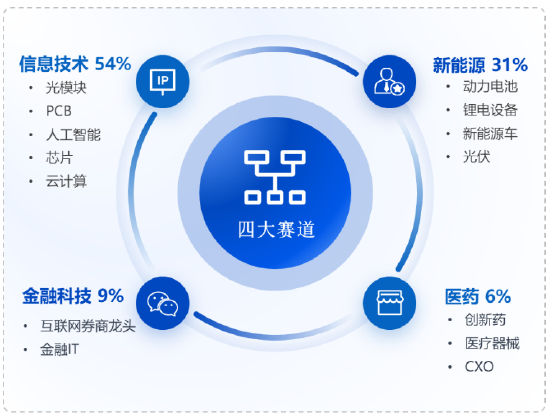
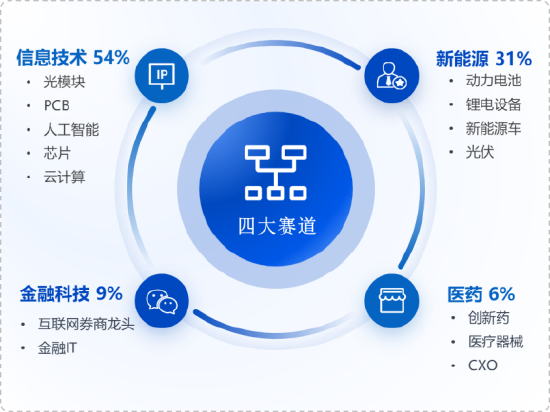
Market Overview - The A-share market showed an overall upward trend before the holiday, with the CSI 300 rising by 0.36%, the CSI 1000 by 1.90%, the ChiNext 50 by 1.10%, and the Sci-Tech 50 by 3.37% [1][8] - Global stock markets mostly rose during the Spring Festival break, indicating a favorable global risk appetite [1][8] - The liquidity outlook remains stable despite uncertainties in the Federal Reserve's interest rate path, and the offshore RMB exchange rate remained steady during the holiday [1][8] Industry Trends - Technology hotspots, including robotics and domestic large models, continue to gain traction [1][8] - The upcoming Two Sessions are expected to reinforce market stability expectations, while confirmation of Trump's planned visit to China in late March may help stabilize external environment expectations [1][8] - The ChiNext serves as a direct financing platform for innovative enterprises focusing on "three innovations (innovation, creation, creativity)" and "four new (new technologies, new industries, new business formats, new models)" [1][8] ChiNext 50 Index Insights - The ChiNext 50 Index focuses on four key sectors: information technology, new energy, financial technology, and pharmaceuticals, reflecting a pure technology growth attribute [1][8] - The index has a significant concentration in the information technology sector, comprising 54% of its weight, with high-weight companies in optical modules and AI applications benefiting from global AI capital expenditure expansion [3][10] - The performance of the ChiNext 50 ETF (159949) is highlighted, with a current valuation of 42.76 times, placing it in the 45.28% percentile over the past decade [3][10] Sector-Specific Developments New Energy and Photovoltaics - February is expected to be the low point for annual production, with a projected increase in lithium battery production starting in March, returning to a high point not seen since 2025 [11] - Tesla's photovoltaic planning has surged from an initial 10GW to 50GW, with a requirement for delivery by Q3 this year, significantly enhancing order certainty [11] Pharmaceuticals and Biotechnology - Recent overseas licensing agreements by local companies in innovative drugs validate the increasing global competitiveness of Chinese innovation drugs and the acceleration of internationalization [11] - The pharmaceutical sector is expected to enter a catalyst-rich period post-holiday, with industry conferences and earnings reports on the horizon [11]

TCL创始人、董事长李东生:继续完善全球化3.0体系
Jing Ji Guan Cha Wang· 2026-02-17 08:59
Group 1 - TCL will debut as an Olympic global partner at the 2026 Milan Winter Olympics, marking a new chapter in its globalization strategy [1] - The current global competition has shifted from cost and scale to a comprehensive comparison of values, technological capabilities, and industrial responsibilities [1] - The company defines this new phase as "Globalization 3.0," focusing on localizing the global industrial and supply chains [1] Group 2 - TCL aims to establish five local entities overseas, fostering local industrial ecosystems that include brand marketing, channel management, retail management, user service capabilities, and even product design [1] - The company is not just selling products abroad but is embedding R&D, manufacturing, and service capabilities in target markets [1] - In Poland, TCL is leveraging local talent in mathematics and algorithms to advance artificial intelligence technology [2] Group 3 - The "local for local" business model has dual strategic significance, contributing to local economic and social development while building long-term trust relationships [2] - TCL's confidence in its globalization efforts stems from its technological authority, exemplified by the construction of the world's first G8.6 generation printed OLED panel production line in Guangzhou [2] - The company is also committed to sustainable development, having launched a global code of conduct and a digital platform for carbon tracking [2] Group 4 - Looking ahead, TCL will maintain strategic focus on three core areas: smart terminals, semiconductor displays, and new energy photovoltaics [3] - The company plans to enhance its core capabilities by utilizing AI technology to improve advanced manufacturing levels and drive industrial efficiency [3] - TCL will continue to refine its Globalization 3.0 framework through deeper collaboration with global partners to explore new growth opportunities [3]
TCL创始人、董事长李东生:继续完善全球化3.0体系|2026商业新愿景
Jing Ji Guan Cha Wang· 2026-02-17 05:56
Group 1 - TCL will debut as an Olympic global partner at the 2026 Milan Winter Olympics, marking a new chapter in its globalization strategy [2] - The current global competition has shifted from cost and scale to a comprehensive comparison of values, technological capabilities, and industrial responsibilities [2] - The company defines this new phase as "Globalization 3.0," focusing on localizing global industrial and supply chains [2] Group 2 - TCL aims to establish five local entities overseas, fostering local industrial ecosystems with capabilities in brand marketing, channel management, retail management, user service, and product design [2] - The company is not just selling products abroad but is embedding core functions like R&D, manufacturing, and services in target markets [2] - In Poland, TCL is leveraging local talent in mathematics and algorithms to advance artificial intelligence technology [3] Group 3 - The "local for local" business model has dual strategic significance, contributing to local economic development and building long-term trust relationships [3] - TCL's confidence in its globalization efforts stems from its technological influence, exemplified by the construction of the world's first G8.6 generation printed OLED panel production line in Guangzhou [3] - The company is also committed to sustainable development, having launched a global code of conduct and a digital platform for carbon tracking [3] Group 4 - Looking ahead, TCL will maintain strategic focus on three core areas: smart terminals, semiconductor displays, and renewable energy photovoltaics [4] - The company plans to enhance its core capabilities by utilizing AI technology to improve advanced manufacturing levels and drive industrial efficiency [4] - TCL will continue to refine its Globalization 3.0 framework through deeper collaboration with global partners to explore new growth opportunities [4]
华安基金:市场波动加剧,创业板50指数上周回调3.68%
Xin Lang Ji Jin· 2026-02-09 07:57
Market Overview - The A-share market experienced a downward trend last week, with major indices declining: CSI 300 down 1.33%, CSI 500 down 2.68%, CSI 1000 down 2.46%, ChiNext 50 down 3.68%, and Sci-Tech 50 down 5.76% [1] - The average daily trading volume in the A-share market was around 2.4 trillion yuan, indicating a decrease in market investment enthusiasm [1] - The market showed rapid rotation characteristics, with commercial aerospace and space photovoltaic sectors being notably active [1] Investment Recommendations - It is suggested to control positions and focus on sectors supported by policies and improving economic conditions, emphasizing the need to select structural opportunities amid rapid market rotations [1] - The ChiNext 50 index, which includes high-weighted assets, is recommended for attention due to its performance supported by earnings [1] ChiNext 50 Index Insights - The ChiNext 50 index serves as a direct financing platform for growth-oriented innovative enterprises in the "three innovations and four new" sectors [1] - The index focuses on four key sectors: information technology, new energy, financial technology, and pharmaceuticals, showcasing a pure technology growth attribute [1] Sector Analysis Technology, AI, and Communication - Information technology accounts for approximately 54% of the ChiNext 50 index, with active segments including optical modules, AI applications, and computing hardware [3] - Despite recent market fluctuations, leading companies in the optical communication sector are expected to benefit from global AI capital expenditure expansion and the mass production of 1.6T optical modules [4] New Energy Photovoltaics - The photovoltaic sector showed structural performance driven by technological iterations and policy support, with significant progress in space photovoltaic technology [4] - The export market for photovoltaic components saw a 58% year-on-year increase in January 2026 to "Belt and Road" countries, with accelerated bidding for large projects in the Middle East and North Africa [4] Pharmaceuticals and Biotech - The innovative drug and CXO sectors are experiencing dual recovery in performance and sentiment, with active License-out transactions indicating global recognition of domestic innovation [5] - The CXO sector is seeing a significant increase in new orders, particularly in clinical CRO and CDMO segments, benefiting from the global trend of regionalized capacity transfer [5] ChiNext 50 ETF Overview - The ChiNext 50 ETF (code: 159949) tracks the ChiNext 50 index, focusing on high-quality leading companies in five major technology sectors: new energy vehicles, biomedicine, electronics, photovoltaics, and internet finance [6] - The ETF has a substantial liquidity with an average daily trading volume of 1.513 billion yuan over the past year, ranking among the top ETFs on the Shenzhen Stock Exchange [6]
李东生把3800亿巨轮交给了爱将
创业家· 2026-02-05 10:21
Core Viewpoint - TCL Technology is entering a new era of leadership as founder Li Dongsheng steps down as CEO, handing over the reins to Wang Cheng, marking a significant transition in the company's management structure and strategy [4][5]. Group 1: Company Background and Historical Context - TCL was founded in 1981 as TTK Household Appliance Co., initially focusing on tape production, with limited ambitions [9]. - Li Dongsheng joined TCL in 1982 and played a pivotal role in transforming the company, leading it into the telecommunications and television manufacturing sectors [10]. - Under Li's leadership, TCL underwent significant transformations, including a major acquisition in 2004 that expanded its international presence, although it faced substantial losses shortly thereafter [11][12]. - The company rebounded from losses through strategic reforms and investments, notably in LCD panel production, which positioned TCL as a key player in the display industry [13][14]. Group 2: Recent Developments and Strategic Moves - In 2020, TCL made a strategic entry into the renewable energy sector by acquiring Tianjin Zhonghuan Semiconductor, enhancing its capabilities in the photovoltaic industry [17]. - TCL's solar products, particularly the G12 monocrystalline silicon wafers, have gained a dominant market share globally, showcasing the company's successful diversification [18]. - Despite facing challenges in the solar market due to overcapacity and price wars, TCL is leveraging advanced technologies to improve efficiency and reduce costs [19]. Group 3: Leadership Transition and Future Challenges - Wang Cheng, the newly appointed CEO, has a long history with TCL, having joined as a management trainee in 1997 and rising through the ranks to lead various global operations [21][22]. - The transition comes at a critical time as TCL is set to engage in a joint venture with Sony to take over its global home entertainment business, indicating a significant strategic shift [22][23]. - Wang faces multiple challenges, including navigating industry volatility in semiconductor displays and solar energy, while also executing Li's vision of expanding TCL's global footprint [24][25]. - The need for technological innovation and organizational culture continuity will be crucial for Wang as he leads TCL into its next growth phase [26][27].

研报掘金丨中邮证券:维持TCL科技“买入”评级,盈利增速彰显强劲增长动能
Ge Long Hui A P P· 2026-02-04 06:21
Core Viewpoint - TCL Technology demonstrates strong growth momentum with significant increases in revenue and net profit for the first three quarters of 2025 [1] Financial Performance - The company achieved operating revenue of 136.065 billion yuan, a year-on-year increase of 10.50% [1] - The net profit attributable to shareholders reached 3.047 billion yuan, reflecting a year-on-year increase of 99.75% [1] Business Segments - The semiconductor display business shows multiple breakthroughs, highlighting resilience and growth potential [1] - The company maintains a leading position in the domestic industry as the largest and most technologically advanced semiconductor materials enterprise, covering key domestic and international clients [1] - In the renewable photovoltaic sector, the company actively responds to industry cycle fluctuations and implements a "reverse involution" strategy, achieving a quarter-on-quarter revenue improvement of 22% [1] Operational Strategies - The company optimizes product structure, strengthens cost control, enhances product capabilities, and expands both domestic and international markets, leading to significant recovery in profitability [1] - Other business aspects include Maojia Technology, the world's largest TV OEM, which experiences rapid growth in TV and display monitor OEM volumes [1] Investment Rating - The company maintains a "Buy" rating based on its robust performance and growth prospects [1]
中邮证券:维持TCL科技“买入”评级,盈利增速彰显强劲增长动能
Xin Lang Cai Jing· 2026-02-04 06:21
Core Viewpoint - TCL Technology demonstrates strong growth momentum with significant increases in revenue and net profit for the first three quarters of 2025, indicating robust operational performance and market competitiveness [1] Financial Performance - The company achieved operating revenue of 136.065 billion yuan, a year-on-year increase of 10.50% [1] - The net profit attributable to shareholders reached 3.047 billion yuan, reflecting a remarkable year-on-year growth of 99.75% [1] Business Segments - The semiconductor display business shows multiple breakthroughs, highlighting resilience and growth potential [1] - The company maintains its position as the largest and most comprehensive semiconductor materials enterprise in China, serving key domestic and international clients [1] - The new energy photovoltaic business has improved revenue by 22% quarter-on-quarter, effectively responding to industry cyclicality and enhancing profitability through product structure optimization and cost control [1] Other Business Developments - Maojia Technology, as the world's largest TV OEM, has experienced rapid growth in TV and display monitor OEM volumes [1]