发卡

Search documents
几块钱包邮的商品真的不赔钱?淘宝、拼多多不亏的秘密是什么
Sou Hu Cai Jing· 2026-02-26 17:57
Core Insights - The low-price, free shipping model on platforms like Taobao and Pinduoduo is not a charitable act but a complex commercial strategy involving economies of scale, cost control, and traffic operation [1][13] Group 1: Logistics Cost Truth - The cost of shipping is significantly reduced due to the massive volume of orders processed by major e-commerce platforms, allowing them to negotiate lower rates with courier companies [2] - Large e-commerce merchants can reduce shipping costs to as low as 2-5 yuan per item through long-term contracts, compared to the typical 10-15 yuan for individual consumers [2][4] Group 2: Product Cost Breakdown - Many low-priced items originate from industrial hubs like Yiwu and Dongguan, benefiting from complete supply chains that allow for mass production and cost efficiency [5] - For example, a 9.9 yuan plastic storage box may have a production cost of only 2-3 yuan, allowing merchants to maintain a profit margin even after accounting for shipping costs [5] Group 3: Platform Subsidy Logic - E-commerce platforms like Pinduoduo and Taobao use aggressive subsidy strategies to attract consumers, with a significant portion of these subsidies directed towards shipping costs [6] - The primary goal of these subsidies is to increase traffic, as low-priced items serve as effective bait to draw in price-sensitive consumers [6][10] Group 4: Data Value Monetization - Major e-commerce platforms leverage consumer data to optimize product offerings and advertising strategies, enhancing the effectiveness of promotional spending [9] - By analyzing consumer behavior, platforms can guide manufacturers to produce in-demand items, further driving down costs and increasing sales [9] Group 5: Consumer Behavior Transformation - The prevalence of free shipping has altered consumer purchasing habits, leading to an increase in order volume and enabling merchants to lower costs further [10] - This shift has also facilitated the sale of niche and long-tail products that were previously unviable due to high shipping costs [10] Group 6: Model Concerns and Rational Consumption - While low-price, free shipping offers consumer benefits, it may lead to quality compromises, as some merchants may cut corners to maintain low prices [11] - The competitive landscape may disadvantage smaller merchants who cannot sustain low pricing strategies, potentially leading to market consolidation [12] Group 7: Conclusion - The low-price, free shipping model is a natural evolution in the e-commerce sector, driven by multiple commercial logics including economies of scale and data-driven operations [13] - This model reflects advancements in industrial production and logistics, ultimately benefiting consumers through enhanced access to affordable goods [13]



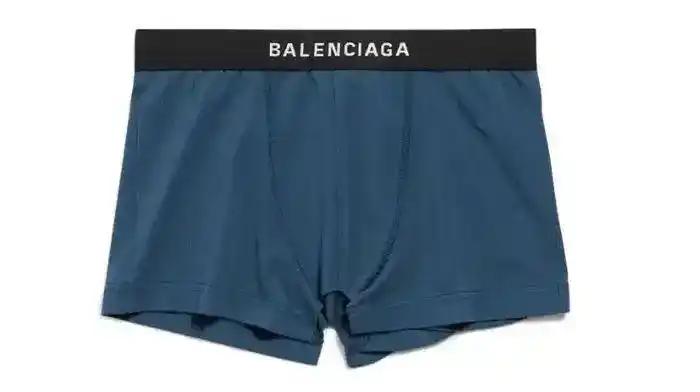
内裤剪一刀,敢卖4500?
3 6 Ke· 2025-06-09 04:47
Group 1 - Balenciaga has released a controversial women's blue knitted skirt priced at 4500 yuan, which many consumers initially mistook for men's underwear, leading to widespread mockery online [1][3][5] - The skirt is part of Balenciaga's 2025 Fall Collection and features a unique design with a Balenciaga logo at the waistband and an unconventional cut [3][5] - The brand is known for its unconventional designs, including a "Peking Duck Bag" priced at 15500 yuan, which resembles a potato chip bag and has garnered significant attention [5][11] Group 2 - Balenciaga's history of producing "expensive and incomprehensible" designs is rooted in its brand identity, which emphasizes innovation and avant-garde fashion [19][22] - The current creative director, Demna Gvasalia, has been pivotal in pushing the brand's boundaries since his appointment in 2015, leading to a notable increase in sales from approximately 350 million euros in 2015 to an estimated 2.5 billion euros in 2023 [20][22] - Despite a predicted decline in sales for 2024, Balenciaga's overall performance remains relatively stable compared to the broader luxury goods market [20][22] Group 3 - The concept of "expensive and useless" items is prevalent in the luxury goods sector, serving as a marketing strategy to attract attention and create discussions around the brand [23][31] - Balenciaga's pricing strategy and unique designs contribute to its brand allure, as consumers often engage in discussions about the absurdity of the products, which in turn enhances brand visibility [33][34] - The phenomenon of "conspicuous consumption" is highlighted, where luxury goods serve as a status symbol, and the discussions surrounding their impracticality further solidify their market presence [33][34]
PhotonPay光子易与摩根大通达成战略对话,共助企业全球化进阶
Sou Hu Cai Jing· 2025-06-06 02:21
Core Insights - PhotonPay has engaged in high-level discussions with J.P. Morgan to explore innovative development paths in the global payment industry and potential collaboration opportunities [1][3] Group 1: Company Overview - PhotonPay has upgraded its products to enhance operational efficiency and compliance capabilities, which are crucial for sustainable global development [3] - The company currently has local payment capabilities covering 87 countries and regions, with a global payment network spanning over 230 countries and more than 60 currencies [3] - PhotonPay has developed an AI application framework that improves fund circulation and settlement efficiency while optimizing risk control accuracy [3] Group 2: Strategic Direction - The CEO of PhotonPay emphasized that market opportunities drive disruptive innovation, while user demand is the true catalyst for continuous innovation [3] - The strategic dialogue with J.P. Morgan is expected to provide valuable insights for optimizing the global payment ecosystem and aims to establish a long-term strategic partnership [3][4] - PhotonPay plans to deepen strategic cooperation with international financial institutions to create more open, flexible, and scalable financial services, addressing financial friction in global commerce [4]


1元发卡卖2700元!巴黎世家“坑死”有钱人 | 5D调查
新浪财经· 2025-03-03 01:01
Core Viewpoint - Balenciaga's recent controversial product launches, such as a 2,700 yuan hairpin that resembles a 1 yuan version available on e-commerce platforms, highlight the brand's strategy of leveraging controversy to maintain market attention and drive sales, though this approach may risk long-term brand loyalty and image [1][2][3][4]. Product Strategy - Balenciaga continues to release perplexing fashion items, including the 2,700 yuan hairpin and previously criticized products like a 4,000 yuan keychain and a 6,700 yuan bath towel, which have sparked public debate [2][7]. - The hairpin's design is nearly identical to a standard iron hairpin, with its high price attributed to the Balenciaga branding rather than material or craftsmanship [3][7]. - Despite the high prices, these controversial items often lead to increased sales and limited stock availability, indicating a successful short-term sales strategy [3][4]. Financial Performance - In 2024, the global luxury goods market experienced a downturn, with total sales dropping to 1.478 trillion euros, a 2% decline year-on-year, and a loss of approximately 50 million consumers [11]. - Kering Group, Balenciaga's parent company, reported a 12% decrease in revenue to 17.194 billion euros and a 62% drop in net profit to 1.133 billion euros for the same year [11][12]. - The decline in performance is primarily linked to poor sales of Gucci, which accounts for nearly half of Kering's total revenue, with a 23% year-on-year revenue decrease [12][13]. Brand Image and Consumer Sentiment - The reliance on controversy for brand visibility has raised concerns about potential long-term damage to Balenciaga's reputation, as negative consumer experiences and complaints have been widely shared on social media [16][17]. - Instances of poor customer service and product quality issues have led to significant consumer dissatisfaction, with numerous complaints filed against the brand [16][17]. - Analysts warn that if Balenciaga fails to convert controversy into a positive brand image, it may face challenges in maintaining its position in the luxury market, especially during a period of industry contraction [17].