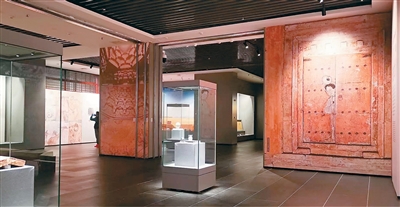
古墓探秘·千年幽语奇幻游

Search documents
科技赋能文化打底,古都洛阳成文旅“顶流”
Xin Hua She· 2026-02-11 23:59
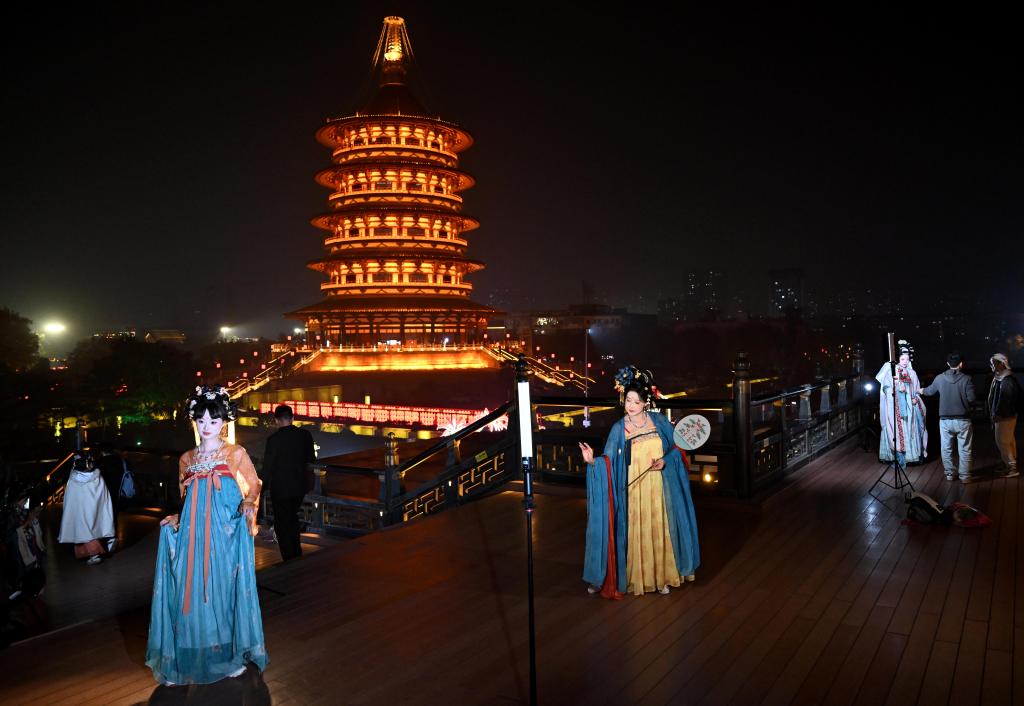
Core Insights - The ancient city of Luoyang has become a popular cultural tourism destination, attracting over 600 million visitors in the past five years, showcasing its vibrant consumer activity [1][2][4] Group 1: Cultural Tourism Development - The transformation of Luoyang into a cultural tourism "top flow" is attributed to the shift from resource-based tourism to creativity-driven experiences [2][5] - The Luoyang Ancient Tomb Museum has successfully increased visitor numbers by combining cultural relics with creative experiences, with nearly 70% of visitors under 35 years old [3][5] - The city boasts over 110 museums and memorials, receiving more than 17 million visitors annually, positioning itself as a "museum without walls" for Chinese culture [5][10] Group 2: Innovative Experiences - The immersive experience economy is emphasized, with a focus on transforming static cultural displays into engaging, participatory experiences [9][10] - The Luoyang Ancient City has become a popular destination for Hanfu culture, attracting over 13 million visitors in 2023 and generating over 2.2 billion yuan in market consumption [10] - The number of Hanfu-related businesses in the old city has surged from 18 to over 1,300, creating over 30,000 jobs in the full-service supply chain [10] Group 3: Digital Engagement and Marketing - The Old Jun Mountain has seen over 5 million visitors and 1.2 billion yuan in annual revenue, largely due to viral marketing through short videos [11][12] - The mountain's management has adapted to visitor demands by introducing night tours and trendy projects, enhancing its appeal [12][13] - The integration of interactive marketing has significantly increased visitor numbers, with the mountain's annual visitors rising from 1.8 million in 2021 to 5.38 million by 2025 [13] Group 4: Economic Impact - During the 14th Five-Year Plan period, Luoyang received over 600 million visitors, generating nearly 480 billion yuan in tourism revenue, reflecting a successful implementation of innovative tourism strategies [13]
因地制宜发展新质生产力|科技赋能 文化打底——古都洛阳何以成文旅“顶流”?
Xin Hua Wang· 2026-02-09 22:45
Core Insights - The ancient city of Luoyang has transformed into a cultural tourism hotspot, attracting over 600 million visitors in five years, showcasing its vibrant consumer activity [1][9] - The key to Luoyang's success in the cultural tourism industry lies in leveraging new creative production capabilities [1][3] Group 1: Cultural Heritage and Innovation - The Luoyang Ancient Tomb Museum has shifted from being a niche attraction to a popular destination through innovative experiences like "Night Tour of Ancient Tombs," appealing particularly to younger audiences [2][3] - The integration of creative experiences with cultural heritage has led to a significant increase in visitor numbers, with nearly 70% of visitors being under 35 years old [2][3] Group 2: Immersive Experiences and Youth Engagement - The transition from traditional sightseeing to immersive experiences has been pivotal, with the city focusing on creating engaging cultural experiences that resonate with younger consumers [6][7] - Luoyang's initiatives, such as the "Dream of the Sui and Tang Dynasties" brand, have successfully attracted a large number of visitors, with over 13 million experiencing Hanfu culture in 2023 alone [7][9] Group 3: Digital and Social Media Influence - The Old Jun Mountain has seen a surge in visitors due to effective social media marketing, with over 10 billion exposures from user-generated content, leading to a significant increase in annual revenue [8][9] - The use of interactive and engaging content on platforms like Douyin has been crucial in driving traffic and enhancing visitor experiences, contributing to a robust growth cycle in the tourism sector [8][9] Group 4: Economic Impact and Future Prospects - Luoyang's tourism revenue has approached 480 billion yuan during the 14th Five-Year Plan period, indicating a strong economic impact from the cultural tourism sector [9] - The city's approach to combining innovative experiences with cultural heritage serves as a model for sustainable development in the cultural tourism industry [9]

小众博物馆成热门打卡地(你所不知道的一级馆)
Ren Min Ri Bao Hai Wai Ban· 2025-08-19 01:03
Core Insights - The Luoyang Ancient Tomb Museum, also known as the Henan Ancient Mural Museum, is the only museum in China that integrates imperial tombs, burial artifacts, stone carvings, and murals, making it a significant cultural and tourist destination [7][8] - The museum has innovatively utilized its collection resources, attracting both domestic and foreign tourists, and is often referred to as "China's Pyramid" [7] - The museum underwent significant renovations from July 2020 to September 2022, enhancing infrastructure, exhibition content, and visitor experience, leading to a surge in visitor numbers [10][15] Museum Overview - Located in the northern part of Luoyang, the museum showcases 25 typical tombs from the Western Han to the Song and Jin dynasties, reflecting the evolution of burial culture in the Henan region [8][9] - The exhibitions are divided into three main sections: "Overview of Burial Systems," "Northern Wei Imperial Tombs," and "Brick Paintings of the Song and Jin Dynasties," systematically displaying the cultural evolution of tombs [9] Mural Significance - Murals are crucial artifacts that reflect ancient social life and spiritual beliefs, with their themes evolving from mythology and history to more secular subjects in later dynasties [12][13] - The museum's mural protection center, established in 1998, has become a key research base for ancient mural preservation in Henan, successfully restoring murals from various dynasties [14] Visitor Experience and Engagement - The museum has introduced immersive night tours, attracting a younger audience and significantly increasing visitor numbers, with projections of over 200 million visitors in 2024 [15][16] - The "Museum + Company" operational model has been implemented to enhance cultural product development and extend opening hours, responding to the interests of younger visitors [16]