古镇旅游体验

Search documents
要有“舍小取大”的大智慧
Xin Hua Ri Bao· 2026-02-04 21:46
Core Insights - The article discusses the transformation of the traditional tourism model in the context of the Dangkou Ancient Town, emphasizing the shift from a ticketed "scenic area" to a free-access "street area" to revitalize cultural tourism [1][2][3] Group 1: Transformation of Tourism Model - The cancellation of entrance fees at Dangkou Ancient Town represents a fundamental shift in development strategy, moving from a passive approach of waiting for visitors to an active strategy of inviting them [1] - The reopening of Dangkou as a free-access area led to a significant increase in visitor numbers, demonstrating that charging fees can act as a barrier rather than a protective measure [1] - By 2025, revenue from cultural and handmade products in Dangkou is projected to grow by 50% year-on-year, indicating the effectiveness of transforming the tourism focus from mere sightseeing to immersive consumer experiences [1] Group 2: Evolving Visitor Expectations - Modern tourists seek immersive experiences rather than just superficial visits, with a preference for "slow travel" and genuine interactions [2] - The unique charm of ancient towns lies in their authentic local life and historical narratives, which should be preserved rather than artificially recreated [2] - Differentiation in the tourism market is crucial, with a focus on local culture, historical significance, and unique activities to meet the increasingly segmented demands of visitors [2] Group 3: Community Engagement and Economic Impact - The transformation from "scenic area" to "street area" fosters community involvement, with local residents becoming active participants in tourism development rather than being displaced [3] - Residents are investing in hospitality and retail businesses, contributing to the local economy and sharing in the benefits of tourism growth [3] - The implementation of a free-access policy enhances the sense of community and participation among locals, leading to a more sustainable and inclusive economic model [3]

商业泛滥的古镇,该换种打法了
创业邦· 2026-01-09 04:48
Core Viewpoint - The commercialization of ancient towns has become a double-edged sword, where over-commercialization leads to a loss of uniqueness and cultural identity, prompting tourists to seek less commercialized alternatives [5][10][24]. Group 1: Historical Context and Development - The modern concept of ancient town tourism in China began in the 1980s with Zhouzhuang, which initially aimed to raise funds for preservation. By 1989, it received 55,000 visitors and generated approximately 200,000 yuan in revenue [7]. - Zhouzhuang's success led to a boom in ancient town tourism across the country, with a significant increase in visitor numbers and revenue, reaching 330 million visitors and over 1 billion yuan in revenue by 2007 [9]. - The concentration of ancient town attractions is notable, with six provinces housing over half of the ancient town scenic spots, creating a cluster effect [9]. Group 2: Current Challenges and Trends - The phenomenon of homogenization is prevalent, with many ancient towns offering similar products and experiences, leading to a sense of fatigue among tourists [10][20]. - Tourists are increasingly engaging in "reverse tourism," seeking lesser-known towns that retain their authenticity and local life, as seen in the shift from popular destinations like Lijiang to lesser-known towns like Jianchuan [11][20]. - Despite the commercialization, ancient towns like Fenghuang still attract significant visitor numbers and revenue, indicating a strong economic potential [20]. Group 3: The Role of Commercialization - Commercialization is not inherently negative; it supports modern tourism experiences by providing necessary infrastructure and services [13][16]. - However, the current commercial models often lack cultural depth and fail to convert the unique historical and cultural attributes of ancient towns into meaningful experiences [25][27]. - Successful examples like Wuzhen demonstrate the potential for a balanced approach that integrates cultural storytelling with commercial activities, enhancing the overall visitor experience [25][27].

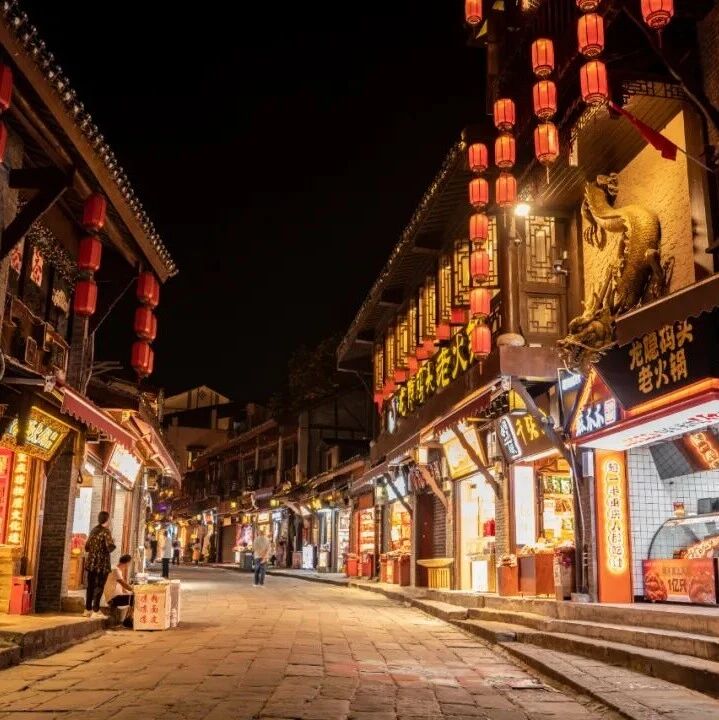
历史碰撞现代!义乌藏了个让外国人痴迷的宝藏古镇
Zhong Guo Xin Wen Wang· 2025-10-21 08:14
Core Points - The article highlights the enduring popularity of the ancient town of Fodang in Yiwu, which combines historical charm with modern vibrancy [1] - Visitors, including foreigners, express admiration for the town's beauty and express intentions to return [1] Summary by Categories - **Historical Significance** - Fodang Ancient Town has a rich history that continues to attract visitors [1] - **Cultural Experience** - The town offers traditional snacks that enhance the visitor experience [1] - Fodang Old Street provides a unique opportunity for visitors to immerse themselves in the local culture [1] - **Tourism Appeal** - The town's aesthetic appeal is noted by tourists, contributing to its reputation as a must-visit destination [1]