司美格鲁肽注射剂

Search documents
关于司美格鲁肽口服片,问得最多的10个问题
GLP1减重宝典· 2026-03-07 15:54
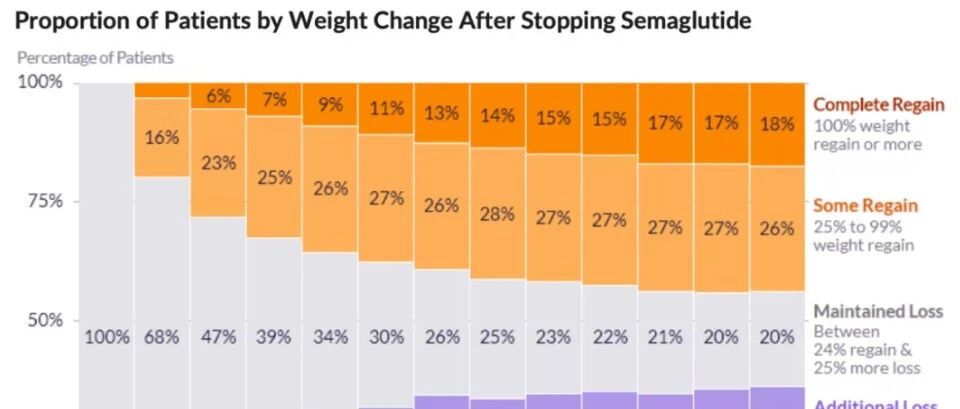
Core Viewpoint - The article addresses common questions regarding the oral formulation of Semaglutide for weight loss, emphasizing its effectiveness, usage guidelines, and safety profile while highlighting ongoing clinical trials and research findings [4]. Group 1: Weight Loss Efficacy - In the OASIS 1 study, participants using 50mg oral Semaglutide lost an average of 17.4% (18.34 kg) over 68 weeks [5][6]. - The OASIS 4 study showed that participants using 25mg oral Semaglutide lost an average of 13.6% (14.4 kg) over 64 weeks, with potential weight loss reaching 16.6% (17.6 kg) if all subjects completed the treatment [7][8]. Group 2: Side Effects and Safety - Approximately 30% of participants reported gastrointestinal side effects, which were mostly mild to moderate and tended to resolve over time [9]. - Semaglutide has shown good safety in elderly patients and those with renal impairment, although caution is advised for patients with severe renal dysfunction [11]. Group 3: Usage Guidelines - Semaglutide should be taken at least 30 minutes before the first meal of the day, using no more than 118ml of water, and should not be crushed or chewed [12]. - The recommended starting dose is 3mg once daily, increasing to 7mg after 30 days, with a maximum dose of 14mg if necessary [12]. Group 4: Lifestyle Changes - Weight loss should not solely rely on dieting; a balanced intake of at least 1200 calories per day is recommended, with a focus on healthy snacks [13]. - Adequate protein intake of at least 1g per kg of body weight is essential, and physical activity of 150-300 minutes per week is advised [15]. Group 5: Mechanism of Action - Semaglutide mimics GLP-1 hormone, improving insulin secretion and reducing appetite, while also slowing gastric emptying to prolong satiety [16]. - The SNAC technology enhances the absorption of Semaglutide, increasing its bioavailability by approximately 100 times [16]. Group 6: Contraindications - Semaglutide is not suitable for type 1 diabetes patients, those with severe gastrointestinal diseases, or individuals with a history of medullary thyroid carcinoma [18]. Group 7: Additional Benefits - Clinical trials have shown that Semaglutide effectively manages type 2 diabetes, with a 92.3% HbA1c target achievement rate among newly diagnosed patients in China [19]. - The PIONEER 6 study indicated a 51% reduction in cardiovascular death risk for patients using Semaglutide compared to placebo [21]. Group 8: Oral vs. Injectable Formulation - Oral Semaglutide is easier to store and transport compared to injectable forms, which require strict cold chain logistics [23]. - The oral formulation is more convenient for patients who may have a fear of injections [23]. Group 9: Risk of Hypoglycemia - Semaglutide's glucose-dependent mechanism means it does not cause hypoglycemia in individuals with normal blood sugar levels, making it safer for weight loss treatments [24]. Group 10: Weight Regain After Discontinuation - In studies, 18% of patients regained weight after stopping Semaglutide, while 56% maintained or continued to lose weight [25].

诺和诺德口服减重药美国上市,每月治疗费用大降
第一财经· 2026-01-06 02:26
Core Viewpoint - Novo Nordisk's oral GLP-1 weight loss drug, semaglutide, was officially launched in the U.S. on January 5, 2026, just two weeks after FDA approval, marking a significant milestone in the weight loss medication market [3][4]. Group 1: Novo Nordisk's Product Launch - The stock price of Novo Nordisk surged over 5% following the launch, while competitor Eli Lilly's stock fell by 3.6% [4]. - The monthly treatment cost for self-paying patients ranges from $149 to $299, significantly lower than the initial $1,000 monthly cost for the injectable version [4]. - The starting dose of oral semaglutide is 1.5 mg, priced at $149 per month, with a planned price increase for higher doses after April 15 [4]. - In a clinical trial involving over 300 obese but non-diabetic adults, patients on the highest dose of oral semaglutide lost an average of 16.6% of their body weight over 64 weeks [4]. Group 2: Competitive Landscape - Eli Lilly's oral GLP-1 weight loss drug, orforglipron, is expected to receive approval in the first quarter of 2026, with clinical data showing an average weight loss of 10.5% at the highest dose [5]. - The oral weight loss medication market is projected to capture 24% of the global weight loss therapy market by 2030, estimated at $950 billion, translating to a market size of approximately $22 billion for oral medications [5]. - Eli Lilly's orforglipron is anticipated to hold about 60% of the oral weight loss drug market, valued at approximately $13.6 billion, while Novo Nordisk's oral semaglutide is expected to capture around 21% of the market, worth about $4 billion [5].


诺和诺德口服减重药美国上市,每月治疗费用大降,最低149美元
Di Yi Cai Jing· 2026-01-06 02:19
Core Insights - Oral weight loss medications are projected to capture 24% of the global weight loss therapy market by 2030, translating to a market size of approximately $22 billion based on an overall weight loss drug market of about $95 billion [1][2] Group 1: Novo Nordisk's Oral Semaglutide - Novo Nordisk's oral version of GLP-1 weight loss drug, semaglutide, was officially launched in the U.S. on January 5, just two weeks after FDA approval [1] - The stock price of Novo Nordisk surged over 5% following the launch, while competitor Eli Lilly's stock fell by 3.6% [1] - The monthly treatment cost for self-paying patients ranges from $149 to $299, significantly reduced from the initial $1,000 monthly cost of the injectable version [1] - The starting dose of oral semaglutide is 1.5 mg, priced at $149 per month, with a planned price increase for higher doses after April 15 [1] Group 2: Clinical Trial Results - In a Phase III clinical trial involving over 300 obese but non-diabetic adults, patients on the highest dose of oral semaglutide lost an average of 16.6% of their body weight after 64 weeks, with an average weight loss of 13.6% overall [2] Group 3: Competitive Landscape - Eli Lilly's oral GLP-1 weight loss drug, orforglipron, is expected to receive approval in the first quarter of this year, with clinical data showing an average weight loss of 10.5% at the highest dose [2] - The oral weight loss therapy market is becoming a competitive battleground among major pharmaceutical companies [2] - Goldman Sachs estimates that Eli Lilly's oral drug could capture about 60% of the oral weight loss drug market, valued at approximately $13.6 billion, while Novo Nordisk's oral semaglutide is expected to hold around 21% of the market, worth about $4 billion [2]
有关司美格鲁肽口服片,问得最多的10个问题一文看懂!
GLP1减重宝典· 2025-06-06 09:52
Core Viewpoint - The article addresses common questions regarding the oral semaglutide for weight loss, emphasizing its effectiveness, usage guidelines, and safety profile. Group 1: Weight Loss Efficacy - In the OASIS 1 study, participants using 50mg oral semaglutide lost an average of 17.4% (18.34 kg) of their body weight over 68 weeks [2] - The OASIS 4 study showed that participants using 25mg oral semaglutide lost an average of 13.6% (14.4 kg) over 64 weeks, with potential maximum weight loss reaching 16.6% (17.6 kg) if all subjects completed the treatment [4] - To achieve weight loss effects similar to the injectable version, higher doses of oral semaglutide (up to 25mg or 50mg) may be required, while the current maximum available dose is 14mg [4] Group 2: Side Effects and Safety - Approximately 30% of participants reported gastrointestinal side effects such as nausea, vomiting, and diarrhea, which are common with GLP-1 receptor agonists [5] - Semaglutide has shown good safety in elderly patients and those with renal impairment, but caution is advised for patients with severe renal dysfunction [7] - Long-term safety data is still being collected, but current studies indicate good long-term tolerability [8] Group 3: Usage Guidelines - Semaglutide should be taken at least 30 minutes before the first meal of the day, using no more than 118ml of plain water for swallowing [9] - The recommended starting dose is 3mg once daily for 30 days, followed by an increase to 7mg once daily [11][12] - If the 7mg dose is ineffective after 30 days, it can be increased to a maximum of 14mg once daily [13] Group 4: Lifestyle Changes for Weight Loss - The article emphasizes that weight loss should not solely focus on calorie restriction; a balanced diet with a minimum of 1200 kcal daily is recommended [15] - Adequate protein intake of at least 1g per kg of body weight is essential, and caloric deficits should be maintained within 300-500 kcal [17] - Regular physical activity is crucial, with recommendations for 150-300 minutes of moderate-intensity exercise weekly [18] Group 5: Mechanism of Action - Semaglutide lowers blood sugar through a glucose-dependent mechanism, improving beta-cell function and insulin resistance [19] - It mimics GLP-1 to help control appetite and prolong satiety by slowing gastric emptying [20][21] Group 6: Additional Benefits - In the PIONEER study, semaglutide demonstrated efficacy in managing type 2 diabetes, significantly lowering HbA1c levels in 92.3% of newly diagnosed patients [28] - The PIONEER 6 study indicated a 51% reduction in cardiovascular death risk among type 2 diabetes patients using semaglutide [29] Group 7: Advantages of Oral Formulation - Oral semaglutide can be stored at room temperature, making it easier to transport compared to injectable forms that require cold chain storage [31] - The oral formulation is more convenient for patients who may fear injections [33] Group 8: Risk of Hypoglycemia - Semaglutide's glucose-dependent mechanism means it does not induce hypoglycemia in individuals with normal blood sugar levels, making it safer for weight loss treatment [34] Group 9: Weight Regain After Discontinuation - In a study, 18% of patients regained weight after stopping semaglutide, while 26% regained more than 25% of their lost weight, indicating a potential for weight rebound [35]