同福共享平台

Search documents
人民网在北京访谈了两家企业,一家三天后上市,另一家又有什么神通?
Sou Hu Cai Jing· 2025-12-14 17:16
Core Insights - The article discusses the recent developments in the industry, particularly focusing on the launch of JD Industrial and the innovative business model of Tongfu Group, which is seen as a potential leader in the integration of industrial and consumer internet [1][3]. Industry Trends - The "14th Five-Year Plan" emphasizes the importance of "dual network integration," reflecting a shift in the consumer market from a supply-driven to a demand-driven model [5]. - Traditional supply chain issues are highlighted, where manufacturers are unaware of consumer needs, leading to inefficiencies and lack of vitality in the industry [5]. Company Strategies - Tongfu Group's President Liu Hui emphasizes that their platform aims to activate the entire supply chain through empowerment and connectivity rather than disrupting existing structures [7]. - The company employs "two integrations" and "eight guiding principles" to connect manufacturers, distributors, stores, and consumers effectively [8][9]. Implementation of Business Model - The "two integrations" involve merging industrial and consumer internet to facilitate data flow between production and consumption, and integrating online and offline resources for efficient traffic flow in physical stores [8]. - The "eight guiding principles" focus on creating demand-driven supply chains, as demonstrated by a successful promotional campaign during the Mid-Autumn Festival that significantly boosted sales for participating stores [9]. Operational Framework - Tongfu's operational strategy includes collaborating with upstream suppliers for efficient production, transforming distributors into platform operators, empowering retail stores with digital tools, and retaining customers through quality products and services [11].


人民会客厅—— 业内共探双网融合:以全链路数字化赋能实体经济提质升级
Ren Min Wang· 2025-12-09 09:22
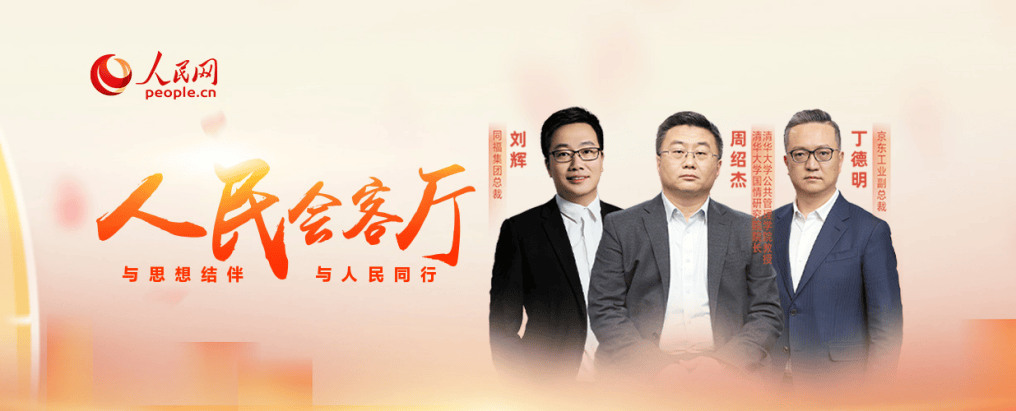
Core Insights - The digital transformation of the consumer market is accelerating, with the deep integration of industrial and consumer internet (referred to as "dual network integration") continuing to deepen, as outlined in the "14th Five-Year Plan" [1] - Experts indicate that dual network integration is a crucial lever for activating consumer potential and will evolve beyond superficial upgrades to become a core force driving urban-rural integration and enhancing the quality of the real economy [1] Group 1: Challenges and Solutions - The two main challenges in advancing dual network integration are "supply-demand mismatch" and the "digitalization weakness of small and medium-sized enterprises (SMEs)" [2] - To address these challenges, a collaborative effort between an "effective market and proactive government" is necessary, as expanding consumption is key to boosting domestic demand [2] - Companies like Tongfu Group are implementing strategies that integrate consumption and industrial internet, aiming to create a virtuous cycle driven by demand [2] Group 2: Practical Applications - Traditional enterprises are leveraging their industry experience to achieve breakthroughs in digital transformation, with Tongfu Group's platform covering over 1.2 million terminal outlets and thousands of supply chain companies [4] - JD Industrial is addressing issues of data flow and standardization in dual network integration by creating a "smart supply chain" that can reduce total costs in China's industrial supply chain by approximately 5.88% [3][4] Group 3: Future Directions - For dual network integration to continue releasing momentum, it requires scientific policy guidance and proactive actions from business entities [5] - Future plans for Tongfu include expanding market reach, enhancing supply chain links, and deepening the application of new technologies like AI [6] - JD Industrial aims to focus on empowering SMEs with free system links and digital capabilities, ensuring that all participants in the supply chain can benefit from the integration [6]
“618”新速度:看智慧物流如何“省力快跑”
Zhong Guo Xin Wen Wang· 2025-06-19 03:14
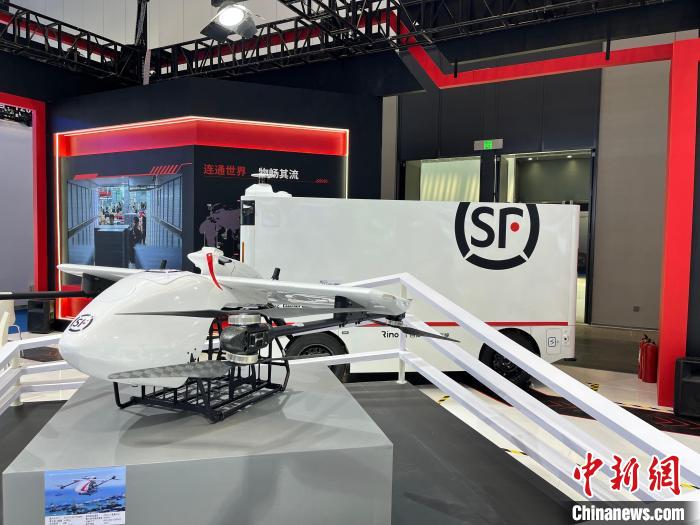
Core Viewpoint - The article highlights the advancements in smart logistics technology showcased during the 2025 China Langfang International Economic and Trade Fair, emphasizing the importance of innovative solutions in enhancing efficiency and reducing costs in the logistics sector [1]. Group 1: Transportation Innovations - The ARK 20 drone from SF Express is a notable example of logistics innovation, capable of carrying 5 kilograms over a distance of 40 kilometers, suitable for various delivery scenarios [2]. - The use of drones can significantly shorten delivery distances, as illustrated by the example of reducing travel time between Zhongshan and Shenzhen by avoiding land routes [4]. Group 2: Warehouse Upgrades - The collaboration between China Foreign Trade and Hebei Mobile has led to the development of passive IoT terminals that do not require a power source, reducing costs to 0.2-0.3 yuan per label and expanding application scenarios [5]. - The implementation of passive IoT devices allows for rapid inventory checks, transforming traditional manual processes that typically take weeks into a few minutes [6]. Group 3: Management Solutions - Tongfu Group focuses on restructuring county-level commercial logistics to address inefficiencies in traditional distribution channels, which often lead to increased costs and wasted resources [7]. - The establishment of the Tongfu Shared Platform aims to streamline the supply chain by aggregating orders and facilitating bulk purchasing, thereby reducing production and marketing costs for manufacturers [9]. - The report indicates that technological innovation will drive efficiency in the global logistics industry from 2024 to 2025, marking a significant trend in the sector [9].