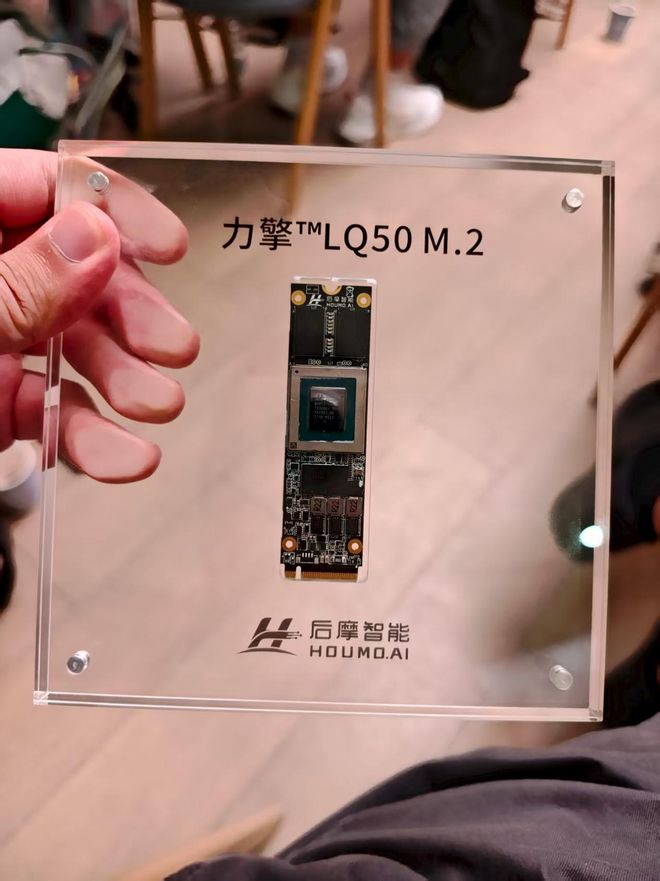
后摩智能M50芯片

Search documents
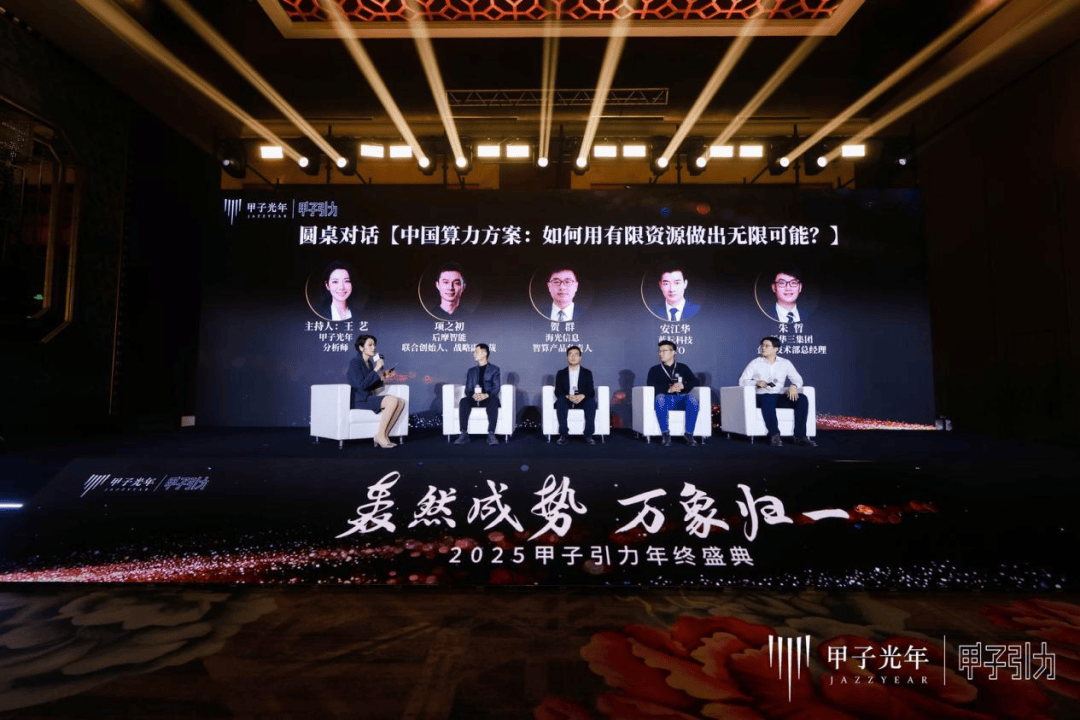
中国算力方案:如何用有限资源做出无限可能?|甲子引力
Sou Hu Cai Jing· 2025-12-12 07:15
Core Insights - The unique advantage of China's computing power industry lies in its scenario-driven innovation model [2][3] - The industry is transitioning from "having computing power" to "sufficient and high-quality computing power" amid global competition [2] - Key challenges include process bottlenecks, software ecosystem maturity, and systematic engineering [5][7][11] Group 1: Key Bottlenecks - The primary bottleneck in China's computing power is the software stack, particularly the compiler toolchain, which requires time for domestic chip companies to catch up [5][7] - Process limitations affect both chip performance and interconnect bandwidth, necessitating breakthroughs in the upstream AI industry [7][11] - Identifying the right application scenarios is crucial for overcoming software stack issues and optimizing computing power [9][11] Group 2: Supernodes and Clusters - Transitioning from thousands to tens of thousands of cards in clusters presents significant non-linear challenges, particularly in communication bandwidth and latency [14][20] - Supernodes are recognized for their utility in both training and inference scenarios, aiming to reduce costs associated with token generation [14][20] - The choice between Scale-up and Scale-out architectures impacts performance and flexibility, with liquid cooling becoming essential for high-density nodes [20][21] Group 3: Edge-Cloud Collaboration - The commercialization of integrated storage and computing technology is approaching, with significant market demand expected once a "Killer APP" emerges [17][23] - Edge AI can enhance privacy by processing sensitive data locally, reducing the risk of data leaks [18][23] - Edge devices are projected to handle over 50% of computing tasks, necessitating a balance between local processing and cloud collaboration [17][18] Group 4: Interconnect and Liquid Cooling - The debate between Scale-up and Scale-out approaches highlights the importance of interconnect efficiency and bandwidth in supernodes [20][21] - Liquid cooling is identified as a necessary solution for high-density nodes, offering energy savings and noise reduction [21][22] Group 5: Engineering Practices - Real-world deployment often reveals discrepancies between theoretical specifications and actual performance, necessitating iterative product improvements [23] - Collaborative ecosystems, such as the chip model community, are essential for optimizing chip performance across various applications [23][24] - China's advantages in system engineering and application diversity provide a robust foundation for innovation in the computing power sector [24]


对话后摩智能CEO吴强:未来90%的数据处理可能会在端边
Guan Cha Zhe Wang· 2025-07-30 06:41
Core Insights - The World Artificial Intelligence Conference (WAIC 2025) highlighted the development of domestic computing power chips, particularly the M50 chip from Houmo Intelligence, designed for large model inference in AI PCs and smart terminals [1][4] - Houmo Intelligence's CEO, Wu Qiang, emphasized a shift in the focus of large models from training to inference, and from cloud intelligence to edge and endpoint intelligence [1][4] Company Overview - Houmo Intelligence was founded in 2020, focusing on high-performance AI chip development based on integrated storage and computing technology [3] - The M50 chip is seen as a significant achievement for Houmo Intelligence, showcasing their advancements over the past two years [3] Product Specifications - The M50 chip delivers 160 TOPS INT8 and 100 TFLOPS bFP16 physical computing power, with a maximum memory of 48GB and a bandwidth of 153.6 GB/s, while maintaining a typical power consumption of only 10W [4] - The product matrix from Houmo Intelligence covers a range of computing solutions from edge to endpoint, including the LQ50 Duo M.2 card for AI PCs and companion robots [4] Market Positioning - Wu Qiang stated that domestic companies should adopt differentiated technological paths rather than directly copying international giants like NVIDIA and AMD [4] - Houmo Intelligence aims to integrate storage and computing technology with large models to enable offline usability and data privacy [4] Future Developments - The release of the M50 chip is viewed as a starting point, with plans for more chips to address computing power, power consumption, and bandwidth issues in edge and endpoint AI computing [5] - Houmo Intelligence has initiated research on next-generation DRAM-PIM technology, which aims to achieve 1TB/s on-chip bandwidth and triple the energy efficiency of current levels [9] Target Markets - The M50 chip is applicable in various fields, including consumer terminals, smart offices, and smart industries, with a focus on offline processing to mitigate data transmission risks [8] - Potential clients include Lenovo's next-generation AI PC, iFlytek's smart voice devices, and China Mobile's new 5G+AI edge computing equipment [8]