和谐号动车组列车

Search documents
沈白高铁开通助推长白山冰雪旅游
Ren Min Wang· 2025-12-04 09:21
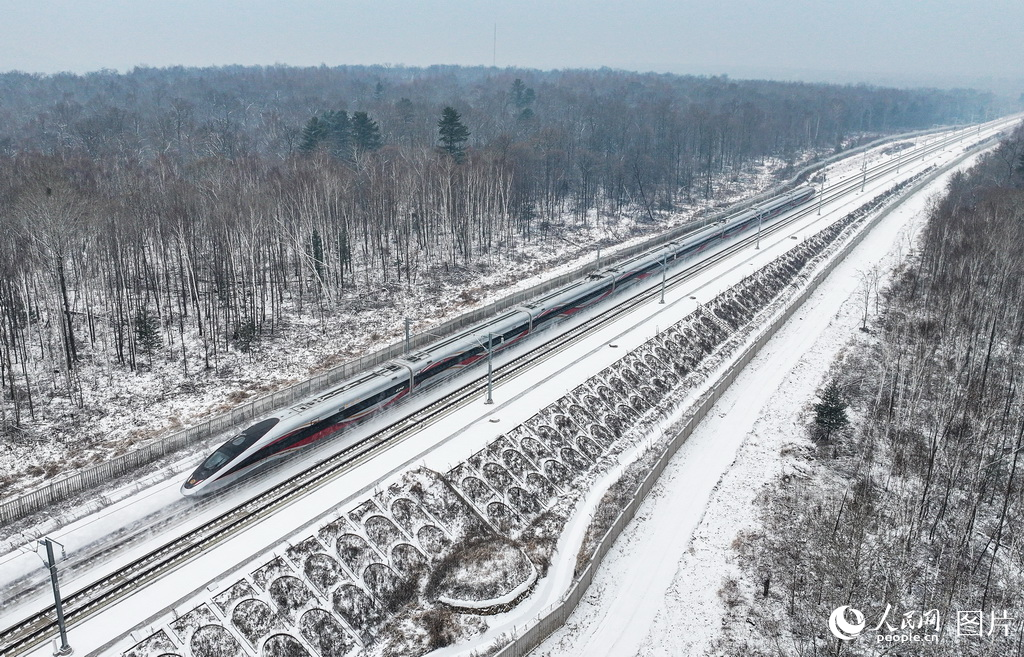
Group 1 - The article highlights the operation of the Fuxing intelligent high-speed trains on the Shenyang-Baihe Railway, showcasing advancements in China's rail transport technology [1][6] - The Harmony high-speed trains are also mentioned as part of the railway services, indicating a diverse fleet operating in the region [3] - The presence of passengers waiting at Changbai Mountain Station emphasizes the growing demand for rail travel in scenic areas [5] Group 2 - The article features the Changbai Mountain Huamei Resort Ski Area, indicating the integration of tourism and transportation in the region [7] - Scenic views of Changbai Mountain after snowfall are presented, highlighting the natural beauty that attracts visitors and supports the local tourism industry [9]


城市密码 | “陆地航母”为飞驰的高铁护航
Chang Jiang Ri Bao· 2025-12-01 03:21
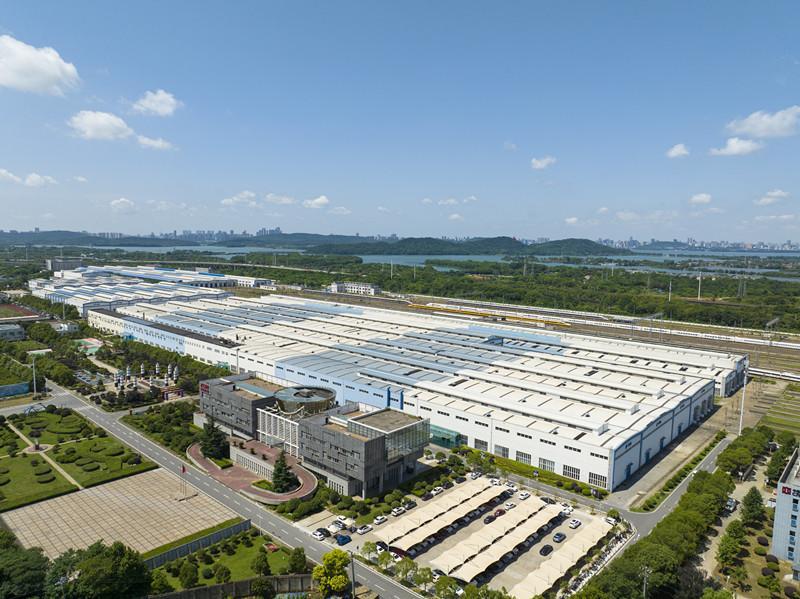
Core Viewpoint - The Wuhan动车段 (Wuhan EMU Depot) serves as a critical hub for the operation and maintenance of China's high-speed trains, ensuring their safety and efficiency through advanced technology and rigorous inspection processes [12][14][34]. Group 1: Overview of Wuhan EMU Depot - Wuhan EMU Depot has been operational for 16 years and is strategically located by East Lake [2][6]. - It supports a vast network, covering 19 provinces, 4 municipalities, and 1 autonomous region, making it a key node in China's high-speed rail system [3][5]. - The depot occupies 2,130 acres, equivalent to 200 standard football fields, and can handle maintenance for 400 train sets annually [12]. Group 2: Historical Context - The history of railways in Wuhan dates back to 1889, with significant developments such as the completion of the 京汉铁路 (Jinghan Railway) in 1906, which drastically reduced travel time from nearly a month to 3 days [8][9]. - The establishment of the 京广铁路 (Jingguang Railway) in 1957 connected major rail lines across the Yangtze River, enhancing transportation efficiency [10]. Group 3: Maintenance and Inspection Processes - The depot operates 24/7, functioning as a "train hospital" where trains undergo various levels of maintenance, from daily checks to comprehensive overhauls [26]. - Maintenance is categorized into five levels, with the first two levels being routine checks and the higher levels involving extensive repairs [18][26]. - Advanced technologies, such as a "train running fault image detection system," are employed to monitor the condition of trains in real-time [19]. Group 4: Technological Innovations - The depot has integrated intelligent inspection robots capable of identifying common faults and conducting extensive diagnostics [34]. - The maintenance intervals for trains have been extended, with first-level repairs now occurring after 9,000 kilometers, up from 4,800 kilometers, reflecting improvements in maintenance quality [34]. Group 5: Workforce and Expertise - The depot employs over 3,000 staff, with an average age of 30, highlighting a youthful and dynamic workforce dedicated to maintaining high safety standards [36][37]. - Notable figures, such as senior mechanic Ma Yaofeng, have contributed significantly to technical innovations and have received multiple accolades for their expertise [28][32].
中国高铁里的高质量发展辩证法
Ren Min Ri Bao· 2025-10-13 05:40
Core Viewpoint - The article highlights the significant advancements in China's high-speed rail technology, particularly the introduction of the 600 km/h superconducting electric maglev train by CRRC, showcasing China's transition from following to leading in high-speed rail technology [1][13]. Group 1: Technological Advancements - CRRC's new superconducting electric maglev train can reach speeds of 600 km/h, transitioning from rubber wheel operation at lower speeds to magnetic levitation at higher speeds [1]. - The CR450 train set achieved a record speed of 450 km/h, marking a milestone in high-speed rail development [1]. - The development of the Fuxing train set, which incorporates 254 important standards with 84% being Chinese standards, demonstrates China's capability in achieving global leadership in rail technology [11]. Group 2: Market Position and Growth - In the first half of the year, CRRC reported a 72.48% year-on-year increase in net profit and secured approximately 30.9 billion yuan in new overseas orders, maintaining its position as the world's largest rail transit equipment supplier [3]. - China's high-speed rail network has expanded to over 48,000 kilometers, covering 97% of cities with populations over 500,000, making it the longest high-speed rail network globally [8]. Group 3: Historical Context and Development Strategy - The article reflects on the historical context of China's high-speed rail development, noting that Japan's Shinkansen was established 44 years earlier than China's initial efforts [4]. - The introduction of the "Medium- and Long-Term Railway Network Plan" in 2004 set the stage for a massive market opportunity in rail transport, prompting global manufacturers to recognize China's potential [6]. - CRRC's strategy of integrating foreign technology while investing significantly in domestic innovation has been pivotal in its growth, adhering to a 1:7 investment principle for technology introduction and innovation [7]. Group 4: Future Prospects and Innovations - CRRC is committed to continuous innovation, with annual R&D investments exceeding 10 billion yuan, focusing on enhancing both quality and efficiency in high-speed rail technology [12]. - The CR450 train set features advanced monitoring and diagnostic systems, making it not only faster but also smarter and greener, with a 10% weight reduction and significant decreases in operational resistance and energy consumption [15].