咖啡手串

Search documents
新华全媒头条|人勤春早 不负春光——立春时节农耕一线见闻
Xin Hua She· 2026-02-04 12:38
Core Viewpoint - The article highlights the agricultural activities and advancements in China as spring begins, emphasizing the integration of traditional farming practices with modern technology to enhance crop yields and sustainability [1][4][12]. Group 1: Agricultural Innovations - The National South Breeding Research Institute in Hainan is showcasing new pepper varieties, with over 800 organizations and 8,000 researchers collaborating on breeding materials for more than 40 crop species [2]. - Advanced breeding technologies, such as molecular markers and functional gene integration, are significantly reducing breeding cycles and improving precision in crop development [3]. - In Shandong, local vegetable seed production has reached 2 billion seedlings annually, with 305 new vegetable varieties developed, some outperforming foreign seeds [3]. Group 2: Soil and Crop Management - The central government aims to stabilize grain production at approximately 1.4 trillion jin (about 700 million tons) as part of its agricultural strategy [4]. - In Jilin Province, protective farming practices are being implemented, with plans to reach 3 million acres of protective tillage by 2025, improving soil quality and increasing corn yields to 3,000 jin per hectare [6]. - In Yunnan, traditional practices are being maintained to ensure the sustainability of terraced farming, with farmers preparing for spring plowing and irrigation [7]. Group 3: Technological Integration - The use of drones for spraying growth regulators and fertilizers is becoming common, enhancing efficiency in large-scale wheat farming [8]. - The government plans to establish 135 million acres of high-standard farmland by 2030, with significant investments in irrigation and mechanization to reduce labor costs [8]. - The integration of ancient agricultural wisdom with modern technology is creating a robust framework for food security and rural revitalization [12]. Group 4: Industry Development - In Yunnan, coffee production is thriving, with over 13,600 acres dedicated to coffee cultivation, yielding more than 4,000 tons annually and generating an agricultural output value of 250 million yuan by 2025 [10]. - The development of a full-chain coffee industry, including value-added products, is significantly increasing the economic benefits for local farmers [10]. - The Ministry of Agriculture is supporting the establishment of numerous agricultural industry clusters and modern agricultural parks to drive rural revitalization [12].
保山市隆阳区潞江镇新寨村——红果变金豆 咖啡富山村
Xin Lang Cai Jing· 2026-01-22 20:14
Core Viewpoint - The transformation of Xinzhai Village's coffee industry through a comprehensive approach integrating agriculture, tourism, and local economic development is leading to significant increases in production, income, and tourism. Group 1: Coffee Production and Economic Impact - Xinzhai Village is expected to produce over 5,000 tons of coffee by 2026, with a total output value projected to exceed 250 million yuan [1] - The average disposable income for villagers is anticipated to surpass 40,000 yuan in 2025 [1] - The price for premium coffee beans has risen to 60 yuan per kilogram, ten times the price of ordinary coffee beans [1] Group 2: Industry Transformation and Integration - Xinzhai Village has restructured its coffee industry by integrating the entire supply chain, focusing on the fusion of primary, secondary, and tertiary industries [1] - The village has adopted a "village committee + enterprise + cooperative + base + farmer" model, incorporating all 502 households into the coffee industry chain [1] - The development of over 10 coffee-themed small courtyards and 6 unique coffee estates has enhanced the coffee tourism experience [2] Group 3: Tourism and Cultural Integration - Since the beginning of the 14th Five-Year Plan, Xinzhai Village has received over 200,000 tourists annually, boosting local coffee sales and related services [3] - The village has developed over 10 derivative products, including drip coffee and coffee-infused beverages, which are marketed through e-commerce [3] - The integration of coffee cultivation with tropical fruit farming has improved land efficiency and diversified product offerings [3]
咖啡飘香 新寨兴旺
Xin Lang Cai Jing· 2026-01-07 20:19
Core Insights - The article highlights the transformation of Xinzhai Village into a thriving coffee production hub, showcasing the successful integration of coffee cultivation with tourism and local culture [2][6][9] Development Breakthrough - Xinzhai Village has established a coffee base of 13,600 acres and formed six cooperatives, leading to a significant increase in coffee production and quality [2][5] - The village's coffee production has evolved from a struggling industry to a profitable venture, with the introduction of high-quality coffee varieties and modern processing techniques [5][6] - The village's coffee output has reached over 4,000 tons annually, with the unique Baoshan small-grain coffee recognized as a geographical indication product [3][4] Value Chain Extension - The establishment of coffee processing facilities has allowed villagers to enhance the value of their coffee products, with many investing in roasting machines to improve quality [6][7] - Xinzhai Village has embraced a "coffee + tourism" model, attracting over 200,000 tourists annually and significantly increasing coffee-related income [7][9] - The village's coffee industry has seen a revenue increase from 70 million yuan in 2020 to an expected 150 million yuan in 2024 [7] Integration and Coexistence - Xinzhai Village has developed six differentiated coffee estates and ten specialty coffee houses, creating a multi-faceted industry that includes cultivation, processing, and tourism [9][10] - The community has successfully engaged in cultural tourism activities, enhancing the overall experience for visitors and promoting local coffee culture [6][9] - The village's approach has attracted young entrepreneurs, revitalizing the local economy and fostering a culture of coffee appreciation among residents [10][11]


走进“书式”圈 尽享文化盛宴
Mei Ri Shang Bao· 2025-07-22 03:00
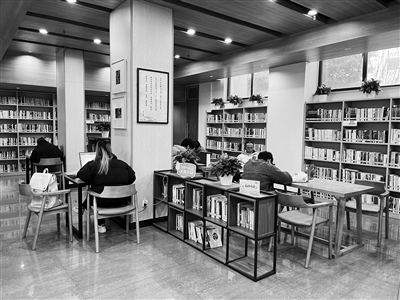
Core Viewpoint - The article highlights the increasing popularity and engagement of the Gudang Street New Era Civilization Practice Center, showcasing its role as a community hub for cultural and educational activities, particularly during the summer months [1][4]. Group 1: Facility and Services - The Gudang Street New Era Civilization Practice Center integrates various resources including a library, training rooms, fitness spaces, and volunteer services within a space of less than 3,000 square meters, making it one of the first five-star cultural homes in Hangzhou [1]. - The West Lake Library has undergone upgrades, offering a wide range of books across different categories, with a focus on comfort and aesthetics through the use of wooden furniture [1][2]. Group 2: Community Engagement - The center has seen a significant increase in foot traffic, with regular attendance rising from around 300 to over 1,000 during the summer, indicating a high level of community interest and participation [1]. - A "mood book list" wall has been established to enhance the reading experience, allowing residents to select books that resonate with their emotions [3]. Group 3: Activities and Courses - The center offers a variety of popular activities and courses, with themes such as "Common Prosperity Gudang" and "Public Welfare Activities," which are highly sought after by residents [4][5]. - The quality of the courses is emphasized, with instructors being local experts who tailor their lessons to meet the needs of the community, ensuring that the content is relevant and valuable [5][6]. Group 4: Cultural Promotion - The center promotes local culture through creative products designed by integrating local elements, providing a platform for residents to purchase unique items [2]. - The center aims to continue enriching the spiritual and cultural lives of residents, enhancing their sense of happiness and fulfillment through ongoing community services and cultural transmission [6].