商品券

Search documents
从公交卡到碳市场,上海碳普惠串起绿色生活价值链
Zhong Guo Huan Jing Bao· 2025-07-08 02:01
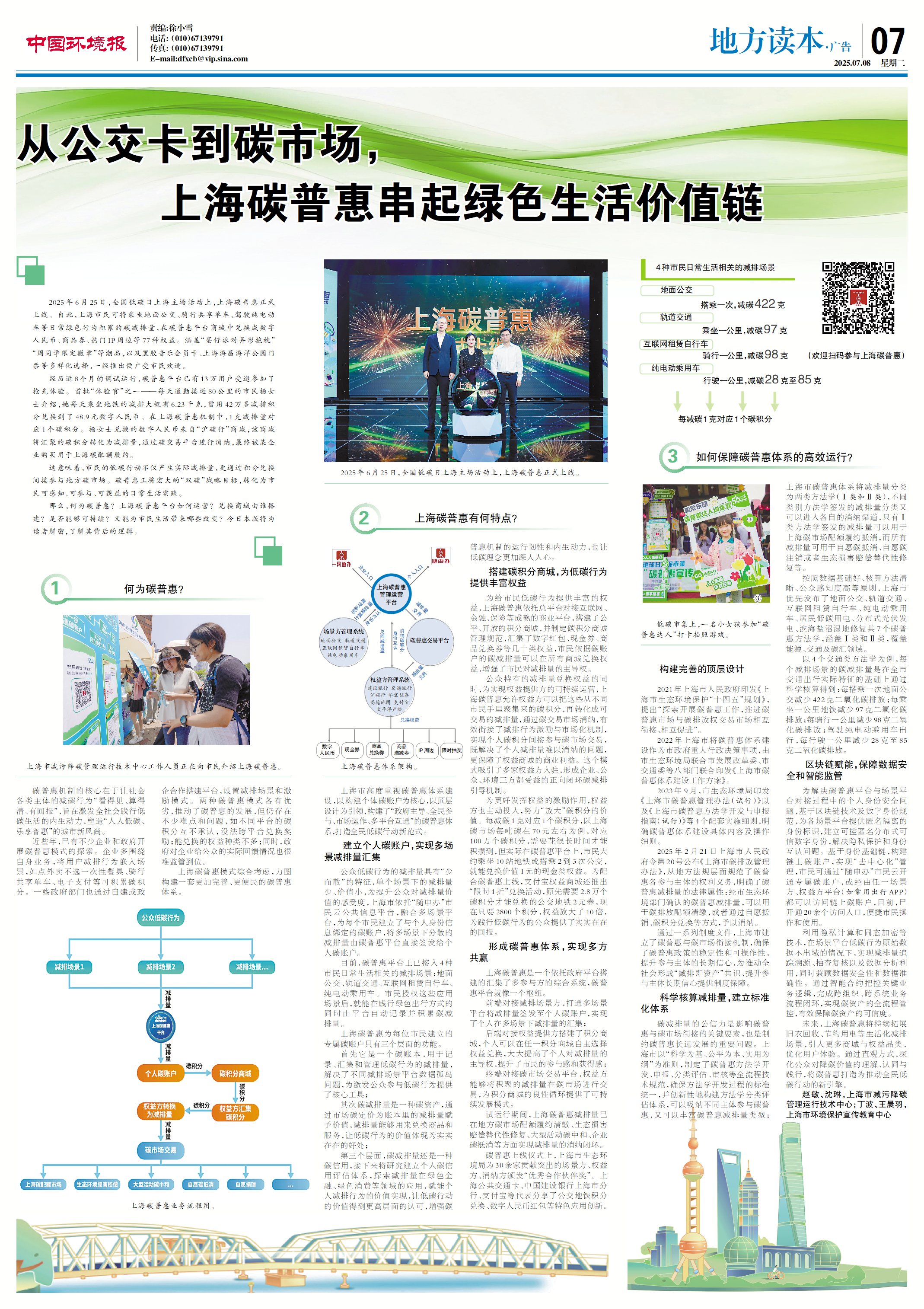
Core Points - The Shanghai Carbon Benefit platform officially launched on June 25, 2025, allowing citizens to convert carbon reduction from daily green behaviors into digital currency and various rewards [1][14][16] - The platform has gained popularity, with 130,000 users participating in the initial experience phase, demonstrating the public's engagement with low-carbon actions [16][18] - The carbon reduction mechanism aims to make carbon reduction actions visible, measurable, and rewarding, fostering a culture of low-carbon living among citizens [18][23] Group 1: Carbon Benefit Mechanism - The core of the carbon benefit mechanism is to enable various societal entities to see, quantify, and receive rewards for their carbon reduction efforts, thus motivating low-carbon lifestyles [18][19] - The platform integrates multiple daily life scenarios for carbon reduction, including public transport, shared bicycles, and electric vehicles, allowing users to accumulate carbon credits [24][37] - Each gram of carbon reduction corresponds to one carbon credit, which can be exchanged for rewards, enhancing the perceived value of low-carbon actions [16][27] Group 2: Platform Features and Structure - The Shanghai Carbon Benefit system is designed with a focus on individual carbon accounts, supported by a top-down approach that encourages government leadership, public participation, and market operations [23][24] - The platform has established a comprehensive and user-friendly carbon benefit system, addressing challenges such as data silos and limited reward options [19][25] - The carbon credit marketplace allows users to exchange their accumulated credits for a variety of rewards, thus linking individual actions to broader carbon market transactions [26][30] Group 3: Regulatory and Technical Framework - The Shanghai government has implemented a series of regulations and guidelines to ensure the effective operation of the carbon benefit system, including the establishment of legal attributes for carbon credits [32][33] - A standardized methodology for calculating carbon reduction has been developed, ensuring the credibility of carbon credits and facilitating their integration into the carbon market [33][34] - Blockchain technology is utilized to secure data and manage identities, enhancing the reliability and transparency of the carbon benefit platform [35]

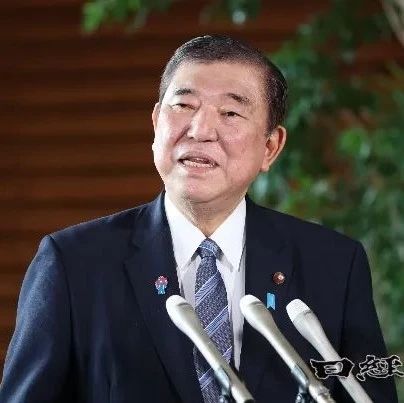
石破向议员发价值10万日元商品券,被质疑违法
日经中文网· 2025-03-14 02:46
Core Viewpoint - The article discusses the controversy surrounding Japanese Prime Minister Kishida Fumio's distribution of 100,000 yen gift vouchers to members of his party during a dinner, raising questions about potential violations of political funding laws [1][3][4]. Group 1: Event Details - On March 3, Kishida hosted a dinner for 15 newly elected members of the House of Representatives, during which his office distributed 100,000 yen gift vouchers to attendees [1][3]. - Kishida claimed that the vouchers were intended as "souvenirs" and were not related to political activities, asserting that there were no legal issues involved [2][4]. Group 2: Legal Implications - The Japanese Political Funds Control Law prohibits personal donations related to political activities, including cash or valuable securities, which raises concerns about the legality of the gift vouchers [3][5]. - Critics argue that the distribution of such vouchers could be interpreted as a personal donation to politicians, potentially violating the law [5]. Group 3: Political Reactions - Opposition parties have criticized Kishida's actions, suggesting that they could undermine the government's functioning, especially given the reliance on minority party cooperation for passing budgets and important legislation [3]. - Prominent political figures have expressed doubts about Kishida's judgment and the appropriateness of using public funds in this manner, especially in light of rising living costs in Japan [5].