四足狗机器人

Search documents
CES上,中国机器人军团想掏空海外买家的口袋
3 6 Ke· 2026-01-08 03:07
Core Insights - The 2026 CES showcased a significant presence of approximately 20 Chinese humanoid robot companies, surpassing the total from the US, Japan, South Korea, Germany, and the UK combined [1][2] - Chinese robot manufacturers aim to establish their brands and secure sales during the event, reflecting a matured industry with developed products and sufficient funding [2][5] Group 1: Participation and Goals - Many Chinese companies, including Fourier and Magic Atom, participated for the first time, highlighting a collective effort to impress international audiences with their humanoid robots [2][5] - The primary goal for these manufacturers is to sell their products overseas, with a focus on establishing trust with potential clients before product demonstrations [6][11] Group 2: Market Dynamics - Chinese manufacturers possess a significant advantage in robot manufacturing capabilities, leading to increased curiosity and purchasing interest from US clients [9][11] - The differences in market focus between China and the US are evident, with Chinese audiences more interested in practical applications, while US audiences are still exploring the novelty of the products [13][17] Group 3: Brand Exposure and Challenges - Brand exposure is crucial for Chinese manufacturers, as gaining recognition in the North American market is seen as a stepping stone for further expansion [19][21] - The high costs associated with participating in CES, including booth fees and logistics, pose significant challenges for these companies [23][25][26] Group 4: Preparation and Logistics - The preparation for CES is extensive, requiring early booking and significant financial investment, with transportation costs for humanoid robots being particularly high [25][26] - The time required for preparation and the logistical challenges faced by Chinese companies highlight a disparity between their rapid development pace and the slower pace of overseas event preparations [26][27]


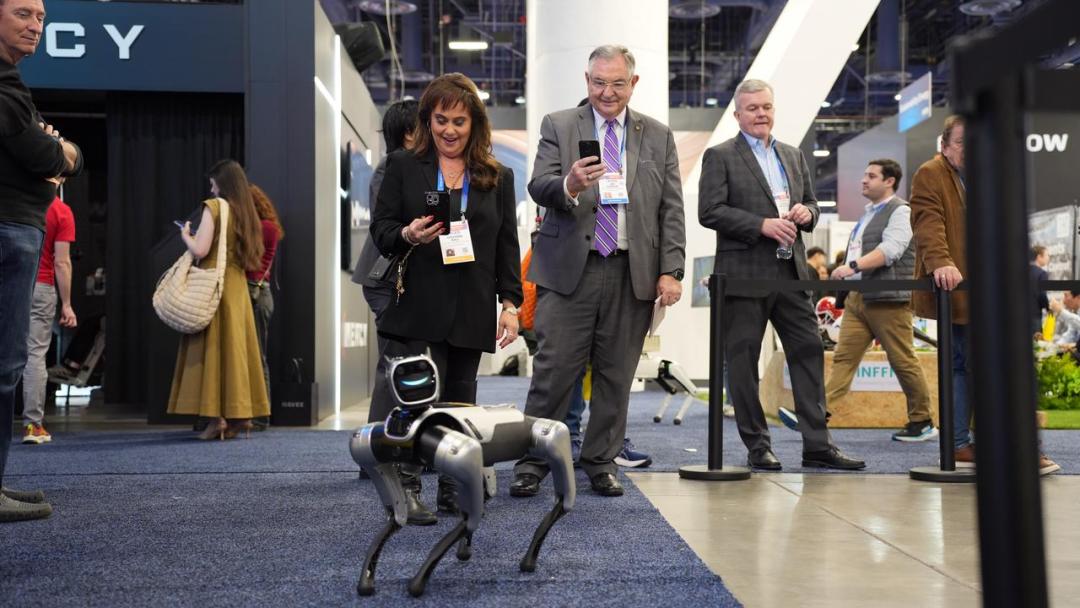
CES上,中国机器人军团想掏空海外买家的口袋
36氪· 2026-01-07 13:55
Core Viewpoint - The article highlights the emergence of Chinese humanoid robot companies at CES 2026, showcasing their advancements and ambitions in the global market, particularly in the context of competition with American and other international firms [4][5][6]. Group 1: Chinese Robot Companies at CES - Approximately 20 Chinese humanoid robot companies participated in CES 2026, surpassing the total number from the US, Japan, South Korea, Germany, and the UK combined [5]. - Many of these companies, including Fourier, Zhijidongli, and Beijing Humanoid Robot Innovation Center, were first-time participants, aiming to establish their brands and secure sales [6][8]. - The presence of Chinese humanoid robots left a strong impression on international audiences, with notable reactions to their capabilities, such as a four-legged robot performing a backflip [7]. Group 2: Sales and Market Strategy - The primary goal for Chinese robot manufacturers at CES was to sell their products, with sales personnel making up about half of the teams attending the event [15][16]. - Key target markets included overseas commercial applications, educational institutions with development needs, and entertainment venues [17]. - Chinese manufacturers possess a significant advantage in the production of robot bodies, leading to increased curiosity and purchasing interest from American customers [19][21]. Group 3: Differences in Market Focus - There is a notable difference in focus between Chinese and American audiences regarding robots; Chinese consumers are more interested in practical applications, while American audiences are still exploring the novelty of robot products [24][26][28]. - Chinese companies are advancing rapidly in application scenarios, while American firms are more focused on foundational technology and general-purpose robots [35][36]. Group 4: Brand Exposure and Market Research - Brand exposure is a critical objective for Chinese robot companies at CES, with many seeking to establish a foothold in the North American market as a stepping stone for global expansion [39]. - Feedback from American users is vital for the iteration of products aimed at global markets, as seen with the "Daitou BoBo" robot [40]. Group 5: Challenges and Costs - Participating in CES involves significant costs, with expenses estimated to be four to five times higher than those for the World Robot Conference (WRC), despite CES offering smaller exhibition spaces [49]. - The logistics of transporting robots to CES are complex and costly, with air freight being six times more expensive than sea freight, leading to a substantial portion of overall costs [48]. - Challenges also include visa issues for R&D personnel, which can limit the technical support available during the event [50][52].
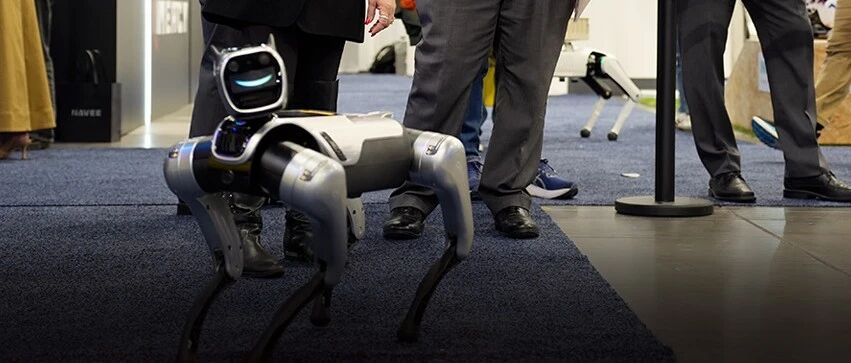
咸亨国际(605056):增长势能延续 经营周期向上
Xin Lang Cai Jing· 2025-10-31 12:29
Core Insights - The company reported strong revenue growth for Q1-Q3 2025, achieving revenue of 2.69 billion, net profit attributable to shareholders of 130 million, and net profit excluding non-recurring items of 130 million, representing year-on-year increases of 35.5%, 32.5%, and 36.9% respectively [1] - The company declared a cash dividend of 0.08 per share, yielding a dividend rate of 0.5% on the announcement date [1] Financial Performance - The gross margin for Q1-Q3 2025 was 22.2%, down 5.8 percentage points year-on-year, attributed to high growth in lower-margin new business areas [2] - The operating expense ratio was 15.0%, down 6.1 percentage points year-on-year, with sales, management, financial, and R&D expense ratios at 7.4%, 6.0%, -0.02%, and 1.6% respectively [2] - The net profit margin for Q1-Q3 was 5.0%, a slight decrease of 0.1 percentage points year-on-year, indicating stable profitability [2] Growth Momentum - The company is experiencing an upward business cycle that began in 2023, focusing on new areas such as oil and gas and power generation, while benefiting from centralized and digital procurement trends among state-owned enterprises [3] - The company is actively expanding its product lines and services, including the deployment of advanced technologies like drones for pipeline inspections and robotic projects [3] - Future profitability is expected to improve as the structure of new business areas optimizes, the proportion of proprietary products increases, and expenses are effectively controlled [3] Profit Forecast and Valuation - The company is positioned as a leader in the MRO sector for power grids, with a diverse product line and nationwide service network, and is expanding into four major areas including oil and petrochemicals [3] - Profit forecasts for 2025-2027 are maintained at 266 million, 316 million, and 359 million respectively, with a "buy" rating upheld [3]

近200亿融资、万亿市场,全球人形机器人市场格局剖析!
Robot猎场备忘录· 2025-07-05 15:09
Core Insights - The article emphasizes the imminent arrival of the humanoid robot era, as highlighted by industry leaders like Nvidia and Tesla during CES 2025, marking a significant shift towards embodied intelligence in 2025 [3] - Major investment banks, Morgan Stanley and Goldman Sachs, have released reports affirming the vast potential of the humanoid robot market, projected to be a trillion-dollar industry, while also detailing the current technological barriers and commercialization challenges [3][4] Investment Trends - The humanoid robot financing landscape is experiencing a bifurcation, with capital increasingly favoring leading startups, as evidenced by significant funding rounds such as The Bot Company's $150 million and Neura Robotics' €120 million [4][5] - In the first half of 2025, global financing in the embodied intelligence sector approached 20 billion yuan, indicating robust investment activity despite a two-tiered market dynamic [4] Company Valuations and Market Dynamics - Leading companies like Zhiyuan Robotics and Yushu Technology have surpassed valuations of 10 billion yuan, with Zhiyuan Robotics valued at approximately 15 billion yuan and Yushu Technology at around 12 billion yuan [7] - The majority of startups in the humanoid robot sector are valued below 3 billion yuan, indicating a highly competitive environment with uncertain prospects for many emerging companies [7] Commercialization Challenges - Despite Yushu Technology's reported annual revenue exceeding 1 billion yuan, the actual commercialization scenarios for humanoid robots remain questionable, with concerns about the sustainability of their business models [9][10] - The article notes that many humanoid robot companies are focusing on educational and research applications rather than industrial use, which may limit their long-term market viability [10] Technological Developments - The humanoid robot sector is entering a phase where companies are expected to develop their own "brains," with a shift towards self-research in foundational models becoming evident [12] - The introduction of DeepSeek's open-source reasoning model presents new opportunities for startups to break free from reliance on tech giants' closed-source models, potentially reshaping the competitive landscape [15] Supply Chain Insights - Upstream core component manufacturers in the humanoid robot supply chain are already reaping benefits, with stock prices of related companies experiencing significant increases [16] - The article highlights the importance of advanced components like dexterous hands and tactile sensors, which are critical for the commercialization of humanoid robots [17]