坦途

Search documents
美国丰田卖回日本,特朗普产业回流仍“病入膏肓”
汽车商业评论· 2025-12-19 23:05
Core Viewpoint - The article discusses the trend of manufacturing return to the U.S., particularly in the automotive and semiconductor industries, driven by government policies and foreign investments aimed at reducing trade deficits and enhancing domestic production capabilities [4][5][6][15][16]. Automotive Industry - Toyota plans to export three models produced in the U.S. back to Japan, symbolizing a positive gesture towards improving U.S.-Japan trade relations [4]. - Honda intends to shift production of key models like CR-V and Civic from Canada and Mexico back to the U.S., aiming for 90% local production within two to three years [8]. - General Motors announced a $4 billion investment in three U.S. plants to increase production capacity, aiming to exceed 2 million vehicles annually [10]. - Stellantis revealed a $13 billion investment plan in the U.S., which includes reopening a previously closed plant and creating approximately 3,300 jobs [12][13]. - Ford is adjusting its electric vehicle strategy, focusing on hybrid and gasoline models while hiring thousands of workers [10]. - The overall trend indicates a significant increase in domestic production and investment from both foreign and U.S. automakers, responding to government policies [10][14]. Semiconductor Industry - Under pressure from U.S. policies, major semiconductor companies like TSMC are expanding their operations in the U.S., with TSMC increasing its investment from $40 billion to $65 billion for new facilities [16][22]. - Intel has received approximately $11.1 billion in government subsidies and is building new fabs in Arizona and Ohio [20]. - Micron announced a $30 billion expansion plan in the U.S., with government support for its production facilities [22]. - The U.S. government is negotiating with Taiwan to facilitate the transfer of skilled labor to support domestic semiconductor manufacturing [23][24]. - Despite these investments, challenges remain in labor availability and supply chain issues, indicating that the return of manufacturing is still in progress and not yet fully realized [26][27]. Overall Manufacturing Trends - As of September 2025, U.S. manufacturing output was approximately $2.905 trillion, showing only slight growth compared to earlier in the year, with employment levels remaining stable [26]. - Trade deficits have widened, with a reported increase of $112.6 billion (17.2%) compared to the previous year, indicating that the intended reduction in trade imbalance has not yet materialized [26]. - The article highlights that while there are ambitious plans and investments, the actual outcomes in terms of production and job creation are still lagging behind expectations, necessitating further reforms and collaboration to achieve a true manufacturing revival in the U.S. [27][28].


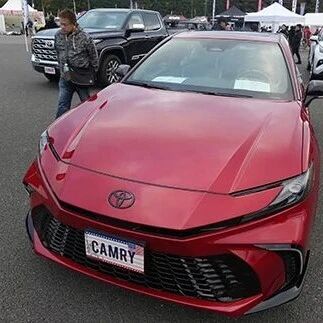
丰田明年起将“逆进口”3款美国产车到日本销售
日经中文网· 2025-12-19 03:31
Core Viewpoint - Toyota plans to reverse import three models, including the Camry, Tundra, and Highlander, from the U.S. to Japan starting in 2026, aiming to address trade deficit concerns raised by the U.S. government and to expand customer options [2][4]. Group 1: Reverse Import Strategy - The models targeted for reverse import include the Camry, Tundra, and Highlander, which are currently not sold in Japan [4]. - This strategy is seen as a response to the U.S. government's concerns about trade deficits and aims to provide more options for Japanese consumers [2][4]. - Other Japanese automakers, such as Honda and Nissan, are also exploring similar reverse import strategies, indicating a growing trend among Japanese car manufacturers to increase production in the U.S. [5]. Group 2: Regulatory Considerations - The implementation of reverse imports is contingent upon the Japanese Ministry of Land, Infrastructure, Transport and Tourism simplifying the import vehicle review process [4]. - The ministry is considering a new "ministerial exception" system that would allow for safety certification through document review, potentially expediting the process by early 2026 [4]. Group 3: Market Dynamics - The rising labor costs in the U.S. and transportation costs to Japan present challenges for Toyota's profitability in this reverse import initiative [4]. - Toyota's Chairman, Akio Toyoda, has expressed a positive attitude towards reverse imports, aligning with the U.S. administration's push for increased sales of American cars in Japan [4].