塞尔达传说

Search documents
全世界最会做游戏的人,越来越少
3 6 Ke· 2026-01-19 05:48
Core Viewpoint - The gaming industry faces a significant loss with the passing of Vince Zampella, a legendary figure in FPS game development, raising concerns about the future of game production as key creators age and retire [1][3][4]. Group 1: Impact of Key Figures Leaving - Vince Zampella's death is seen as a major blow to the gaming industry, with his contributions to iconic titles like Call of Duty and Apex Legends being widely recognized [1][4]. - The industry is witnessing the loss of other influential game developers, such as Itagaki Tomonobu and Viktor Antonov, prompting reflections on the future of game development without these leading figures [6][9]. - The departure of these creators raises questions about the sustainability of new game projects and the potential decline in innovation and creativity in the industry [7][9]. Group 2: Industry Responses to Creator Departures - Companies like EA are proactively addressing the potential crisis by establishing collaborative teams, such as the "Battlefield Alliance," to ensure continuity in game development despite the loss of key individuals [13][15]. - Japanese companies, including Capcom, have shifted towards a model that reduces the influence of individual creators, focusing instead on standardized processes and collective decision-making to manage IPs effectively [17][19]. - Nintendo emphasizes a mentorship approach, ensuring that experienced creators pass on their knowledge to younger developers, thereby maintaining a legacy of creativity and innovation [21][23]. Group 3: Future of Game Development - The industry is at a crossroads, with the potential for a decline in new IPs and a loss of unique artistic expression as companies adapt to a more corporate structure [23][29]. - However, figures like Masahiro Sakurai are taking steps to inspire the next generation of developers by sharing their knowledge and experiences openly, fostering a culture of learning and passion for game development [25][27]. - The commitment to nurturing new talent and preserving the spirit of game creation is seen as essential for the industry's future, ensuring that the legacy of past creators continues to influence new generations [31][33].


游戏IP正在成为影视行业的下一座“超级金矿”
3 6 Ke· 2025-11-10 09:10
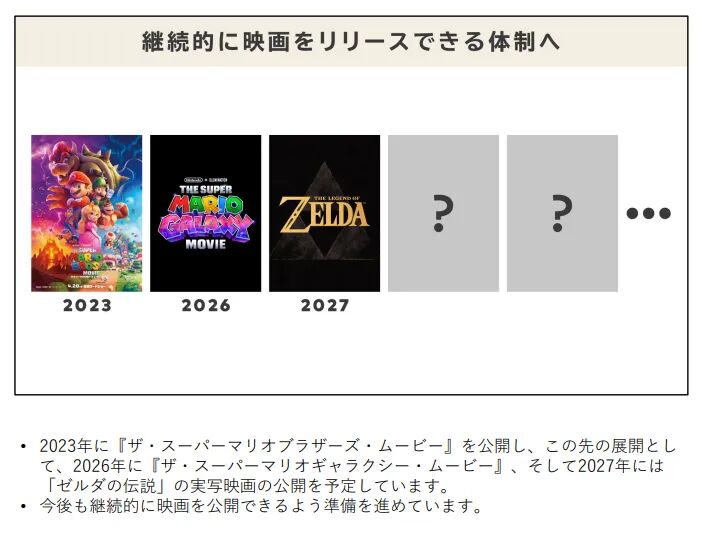
Core Insights - Nintendo is focusing on film adaptations of its IPs as a key strategic direction for the future, with multiple projects in various stages of production set to follow the release of the live-action "The Legend of Zelda" movie in 2027 [1][3] - Unlike most game companies that prefer licensing agreements, Nintendo plans to be deeply involved in the production and investment of these films, believing that creator involvement is crucial for ensuring quality adaptations [3] - The success of "The Super Mario Bros. Movie," which grossed over $1.3 billion globally, has reinforced Nintendo's commitment to this strategy [3] Industry Trends - The trend of video game adaptations is moving towards mainstream acceptance, with a complete project development and global distribution chain emerging [5] - Successful adaptations are no longer seen as isolated incidents but as part of a mature industry chain involving leading companies, IPs, and teams [12] - The collaboration between Netflix and Riot Games on "Arcane" exemplifies a shift in narrative focus from gameplay to universal themes, marking a new stage in the artistic expression of game adaptations [8] Market Developments - In China, similar trends are emerging, with the announcement of an animated film based on "Honor of Kings," aiming for a broader audience beyond just gamers [9][12] - The film is positioned as a "national-level narrative experiment," indicating that Chinese game companies are also entering the global IP film adaptation strategy [12] Cultural Shifts - The generational shift in audience demographics is changing the core narrative sources of global cultural content, with video games becoming significant cultural symbols for those who grew up with them [13] - Traditional narrative frameworks are facing growth limitations, leading to a faster evolution of the film industry's narrative systems, with game IPs offering high adaptability and rich storytelling potential [14][17] - The focus of game adaptations is shifting from merely replicating gameplay to expressing emotional structures that resonate with a wider audience, thus broadening the cultural significance of video games [17]