外卖餐饮

Search documents
外卖和网售食品重磅新规来了!构建“互联网+明厨亮灶”公示体系
智通财经网· 2026-02-26 13:36
Core Viewpoint - The State Administration for Market Regulation (SAMR) has introduced two new regulations aimed at enhancing food safety in online food delivery and sales, emphasizing the responsibility of network operators to ensure both quality and safety in food services [3][5][11]. Group 1: New Regulations Overview - The two regulations are titled "Regulations on the Supervision and Management of Food Safety Responsibilities of Online Catering Service Operators" and "Regulations on the Supervision and Management of Food Safety Responsibilities of Online Food Sales Operators" [3][5]. - These regulations aim to create a comprehensive responsibility network, ensuring that the flow of customers is matched by quality [3][5]. Group 2: Key Features of the Regulations - The regulations emphasize the platform's responsibility, requiring online food delivery platforms to conduct thorough checks on merchant qualifications, manage information disclosure, and handle issues effectively [6][7]. - Merchants are required to have real physical stores, and their operational details must align with their qualifications [6][7]. - The regulations introduce strict penalties for violations, with fines reaching up to 200,000 yuan, and potential personal fines for platform leaders in severe cases [7][10]. Group 3: Enhancements in Consumer Protection - The regulations mandate clear information disclosure, ensuring that consumers can easily verify the authenticity of merchant information and food safety [12][18]. - A visual public disclosure system is established, encouraging merchants to share their food preparation processes online [12][19]. - Platforms are required to provide technical support to ensure that information is accurately displayed and accessible to consumers [13][19]. Group 4: Addressing "Ghost Restaurants" - The regulations tackle the issue of "ghost restaurants" by requiring platforms to conduct real-name registrations and substantive checks on merchant qualifications [14][15]. - Platforms must verify merchant qualifications against data held by market regulation authorities to prevent unqualified entities from operating [14][15]. - Regular updates and checks on merchant information are mandated to ensure ongoing compliance [15][16]. Group 5: Cross-Regional Regulatory Challenges - The regulations introduce a dual jurisdiction model, allowing both the platform's registration location and the location of the violation to have regulatory authority [16][17]. - An information sharing mechanism is established to facilitate cross-regional regulatory cooperation [16][17]. - A collaborative enforcement mechanism is created to ensure timely and effective handling of violations across different regions [17][18]. Group 6: Special Campaigns Against False Advertising - A nationwide campaign will be launched to combat false advertising in online food sales, focusing on misleading claims about food products [25][26]. - The campaign will target various forms of false advertising, including exaggerated health claims and misleading product information [25][26]. - Platforms will be held accountable for ensuring that their merchants do not engage in deceptive practices [26][27].
1月广州CPI环比上涨0.1%
Guang Zhou Ri Bao· 2026-02-13 07:34
Core Insights - In January, Guangzhou's Consumer Price Index (CPI) increased by 0.1% month-on-month and remained flat year-on-year, indicating stable consumer prices in the region [1] Group 1: Price Changes - Food prices decreased by 0.8%, with 9 out of 14 food categories showing a decline, influenced by favorable weather conditions leading to a 7.7% drop in fresh vegetable prices and a 1.1% decrease in pork prices [1] - Prices in the category of other goods and services rose by 2.4%, driven by fluctuations in international precious metal prices, with jewelry and watches increasing by 13.0%, and specific items like gold jewelry rising by 7.7% [1] - The education, culture, and entertainment category saw a price increase of 0.4%, attributed to a rise in online audio-visual services by 4.6% and increased travel demand leading to a 2.8% rise in other travel prices [1] Group 2: Minor Price Influences - Prices for daily necessities and services increased by 0.6%, while healthcare prices rose by 0.3% and transportation and communication prices went up by 0.2% [2] - Housing prices remained stable, and clothing prices experienced a slight decrease of 0.1% [2]
叮咚买菜壮士断腕 中国业务转售美团
BambooWorks· 2026-02-09 09:30
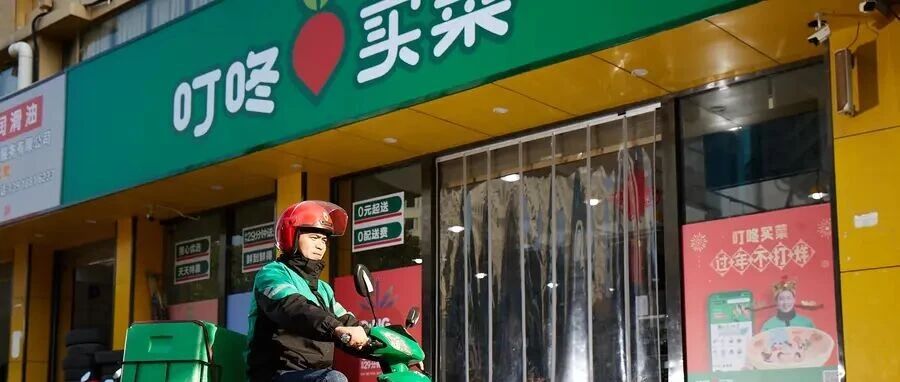
Core Viewpoint - Dingdong Maicai, one of China's earliest online fresh food platforms, is selling its core Chinese business to competitor Meituan for $717 million, marking one of the largest mergers in China's rapidly evolving instant retail market [1][2][3] Group 1: Transaction Details - The sale involves Dingdong Maicai's core Chinese operations, with 90% of the payment made immediately and the remaining 10% contingent on tax settlements [5][8] - Following the announcement, Dingdong Maicai's stock fell by 14%, bringing its market value to approximately $700 million, which aligns closely with the acquisition price [2][6] - The merger is expected to create a leading player in the industry, combining Dingdong Maicai's operations with Meituan's existing online fresh food business [7] Group 2: Market Context - The instant retail market in China has seen rapid growth, particularly with the entry of major e-commerce players like Alibaba and JD.com, which have expanded their delivery capabilities beyond fresh food to include a wide range of daily necessities [5][7] - The competition has intensified, with companies like Alibaba, JD.com, and Meituan subsidizing their instant retail operations, leading to significant financial losses for some, such as Meituan, which reported a loss of 18.6 billion yuan (approximately $2.68 billion) in the third quarter [5][7] - Dingdong Maicai's revenue growth has been limited, with a year-on-year increase of only 1.9% in the third quarter, highlighting the challenges faced by independent platforms in competing with larger players [7] Group 3: Future Implications - Dingdong Maicai retains its international business post-sale, which may lead to speculation about the future of the brand and its potential integration into Meituan's ecosystem [8] - The company holds $549 million in cash and short-term investments, which, combined with the sale proceeds, could exceed $1.2 billion, providing opportunities for future ventures or shareholder returns [8] - There is a possibility that the founder, Liang Changlin, may leverage this capital for new entrepreneurial endeavors, either domestically or internationally, rather than opting for significant shareholder dividends [8]



社会服务行业双周报:春节将至,出行市场高景气-20260209
Bank of China Securities· 2026-02-09 05:26
Investment Rating - The industry investment rating is "Outperform the Market," indicating that the industry index is expected to perform better than the benchmark index over the next 6-12 months [50]. Core Insights - The upcoming Spring Festival holiday, lasting 9 days, is expected to significantly boost travel demand, leading to high market activity in the travel and tourism sector [4][43]. - The social service sector experienced a decline of 3.44% in the past two trading weeks, ranking 24th among 31 industries in the Shenwan classification [13][21]. - The travel market is anticipated to reach a historical peak with an estimated 9.5 billion people traveling during the Spring Festival, driven by various factors including extended holiday periods and increased domestic travel [33][38]. Summary by Sections Market Review & Industry Dynamics - The social service sector's performance was below the market average, with a 3.44% decline compared to a 1.71% drop in the Shanghai Composite Index [13][21]. - The hotel and catering sub-sector saw a slight increase of 0.64%, while other sub-sectors like education and professional services experienced declines of 6.26% and 5.25%, respectively [17][20]. Investment Recommendations - Companies with strong growth potential in the travel chain and related industries include Tongcheng Travel, Huangshan Tourism, and Lijiang Shares, among others [4][43]. - Hotel brands such as Jinjiang Hotels and ShouLai Hotels are expected to benefit from the recovery in business travel and increased market share [4][43]. - The recovery of cross-border travel is likely to boost airport duty-free sales, with recommendations to focus on China Duty Free Group and Wangfujing [4][43]. Company Dynamics & Announcements - Notable company announcements include China Travel Service forecasting a revenue of 11.339 billion yuan for 2025, reflecting a 13.88% year-on-year increase, while other companies like Zhongxin Tourism and Fengshang Culture are expecting significant declines in net profits [37][38]. - The duty-free shopping market in Hainan saw a 44.8% year-on-year increase in January 2026, indicating a strong recovery in consumer spending [30][31]. Travel Data Tracking - The domestic travel market shows positive trends, with a significant increase in hotel bookings and flight reservations during the Spring Festival period [30][31]. - The international flight volume has recovered to 85.59% of the 2019 levels, indicating a steady recovery in the travel sector [21][38].
青春经济、入境游和数字化,上海更大力度提振消费做“乘法”
Di Yi Cai Jing Zi Xun· 2026-02-05 09:20
Group 1 - The core concept of "youth economy" is emerging in Shanghai, focusing on young consumers as the main driving force for consumption and innovation [1][3] - Shanghai's government aims to boost consumption as a strategic priority, with plans to implement special actions to enhance consumer spending and develop an international consumption center [1][2] - The youth economy in Shanghai is characterized by a market size of 4.3 trillion yuan, accounting for 68% of the new consumption sector, with Shanghai leading in various sub-sectors such as coffee shops and esports [3][4] Group 2 - The integration of cultural, tourism, and commercial exhibitions is seen as a multiplier effect to stimulate consumption potential [2][3] - Challenges exist for youth entrepreneurs, including high costs and limited financing options, with over 30% of youth shops failing within a year [4] - Recommendations include incorporating the youth economy into Shanghai's development plans, enhancing financial support, and creating a supportive regulatory environment [4] Group 3 - The influx of inbound tourists is expected to rise significantly, with a projected 39.58% increase in total inbound visitors by 2025, driven by a younger demographic [7] - The design of inbound tourism products should focus on enhancing experiential value to meet the preferences of both inbound and domestic travelers [7][8] - Suggestions for improving tourism offerings include developing unique attractions like a Ferris wheel on the Huangpu River to enhance the city's appeal [8] Group 4 - Digital transformation is crucial for the retail sector, with calls for businesses to leverage AI and other technologies to improve service quality and efficiency [10][11] - The restaurant industry faces challenges in maintaining food safety and service standards, necessitating a shift towards digital solutions for better regulatory compliance [10][11] - Proposals include creating an intelligent regulatory system to enhance food safety monitoring and improve the overall business environment [11]
事关烟花爆竹、电梯安全、外卖餐饮……昆明市市场监督管理局上线回应
Xin Lang Cai Jing· 2026-01-31 17:25
Group 1: Fireworks and Safety Regulations - The Kunming Market Supervision Administration has launched the "Spring City Hotline" to address public concerns regarding the quality of fireworks and safety measures during the upcoming Spring Festival [1] - A comprehensive quality safety supervision check was conducted on 13 fireworks wholesale enterprises, covering 50 batches of products, with 10 batches found to be non-compliant and subsequently sealed [1] Group 2: Elevator Safety Management - Kunming has over 80,000 elevators, and the Market Supervision Administration has implemented a "four-in-one" safety supervision system focusing on legal construction, hazard investigation, publicity drills, and social governance [2] - In the past three years, 81,000 elevator inspections were conducted, resulting in the rectification of safety hazards in 2,444 elevators, the sealing of 88 devices, and the investigation of 229 elevator-related legal cases [2] Group 3: Online Food Safety - The Market Supervision Administration has established a food safety seal standard for online food delivery, requiring sealed packaging for meals to ensure safety during delivery [4][6] - In 2025, a total of 11,336 online catering units were inspected, leading to 167 orders for rectification and 24 business closures, creating a closed-loop supervision process [8] - The administration has conducted 51 responsibility discussions with platforms like Meituan and Ele.me, resulting in the removal of 716 problematic merchants [8]

关闭电商,取消外卖,让实体经济重获新生,这个建议靠谱吗?
Sou Hu Cai Jing· 2025-10-14 02:08
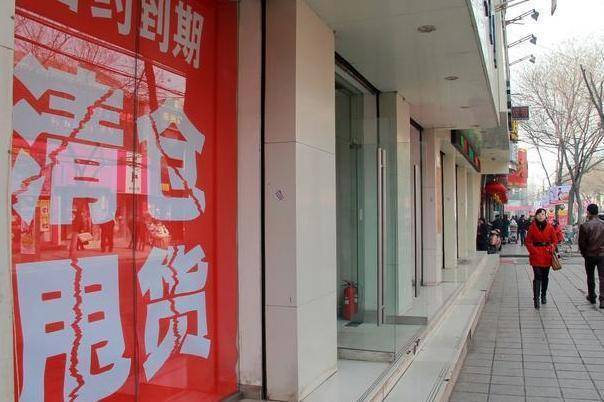
Core Viewpoint - The rise of e-commerce and food delivery services has significantly impacted the physical retail sector, leading to challenges for brick-and-mortar stores amid changing consumer behaviors and economic conditions [1][3]. Group 1: Impact of E-commerce and Food Delivery - E-commerce sales in China reached 10.8 trillion yuan, accounting for 24.5% of total retail sales, with online shopping users numbering 842 million by the end of 2021 [1]. - The food delivery market is projected to approach 941.74 billion yuan in 2022, with online food delivery users reaching 544 million [1]. - The shift towards online shopping and food delivery is driven by modern urban lifestyles, particularly among younger generations who prefer convenience and competitive pricing [3]. Group 2: Challenges Faced by E-commerce and Food Delivery - Despite the growth, e-commerce faces criticism over product quality, with consumers reporting frequent issues such as poor durability and discrepancies between online images and actual products [5]. - The food delivery sector also grapples with concerns over food safety and quality, alongside the potential negative impact on social interactions and health due to over-reliance on delivery services [5]. Group 3: Strategies for Physical Retailers - Physical stores can expand their online sales channels and adopt an O2O (online-to-offline) model to capture market share from e-commerce [6]. - Differentiation is key for physical retailers, leveraging unique advantages such as in-person product experiences and superior after-sales service to attract customers [6].