多芬香皂

Search documents
展现韧性!欧洲公司对美关税“免疫”,明年有望实现两位数利润增长
智通财经网· 2025-11-03 07:05
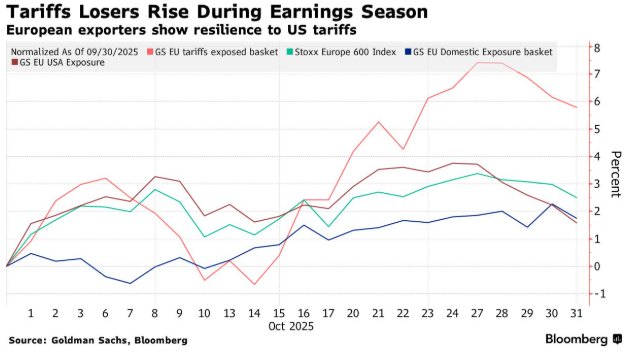
Core Viewpoint - European companies have performed better than expected in response to U.S. tariffs, indicating a positive outlook for profit growth in the coming year, with market expectations of double-digit profit increases [1][3]. Group 1: Performance of European Companies - A basket of European stocks most affected by tariffs, compiled by Goldman Sachs, outperformed the market in October, rising approximately 6%, which is double the increase of the European Stoxx 600 index and three times that of domestic stocks [1]. - Companies like Hermès, Unilever, and Galderma have reported significant sales growth in the Americas, with Hermès seeing a 14.1% increase in sales in the region [3][6]. - The frequency of mentions of tariffs in European earnings calls has been declining, indicating a growing optimism among EU companies regarding their outlook [10]. Group 2: Strategic Adjustments and Cost Management - Companies are adapting to tariffs by cutting costs to avoid raising prices, which could push consumers towards cheaper brands, as seen with Unilever's strategy [6]. - Pharmaceutical companies in Europe are negotiating with the U.S. government to lower drug prices and are committing billions in investments to mitigate the impact of upcoming sector tariffs [6][11]. - Some companies, like Stellantis, reported a 13% increase in net income due to recovery in North American business, while also committing to significant investments in the U.S. [11]. Group 3: Market Sentiment and Future Outlook - Analysts suggest that the gap between profit growth in the U.S. and Europe is expected to narrow, with a general market expectation of a 12% increase in earnings per share for Stoxx 600 constituents next year [3][6]. - There is a growing belief that tariffs are manageable and will not cause significant damage, although some caution remains regarding the long-term effects and currency impacts on earnings [12].


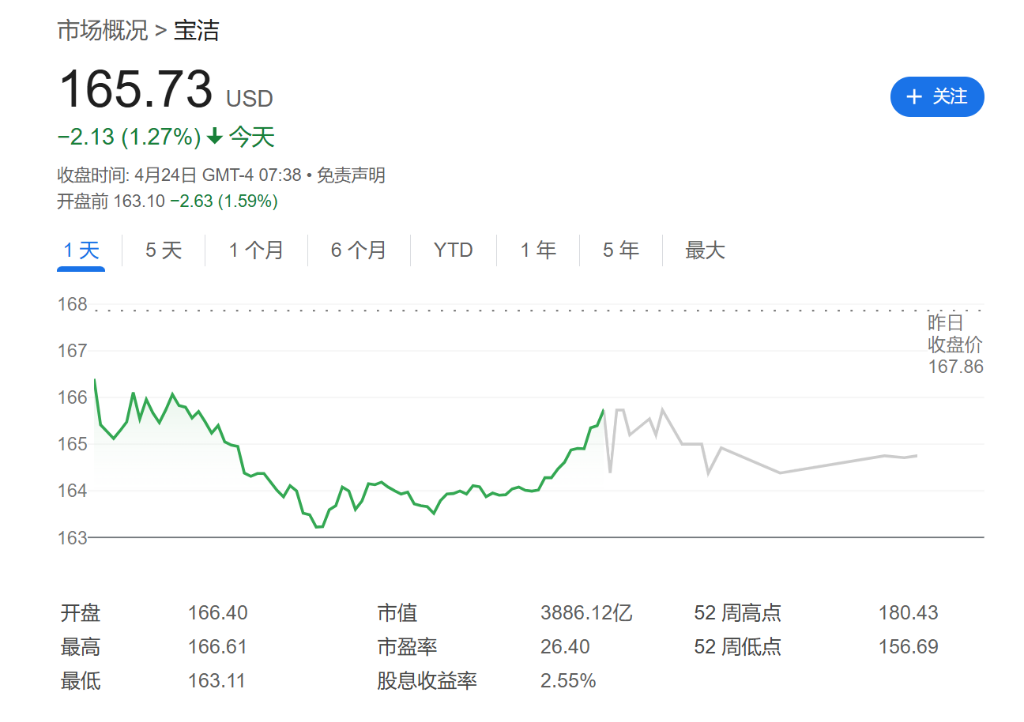
贸易战冲击消费需求,宝洁大幅下调全年业绩指引
Hua Er Jie Jian Wen· 2025-04-24 12:16
Core Viewpoint - Procter & Gamble (P&G) has significantly lowered its sales and profit forecasts for the year amid increasing uncertainty in tariff policies, reporting a larger-than-expected decline in net sales for the third quarter [1][2]. Group 1: Financial Performance - For the fiscal year 2025, P&G expects total net sales to remain roughly flat compared to the previous fiscal year, a significant reduction from the earlier growth target of 2% to 4% [2]. - In the third quarter, net sales decreased by 2% to $19.78 billion, which was notably below analysts' expectations of $20.11 billion, with the market initially predicting only a 0.44% decline [6]. - The core earnings per share for the third quarter were reported at $1.54, slightly above the market estimate of $1.53 [6]. - The adjusted free cash flow for the third quarter was $2.85 billion, falling short of the market expectation of $3.69 billion [6]. Group 2: Market and Economic Conditions - The uncertainty surrounding tariff policies, particularly the comprehensive import tariffs under the Trump administration, has led to concerns about a potential recession in the U.S. economy, which is P&G's largest market [2]. - Consumer sentiment in the U.S. has noticeably deteriorated, with P&G observing a significant reduction in consumer spending during February and March [3][2]. - P&G raised prices by 1% in the third quarter, but this was accompanied by a 1% decline in sales volume, indicating challenges in relying on price increases for sales growth [3]. Group 3: Competitive Landscape - P&G is not the only consumer goods giant facing challenges; competitors like Reckitt and Kimberly-Clark have also reported declines in sales and lowered profit forecasts due to trade tariffs [4]. - In contrast, companies like Nestlé and Unilever have exceeded market expectations in quarterly sales, benefiting from strong performance in their respective product lines [4].