
多面热暖器

Search documents
“一降一增”之间,外贸破局前行
Mei Ri Shang Bao· 2026-02-02 03:22
Group 1 - The core viewpoint of the news highlights the diversification of China's foreign trade, as evidenced by a decrease in the concentration of trade partners and an increase in the number of countries engaged in trade with China [1][2] - In 2025, the share of the top ten trade partners in China's total foreign trade value decreased by two percentage points compared to 2024, indicating a broader market reach [1] - The number of countries and regions with which China has trade relations reached 249, with increases in trade scales exceeding one trillion, one hundred billion, and ten billion yuan compared to 2024 [1] Group 2 - Chinese foreign trade enterprises are actively seeking to adapt and innovate in response to changing international market conditions, with regions like Jiangsu, Hubei, Zhejiang, and Shanghai leading the way [2] - By 2025, at least 60% of countries and regions across five continents experienced growth in imports and exports with China, reflecting the country's expanding role as a major trade partner [2] - A Guangdong furniture manufacturing company plans to establish overseas operational centers and warehouses in emerging markets to drive stable growth in overseas orders [2] Group 3 - China's manufacturing sector is recognized for its diversity and ability to meet global demand, with products like multi-functional heaters and innovative ceramics gaining popularity in international markets [3] - In 2025, China's imports are projected to reach 18.48 trillion yuan, maintaining a global import share of around 10%, with various international products entering the Chinese market [3] - The number of enterprises with import and export records in China exceeded 780,000 in 2025, with private enterprises accounting for 57.3% of the total foreign trade value, reflecting resilience and growth in the sector [3] Group 4 - As China embarks on the "14th Five-Year Plan," the country aims to maintain stability in foreign trade and contribute to global economic recovery and long-term development through openness and innovation [4]
“一降一增”之间,中国外贸破局前行
Xin Lang Cai Jing· 2026-01-27 20:00
Core Insights - China's foreign trade is diversifying, with the share of the top ten trading partners decreasing by 2 percentage points compared to 2024, indicating a reduction in concentration [1] - The number of countries and regions trading with China has reached 249, with increases in trade volume exceeding 1 trillion, 100 billion, and 10 billion yuan compared to 2024 [1] Group 1: Trade Dynamics - The diversification of markets is a positive outcome for foreign trade enterprises, showcasing their efforts to expand into multiple markets [1] - In 2025, trade with at least 60% of countries and regions across five continents has seen growth, with China becoming a major trading partner for over 160 countries and regions, an increase of more than 20 since 2020 [2] Group 2: Product Innovation and Demand - Chinese manufacturing is recognized for its diversity and adaptability, producing a wide range of products that meet global demands, such as multi-functional heaters and unique decorative items [3] - The import sector is also thriving, with China maintaining a 10% share of global imports, highlighting the country's commitment to expanding its import market [3] Group 3: Business Resilience - In 2025, over 780,000 entities recorded imports and exports, with private enterprises increasing their share of total foreign trade to 57.3%, up by 1.8 percentage points [3] - The resilience and growth of foreign trade enterprises are emphasized, showcasing their ability to adapt and thrive in challenging environments [3] Group 4: Future Outlook - As China embarks on its "15th Five-Year Plan," the country aims to maintain stability in foreign trade and contribute positively to global economic recovery and long-term development [4]
新华社经济随笔:“一降一增”之间,中国外贸破局前行
Xin Hua Wang· 2026-01-27 15:03
Core Insights - China's foreign trade is evolving with a decrease in concentration among the top ten trading partners and an increase in the number of countries and regions engaged in trade with China, indicating a successful diversification strategy [1][2] Group 1: Trade Dynamics - The share of the top ten trading partners in China's total foreign trade decreased by 2 percentage points compared to 2024, reflecting a lower concentration [1] - The number of countries and regions with which China has trade relations reached 249, with increases in the number of countries with trade volumes exceeding 1 trillion, 100 billion, and 10 billion yuan, rising by 2, 6, and 10 respectively compared to 2024 [1] Group 2: Market Expansion - Chinese foreign trade enterprises are actively seeking new markets, with regions like Jiangsu, Hubei, Zhejiang, and Shanghai forming alliances to explore global opportunities [2] - By 2025, at least 60% of countries and regions across five continents experienced growth in imports and exports with China, with China becoming a major trading partner for over 160 countries and regions, an increase of more than 20 since 2020 [2] Group 3: Product Innovation and Demand - Chinese manufacturing is recognized for its diversity and adaptability, producing a wide range of products that meet global demand, such as multi-functional heaters and innovative ceramics [3] - In 2025, China's imports are projected to reach 18.48 trillion yuan, maintaining a 10% share of global imports, with various international products entering the Chinese market [3] Group 4: Business Resilience - The number of trading entities in China exceeded 780,000 in 2025, with private enterprises increasing their share of foreign trade value by 1.8 percentage points to 57.3%, demonstrating resilience and growth in challenging conditions [3]
国产取暖小家电扬帆出海,现存取暖相关企业超1万家
Xin Lang Cai Jing· 2026-01-27 02:39
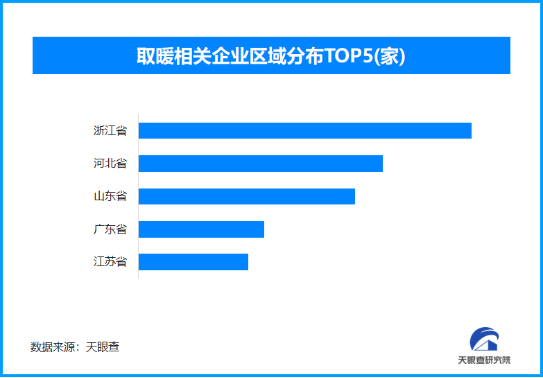
Core Viewpoint - Domestic heating small appliances have become popular choices overseas during the winter, with innovative products like integrated heating and cooling machines, multi-surface heaters, and heated carpets gaining traction in regions such as Central Asia, Japan, South Korea, and Europe [1][4]. Group 1: Market Trends - The market for heating-related enterprises in China has over 10,000 active companies, with Zhejiang, Hebei, and Shandong provinces accounting for more than 4,300 of these, representing 43.17% of the total [5]. - Chinese foreign trade merchants are quickly adapting to demand changes by launching products that cater to local tastes, while manufacturing companies leverage strong industrial clusters for rapid design and production [5]. Group 2: Supplier Selection and Risk Management - Overseas consumers, importers, and e-commerce platforms are increasingly prioritizing the compliance qualifications and safety records of manufacturing companies when selecting products [5]. - Utilizing enterprise information query tools for verifying qualifications, risk warnings, and capital insights has become a common method for making prudent and efficient decisions in the competitive international market [2][5]. Group 3: Innovation and Team Capability - The continuous innovation capability and product iteration speed of companies are closely linked to their core R&D and management teams [6]. - Investigating the employment information and backgrounds of key technical leaders and core members in overseas market expansion can provide important references for assessing a company's professional capabilities and market adaptability [6].

中国品牌圈粉海外|国产取暖小家电何以热销海外
Ren Min Ri Bao· 2026-01-22 10:28
Core Viewpoint - The article highlights the growing international demand for Chinese heating appliances, showcasing how innovative products are expanding market opportunities amid a cold winter season. Group 1: Market Demand and Export Growth - The export of electric space heaters, electric blankets, and other heating appliances reached 10.615 million units from January to November 2025, marking a year-on-year increase of 6.18% [1] - In Germany, a multifunctional heater from Ningbo, Zhejiang, is actively used to combat cold while purifying the air [2] - In Istanbul, Turkey, various heating products, including 3D simulated flame fireplaces and wall-mounted heaters, prominently feature "Made in China" labels [2] Group 2: Production and Trade Activity - In Cixi, Zhejiang, a major production hub for small appliances, the output of heating devices is projected to reach 300,000 units in 2025, reflecting a nearly 30% year-on-year increase [3] - In Yiwu, foreign buyers from Central Asia and Europe are rapidly placing orders for heating appliances, with one customer from Kazakhstan returning for a new order worth 28,000 yuan [3] - The total export value of heating appliances from Cixi reached 3.32 billion yuan from January to November 2025, with exports to the EU amounting to 1.28 billion yuan, a year-on-year increase of 8.4% [4] Group 3: Flexibility and Responsiveness of Enterprises - Chinese manufacturers are noted for their quick market responsiveness, with one foreign buyer stating that Chinese merchants are quick to seize market opportunities [5] - The production time for a new heating appliance can be as short as two months, showcasing the agility of manufacturers in Cixi [7] - Cixi accounts for nearly one-third of the national export volume of heating appliances, benefiting from a well-established industrial cluster [7] Group 4: Competitive Landscape and Innovation - The heating appliance industry is experiencing intensified competition, shifting from individual company competition to a focus on collaborative capabilities across the supply chain [8] - Companies are innovating to break through market challenges, with one manufacturer successfully developing a dual-function heater and air purifier through collaborative innovation [9] - Cost control measures are being implemented, such as switching to more efficient motors and integrating components to reduce production costs while maintaining quality [11][12] Group 5: Market Expansion Strategies - Companies are actively seeking new markets, with one firm collaborating with clients to design a minimalist heater for the Nordic market, resulting in strong sales [13] - The number of countries and regions engaging in trade with Yiwu has reached over 230, with 156 of them having trade volumes exceeding 100 million yuan [14] - Despite competitive pressures, many companies remain optimistic about future orders, indicating a strong belief in innovation and market adaptability [15]
国产取暖小家电何以热销海外
Ren Min Ri Bao· 2026-01-22 02:25
Core Insights - The article highlights the increasing demand for Chinese heating appliances in international markets, showcasing innovative products that cater to diverse consumer needs [1][6][10] Market Performance - In the first eleven months of 2025, exports of electric heaters and electric blankets reached 10.615 million units, marking a year-on-year growth of 6.18% [1] - Cixi, a hub for small home appliances, exported heating devices worth 3.32 billion yuan, with an 8.4% increase in exports to the EU [5] - Yiwu's electric heater exports amounted to 290 million yuan, reflecting a 32% year-on-year growth, with products sold across Europe, the Middle East, and Latin America [5] Production and Supply Chain - Cixi's production capacity is robust, with a significant portion of the national output of heating appliances originating from this region [8] - The manufacturing process for new heating products can be completed in under two months, demonstrating the agility of Chinese manufacturers [8] - The complete industrial system in China allows for efficient sourcing of materials and components, enhancing competitiveness in the global market [8] Market Adaptation and Innovation - Chinese manufacturers are quick to respond to market demands, with products designed to meet specific regional preferences, such as decorative features for Europe and space-saving designs for Central Asia [6][7] - Companies are increasingly focusing on high-end products and cost reduction strategies to maintain competitiveness [10][12] - Collaborative innovation within the supply chain has led to breakthroughs in product development, enabling companies to offer advanced features while maintaining cost efficiency [10][12] Competitive Landscape - The heating appliance industry is experiencing intensified competition, shifting from individual company performance to a focus on collaborative capabilities across the supply chain [9] - Many companies are actively seeking new markets and opportunities, with a notable increase in trade connections, reaching over 230 countries and regions by 2025 [14]
国产取暖小家电何以热销海外——来自浙江慈溪、义乌两地市场的观察
Xin Hua Wang· 2026-01-21 23:41
Core Insights - The article highlights the increasing demand for small heating appliances from China in international markets, particularly in Central Asia, Europe, and the Middle East, driven by innovative product designs and efficient manufacturing capabilities [1][4]. Group 1: Market Demand and Trends - The export of electric heaters and related appliances reached 10.615 million units from January to November 2025, marking a year-on-year growth of 6.18% [1]. - In Germany, a multifunctional heater from Ningbo, Zhejiang, is actively used, while in Turkey, various heating products labeled "Made in China" are popular among consumers [2]. - The market for heating appliances is characterized by quick reorders and small batch orders, with companies like Yijia Trade receiving rapid repeat orders from familiar clients [3]. Group 2: Production and Export Growth - The production capacity in Ningbo and Yiwu is robust, with companies like Jiuyou Electric aiming for a production target of 300,000 units in 2025, reflecting a nearly 30% increase [3]. - Cixi's heating appliance exports reached 3.32 billion yuan, with a year-on-year growth of 8.4%, while Yiwu's exports amounted to 290 million yuan, growing by 32% [4]. Group 3: Adaptability and Innovation - Chinese manufacturers are noted for their quick market responsiveness, with the ability to pivot to new product designs based on market feedback [5]. - The industry has achieved a level of self-sufficiency in production, with many companies focusing on collaborative innovation to enhance competitiveness [8][9]. - Companies are increasingly investing in high-end product development and cost reduction strategies, such as switching to more efficient motor technologies to lower production costs while maintaining quality [11][12]. Group 4: Market Expansion Strategies - Companies are actively seeking new markets, with examples of tailored product designs for specific regions, such as a minimalist heater for the Nordic market [13]. - The number of countries and regions engaging in trade with Yiwu has expanded to over 230, with 156 of these having trade volumes exceeding 100 million yuan [13]. - Despite competitive pressures, companies maintain a positive outlook, with many reporting orders extending into April [14].
国产取暖小家电何以热销海外(中国品牌圈粉海外)
Ren Min Ri Bao· 2026-01-21 23:31
Core Insights - The article highlights the increasing demand for Chinese heating appliances in international markets, driven by innovative product designs and efficient manufacturing capabilities. Group 1: Market Performance - The export of electric heaters and electric blankets reached 10.615 million units from January to November 2025, marking a year-on-year increase of 6.18% [1] - In Cixi, the export value of heaters was 3.32 billion yuan, with a year-on-year growth of 8.4%, while Yiwu's electric heater exports reached 290 million yuan, up 32% [5] - The cumulative transaction volume of electric blankets on Alibaba International Station increased by 224% year-on-year by the end of November 2025 [5] Group 2: Production and Supply Chain - Cixi and Yiwu are identified as key manufacturing hubs for small household appliances, with Cixi producing nearly one-third of the country's heaters [6] - The production cycle for new heater models can be completed in less than two months, showcasing the agility of Chinese manufacturers [6] - The complete industrial system in China provides a competitive edge, allowing for rapid sourcing of components and efficient production [6] Group 3: Market Adaptation and Innovation - Chinese manufacturers are quick to respond to market demands, with products tailored to regional preferences, such as decorative models for Europe and space-saving designs for Central Asia [7] - Companies are increasingly focusing on high-end products and cost reduction strategies, such as integrating components to lower production costs while maintaining quality [9][11] - The shift towards collaborative innovation within the supply chain is becoming essential as competition intensifies [8] Group 4: Future Outlook - Despite competitive pressures, companies remain optimistic about future orders, with some reporting bookings extending into April [14] - The proactive approach of expanding into new markets and adapting products to local needs is seen as a key strategy for growth [13]