大成睿享A

Search documents
【干货】一图看懂2025年4季报,投顾组合基金背后的投资秘诀
银行螺丝钉· 2026-01-29 14:04
Core Viewpoint - The article provides an overview of the updated active fund manager pool information for the 2025 Q4 reports, highlighting key metrics such as investment style, stock ratio, industry preference, turnover rate, valuation of major holdings, concentration of holdings, and fund size [1][2][3]. Summary by Sections Fund Manager Information - The article includes a comprehensive list of fund managers categorized by investment style, such as deep value, growth, and balanced strategies, along with their respective fund names and codes [4][5][10][11]. Investment Style - Investment styles are crucial as they reflect the types of stocks held by the funds. The article notes that different styles have their strong and weak phases, with historical data showing a rotation between value and growth styles over the years [36][40]. Industry Preference - Fund managers typically focus on specific industries where they have expertise. The article emphasizes the importance of understanding these preferences to gauge potential performance [48][50]. Stock Ratio - The article discusses the stock ratio, indicating that active funds usually maintain a stock ratio around 85% to 90%, which affects the fund's volatility [45][46]. Concentration of Holdings - The concentration of holdings, defined as the proportion of the top ten stocks in the fund's net assets, is highlighted as a significant factor influencing fund volatility [53]. Valuation of Major Holdings - The article mentions that the valuation of major holdings is assessed based on the top ten stocks disclosed in the fund's reports, which may not always reflect real-time adjustments made by fund managers [56][58]. Turnover Rate - The turnover rate, which indicates how frequently stocks are bought and sold within the fund, is discussed. A turnover rate below 200% is considered low for active funds [59][60]. Fund Size - The size of the fund is noted as a critical factor, with larger funds potentially facing challenges in achieving excess returns due to management complexities [62][64]. Fund Manager's Perspective - The article emphasizes the importance of the fund manager's insights, which can provide valuable context regarding past performance and future market outlooks [70][74].


业绩与规模双杀,大成基金为何读不懂2025?
Xin Lang Cai Jing· 2025-12-15 06:32
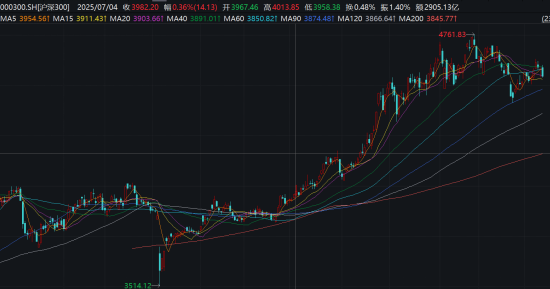
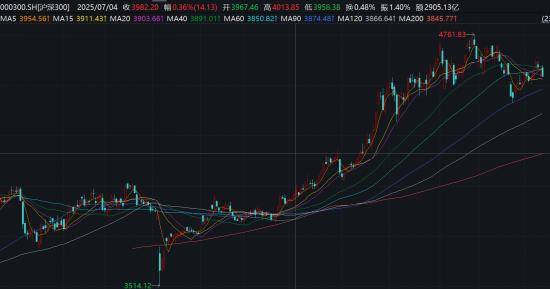
Core Viewpoint - In 2025, while the A-share market thrives, with the CSI 300 index rising by 14.82% and the Shanghai Composite Index surpassing 4000 points, Da Cheng Fund's equity products significantly lag behind, leading to a decline in scale and contrasting sharply with overall market performance [1][3][36]. Group 1: Market Performance - The total share of stock funds in the market increased from 199.208 billion to 223.348 billion, a growth of 12.1% [3][36]. - Da Cheng Fund's stock fund share decreased from 243.8 billion to 200.9 billion, a decline of 17.6% [3][36]. - Da Cheng Gao Xin A, a flagship product, achieved a return of only 15.76%, ranking 723 out of 969 in its category [5][39]. Group 2: Investment Style and Performance - Da Cheng Fund relies heavily on a "deep value" investment style, with only 21% of its equity allocation in growth stocks, significantly lower than the industry average of over 30% [7][40]. - The fund's managers, Xu Yan and Liu Xu, have maintained returns around 14%, focusing on long-term holdings rather than chasing market trends [7][40]. - Da Cheng Gao Xin A's stock selection ability was only 0.85%, below the average of 1.06%, and its timing ability was -2.26, compared to the average of -0.78 [10][43]. Group 3: Fund Management and Challenges - Da Cheng Fund, established in 1999, is one of China's first ten fund companies, but its non-monetary scale is now only 288.458 billion, ranking 21st [26][58]. - The company has primarily launched fixed-income products this year, with the largest issuance being a medium to long-term pure bond fund exceeding 8 billion [28][60]. - The new fund, Da Cheng Xing Yuan Qi Hang A, faced criticism for not building positions until September, reflecting challenges in adapting to the current market environment [21][56]. Group 4: Long-term Strategy and Market Adaptation - Da Cheng Fund's CEO emphasized a commitment to "long-termism" and stable investment styles, acknowledging the mismatch between their deep value approach and the prevailing growth market in 2025 [34][65]. - The company's strategy may face scrutiny regarding its ability to deliver sustainable returns over longer periods, as it navigates the challenges of market adaptability and investment style diversification [34][66].
业绩与规模双杀,大成基金为何读不懂2025?|基金观察
Sou Hu Cai Jing· 2025-12-15 02:09
Core Viewpoint - In 2025, while the A-share market thrives led by technology growth, Dacheng Fund's equity products significantly lag behind, resulting in a decline in scale and contrasting sharply with overall market performance [1]. Group 1: Market Performance - The stock market is experiencing a robust year, with the CSI 300 index rising by 14.82% as of December 10, 2025, and the Shanghai Composite Index briefly surpassing 4000 points [2]. - The total share of equity funds in the market increased from 199.208 billion shares at the beginning of the year to 223.348 billion shares, marking a growth of 12.1% [4]. Group 2: Dacheng Fund's Performance - Dacheng Fund's equity fund share decreased from 24.38 billion shares at the beginning of the year to 20.09 billion shares, a decline of 17.6% [4]. - The flagship product, Dacheng Gaoxin A, achieved a return of only 15.76% this year, ranking 723 out of 969 in its category [6][7]. - Dacheng Gaoxin A's year-to-date performance is below its benchmark of 18.09% and the CSI 300's 16.69% [7]. Group 3: Investment Style and Strategy - Dacheng Fund has a significant reliance on a "deep value" investment style, with over 70% of its actively managed equity products concentrated among three key fund managers [8]. - The overall allocation to growth style investments at Dacheng Fund is only 21%, which is below the industry average of over 30% [8]. - The fund manager Xu Yan's products have maintained around a 14% return this year, focusing on independent research rather than chasing market trends [8]. Group 4: Challenges and Future Outlook - Dacheng Fund's performance in 2025 reflects a mismatch between its deep value investment style and the prevailing market growth style, highlighting challenges in investment style diversification and market adaptability [29]. - The company emphasizes a "long-termism" philosophy, suggesting that the evaluation of its strategies should consider long-term returns rather than short-term market movements [29].
大成基金徐彦“牛市零建仓”引爆争议!基民愤怒围堵:不建仓还收费?
Sou Hu Cai Jing· 2025-08-20 11:58
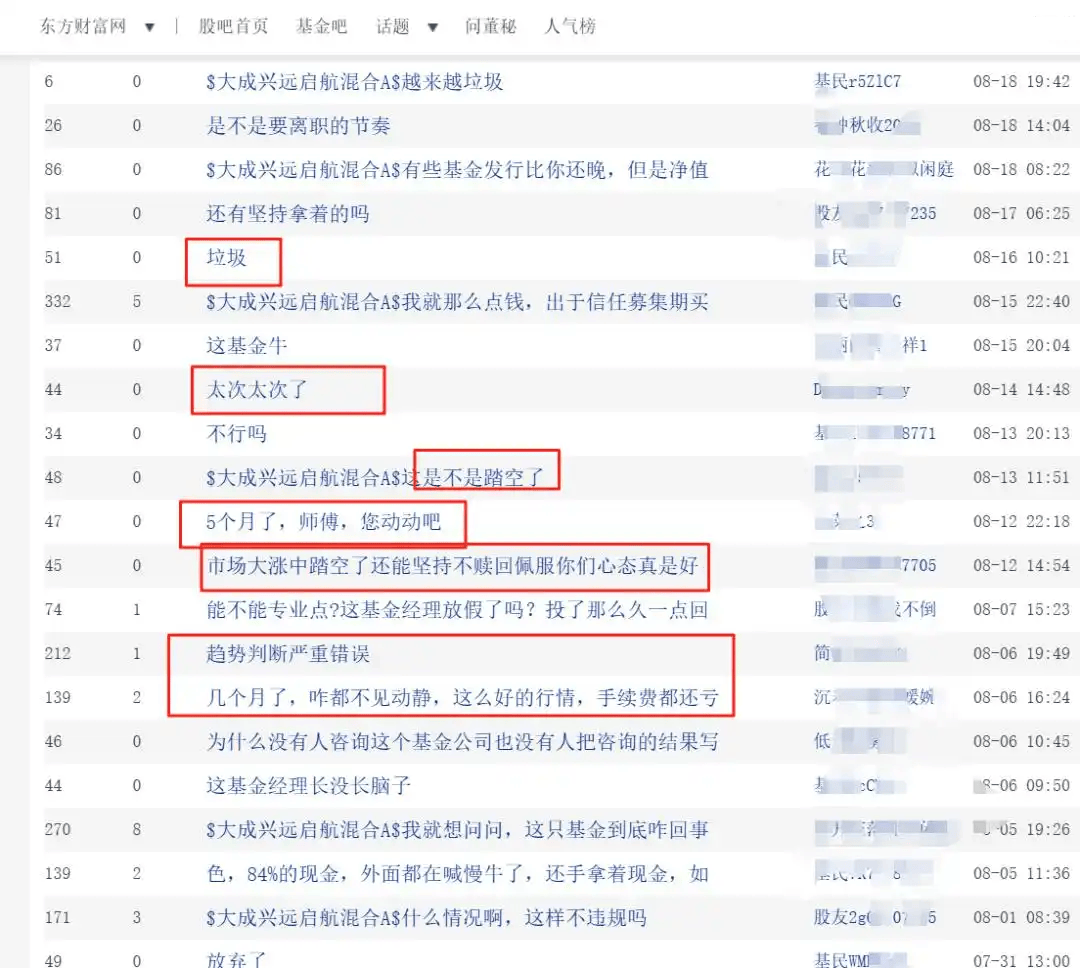
Core Viewpoint - The performance of the Dacheng Xingyuan Qihang Mixed Fund, managed by Xu Yan, has faced significant criticism from investors due to its near "zero operation" strategy, resulting in a net value that remains below 1 since its inception, despite a strong market rally [1][3][6]. Fund Performance - As of August 19, the net value of the Dacheng Xingyuan Qihang Mixed Fund is 0.9994 for Class A shares and 0.9968 for Class C shares, indicating that the fund has not generated returns since its establishment on March 11, 2025 [1]. - The fund's initial fundraising was 757 million yuan, but it has since shrunk to 627 million yuan, a decrease of 17% over six months [1]. - Investors have expressed dissatisfaction, noting that despite a strong market since the beginning of the year, the fund has not participated in the gains, leading to calls for action from the fund manager [1][2]. Investor Sentiment - Investor feedback on platforms like Dongfang Caifu reflects widespread frustration, with comments highlighting the fund's failure to capitalize on market opportunities and questioning the fund manager's strategy [2]. - Many investors feel misled by the fund's positioning and the expectations set by the reputation of the fund manager, Xu Yan, who is known for his cautious investment approach [6]. Fund Manager's Response - Xu Yan acknowledged the lack of systematic investment in the fund, attributing it to the need to start from scratch and the challenges posed by the current market environment, which has seen a significant reduction in undervalued stocks [3]. - He committed to completing the fund's investment within the stipulated timeframe, emphasizing the importance of adhering to investment discipline [3]. Company Background - Dacheng Fund Management Company, established in 1999, is one of China's first ten fund companies and has a strong track record in absolute returns over the past decade [5]. - Xu Yan, a seasoned fund manager with a background in value investing, has been with Dacheng since 2007 and is recognized for his long-term investment strategy, which prioritizes stability over short-term gains [5].
一图看懂:主动优选基金经理,在2025年1季报里都说了啥?
银行螺丝钉· 2025-05-21 13:56
Core Viewpoints - The article summarizes the insights from fund managers based on their Q1 2025 reports, focusing on their investment strategies and market outlooks [1]. Group 1: Fund Manager Perspectives - Fund managers typically cover two main areas in their reports: a review of past investments and future market outlooks, with the latter being more significant [3]. - Different fund managers exhibit varying levels of detail in their reports, influenced by their investment styles, such as value or growth [3]. - The deep value style emphasizes low valuations and high dividend yields, primarily investing in sectors like finance, real estate, and energy [4][5]. - Growth value style focuses on companies with strong profitability and cash flow, often holding stocks for the long term [10]. Group 2: Deep Value Style Insights - Deep value style has shown strong performance from 2021 to 2024, while it underperformed in 2019-2020 [6]. - Fund managers express confidence in their holdings despite market uncertainties, citing factors like geopolitical changes and technological advancements as influential [7]. - The current market environment is characterized by structural changes, with some sectors facing prolonged competition, while others show clear competitive advantages [7]. Group 3: Growth Value Style Insights - Growth value managers highlight the resilience of high-frequency economic data and improved financing conditions, suggesting a positive outlook for the second quarter [12]. - They emphasize the importance of focusing on domestic economic transformation and internal demand rather than external pressures [12][13]. - Fund managers are adjusting their portfolios to capitalize on sectors like AI and healthcare, anticipating a shift in consumer behavior and market dynamics [15][16]. Group 4: Balanced Style Insights - The balanced style seeks to combine growth potential with valuation, often looking for stocks that offer good value relative to their growth prospects [26]. - Fund managers maintain a diversified approach, focusing on sectors with favorable valuations and growth potential, such as healthcare and technology [29][30]. - They express optimism about domestic consumption policies and liquidity, which may support market performance despite external uncertainties [30]. Group 5: Growth Style Insights - The growth style prioritizes companies with high revenue and profit growth, often accepting higher valuations for strong growth potential [39][40]. - Fund managers are actively seeking opportunities in emerging industries, such as renewable energy and technology, which are expected to drive future growth [41].