
天翼AI眼镜

Search documents
2025数智科技生态大会 | 高通携手合作伙伴带来多项“智能领航”创新成果
Huan Qiu Wang· 2025-12-07 01:32
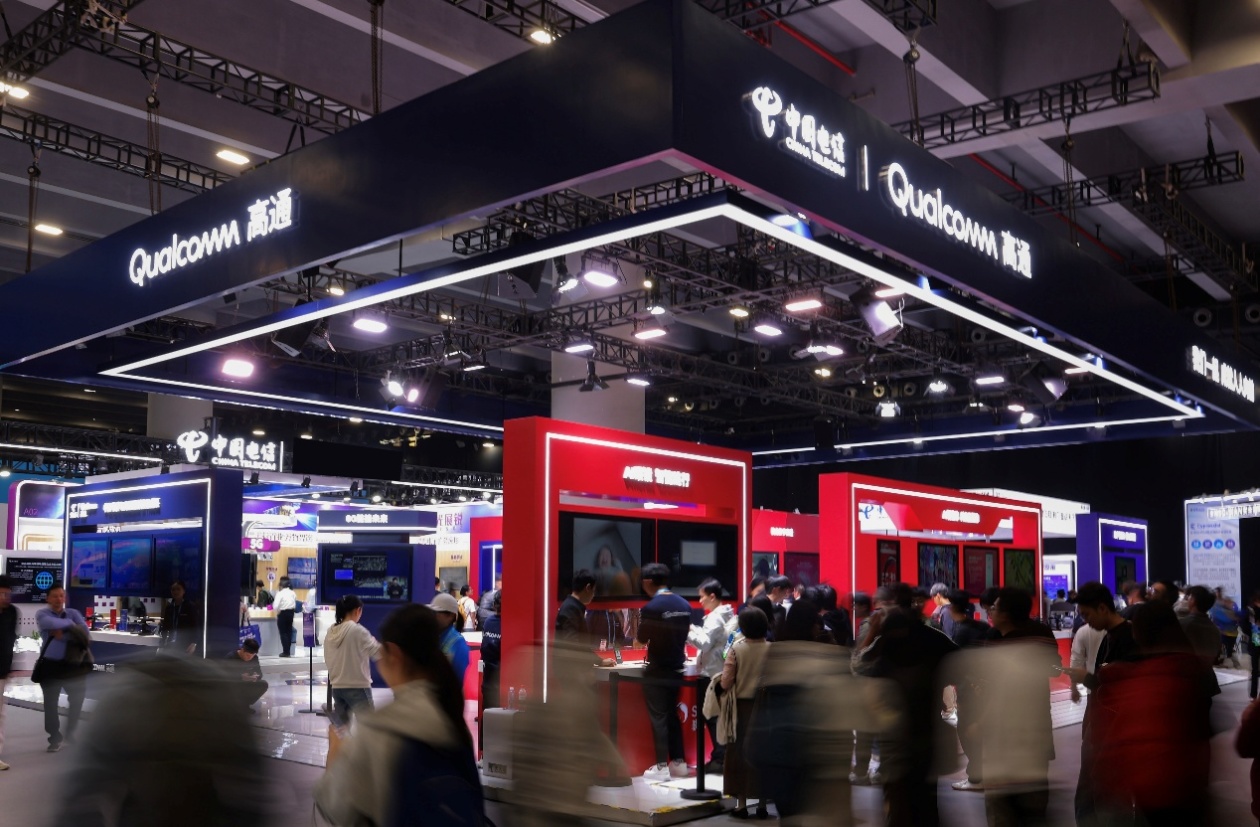
Core Insights - The 2025 Digital Intelligence Technology Ecological Conference hosted by China Telecom focused on the theme "Intelligent Navigation, Intelligent Coexistence," showcasing technological innovations and discussing new opportunities in the digital intelligence ecosystem [1] - Qualcomm, a long-term partner of China Telecom, presented innovations in AI, connectivity, and computing, highlighting collaborative achievements in various fields such as AI smartphones, PCs, XR, Wi-Fi, automotive, robotics, and wearables [3][5] Group 1: AI Integration - Artificial intelligence is becoming a key driver of industrial transformation and economic development, with the Chinese government aiming for over 70% application penetration of new intelligent terminals and agents by 2027, and over 90% by 2030 [5] - The shift in AI architecture from "cloud-centric" to "cloud + edge + terminal" is essential for making AI accessible to the public, emphasizing the advantages of terminal-side AI in terms of privacy, security, performance, and latency [7] - Qualcomm has been a proactive player in AI development for over 15 years, providing advanced hardware and software platforms for billions of edge devices, including the latest Snapdragon 8 Gen 2, which supports personalized AI assistant experiences [7][9] Group 2: Connectivity and 6G - The integration of AI and connectivity is crucial for the large-scale expansion of intelligent agents, with 6G being a pivotal development year for communication technology [10] - 6G will serve as a bridge between cloud and edge, enhancing AI applications and computational capabilities while ensuring low latency [12] - Qualcomm and China Telecom have achieved significant milestones in 5G-A technology, including the first end-to-end verification of 4CC carrier aggregation and innovative applications in smart tourism [12][13] Group 3: Industry Collaboration - The transition from "Internet+" to "AI+" signifies a profound transformation in economic development paradigms, requiring deep integration of underlying technologies and collaborative innovation across industries [14] - Qualcomm continues to deepen cooperation with China Telecom and other partners to accelerate the integration of technological innovations into industry scenarios, creating new value opportunities [14][16] - Various industry applications were showcased at the conference, including advanced robotics and IoT devices, demonstrating the capabilities of Qualcomm's platforms in diverse scenarios [16][18]



2025数智科技生态大会开幕,高通孟樸:云强、网稳、端智能,推动AI真正普惠落地
Huan Qiu Wang· 2025-12-05 06:53
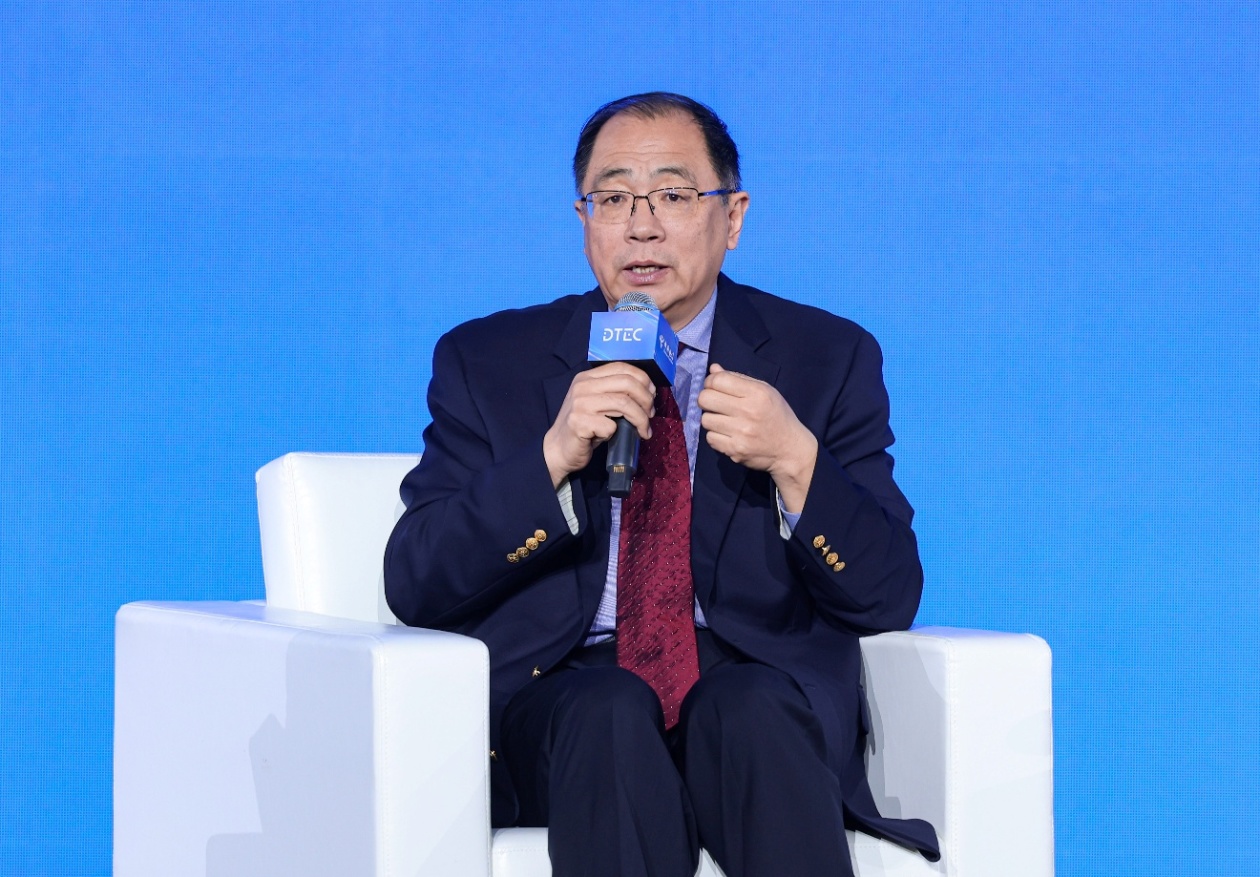
Core Insights - The 2025 Digital Intelligence Technology Ecological Conference, hosted by China Telecom, focuses on the theme "Intelligent Navigation, Intelligent Coexistence," discussing trends in AI, satellite communication, and low-altitude economy [1] Group 1: AI Development and Collaboration - The "Intelligent Cloud Ecosystem" is a key topic at the conference, emphasizing the importance of collaboration among network operators, cloud service providers, and terminal manufacturers for AI's widespread adoption [3][6] - Qualcomm's Chairman in China, Meng Pu, highlights that the rapid evolution of large models and network infrastructure has laid the foundation for AI development, stressing the need for a collaborative approach among cloud, network, and terminal sides to realize AI's potential [3][4] Group 2: Practical Applications and Innovations - Qualcomm has collaborated with China Telecom over the past year to develop terminal-side AI applications, including the Tianyi AI glasses and the Maigang AI phone, which allows users to access AI services easily [4][7] - The focus on terminal-side AI is crucial for addressing privacy, security, performance, and latency issues, making it essential for AI to operate close to users rather than solely relying on data centers [6][7] Group 3: Future Outlook - For AI to be truly accessible, it must meet three conditions: strong cloud capabilities, stable network performance, and intelligent terminal devices, aligning with the conference's theme of making AI services available to everyone [3][6]
中国电信展示人工智能成果
Jing Ji Ri Bao· 2025-09-26 09:10
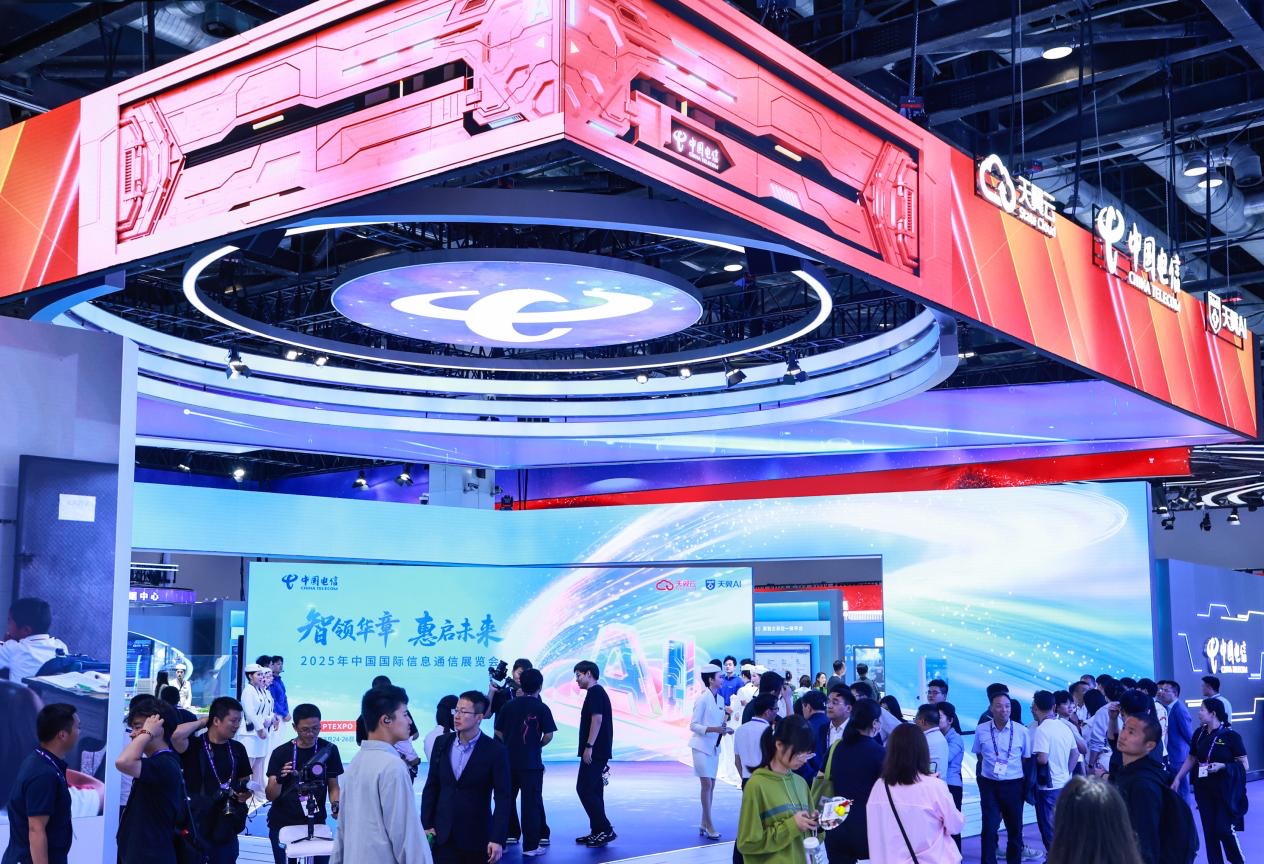
Core Insights - The 2025 China International Information Communication Exhibition has opened in Beijing, showcasing China Telecom's strategic advancements in digital transformation and artificial intelligence [1] Group 1: Company Initiatives - China Telecom is promoting its enterprise strategy towards "cloud transformation, data transition, and intelligent benefits," supporting the digital transformation of the economy and society [1] - The exhibition features the "Xingchen Large Model," which has core advantages of "full modality, fully self-developed, and fully domestically produced" [1] - The "Tianyi AI Glasses," weighing only 38 grams, are designed for comfort and equipped with AI voice technology, showcasing the company's focus on user-friendly AI applications [1] Group 2: Technological Developments - The exhibition highlights the integration of "computing power + platform + data + model + application" in China Telecom's intelligent cloud services [1] - The "Intelligent Transmission Network" demonstrates the future vision of intelligence flowing freely between "end-edge-cloud-network," emphasizing advancements in communication technology [1] - The "Fully Domestic Computing Power" exhibit showcases the domestic hardware of the Zijin computing architecture and the self-developed CTyunOS operating system, indicating China Telecom's comprehensive self-control capabilities from hardware to applications [1]
推动数实深度融合 促进AI应用繁荣
Ke Ji Ri Bao· 2025-09-24 23:41
Core Insights - The article highlights the advancements in China's information and communication industry, showcasing innovations in 5G technology and artificial intelligence, as well as the importance of integrating digital and physical infrastructures for future growth [1][2][3][4]. Group 1: Industry Developments - As of August 2023, China has established 4.646 million 5G base stations and has 1.154 billion 5G mobile phone users, maintaining a global lead in key metrics such as 5G user penetration and gigabit optical network coverage [2]. - The integration of 5G technology into 86 categories of the national economy is accelerating, with a focus on enhancing production core processes [2]. - The industry is actively pursuing technological innovation, with a push for the development of 5G-A product systems and the advancement of 6G technology [3]. Group 2: Technological Innovations - The introduction of a new disaster-resistant base station by China Tower, capable of withstanding level 8 earthquakes and level 12 winds, demonstrates the commitment to ensuring communication continuity during extreme disasters [1]. - The event showcased the integration of AI and 5G technologies, with applications such as intelligent robots performing alongside human dancers, enabled by ultra-low latency 5G networks [3][4]. - China Telecom and China Mobile are developing comprehensive computing capabilities, including quantum computing and AI models, to meet diverse industry needs [4]. Group 3: Future Outlook - The industry anticipates a shift towards AI-driven applications, with predictions that by 2030, the number of intelligent agents will surpass traditional apps, creating new opportunities for operators [4]. - There is a strong emphasis on fostering the integration of AI and manufacturing, aiming to cultivate a new generation of industrial intelligent agents [5].
