
太空金属3D打印

Search documents
我国实现太空金属3D打印,开启“天造天用”新篇章
Xin Lang Cai Jing· 2026-02-03 12:52
Core Insights - China's first successful space metal additive manufacturing experiment marks a significant advancement in space manufacturing technology, transitioning from "ground verification" to "space engineering verification" [1][5] - This breakthrough is expected to enhance the development of space manufacturing technology, laying a crucial technical foundation for rapid in-orbit manufacturing, autonomous repairs, deep space exploration, and extraterrestrial base construction [1][5] Policy Support - The Chinese government has identified space metal 3D printing as a key development area, providing robust policy and project support [2][7] - In November 2025, the China National Space Administration established a dedicated regulatory body for commercial space, indicating a structured approach to the sector's growth [2][7] Market Activity - Companies are actively entering the space metal 3D printing market, with Hangzhou E-Jia 3D Printing Technology Co., Ltd. planning to raise 1.205 billion yuan for expansion and R&D in metal 3D printing [3][8] - E-Jia's technology can reduce engine weight by over 50% and double strength, while significantly shortening delivery times from six months to weeks, aligning with the commercial space sector's demands for lightweight, low-cost, and efficient manufacturing [3][8] Future Applications - Space metal 3D printing technology is expected to be applied in various aerospace scenarios, including on-orbit maintenance of spacecraft and satellites, reducing reliance on ground supplies [4][9] - In deep space exploration, this technology can utilize extraterrestrial resources to print necessary tools and components, supporting future space infrastructure and habitation efforts [4][9]
“基建狂魔”,要上太空了!
Jing Ji Ri Bao· 2026-02-02 08:01
Core Viewpoint - The China Aerospace Science and Technology Corporation has unveiled a new blueprint for the "14th Five-Year Plan," focusing on the development of space tourism, smart space infrastructure, space resource development, and space traffic management, marking a significant shift in infrastructure development towards space [1] Group 1: Security Perspective - Space is considered a "high frontier" for national security, with approximately 15,000 satellites in orbit globally, over half of which are owned by the United States [2] - The increasing congestion in low Earth orbit raises collision risks, necessitating the establishment of a space traffic management system to ensure safety [2] - Developing key technologies for space debris monitoring, early warning, and removal is crucial for securing China's position in international space traffic management rules [2] Group 2: Economic Perspective - The global space economy is projected to reach approximately $600 billion in 2024, with forecasts suggesting it could grow to $1.8 trillion by 2035 [2] - Space resource development, including mining on the Moon and asteroids, is expected to turn the concept of "space mining" into reality, driven by the rich resources available beyond Earth [2] - Building gigawatt-level smart space infrastructure is essential for unleashing space-based productivity and accelerating the development of the space economy [2] - Space tourism is anticipated to emerge as a new engine for consumer spending [2] Group 3: Current Capabilities - China has established a solid foundation for advancing space infrastructure, with significant technological advancements in satellite navigation and space computing [3] - Successful return of lunar soil samples and breakthroughs in 3D metal printing in microgravity demonstrate China's growing capabilities in space technology [3] - The development of reusable rockets is entering a verification phase, which is expected to significantly reduce launch costs [3] - Favorable policies, such as the establishment of a commercial space administration and initiatives to promote the utilization of commercial satellite data, are emerging [3] Group 4: Challenges Ahead - Technical challenges remain, particularly in the maturity of reusable rocket technology and the need for breakthroughs in key areas such as resource exploration and autonomous mining [4] - There is a significant regulatory gap in international space law, with existing treaties not adequately addressing current commercial space activities [4] - High capital risks associated with commercial space ventures necessitate a layered approach to investment, breaking down operations into independently profitable modules to lower entry barriers for private capital [4]
【中国新闻网】中国成功实现太空金属3D打印 首次制造出完整金属构件
Zhong Guo Xin Wen Wang· 2026-01-26 02:31
Core Insights - The Chinese Academy of Sciences has successfully developed a microgravity laser additive manufacturing (3D printing) payload, marking a significant advancement in China's space metal manufacturing technology from "ground verification" to "space engineering verification" [3] Group 1: Technology Development - The microgravity laser additive manufacturing payload was launched aboard the "Lihong-1" remote-controlled vehicle, successfully producing complete metal components in a microgravity environment [3] - The experiment achieved breakthroughs in key technologies such as metal additive manufacturing shaping and control under microgravity conditions, closed-loop control throughout the process, and high-reliability collaboration between payload and rocket [3] Group 2: Future Applications - Space metal 3D printing is viewed as a critical enabling technology for future space missions, allowing for rapid manufacturing and autonomous repair of spacecraft components in orbit, significantly enhancing the flexibility and sustainability of deep space exploration, long-term space station operations, and lunar base construction [3] - The success of this experiment establishes China at the forefront of this technology globally, laying a solid foundation for future development in on-orbit manufacturing and maintenance technologies [3] Group 3: Vehicle Capabilities - The "Lihong-1" vehicle operates at an altitude of approximately 120 kilometers, providing over 300 seconds of high-quality microgravity environment [4] - Future upgrades aim for a minimum orbital stay of one year and at least ten reuse cycles, supporting high-precision requirements for on-orbit manufacturing and advancing research in microgravity physics, space life sciences, and space materials science [4] Group 4: Strategic Importance - The Chinese Academy of Sciences is a key player in national strategic technology, focusing on cutting-edge space technology and gradually building a foundational theoretical framework and process database for space metal manufacturing [4] - Key technologies such as flexible cabin deployment and on-orbit stability control have been successfully developed, contributing to the future establishment of a "space factory" [4]

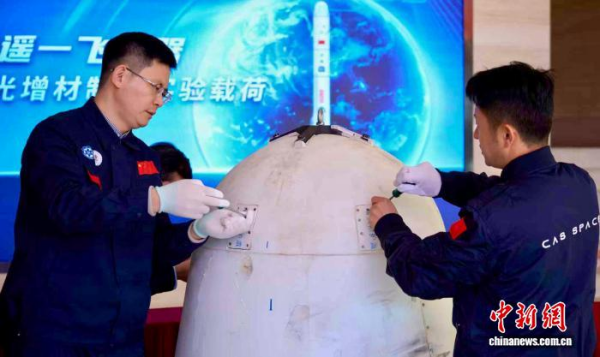
中国成功实现太空金属3D打印 首次制造出完整金属构件
Xin Lang Cai Jing· 2026-01-24 09:18
Core Insights - The Chinese Academy of Sciences' Institute of Mechanics has successfully manufactured a complete metal component in microgravity using laser additive manufacturing technology, marking a significant advancement in China's space metal manufacturing capabilities [1][3]. Group 1: Technological Advancements - The microgravity laser additive manufacturing experiment was conducted aboard the "Lihong-1" suborbital vehicle, successfully obtaining data on metal component manufacturing in space [3]. - The experiment overcame key technical challenges related to metal additive manufacturing in microgravity, including shape control, closed-loop regulation, and high-reliability collaboration between payload and rocket [3][5]. - The success of this experiment positions China at the forefront of space metal 3D printing technology, laying a solid foundation for future in-orbit manufacturing and maintenance technologies [3][7]. Group 2: Future Applications - Space metal 3D printing is viewed as a critical enabling technology for future space missions, allowing for rapid manufacturing and autonomous repair of spacecraft components, thereby enhancing mission flexibility and sustainability for deep space exploration and long-term space station operations [3][5]. - The "Lihong-1" vehicle currently operates at an altitude of approximately 120 kilometers, providing over 300 seconds of high-quality microgravity environment, with plans for future upgrades to support longer missions and higher precision manufacturing needs [5][7]. - The Institute of Mechanics is building a theoretical framework and process database for space metal manufacturing, which will support the development of future "space factories" [7].
视频丨多个首次!本周,我国科技再迎密集突破
Yang Shi Xin Wen Ke Hu Duan· 2026-01-24 00:45
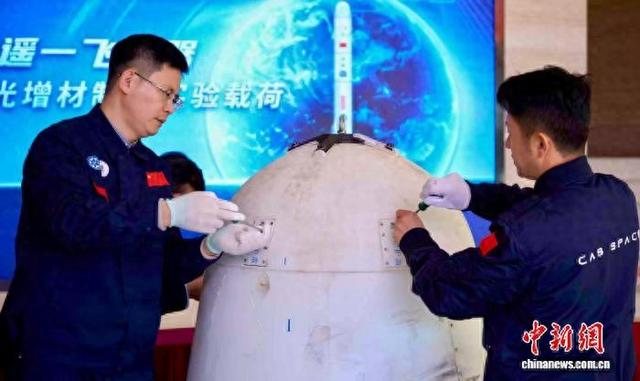
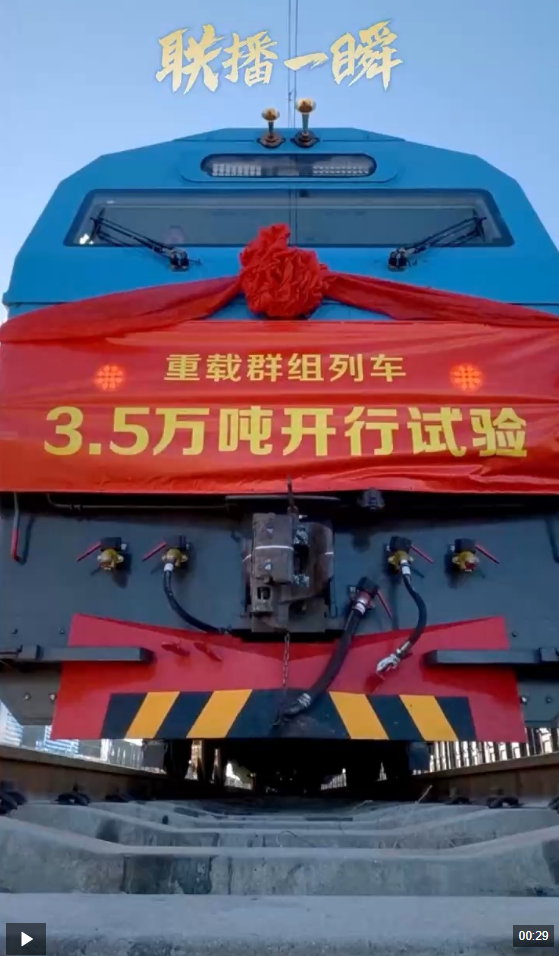
Group 1 - China's self-developed 10,000-ton heavy freight train successfully completed the world's first automatic formation driving test, achieving a 50% increase in comprehensive transport capacity [3] - The satellite internet low-orbit constellation, consisting of 19 satellites, was successfully launched, marking the first time a fully digital process was achieved for satellite deployment [3] - The research team at the Guangzhou Institute of Geochemistry presented a new mechanism for gold precipitation induced by pyrite, challenging traditional views on gold sources [4] Group 2 - The first successful space metal 3D printing experiment was conducted, marking a significant advancement in space manufacturing technology [6][8] - The Zhejiang Anji power plant, the largest and most efficient gas power plant in China, has officially commenced full-capacity operation, with a total installed capacity of 1,686 megawatts and an annual output capable of meeting the electricity needs of 6 million residents [9] - Continuous innovation in technology is expected to enhance the future landscape of China's scientific development [9]
【科技日报】我国实现太空金属3D打印
Ke Ji Ri Bao· 2026-01-23 02:22
Core Insights - The successful delivery of the microgravity metal additive manufacturing return scientific payload by China Aerospace Science and Technology Corporation marks a significant milestone in China's space manufacturing capabilities [1] - This experiment represents China's first implementation of space metal additive manufacturing based on a rocket platform, transitioning from ground research to space engineering validation [1] Group 1: Experiment Details - The payload was developed by the Institute of Mechanics, Chinese Academy of Sciences, and was successfully launched on January 12, conducting China's first space metal additive manufacturing experiment [1] - The experiment utilized 3D printing technology to successfully fabricate metal components in a microgravity environment, achieving world-class technical standards [1] - Key technological breakthroughs were made in material stability transport and forming under microgravity conditions, closed-loop control throughout the process, and high-reliability collaboration between the payload and rocket [1] Group 2: Data and Outcomes - The experiment successfully collected process data in the microgravity environment, including characteristics of the molten pool, material transport, and solidification behavior [1] - Parameters such as the forming accuracy and mechanical properties of the metal components produced in space were also obtained, providing valuable experimental data for the rapid iteration of China's space metal additive manufacturing technology [1] - The successful completion of this experiment is expected to significantly advance China's space manufacturing technology and provide critical support for future space infrastructure development [1]