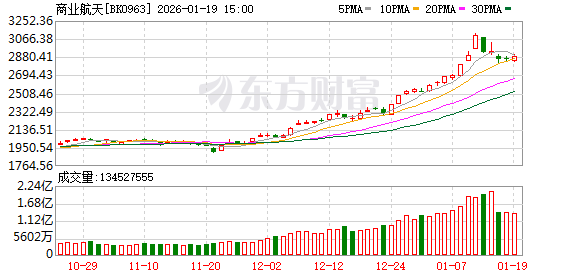
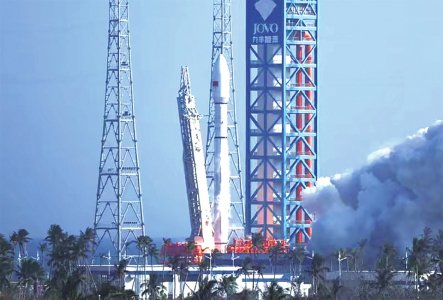
卫星互联网低轨19组卫星

Search documents
技术集成创新助力商业航天产业发展(创新故事)
Ren Min Ri Bao· 2026-01-28 22:09
Core Insights - The successful launch of 19 low-orbit satellite internet satellites by the Long March 12 rocket marks the 12th successful mission from the Hainan commercial space launch site, showcasing the increasing maturity and efficiency of the launch operations [1] Group 1: Launch Operations - The launch site has implemented a "three vertical testing mode," which allows for the vertical transportation, assembly, and testing of rockets, enhancing reliability and reducing waiting times [1] - The site has achieved a rapid turnaround capability, with a five-day launch and five-day repair cycle, indicating a high-density and regular launch capacity [1] Group 2: Technological Innovations - Innovations such as the dual-flow cone technology and modular design have improved safety and efficiency, with the former preventing high-temperature gas from damaging the rocket and ground facilities [2] - The use of a high-flow water spray system can release 500 tons of water in 15 seconds, improving cooling and noise reduction efficiency by 30% [2] - The second launch site has adopted a "unified design" approach, successfully accommodating multiple rocket types, which has proven to be a correct decision through five successful launches [2] Group 3: Team and Management - The launch team has optimized roles and responsibilities, with a focus on practical training and mentorship, allowing younger technical staff to quickly become proficient [3] - The dual-site launch preparation process has been streamlined, with clear responsibilities for the chief commanders, enhancing communication and coordination [3] Group 4: Economic Efficiency - The company has developed a market-oriented procurement strategy to reduce costs associated with large facilities and special fuels, improving procurement efficiency [4] - Resource-saving measures, such as high-pressure helium recovery and reduced pre-cooling times, have led to significant cost savings, including a potential saving of 1 million yuan from reduced liquid hydrogen usage [4] - The integration of communication, meteorological, and optical relay systems has facilitated multi-system decision-making, enhancing operational efficiency [4]
高密度发射 我国商业航天何以迎来突破?
Xin Lang Cai Jing· 2026-01-26 18:59
Core Insights - The recent launch of 19 low-orbit satellites by China's commercial space sector marks a significant step in the country's ambition to become a "space power" as outlined in the 14th Five-Year Plan [2][8] - The rapid advancements in technology and the increasing capabilities of private space companies are driving the commercialization of space, transitioning from supplementary forces to strategic pillars [2][7] Group 1: Launch and Technology Developments - The Long March 12 rocket, used for the recent satellite launch, is China's first 4-meter single-core rocket with a near-Earth orbit capacity of at least 12 tons, supporting various launch missions [3] - Galaxy Space successfully launched its second group of self-developed low-orbit satellites, incorporating advanced technologies such as low-cost phased array antennas and automated production processes to enhance efficiency [2][3] Group 2: Reusable Rocket Technology - The development of reusable rocket technology is seen as a key factor in reducing launch costs and increasing launch frequency, with both state-owned and private enterprises collaborating on this front [5][7] - By the end of 2025, attempts at first-stage recovery tests for the Zhuque-3 and Long March 12A rockets are planned, indicating progress in this area [5] Group 3: Market and Policy Drivers - The rapid growth of China's commercial space sector is driven by favorable policies, capital investment, and technological breakthroughs, with a focus on satellite internet and 6G technology [6][7] - China has submitted applications for an additional 203,000 satellites, with major telecom operators like China Mobile and China Telecom entering the satellite constellation market [7][8] Group 4: Industry Ecosystem - The commercial space industry in China is developing a complete ecosystem from rocket and satellite manufacturing to launch services and communication operations, creating internal momentum for growth [8] - The successful integration of key technologies and the expansion of large-scale applications position China's commercial space sector to play an increasingly important role in the global space economy [8]

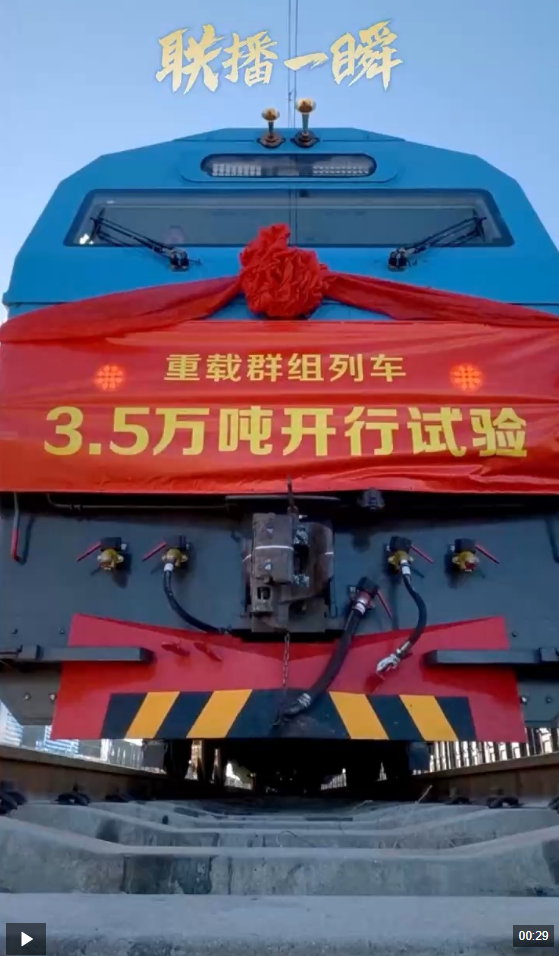
视频丨多个首次!本周,我国科技再迎密集突破
Yang Shi Xin Wen Ke Hu Duan· 2026-01-24 00:45
Group 1 - China's self-developed 10,000-ton heavy freight train successfully completed the world's first automatic formation driving test, achieving a 50% increase in comprehensive transport capacity [3] - The satellite internet low-orbit constellation, consisting of 19 satellites, was successfully launched, marking the first time a fully digital process was achieved for satellite deployment [3] - The research team at the Guangzhou Institute of Geochemistry presented a new mechanism for gold precipitation induced by pyrite, challenging traditional views on gold sources [4] Group 2 - The first successful space metal 3D printing experiment was conducted, marking a significant advancement in space manufacturing technology [6][8] - The Zhejiang Anji power plant, the largest and most efficient gas power plant in China, has officially commenced full-capacity operation, with a total installed capacity of 1,686 megawatts and an annual output capable of meeting the electricity needs of 6 million residents [9] - Continuous innovation in technology is expected to enhance the future landscape of China's scientific development [9]
科技日报:卫星互联网低轨19组卫星成功发射
Ke Ji Ri Bao· 2026-01-21 08:53
Core Viewpoint - The successful launch of 19 low Earth orbit satellites for satellite internet by China using the Long March 12 rocket marks a significant advancement in China's commercial space capabilities [1] Group 1: Launch Details - The Long March 12 rocket was launched from the Hainan commercial space launch site at 15:48 on January 19 [1] - The mission was successful, with the satellites entering their designated orbits [1] Group 2: Rocket Specifications - The Long March 12 is a new generation of cryogenic liquid launch vehicle developed by the China Aerospace Science and Technology Corporation's Eighth Academy [1] - It is China's first 4-meter single-core launch vehicle, with a near-Earth orbit carrying capacity of no less than 12 tons and a 700-kilometer sun-synchronous orbit capacity of no less than 6 tons [1] - The rocket can adapt to different mission requirements with fairing configurations of 4.2 meters and 5.2 meters in diameter, supporting both single and multiple satellite launches [1] Group 3: Satellite Technology - The 19 low Earth orbit satellites were developed by Galaxy Space, which focuses on cost-effective technologies such as phased array, millimeter-wave antennas, and integrated electronics [1] - The company achieved a fully digital process for the first time during the development, enhancing efficiency through automated testing, intelligent assembly, and launch site process optimization [1]
低轨19组卫星升空组网,中国商业航天独角兽再破纪录;卫星制造商York Space Systems IPO定价30-34美元/股,拟募资5.12亿美元—...
Mei Ri Jing Ji Xin Wen· 2026-01-20 23:33
Market News - On January 19, the S&P 500 futures fell by 0.88%, Dow futures dropped by 0.80%, and Nasdaq 100 futures decreased by 1.11% [1] - The ICE Dollar Index declined by 0.33%, closing at 99.065 points [1] - COMEX gold futures rose by 1.77%, ending at $4,676.70 per ounce, while silver futures increased by 6.49%, closing at $94.280 per ounce [1] - The onshore RMB against the USD closed at 6.9640, appreciating by 80 basis points from the previous trading day [1] - European stock indices closed lower, with Germany's DAX down 1.34%, France's CAC40 down 1.78%, and the UK's FTSE 100 down 0.39% [1] Industry Insights - York Space Systems plans to raise $512 million through an IPO by issuing 16 million shares, with a price range of $30 to $34 per share [2] - The satellite internet sector is projected to grow to between 200 billion to 400 billion yuan by 2030, with an annual compound growth rate of 10% to 28% [2] - The launch of 19 low-orbit satellites by China's Long March 12 rocket marks a significant step in the development of satellite internet infrastructure [3] - The Dojo 3 project by Tesla aims to enhance AI capabilities for autonomous driving, with the AI5 design expected to support more complex algorithms [5][6]

低轨19组卫星升空组网,中国商业航天独角兽再破纪录;卫星制造商York Space Systems IPO定价30-34美元/股,拟募资5.12亿美元——《投资早参》
Mei Ri Jing Ji Xin Wen· 2026-01-20 23:17
Market News - On January 19, the S&P 500 futures fell by 0.88%, Dow futures dropped by 0.80%, and Nasdaq 100 futures decreased by 1.11% [1] - The ICE Dollar Index declined by 0.33%, closing at 99.065 points [1] - COMEX gold futures rose by 1.77%, ending at $4,676.70 per ounce, while silver futures increased by 6.49%, closing at $94.280 per ounce [1] - The onshore RMB against the USD closed at 6.9640, appreciating by 80 basis points from the previous trading day [1] - European stock indices closed lower, with Germany's DAX down 1.34%, France's CAC40 down 1.78%, and the UK's FTSE 100 down 0.39% [1] Industry Insights - York Space Systems announced its IPO terms, planning to raise $512 million by issuing 16 million shares priced between $30 and $34 each [2] - The satellite internet sector is projected to grow significantly, with the satellite communication industry expected to reach a scale of 200 billion to 400 billion yuan by 2030, with an annual compound growth rate of 10% to 28% [2] - The successful launch of 19 low-orbit satellites by China's Long March 12 rocket marks a significant step in the development of satellite internet infrastructure [3] - The Dojo 3 project by Tesla aims to enhance its AI capabilities for autonomous driving, with the AI5 design expected to support more complex algorithms [5][6]
卫星互联网低轨19组卫星成功发射
Ren Min Wang· 2026-01-20 08:16
Core Viewpoint - The successful launch of 19 low Earth orbit satellites for satellite internet by China on January 19, 2023, marks a significant advancement in the country's commercial space capabilities and satellite technology [1] Group 1: Launch Details - The launch was conducted using the Long March 12 rocket at the Hainan commercial space launch site, achieving a successful mission with the satellites entering their designated orbits [1] - The Long March 12 rocket is a new generation of cryogenic liquid launch vehicle developed by the China Aerospace Science and Technology Corporation, with a near-Earth orbit carrying capacity of no less than 12 tons and a 700 km sun-synchronous orbit capacity of no less than 6 tons [1] - This launch represents the 628th mission of the Long March series of rockets [1] Group 2: Satellite Technology - The 19 satellites were developed by Galaxy Space, featuring core technologies such as phased array, millimeter-wave antennas, integrated electronics, and energy systems aimed at reducing costs [1] - The development process of this batch of satellites achieved a fully digital workflow for the first time, incorporating automated testing, intelligent assembly and inspection, and optimized launch site processes to significantly enhance efficiency [1]
我国在文昌成功发射卫星互联网低轨19组卫星
Hai Nan Ri Bao· 2026-01-20 01:29
Core Viewpoint - The successful launch of 19 low Earth orbit satellite internet satellites by the Long March 12 rocket at the Hainan commercial space launch site marks a significant achievement in China's satellite internet capabilities [1] Group 1 - The launch occurred on January 19 at 15:48, demonstrating China's growing capabilities in commercial space endeavors [1] - The satellites successfully entered their designated orbits, indicating the effectiveness of the launch and the reliability of the Long March 12 rocket [1]
我国成功发射 卫星互联网低轨19组卫星
Zhong Guo Zheng Quan Bao· 2026-01-19 21:53
Group 1 - The core point of the article is the successful launch of 19 low Earth orbit satellites for satellite internet by China using the Long March 12 rocket at the Hainan commercial space launch site [1] Group 2 - The launch took place on January 19 at 15:48, marking a significant achievement in China's commercial space endeavors [1] - The satellites successfully entered their designated orbits, indicating the effectiveness of the launch and the capabilities of the Long March 12 rocket [1]
中国星网低轨19组卫星成功发射 卫星研制方系银河航天
Guo Ji Jin Rong Bao· 2026-01-19 17:27
Core Insights - Satellite mass production has become a key capability for the development of new space infrastructure [2][3] - The China Star Network, responsible for the first giant satellite internet project in China, aims to establish a global integrated communication system with a target of 400 satellites in orbit by 2027 [2] Group 1: Company Overview - Galaxy Space, founded in 2018, is a leading private satellite internet company in China and the first unicorn in the commercial space sector [3] - The company focuses on the independent research and low-cost mass production of communication payloads, core components, and satellite platforms [3] Group 2: Technological Advancements - The recent satellite group developed by Galaxy Space incorporates several core technologies, including phased array, millimeter-wave antennas, and integrated electronics, showcasing industry-leading technical levels and cost advantages [3] - The company has achieved a fully digital process for satellite production, implementing automated testing, intelligent assembly, and optimized launch procedures to significantly enhance production efficiency [3] Group 3: Recent Developments - On January 19, 2024, Galaxy Space successfully launched a group of 19 low-orbit satellites, marking its second batch of satellites for space infrastructure construction [2] - The company’s satellite factory has established a complete industrial ecosystem from component development to satellite integration testing, continuously improving batch production efficiency and shortening development cycles [3]