夸克Quark AI眼镜S1

Search documents
从“卖铲子”转向“挖金子” 谁已提前下注?
Zhong Guo Zheng Quan Bao· 2025-12-11 14:36
Core Insights - The investment focus is shifting from computing power to application stories, indicating a growing imagination space in AI applications compared to the established value base of computing power [1][2][7] - Venture capital is actively investing in next-generation AI hardware, while fund managers are positioning themselves to benefit from emerging AI products in the secondary market [1][2] Investment Strategies - Fund managers are adjusting their AI investment strategies as the structure of the supply chain stabilizes, with a focus on AI applications that are expected to see significant growth [2][4] - Specific funds, such as Dongwu Fund, have increased their holdings in semiconductor stocks while reducing exposure to certain AI-related stocks, indicating a strategic shift towards hardware that supports AI applications [2][3] Market Activity - The primary market is witnessing increased activity with new AI products being launched, such as the Doubao mobile assistant and Quark AI glasses, which are gaining traction in the consumer electronics market [5][6] - Significant funding rounds have been completed in the AI hardware sector, with companies like Thunder Innovation and Guangli Technology securing substantial investments, highlighting investor confidence in the sector [5][6] Future Outlook - The investment landscape for 2026 is expected to be driven by consumer electronics linked to AI applications, as the focus shifts from infrastructure to practical applications and commercialization [7] - The potential for AI applications to create clear business models and revenue growth points is recognized, with expectations for continued cross-industry investment opportunities [7]
从“卖铲子”转向“挖金子”,谁已提前下注?
Zhong Guo Zheng Quan Bao· 2025-12-11 14:33
Core Insights - The investment logic is shifting from focusing on hardware and infrastructure ("selling shovels") to prioritizing actual applications and commercialization ("mining gold") in the AI sector [1][7] - The AI application layer is seen as having greater potential for growth and innovation compared to the more stable and predictable computing power layer [1][2] Market Trends - In the primary market, venture capital is heavily investing in next-generation AI hardware companies, while in the secondary market, fund managers are positioning themselves to benefit from emerging AI products [1][2] - Fund managers are increasingly optimistic about AI applications, particularly with the rise of edge AI products, leading to a gradual increase in investments in this area [2][4] Fund Manager Strategies - For example, Dongwu Fund's manager significantly increased investments in semiconductors while reducing holdings in AI optical modules and PCBs, indicating a strategic shift towards hardware that supports AI applications [3] - Managers are focusing on mid-term opportunities in AI terminal applications, including foldable screens, 3D printing, AI glasses, and robotics [3][4] Primary Market Activity - The edge AI market is witnessing new developments, such as the launch of the Doubao mobile assistant and the Quark AI glasses, indicating a growing consumer interest in AI-integrated devices [5] - Significant funding rounds have been completed in the edge AI hardware sector, with record investments in companies like Thunderbird Innovation and Guangli Technology [5] Consumer Electronics Outlook - The Ministry of Industry and Information Technology has outlined plans for significant growth in consumer electronics, with expectations for AI devices to drive performance in related companies [6] - The investment focus for 2026 is anticipated to be on the consumer electronics chain driven by edge AI innovations, as the industry shifts towards application-based value creation [7]
投资人今年用40亿元给AI智能眼镜加热,有公司一年拿下3轮融资
3 6 Ke· 2025-12-04 10:57
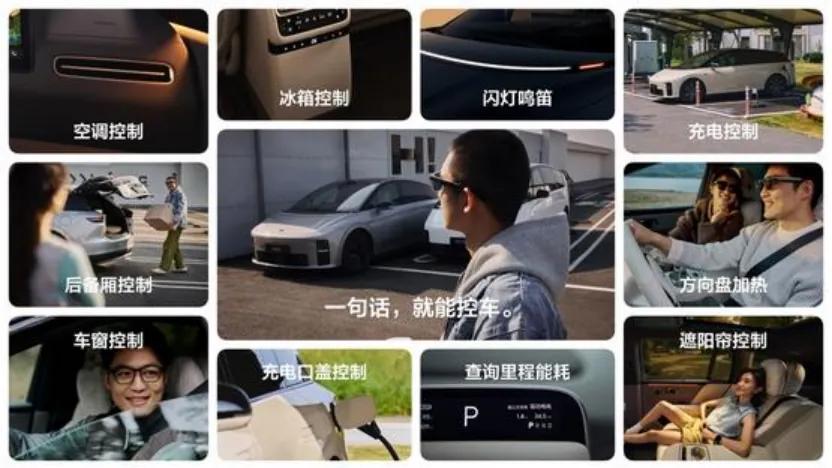
Group 1 - The VR headset market is declining while the smart glasses sector is experiencing a resurgence, particularly with major companies entering the space, attracting significant attention [1][3] - Alibaba has launched the Quark AI glasses S1, integrating advanced AI capabilities such as real-time translation and payment, marking its entry into the consumer wearable device market [1] - Li Auto has introduced its first Livis AI glasses, which can control various functions of its vehicles through voice commands, showcasing the integration of smart glasses with automotive technology [1] Group 2 - The smart glasses industry has evolved significantly, enhanced by AI, resulting in lighter designs and a broader range of applications, positioning AI glasses as a potential new entry point for consumer engagement [3][8] - Major tech giants like Meta, Google, and Apple are focusing on AI/AR glasses, indicating the strategic importance of this technology in the AI era [3] - The investment landscape for AI smart glasses has become active, with over 4 billion yuan invested in the sector this year, highlighting opportunities for startups due to the maturity of the supply chain and AI model integration [4][5] Group 3 - In 2025, the smart glasses sector recorded 36 financing events totaling approximately 4.367 billion yuan, involving 26 startups across various industry segments [5] - The distribution of financing rounds shows that early-stage investments (pre-A rounds) and later-stage investments (B rounds and beyond) each account for 40%, indicating ongoing innovation and market validation [7][8] - The geographical distribution of companies shows that Guangdong (mainly Shenzhen) and Beijing dominate, reflecting manufacturing advantages and R&D clusters, with many companies also targeting international markets [10] Group 4 - Thunderbird Innovation has emerged as a leader in the consumer AR glasses market, completing three rounds of financing in one year, with a total amount exceeding several hundred million yuan [11][13] - INMO has raised over 150 million yuan in recent financing rounds, focusing on creating an AI+AR content ecosystem with its INMO Go3 AI glasses [14] - Gyges Labs has developed innovative secret display technology and completed a Pre-A+ round of financing, with its first product expected to launch next year [17] Group 5 - Light Particle Technology has secured B round financing and focuses on AR smart swimming goggles, successfully entering international markets [20] - Liangliang Vision has transitioned from enterprise services to consumer markets, launching a new translation glasses product with high accuracy in noisy environments [21][24] - Micro Light Electronics has adopted a modular approach to AR smart glasses, allowing users to utilize AR without needing additional prescription glasses [24] Group 6 - The smart glasses sector is expected to see new technological validations in 2025, leading to consumer product innovations, with a projected maturation phase from 2026 to 2030 [28] - The integration of AR and AI is becoming a trend, with new functionalities like translation and health monitoring emerging as key selling points [28] - Chinese local companies with a global perspective are better positioned to capitalize on overseas markets, supported by established supply chains [29]