
AI智能眼镜

Search documents
理想AI眼镜优势来自think different敢于不用AR1芯片
理想TOP2· 2026-03-29 11:57
Core Viewpoint - The article discusses the advancements and competitive advantages of Ideal's smart glasses in the AR and VR market, highlighting their unique technology and design choices that set them apart from competitors like META and Qualcomm [1][5][10]. Group 1: Product Features and Performance - Ideal's smart glasses have a faster AI response time compared to META's Ray-Ban, allowing for more natural interactions and quicker responses to user queries [5]. - The glasses are significantly lighter and offer three times the battery life compared to META's products, enabling all-day use without the need for recharging [5][9]. - Ideal's glasses integrate Live Photo seamlessly into Apple Photos, a feature that META has not implemented, enhancing user experience [5]. - The lightweight system allows for rapid photo and video capture, with a streamlined process that reduces latency in user interactions [8]. Group 2: Technology and Design - Ideal's decision to use custom ISP and Bluetooth chips instead of Qualcomm's AR1 chip allows for lower power consumption and cost, while achieving better performance metrics [10][12]. - The operating system of Ideal's glasses is designed to be lightweight, with a total size of only a few megabytes, which enhances system responsiveness [7][11]. - The design incorporates high standards of industrial design, achieving G3 continuity for a premium aesthetic, which is crucial for user perception [13]. Group 3: Market Position and Strategy - Ideal's approach to smart glasses is rooted in a clear vision of creating a high-quality user experience, focusing on practical applications beyond automotive use [12][13]. - The company emphasizes the importance of integrating advanced technology with user-centric design, aiming to deliver a product that is both functional and appealing [13]. - Ideal's strategy includes regular product evaluations to refine details, ensuring that the final product meets high standards of quality and usability [13].



轻工制造及纺服服饰行业周报:太阳纸业发布业绩快报,展现经营韧性-20260302
ZHONGTAI SECURITIES· 2026-03-02 09:40
Investment Rating - The report maintains a "Buy" rating for key companies such as Sun Paper, Baiya Co., and Huali Group, indicating a positive outlook for their stock performance in the coming years [3][5]. Core Insights - Sun Paper's performance demonstrates operational resilience, with a reported revenue of 39.184 billion yuan for 2025, a year-on-year decrease of 3.79%, while net profit increased by 5.05% to 3.258 billion yuan [5]. - The overall paper and paper products industry in China saw a profit decline of 13.6% in 2025, highlighting Sun Paper's ability to enhance profitability amidst industry challenges [5]. - The report emphasizes the potential growth in the sportswear sector due to the upcoming Milan Winter Olympics, which is expected to boost brand exposure and consumer demand for companies like Anta and Li Ning [5][6]. Summary by Sections Industry Overview - The light industry sector includes 168 listed companies with a total market value of 1,209.96 billion yuan and a circulating market value of 1,016.12 billion yuan [1]. Market Performance - The light manufacturing index increased by 1.24% from February 23 to February 27, 2026, ranking 16th among 28 industries, while the textile and apparel index rose by 1.47%, ranking 15th [10]. - Sub-sectors within light manufacturing showed varied performance, with entertainment products up by 3.02%, paper up by 2.27%, and home goods up by 1.17% [10]. Key Company Performance - Sun Paper's operational metrics include a revenue of 39.184 billion yuan and a net profit of 3.258 billion yuan, showcasing a growth in profitability against a backdrop of industry decline [5]. - Baiya Co. and Huali Group also show promising earnings projections, with expected EPS growth over the next few years [3]. Recommendations - The report suggests focusing on companies with strong supply chain management and cost control, such as Sun Paper and Xianhe Co., while also highlighting the potential of emerging brands in the pet products and AI sectors [6][19].

YouTube应用登陆苹果(AAPL.US)Vision Pro 谷歌(GOOGL.US)终补全生态系统拼图
Zhi Tong Cai Jing· 2026-02-13 02:05
Group 1 - Apple is set to launch the Vision Pro headset in early 2024, but the long-awaited YouTube app for visionOS has only recently been made available after nearly two years [1] - The YouTube app allows Vision Pro users to watch various video formats, including 3D, 360-degree, and VR180, with 8K resolution playback on the Vision Pro M5 [1] - The Vision Pro headset is priced at $3,499, which many consider too expensive, and it has faced criticism for being heavy, uncomfortable, and having limited battery life and app availability [1] Group 2 - Apple's strategic focus has shifted towards the development of AI smart glasses, leading to the shelving of significant iterations for the Vision Pro [2] - Apple's stock price fell nearly 5% recently, with concerns over ongoing storage chip supply shortages impacting the hardware sector [2] - Cisco's CFO indicated that rising memory costs have negatively affected gross margin performance, reflecting broader industry challenges [2]

歌尔股份火速加码回购,控股股东曾在20元附近大规模增持
Mei Ri Jing Ji Xin Wen· 2026-02-03 03:01
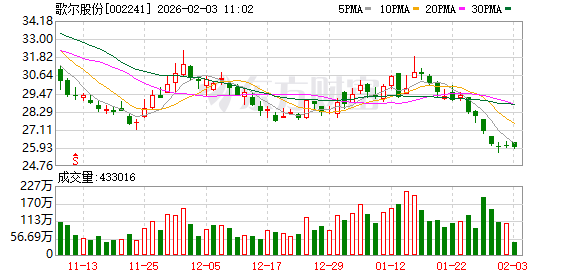
Group 1 - The core viewpoint of the article highlights that GoerTek has increased its share buyback amount from 500 million to 1.5 billion yuan due to a more than 35% decline in stock price from its peak [2] - The company's closing price has fallen below the average buyback price of 27.32 yuan, and the controlling shareholder previously made significant purchases around the 20 yuan mark [2] - GoerTek's main business includes precision components, smart acoustic systems, and smart hardware, with products used in smartphones, tablets, smart wireless earphones, VR, MR, AR, AI smart glasses, wearables, smart home devices, and automotive electronics [2] Group 2 - For the first three quarters of 2025, GoerTek reported revenue of 68.107 billion yuan, a year-on-year decrease of 2.21%, while net profit attributable to shareholders increased by 10.33% to 2.587 billion yuan [2] - As of February 2, GoerTek's stock price was 26.06 yuan per share, with a TTM price-to-earnings ratio of 31.78 [2]

机械设备:3C设备周观点:苹果AI眼镜或将在2026年Q2亮相,龙头积极布局眼镜市场-20260125
Huafu Securities· 2026-01-25 05:48
Investment Rating - The industry rating is "Outperform the Market," indicating that the overall return of the industry is expected to exceed the market benchmark index by more than 5% in the next 6 months [13]. Core Insights - Apple's AI glasses project has made significant progress and is expected to officially debut in Q2 2026, utilizing magnesium alloy materials and special lenses to enhance the wearing experience, relying on integration with the iPhone for core functionalities [2]. - Meta is shifting its core strategy from the metaverse to AI wearable devices, with plans to double the annual production capacity of its AI smart glasses to 20 million units by the end of 2026, potentially increasing to 30 million based on market conditions [3]. - The smart glasses market is becoming increasingly competitive with major players like Apple, Samsung, and Xiaomi entering the field, leading to strong sales performance for products like the Ray-Ban Meta series, which saw a year-on-year sales increase of over 200% [4]. Summary by Relevant Sections - **Apple's AI Glasses**: Expected to launch in Q2 2026, focusing on a design that does not include an integrated screen and enhances user experience through its pairing with iPhones [2]. - **Meta's Strategy**: Transitioning to AI wearable devices, with a significant increase in production capacity planned for its smart glasses [3]. - **Market Dynamics**: The entry of major hardware manufacturers into the smart glasses market is intensifying competition, with notable sales growth reported for existing products [4]. - **Investment Opportunities**: Suggested focus on companies involved in smart glasses (e.g., Deep Science, Quick Intelligent), silicon-based OLED screens (e.g., Yirui Technology), and automation equipment [5].

康耐特光学(02276):25年盈利高增,看好智能眼镜增长前景
Huafu Securities· 2026-01-18 08:24
Investment Rating - The report maintains a "Buy" rating for the company, indicating an expected relative price increase of over 20% against the market benchmark within the next six months [6][16]. Core Insights - The company anticipates a net profit increase of at least 30% for the fiscal year ending December 31, 2025, compared to the previous year, driven by increased sales of 1.74 refractive index lenses and other multifunctional products, along with improved operational efficiency and financing structure [3][4]. - The company is positioned as a leading manufacturer of high-refractive lenses in China, with significant cost advantages due to its scale and production capabilities. It is also expanding its overseas production capacity to mitigate tariff impacts [4][5]. - The smart glasses market is projected to grow significantly, with a 110% year-on-year increase in shipments expected in the first half of 2025. The company has secured partnerships with major players in the smart glasses sector, enhancing its revenue potential from XR (extended reality) business [5][6]. Financial Projections - Revenue growth rates are forecasted at 20% for 2025, 21% for 2026, and 19% for 2027, with corresponding net profit growth rates of 31%, 25%, and 23% respectively. The report adjusts previous estimates slightly upward [6][10]. - The company's earnings per share (EPS) is projected to increase from 0.89 in 2024 to 1.79 by 2027, reflecting strong profitability growth [6][10]. Financial Data Summary - The company’s main revenue is expected to reach RMB 2,477 million in 2025, with a net profit of RMB 559 million. By 2027, revenue is projected to grow to RMB 3,582 million, with net profit reaching RMB 861 million [7][10]. - The report highlights a consistent improvement in gross margin, expected to rise from 38.6% in 2024 to 42.1% by 2027, indicating enhanced operational efficiency [10].
康耐特光学早盘涨超8% 机构称Meta加大智能眼镜业务投入有望引领产业加速发展
Xin Lang Cai Jing· 2026-01-16 02:21
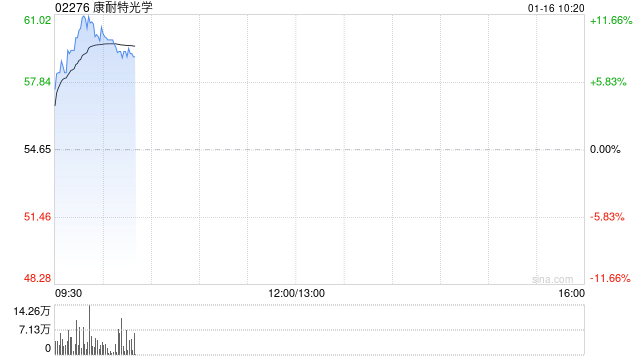
Core Viewpoint - 康耐特光学's stock price increased by 8.51% to HKD 59.30, with a trading volume of HKD 115 million, following news of Meta and EssilorLuxottica's plans to double AI smart glasses production by the end of the year to meet growing demand and stay ahead of competitors [1][5]. Group 1: Company Developments - Meta is discussing with EssilorLuxottica to increase AI smart glasses production capacity to 20 million units or more by the end of 2026, as sales of Ray-Ban Meta glasses begin to rise [1][5]. - Long江证券 indicates that Meta's increased investment in smart glasses is expected to accelerate industry development [1][5]. Group 2: Market Forecast - According to Wellsenn XR, global sales of AI smart glasses are projected to reach 7 million units by 2025, representing a nearly 360% increase, with Meta expected to sell 5 million units [1][5]. - By 2030, global sales of AI smart glasses are anticipated to reach 90 million units, indicating rapid growth potential [1][5]. - Meta's plan to double the production capacity of Ray-Ban AI glasses to 20 million units by 2026 reflects its confidence in the sales potential of AI glasses [1][5]. Group 3: Industry Insights - The smart glasses industry involves multiple supply chain segments, including lens manufacturing and eyewear sales channels, highlighting the importance of leading companies like 康耐特光学 [1][5].
美股三大指数自历史高位回落,热门中概股多数下跌,拼多多跌超5%
Feng Huang Wang· 2026-01-13 23:00
Market Overview - On January 4, U.S. stock indices collectively declined, with financial stocks leading the drop due to concerns over Trump's proposed credit card interest rate cap [1][2] - The Dow Jones fell by 398.21 points (0.80%) to 49,191.99, the Nasdaq decreased by 24.03 points (0.10%) to 23,709.87, and the S&P 500 dropped by 13.56 points (0.19%) to 6,963.71 [3] - The financial sector within the S&P 500 fell by 1.84%, contributing significantly to the overall market decline [3] Financial Sector Impact - JPMorgan Chase executives, including CEO Jamie Dimon, warned that Trump's plan to cap credit card interest rates at 10% could severely impact consumers, reigniting a sell-off in financial stocks [1][2] - Visa and Mastercard experienced significant stock price declines as a result of the proposed credit card interest rate cap [2] - Analysts expect S&P 500 companies to report an 8.3% year-over-year increase in earnings per share for the last quarter of 2025, despite the current market pressures [2] Company Performance - JPMorgan Chase's stock fell by 4.23%, despite exceeding revenue and earnings expectations for Q4, due to challenges in its investment banking and Apple Card provisioning [4] - Delta Air Lines' stock dropped by 2.4% after reporting profits above market expectations but failing to meet revenue forecasts [4] - Boeing's stock rose by 2% as the company reported net orders of 1,173 aircraft in the previous year, surpassing European competitor Airbus for the first time since 2018 [4] Notable Stock Movements - Moderna's stock surged by 17.1%, becoming one of the best performers in the S&P 500, as the company projected higher revenues for 2025 than previously forecasted [5] - Major tech stocks showed mixed performance, with Intel rising over 7% to reach a near two-year high, while others like Tesla and Amazon saw declines [4][5] Upcoming Developments - Delta Air Lines announced an agreement to purchase 30 Boeing 787-10 wide-body aircraft, with an option for an additional 30, scheduled for delivery starting in 2031 [8] - Meta Platforms is in discussions to double the production capacity of its AI smart glasses to 20 million units by the end of 2026, in response to growing demand [6]

国泰海通|轻工:CES 2026新品百花齐放,产业趋势明确
国泰海通证券研究· 2026-01-13 13:20
Core Viewpoint - The smart glasses industry is expected to enter a rapid growth phase, with related companies poised to benefit from an upward cycle in market conditions [2]. Group 1: Industry Trends - CES 2026 showcased a variety of new smart glasses from leading Chinese brands such as Thunderbird Innovation, XREAL, Rokid, and others, highlighting a clear industry trend [2]. - Key product highlights include differentiated designs for competitive advantage, innovative multi-core solutions for better performance and power balance, and a focus on niche markets to meet specific needs [2]. - The integration of AI technology is deepening, with products like Looki L1 claiming to automatically record life events and store data locally [2]. Group 2: Future Product Launches - Google plans to launch Project Aura in December 2025 in collaboration with Xreal and is reviving its independent AI glasses project, aiming for a 2026 release [3]. - Apple is concentrating resources on the development of Apple Glasses, expected to be announced at WWDC 2026, which will rely on the iPhone and focus on AI and audio [3]. - Meta is delaying the release of its mixed reality glasses, code-named "Phoenix," to optimize product experience after significant losses in its Reality Labs division [3]. - ByteDance is set to release its first AI glasses in Q1 2026 [3]. Group 3: Market Projections - Global smart glasses sales are projected to reach 1.52 million units in 2024, with a significant increase to 3.5 million units in 2025, representing a 230% year-on-year growth [4]. - The growth is primarily driven by the continued sales of RayBan Meta and the introduction of multiple new AI smart glasses from major manufacturers [4]. - By 2029, global sales are expected to reach 60 million units, with a CAGR of 109% from 2025 to 2029, indicating a substantial market share for China [4].

东吴证券:首次覆盖康耐特光学(02276)给予“买入”评级 智能眼镜打开成长空间
智通财经网· 2025-12-29 07:33
Core Viewpoint - 康耐特光学 is positioned to benefit from the growing demand for AI smart glasses, with a solid traditional business foundation and clear growth path, leading to a "buy" rating from Dongwu Securities [1] Group 1: Company Overview - 康耐特光学 is a leading supplier of resin lenses in China, with production bases in Shanghai, Jiangsu, and Japan, and a new facility in Thailand expected to start production in 2026 [2] - The company offers a range of products including standard, functional, and customized lenses, with a mature business model and a sales network covering over 90 countries [2] - 康耐特光学 has demonstrated steady revenue growth, with a projected CAGR of 17.2% for revenue and 35.2% for net profit from 2020 to 2024 [2] Group 2: Industry Insights - The lens industry is expected to see significant growth, driven by the increasing number of myopic children and elderly individuals in China, with sales projected to reach 20.72 billion yuan in 2024 [3] - The demand for functional lenses with properties such as blue light blocking and anti-fatigue is rapidly increasing, alongside a growing market for high refractive index lenses [3] - The smart glasses industry is at a critical turning point, with major tech companies like Alibaba, Amazon, and Meta accelerating their investments, creating opportunities for leading lens manufacturers [3] Group 3: Strategic Positioning - 康耐特光学 has three key advantages in the XR industry: the ability to mass-produce 1.74 ultra-high refractive index lenses, a responsive C2M production system for personalized demands, and strong partnerships with leading manufacturers like Goer [4] - The company is the exclusive lens supplier for Alibaba's "Quark AI Glasses," which may facilitate further expansion into other smart glasses clients [4] - Profit forecasts indicate that 康耐特光学's net profit is expected to reach 540 million, 660 million, and 860 million yuan for 2025-2027, with corresponding PE ratios of 43.0, 35.0, and 27.1 times [4]
